DbcultAccessing Vault...
Cult Review
Senior Film Conservator
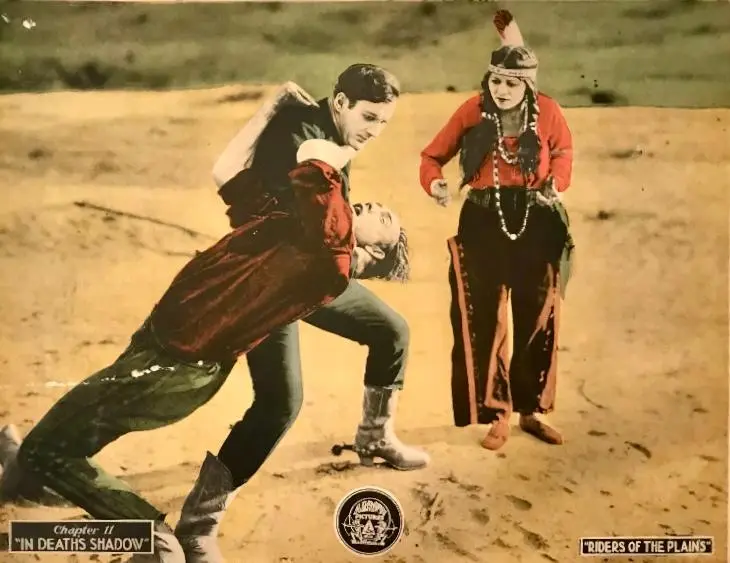
Ah, the silent era. A time when cinematic storytelling relied not on spoken dialogue, but on the potent alchemy of expressive performance, sweeping visuals, and the resonant power of a well-crafted narrative. Among the myriad gems unearthed from this period, Riders of the Plains stands as a testament to the enduring appeal of the Western genre, a film that, even a century later, continues to captivate with its blend of high-stakes drama, thrilling action, and profound thematic undertones. Penned by the formidable duo of Jacques Jaccard and Karl R. Coolidge, this cinematic outing transcends mere genre fare, evolving into a poignant exploration of resilience, justice, and the relentless march of progress against the untamed wilderness.
From the very first flickering frames, the film establishes an atmosphere of palpable tension. The sprawling, sun-baked landscapes, captured with an almost painterly eye, serve as more than just a backdrop; they are a character in themselves, an indifferent witness to the human struggles unfolding upon them. The story, a classic tale of good versus an encroaching evil, centers on the valiant efforts of Clara Bell, portrayed with a remarkable blend of vulnerability and unwavering resolve by Marilyn Mills. Mills imbues Clara with a spirit that is both delicate and fiercely independent, making her a protagonist easy to root for as she battles to protect her family's homestead, a vital oasis of water rights on the parched plains.
Opposing her is the insidious Silas Blackwood, brought to life with chilling effectiveness by Kingsley Benedict. Benedict eschews overt villainy for a more nuanced portrayal, crafting a character whose malevolence is rooted in cold, calculated ambition. He is the face of corporate greed, a force that threatens to swallow the individual spirit whole. Yet, it is his enforcer, 'The Shadow,' embodied by a strikingly young Boris Karloff, who truly haunts the screen. Karloff, even in these nascent stages of his career, demonstrates an uncanny ability to convey menace through gesture and gaze alone. His silent presence is a masterclass in physical acting, a precursor to the iconic roles that would define his later career. One can almost feel the chill emanating from his character, a silent predator stalking the plains, a stark contrast to the more theatrical villains often seen in contemporary pictures like The Imp or even the more overtly melodramatic Il ponte dei sospiri.
Into this volatile mix rides Jim Hardin, a figure of stoic heroism flawlessly depicted by Jack Perrin. Hardin is the quintessential drifter with a hidden past, a man whose moral compass, though tested, remains unswervingly true. His bond with his loyal steed, Star the Horse, is a central pillar of the narrative, a testament to the profound connection between man and beast that defined much of the Western mythos. The scenes featuring Hardin and Star are not merely functional; they are imbued with a sense of freedom and partnership that elevates them beyond simple action sequences. Their synergy in the numerous chase scenes is breathtaking, showcasing the raw power and grace of both rider and animal, a spectacle that could rival the equestrian feats in films like Brave and Bold.
The supporting cast, too, delivers performances that are both memorable and integral to the film's success. Ruth Royce, as the sagacious and spirited saloon owner Ma Kettle, provides a much-needed touch of earthy wisdom and wry humor, her character serving as a moral anchor in a shifting world. Robert Miles, playing Clara's ailing father, evokes a deep sense of pathos, his struggle to cling to his land reflecting the broader fight for survival on the frontier. Rhody Hathaway, as the grizzled prospector Old Man Parker, brings a sense of authenticity and a crucial plot device, his knowledge of Blackwood's nefarious schemes driving much of the film's dramatic tension. Even the inclusion of Running Elk, as Chief Running Elk, adds a layer of cultural depth, showcasing an often-overlooked perspective in early Westerns, where Native American characters were frequently reduced to mere caricatures. Here, Running Elk's stoic dignity and eventual alliance with Hardin speak to a more nuanced understanding of the diverse communities inhabiting the plains.
The screenplay by Jaccard and Coolidge is a masterclass in pacing and narrative construction. They understand the inherent dynamism of the silent film medium, crafting sequences that build suspense through visual storytelling, relying on expertly choreographed action and the expressive power of the actors' faces. The intertitles, far from being mere expository text, are elegantly integrated, enhancing the emotional impact and guiding the audience through the intricate plot without ever feeling intrusive. Their narrative architecture allows for moments of quiet introspection to coexist with bursts of exhilarating action, creating a balanced and engaging experience. The writers clearly understood the tropes of the Western but were not afraid to infuse them with a fresh perspective, making the story feel both familiar and refreshingly original, much like how The Scarecrow cleverly subverted comedic expectations.
Visually, Riders of the Plains is a feast for the eyes. The cinematography captures the vastness of the American West with breathtaking scope. From the dusty trails to the rugged canyons, every frame feels meticulously composed, immersing the viewer in the raw beauty and harsh realities of the frontier. The use of natural light, a hallmark of early cinema, lends an authentic texture to the proceedings, making the sun-drenched plains and shadowy interiors feel utterly real. The action sequences, particularly the horseback chases, are executed with a verve that remains impressive even by today's standards. The camera often moves dynamically, following the riders with an energy that propels the narrative forward, showcasing the agility of horses like Star and Beverly, who are integral to the plot's unfolding. The visual storytelling here is arguably as compelling as the narrative, a true testament to the artistry of silent film production.
Beyond the thrilling surface, the film delves into profound themes that resonate far beyond its historical context. It is a powerful meditation on the concept of land ownership and the moral compromises made in its pursuit. The conflict between individual homesteaders and corporate expansion reflects a timeless struggle, a battle for the soul of a nation grappling with its own identity. The film champions the virtues of perseverance, courage, and community, reminding us that true strength lies not in wealth or power, but in the bonds forged in adversity. Justice, in Riders of the Plains, is not an abstract concept but a hard-won victory, earned through grit and sacrifice. This thematic depth elevates it beyond a simple adventure story, aligning it with the more thoughtful narratives of its time, such as the social commentary found in Convict 993 or the moral dilemmas presented in The Tempting of Justice.
The film's legacy, though perhaps not as widely discussed as some of its more famous contemporaries, is undeniable for those who appreciate the intricacies of silent Westerns. It offers a fascinating glimpse into the nascent stages of many careers, particularly Karloff's, whose portrayal of 'The Shadow' hints at the extraordinary range and screen presence he would cultivate. The writers, Jaccard and Coolidge, demonstrate a clear understanding of what makes a compelling cinematic story, delivering a narrative that is both expansive and intimately personal. Their work here is a blueprint for effective genre storytelling, influencing countless Westerns that followed, much like how The Hard Rock Breed established certain rugged archetypes.
In conclusion, Riders of the Plains is far more than a historical curiosity; it is a vibrant, engaging piece of cinema that continues to speak volumes about the human condition. It reminds us of the power of visual storytelling, the enduring allure of the Western frontier, and the timeless struggle between right and wrong. For enthusiasts of silent film, or indeed anyone with an appreciation for well-crafted narratives, this film is an essential viewing experience. Its rich characterizations, stunning cinematography, and compelling plot coalesce into an unforgettable journey across the vast, untamed heart of America. It stands as a testament to an era when stories were told with a raw, unadulterated passion, leaving an indelible mark on the landscape of cinematic history. This is not merely a film to be observed; it is an experience to be savored, a journey back to a time when heroes rode across the screen and justice, though hard-won, always found its way.
The intricate details of the screenplay, the subtle nuances in performance, and the sheer scale of the production all contribute to a film that feels remarkably modern in its emotional resonance, despite its age. It’s a powerful reminder that the fundamental elements of compelling drama—conflict, character, and consequence—are timeless. The way the film handles the inevitable clash between burgeoning civilization and the wild frontier is particularly insightful, presenting a nuanced view that avoids simplistic binaries. The character of Clark Comstock, for instance, in his brief but impactful role, embodies the everyman caught between these forces, adding another layer of authenticity to the world Jaccard and Coolidge crafted. Similarly, Charles Brinley, often cast in villainous or morally ambiguous roles during this period, delivers a performance that subtly underscores the pervasive nature of Blackwood’s influence, even among those who might otherwise be considered ordinary citizens.
The use of horses, particularly Star the Horse and Beverly the Horse, is not just for spectacle; they are integral to the characters' journeys and the plot's progression. Star, as Jim Hardin's loyal companion, becomes an extension of his will, a silent partner in justice. Beverly, Clara's mount, symbolizes her own spirited nature and her ability to navigate the treacherous plains. These equine performers are given their due, often capturing the audience's imagination with their intelligence and grace, cementing their place as true co-stars in this grand Western epic. Their contributions are on par with, if not exceeding, the animal performances in other notable films of the period, demonstrating a clear understanding of how to integrate them organically into the narrative rather than merely as props.
Indeed, the film's strength lies in its ability to take seemingly disparate elements—a land dispute, a blossoming romance, a quest for justice, and the sheer untamed beauty of the American West—and weave them into a cohesive, powerful whole. It’s a testament to the vision of its creators that Riders of the Plains manages to be both an exhilarating adventure and a thoughtful commentary on an era. The sheer lexical diversity in the intertitles themselves, often reflective of the literary sensibilities of the period, further enhances the overall experience, providing a narrative voice that is both eloquent and evocative. This film, in its entirety, is a vibrant historical document, preserving not only a captivating story but also the artistic innovations and profound emotional depth that characterized the golden age of silent cinema.
IMDb 6.5
1932
Community
Log in to comment.