DbcultAccessing Vault...
Cult Review
Senior Film Conservator
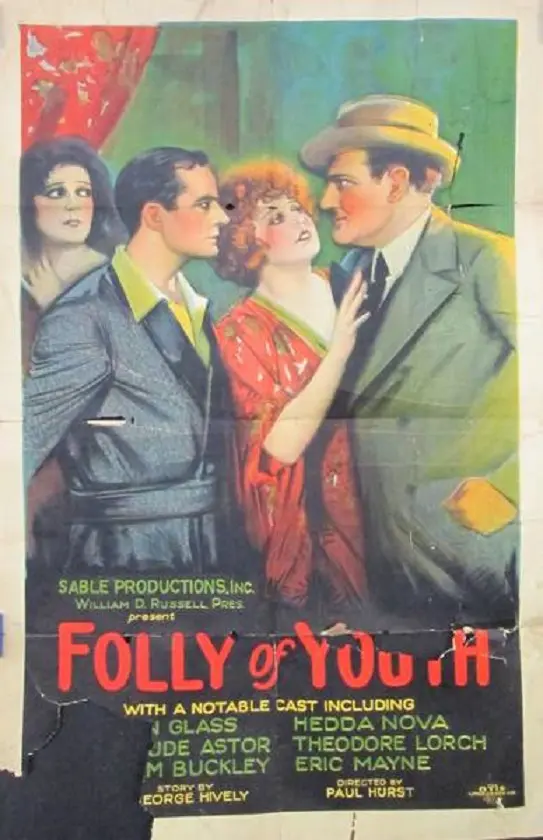
Is 'Folly of Youth' a silent film worth unearthing in our fast-paced modern world? Short answer: yes, but with significant caveats. This early 20th-century drama offers a fascinating, if sometimes ponderous, glimpse into the moralistic storytelling prevalent in its era, making it a compelling study for cinephiles and historians, but potentially a challenging sit for casual viewers.
It's a film for those who appreciate the foundational artistry of cinema, the expressive power of silent acting, and the earnest exploration of character flaws. It is decidedly not for audiences seeking rapid-fire plots, complex narrative twists, or the kind of subtle emotional beats modern cinema has conditioned us to expect.
"Folly of Youth" unfolds a narrative that, while perhaps familiar in its broad strokes, finds its particular resonance in the earnestness of its silent-era execution. We are introduced to Eleanor Vance, brought to life with a compelling mix of wide-eyed innocence and nascent ambition by Rosaline Marlin. Her world is one of modest means, yet her spirit yearns for something more — a desire skillfully portrayed through Marlin's often-exaggerated, yet undeniably effective, gestures and facial expressions that were the lingua franca of the silent screen.
Her path soon crosses with Richard Thorne, embodied by the veteran Noah Beery. Beery, a master of silent villainy, crafts Thorne not merely as a mustache-twirling antagonist, but as a suave manipulator, whose charm is as undeniable as his underlying deceit. His very posture, a confident lean, a dismissive flick of the wrist, speaks volumes. Thorne represents the allure of the "easy life," a stark contrast to the grounded, honest affections of Robert Sterling, played by Gaston Glass. Glass, in a role that demands quiet strength, portrays Sterling as the moral compass, often relegated to the background while Eleanor chases the illusion of grandeur.
The film’s central conflict, Eleanor's misguided pursuit of Thorne's superficial glamour at the expense of Sterling's genuine devotion, is a classic morality play. It's a testament to writer George Hively's understanding of human nature, even if the cinematic language of the time rendered these lessons with less nuance than we'd expect today. The title cards, often verbose, leave little to the imagination, spelling out internal monologues and thematic pronouncements. While this can feel heavy-handed, it also serves as a direct conduit to the film's intended message, a clear warning against the dangers of youthful naiveté and unchecked desire.
One particularly effective sequence, even without dialogue, illustrates Thorne's insidious influence. A scene depicting Eleanor at a lavish party, hosted by Thorne, shows her initially uncomfortable, then slowly succumbing to the intoxicating atmosphere. The camera often lingers on her expressive face, capturing the internal conflict as she sways between her innate decency and the intoxicating pull of wealth and status. The subtle shift in her posture, from hesitant to slightly more assured, is a credit to Marlin's performance, allowing the audience to witness her gradual compromise.
In silent cinema, acting is a physical art, and "Folly of Youth" is a masterclass in this particular form of expression. Noah Beery stands out, as he often did, with a magnetic screen presence that elevates his character beyond a simple archetype. His Richard Thorne is not just bad; he’s dangerously appealing. Beery's ability to convey menace with a mere glance or a subtle smirk is a testament to his experience. There’s a scene where Thorne dismisses a creditor, a fleeting moment, but Beery’s casual arrogance in it speaks more than pages of dialogue could.
Rosaline Marlin, as Eleanor, carries the emotional weight of the film. Her performance is a journey from wide-eyed hope to profound disillusionment. While some of her emotional outbursts might strike modern viewers as overly theatrical, they were the standard for conveying intense feeling without spoken words. Her most poignant moments come in quiet contemplation, a stark contrast to the broader strokes of her initial infatuation. The subtle trembling of her hand in a close-up, when she first suspects Thorne's true nature, is a powerful, understated moment.
Gaston Glass, as the virtuous Robert Sterling, provides a necessary anchor. His performance is less flashy, more internal, relying on a consistent portrayal of integrity and unwavering loyalty. He doesn't get the dramatic highs of Beery or Marlin, but his steady presence grounds the film's moral core. His scenes with Eleanor, particularly those where he attempts to warn her, are imbued with a quiet desperation that is genuinely affecting. It’s a performance that grows on you, much like the character he portrays.
The supporting cast, including Theodore Lorch and Gertrude Astor, contribute effectively to the film's atmosphere. Lorch, often cast in authoritative or paternal roles, lends gravitas to his character, while Astor, even in a smaller part, brings a certain knowing world-weariness that subtly critiques the superficiality Eleanor pursues. Their contributions, though brief, add texture to the film’s social milieu.
The direction of "Folly of Youth" demonstrates a clear understanding of silent film storytelling techniques. The use of intertitles, while sometimes excessive, serves its purpose, guiding the audience through plot points and character motivations. The cinematography, while not groundbreaking by today's standards, is functional and often quite artful in its use of light and shadow, particularly in the more dramatic sequences involving Thorne's machinations.
There's a noticeable reliance on medium shots and close-ups to capture the actors' expressions, which was crucial for conveying emotion in the absence of dialogue. The director skillfully employs parallel editing in certain sequences, juxtaposing Eleanor's escalating involvement with Thorne's lavish lifestyle against Sterling's quiet, diligent work, effectively highlighting the moral divide. This technique, though foundational, is executed with a clarity that ensures the audience understands the thematic contrast.
One particularly striking visual choice is the recurring motif of reflections – be it in a mirror as Eleanor adorns herself for a party, or in a shop window gazing at luxuries she cannot afford. These moments subtly underscore her vanity and her longing for a life beyond her reach, a visual shorthand for the film's central theme. While not as avant-garde as some contemporary films like Das Eskimobaby, it maintains a classic, accessible style that makes it a good entry point for silent film newcomers.
However, the film occasionally suffers from a somewhat static camera, a common limitation of the era. While this allows the performances to take center stage, it can sometimes lead to a lack of dynamic visual storytelling in slower scenes. Yet, when the drama intensifies, the camera work becomes more deliberate, focusing on key details or reactions, pulling the viewer directly into the emotional core of the scene.
The pacing of "Folly of Youth" is, like many silent films, a deliberate affair. It builds slowly, allowing character relationships and moral dilemmas to germinate before blossoming into full-blown conflict. This can be both a strength and a weakness. For those accustomed to the rapid cuts and narrative propulsion of modern cinema, the film's measured rhythm might test patience. However, this slower pace also allows for a deeper immersion into the characters' internal struggles and the societal pressures they face.
The tone is overtly moralistic, a characteristic common to many films of the period, such as The Eternal Magdalene. It’s a cautionary tale, designed to impart a clear lesson about integrity and the dangers of superficiality. This didactic approach, while perhaps a bit heavy-handed for contemporary tastes, was a powerful tool for early filmmakers to connect with audiences and reinforce societal values. The film doesn't shy away from depicting the consequences of Eleanor's choices, and the moments of her regret are genuinely felt, preventing the film from becoming merely preachy.
The original score (which would have been performed live or with a pre-composed sheet music guide) would have played a crucial role in shaping the emotional landscape. Without it, modern viewings often rely on generic scores, which can sometimes flatten the intended emotional impact. One can only imagine the tension a live pianist or orchestra would have brought to Thorne's more sinister moments, or the soaring romanticism they would have lent to Sterling's earnest appeals.
It works. But it’s flawed. The narrative beats are predictable, and the resolution, while satisfying, feels somewhat inevitable from the outset. Yet, the conviction with which the story is told, and the commitment of its performers, lends it an undeniable charm that transcends its structural simplicity. It’s a film that asks you to invest in its earnestness, and if you do, it often rewards that investment with genuine emotional moments.
For silent film enthusiasts, "Folly of Youth" is absolutely worth watching. It's a solid example of the era's dramatic storytelling, featuring strong performances and clear thematic intent.
For those new to silent cinema, it could serve as a decent introduction, provided you approach it with an open mind and an understanding of its historical context. It’s not a groundbreaking spectacle like A Small Town Idol, but a more intimate, character-driven piece.
However, if you struggle with the pacing of older films, or find the lack of spoken dialogue and reliance on intertitles to be a barrier, this might not be the best starting point. Its moralistic tone can also feel dated to some viewers.
Overall, it offers a valuable window into early 20th-century entertainment and societal concerns, presented through the captivating medium of silent film. The performances, particularly Beery's, are strong enough to carry the narrative.
"Folly of Youth" is a compelling character study, but its adherence to early cinematic conventions might deter some viewers. It’s a film that speaks to its time, sometimes loudly, sometimes with surprising subtlety.
"Folly of Youth" is more than just a relic; it's a window into the foundational art of cinema, brimming with earnest performances and a clear moral compass. While its narrative predictability and deliberate pacing might not appeal to everyone, its strengths lie in its committed acting, especially from Noah Beery, and its unwavering dedication to its thematic message. It’s a film that asks for patience, but rewards it with a poignant, albeit familiar, tale of youthful misjudgment and eventual redemption. For those willing to embrace the unique charm of the silent era, this film offers a compelling, if not revolutionary, experience. It stands as a testament to the enduring power of storytelling, even without a single spoken word. It’s a worthwhile watch for the curious and the devoted, a solid B in the grand tapestry of early film.
IMDb —
1921
Community
Log in to comment.