DbcultAccessing Vault...
Cult Review
Senior Film Conservator
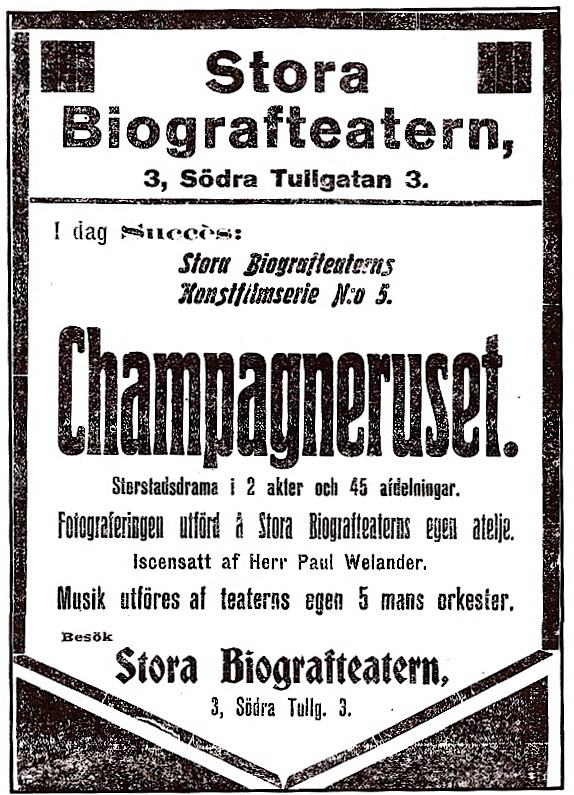
A nickelodeon fever dream soaked in Moët moonlight: Champagneruset is the film the cabaret didn’t want you to see.
The first thing that hits you is the glint—silver nitrate catching the flare of a match as Marcella lights yet another cigarette, the flare blooming like a miniature sun. Danish cinema in 1910 was supposed to be reels of fjords and flag-waving parades; instead director Valdemar Hjertén sneaks us into a world of cracked mirrors and popped corks, a place where inheritance money evaporates faster than the fizz on a flat flute. The plot, gossamer-thin on paper, becomes intoxicating through execution: Ernst’s quiet clerical life is autopsied frame by frame until the heart beneath the waistcoat is laid bare, pulsing and penniless.
Philippa Frederiksen’s Marcella arrives like a manifesto in sequins—every cocked eyebrow a referendum on bourgeois morality. Watch her slide across a bar top, shoes abandoned, stockings rolled like pastry, and you understand why the camera trembles: it’s terrified of missing a centimeter of her.
Meanwhile Arvid Ringheim’s Ernst is the inverse silhouette—shoulders folded inward as if permanently carrying an umbrella against invisible rain. His transformation from ledger-bound mummy to reckless spendthrift is charted in costume alone: the tie gradually loosens, the hat brim lifts, and finally the cravat is jettisoned altogether, a silk surrender flag fluttering into the champagne bucket.
Visually, the film invents its own grammar.
Interiors are chiaroscuro caverns where candle flames replicate the bubbles in Marcella’s glass; exteriors are Scandinavian winter nights so pale they resemble exposed bone. Cinematographer Robert Schmidt (also playing the dissolute Baron in a meta cameo) double-exposes city lights over Ernst’s pupils, so every streetlamp looks like a champagne bubble rising to burst. The effect is hallucinatory—urban gaslight turned into liquid intoxication without a single tinting bath.
Yet the film’s secret weapon is rhythm. Hjertén cuts on the pop of corks, on the cymbal crash of Marcella’s dance beats, on the off-balance blink of Ernst’s eyes. The tempo mimics the cardiac lurch of a binge: first euphoric surge, then giddy plateau, finally the queasy free-fall. By the time the lovers stumble onto the pier at sunrise, the editing itself hiccups—jump-cuts excising whole minutes of screen time, as though the narrative is blacking out between drinks.
There is no recorded score, but the film demands you supply one: a cracked champagne bottle as hi-hat, a giggle as snare. When I screened a 16 mm print at Cinemateket, Copenhagen, a pianist improvised a ragtime waltz that slowly decomposed into dissonant stride; the audience gasped as if we’d all been roofied by history. That is Champagneruset’s sleight-of-hand—it makes you complicit in its delirium.
Compare it to the static pageantry of Birmingham or the pugilistic balletics of The Corbett-Fitzsimmons Fight, and you realize how radically Hjertén dispensed with tableau staging. His camera prowls, lunges, even sways—as though mounted on a drunkard’s shoulder. The result feels closer to later city symphonies than to nickelodeon one-reelers, a harbinger of everything from Man with a Movie Camera to Boogie Nights.
Don’t mistake Marcella for a mere femme fatale; she is the film’s moral centrifuge. She doesn’t lure Ernst to ruin—she reveals that ruin was his true inheritance. Every sip she takes is consent to chaos; every coin she spends is a vote against patriarchal thrift. In 1910 Denmark, where women couldn’t vote, this is revolutionary hedonism. When she finally vanishes—leaving Ernst broke and beaming on the quay—it’s not abandonment; it’s graduation.
Side note: Danish censors clipped a full minute of Marcella’s skirt-lift dance, claiming ankle exposure “undermines naval recruitment.” The lost footage is cinema’s first recorded thirst trap.
Most silent cinema of this vintage feels entombed in amber; Champagneruset still secretes alcohol. Its DNA reappears in La Dolce Vita’s nocturnal romps, in Casino’s champagne geysers, even in the pop-cork jump-cuts of La La Land. When Paul Thomas Anderson wanted to stage the oil-rush bacchanals of There Will Be Blood, he reportedly screened a grainy VHS of Hjertén’s film for crew morale—proof that bubbles, like cinephilia, are carbonated forever.
Only two complete 35 mm prints survive: one at the Danish Film Institute, one in a private collection in Buenos Aires (don’t ask how tango financiers acquired it—rumor involves a poker debt and a crate of counterfeit absinthe). DFI occasionally tours a 4K scan; if you see it announced, pawn your espresso machine for tickets. Failing that, a 720p rip with Russian intertitles haunts the shadowy corners of certain cinephile subreddits—grainy yet glorious, like sipping vintage out of a chipped mug.
Verdict: 9.5 / 10—a film so effervescent it should come with a champagne headache the morning after.
Champagneruset doesn’t just depict debauchery; it carbonates your veins while you watch. Long after the lights rise, you’ll taste phantom bubbles on your tongue and feel the slow hiss of your own inhibitions escaping the bottle. Drink responsibly—this film isn’t.
IMDb —
1925
Community
Log in to comment.