DbcultAccessing Vault...
Cult Review
Senior Film Conservator
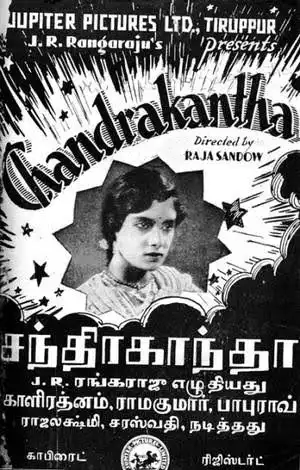
If you have a soft spot for the rough edges of early cinema, sure. It’s a curious artifact. But if you need your pacing tight and your dialogue natural, you’ll probably be checking your watch every ten minutes. 🕰️
There is a specific kind of *grit* to this film. It isn't the gritty of a modern noir, but the grit of old film stock and stage lights that feel like they’re burning through the screen. You can almost smell the dust on the sets.
Watching P.U. Chinnappa is like watching a lightning bolt trapped in a box. He brings this frantic, heavy energy that makes the rest of the scene look like it’s lagging behind. Sometimes it works, and sometimes it feels like he’s in a completely different movie than the rest of the cast. ⚡
There’s a moment about halfway through—I think it’s near the palace gates—where the background extras look like they’ve completely forgotten they’re on camera. One guy is just staring at his feet for a full ten seconds. It’s distracting, sure, but it also made me laugh. It feels human, you know?
The whole experience reminded me a bit of the frantic pacing in The Prison Panic. Both films seem to be in such a rush to get to the next musical number or dramatic outburst that they forget to let the audience breathe. It’s exhausting, but in a weirdly fun way.
It’s nowhere near as refined as A Chapter in Her Life, but it’s got a pulse. It’s not trying to be high art. It’s just trying to survive the reel.
Don’t go in expecting a cohesive story. Treat it like a collection of moments. Some are great, some are just noise, and all of them are very, very loud. If you want to turn your brain off and just watch people perform until they’re sweating, this is your movie. Just don't ask me to explain the ending, because I think the print I saw was missing a chunk of it anyway.
Year
1936
IMDb Rating
—

Editorial
Deciphering the legacy of transgressive cult cinema.
Community
Log in to comment.