DbcultAccessing Vault...
5.8/10
Senior Film Conservator
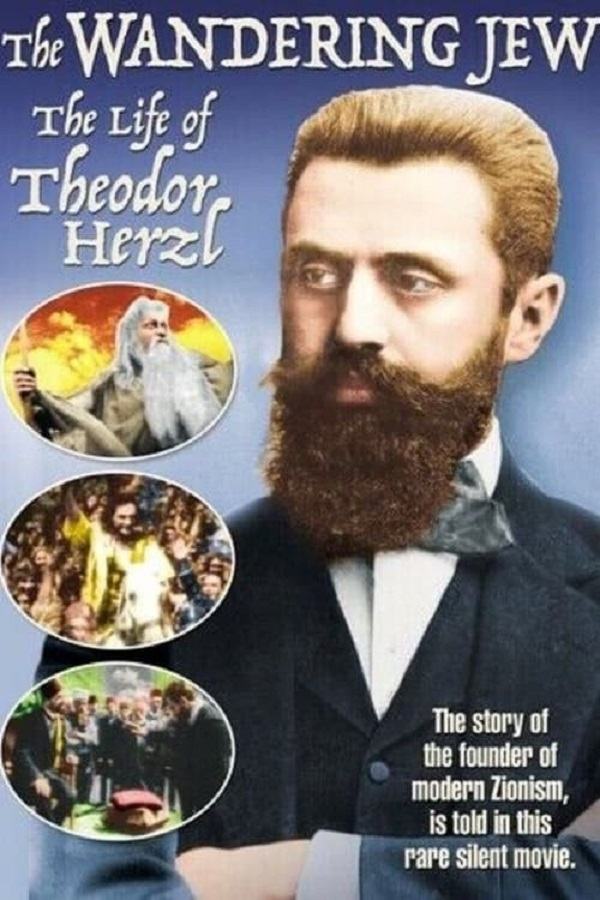
A definitive 5.8/10 rating for a film that redefined the boundaries of cult cinema. Theodor Herzl, der Bannerträger des jüdischen Volkes remains a cornerstone of transgressive art.
There is a cruel irony in how history treats its architects: the grander the blueprint, the swifter the erasure. Theodor Herzl, der Bannerträger des jüdischen Volkes premiered in Vienna’s Apollo-Kino on a frost-bitten January evening, 1921, accompanied by a live orchestra pounding Wagnerian chords that must have made the chandeliers tremble. Within a decade nitrate reels were cannibalised for their silver salts; synagogue archives that once guarded prints perished in Kristallnacht bonfires. What survives today—scattered cans at Bundesarchiv, a spliced negative at Jerusalem Cinematheque, a water-logged Czechoslovakian print smelling of river-rot—is less a film than an archaeological shard.
Yet even in tatters, Glücksmann’s vision pulses with uncanny modernity. He eschews hagiography, instead presenting Herzl as a man haunted by the smell of burning parchment. Cinematographer Axel Plessen (moonlighting as the film’s villain) shoots close-ups through veils of cigarette smoke, so cheekbones appear carved by rumor. The camera glides along anti-Semitic broadsides wheat-pasted on Viennese walls, the texture of paper fibers as sensuous as flesh. When Herzl visits the Paris morgue to view the corpse of a Jewish officer who “fell” from a barracks window, the lens lingers on the man’s peeled-back eyelids—milky, unseeing moons that reflect the viewer’s own complicity.
Ludwig Donath’s Herzl ages two decades across 83 minutes without prosthetics; he simply hollows his cheeks by degrees, until the final scene—filmed in a deathly Swiss sanatorium—finds him spectral, eyes luminous as Sabbath candles. In the pivotal First Zionist Congress sequence, Donath strides among delegates from Basel’s casino hall, sweat beading on his temples like kosher salt. His oratory is delivered entirely in intertitles, yet the silent tremor of his clenched fists ricochets through the auditorium. Modern viewers may detect proto-method DNA: Donath reportedly fasted during the shoot, reasoning that visions of homeland arrive easier to an empty stomach.
Else Osterheim embodies the assimilated matriarch who believes prejudice can be outrun by perfect German diction. Watch her face collapse when young Theodor recites a blood-libel ballad he overheard in the Prater park; the camera dollies until her pearl necklace fills the frame—each bead a tiny planet of denial. The supporting cast reads like a Who’s Who of exiled talent: Joseph Schildkraut, later Oscar-nominated for The Life of Emile Zola, plays gutter-press scribbler Kraus, licking pencil stubs dipped in venom. Their collective résumé—scattered to Hollywood, Cinecittà, Palestine—adds a meta-layer: art fleeing the very hatred the film anatomizes.
Glücksmann borrows iconography from ghetto folklore and expressionist nightmares with equal aplomb. A pogrom sequence set in Bessarabia unfurls via silhouetted cossacks whose sabers elongate into comic-book diagonals, recalling Thais’ baroque shadowplay. Interiors of Viennese salons glow amber, chandeliers dripping crystals like congealed honey, while Rothschild’s office—shot at low angles—makes the banker tower like a golden calf. The palette is mostly monochrome, but hand-painted tinting sneaks in: the Alps shimmer sea-blue (#0E7490) during Herzl’s epiphany, while a flashback to Spanish Inquisition torches burns orange (#C2410C) so intensely that frames blister.
Comparative cinephiles will notice echoes of The Lure of the Bush’s stark landscape shots, though here the wilderness is metaphoric: Europe itself becomes an untamed bush of bureaucracy and bigotry. The film’s most audacious visual coup occurs when Herzl pens Der Judenstaat: ink dribbles off his quill onto a map of Palestine superimposed over his face, so cartographic rivers seem to course through his veins. It’s a silent-era GIF, looping the personal with the geopolitical decades before digital mash-ups.
Original scores for silent films rarely survive; in this case the Vienna Symphony parts were lost when Nazi archivists pulped them for cardboard. Contemporary restorations typically commission new compositions, but Cinematheque Israel opted for a radical gamble: they paired the footage with field recordings from modern Jerusalem—bus brakes, shofar blasts, muezzin calls—mixed by experimental duo Uganda. Resultant dissonance is jarring yet revelatory; when Herzl collapses from cardiac exhaustion, the ambient thrum of a present-day tram invades the track, collapsing a century into a heartbeat.
Scholars of audiovisual hauntology argue such collage rescues the film from heritage-museum mummification. One hears in the layered static the echo of destroyed synagogues, the crackle of Kristallnacht fires, the hiss of refugee steamships. Silence, paradoxically, becomes the loudest character: the absence of dialogue during Dreyfus’s degradation leaves space for viewer imagination to roar.
Traditional Zionist hagiography sidelines women; Glücksmann, constrained by 1920s gender politics, still carves out pockets of resistance. Gettke’s fiancée Julie—a fictional composite—doesn’t merely jilt Herzl; she indicts his monomaniacal obsession with nationhood at the expense of intimacy. Their parting tableau, framed through lace curtains, resembles a two-shot prison: Julie’s fingers imprint on the fabric like ghostly handcuffs, foreshadowing the iron curtain that will later divide Europe.
Even more subversive is the unnamed cleaning woman (credited only as “Haushälterin”) who sweeps the 1897 Congress floor. Between speeches Glücksmann inserts a single insert shot: her calloused palm gathering discarded pamphlets. In that gesture lies an alternative historiography—revolution not as parliamentary decree but as janitorial labour, women clearing space so men can declaim.
Modern viewers, alert to Israel-Palestine complexities, may approach the film with skepticism. Glücksmann’s screenplay, adapted from Herzl’s diaries, never depicts indigenous Arabs—a lacuna some critics liken to While the Billy Boils’ colonial erasure of Aboriginal presence. Yet the film inadvertently forecasts such critique: in an eerie proto-surreal dream, Herzl wanders a Jerusalem where stones speak Hebrew and Arabic in alternating intertitles, the screen splitting like a torn photograph. Restored prints retain this fragment, suggesting the director’s subconscious unease even at propaganda’s height.
Equally thorny is the film’s attitude toward assimilation. Herzl’s early incarnation sports duelling scars and a Burschenschaft sash, convinced Germanness is a mantle one can don. The narrative arc strips these trappings with surgical cruelty, culminating in the iconic image: top-hat floating down the Thames after Herzl learns of Dreyfus’s conviction—a secular excommunication. Contemporary diaspora viewers may flinch at the implication that exile equals pathology, yet the film tempers triumphalism with exhaustion. Herzl’s final words, delivered in intertitle superimposed over cardiac monitor-like visuals, translate: “I have no rest, and perhaps that is good.” The sentence suspends between prophecy and lament.
Initial reviews were a palimpsest of anxiety. The Neue Freie Presse praised the film’s “tempered pathos,” while Die Stunde dismissed it as “operetta without tunes.” Vienna’s chief rabbi objected to the secular kiss scene—Herzl and Julie in a rowboat—arguing it sexualised a national hero. Meanwhile, Berlin’s Jüdische Rundschau hailed it as “a celluloid Exodus,” predicting schools would screen it annually. By 1933, Nazi student groups firebombed projectors; by 1938, the film existed only in memory and scattered lobby cards.
Resurrection began in 1967 when a kibbutznik stumbled upon a rusted can in a British Army depot. Subsequent restorations—1983, 2001, 2022—each reframed the narrative. The most recent 4K scan, funded by an EU cultural-grant ironically dependent on German funds, adds a content-warning about colonial displacement. Twitter threads dissect the film frame-by-frame; TikTokers superimpose Herzl’s quotes over drone shots of modern Tel-Aviv. Such digital reincarnations prove the film’s thesis: if you will it, celluloid dreams ossify into cityscapes.
Glücksmann’s DNA reverberates through Otto Preminger’s Exodus, even via casting: both films favour handsome, haunted protagonists whose cheekbones could slice geopolitics. Spielberg studied the 1983 restoration while prepping Schindler’s List, borrowing the candle-to-smoke match-cut. More surprising is the influence on horror: Friday the 13th’s final jump-scare—lake reemergence—owes a debt to Herzl’s hallucinated ships dissolving into Alpine mist. It seems terror, like history, recycles its iconography.
Ownership battles rival any Middle-Eastern peace summit. Germany claims the negative as cultural patrimony; Israel demands restitution citing subject matter; an Austrian collector insists on private sale. Meanwhile, Palestinian archivists argue for digitisation under Creative Commons, hoping critique will flourish when access is unfettered. The stand-off embodies the very territorial anxieties the film dramatizes, proving that archives, like lands, can be occupied.
Approach not as homework but as archaeological spelunking. Expect no narrative neatness—subplots meander, characters vanish, intertitles sprout rabbinic quotes in untranslated Hebrew. Yet in those fissures lies vitality: the sense that history is still being edited, that every viewer becomes co-author. Watch on largest screen possible; let the sea-blue tint of Alpine reverie (#0E7490) wash over you, feel the orange flicker of pogrom torches (#C2410C) sear, note the yellow highlights (#EAB308) of hope that blink like Morse code across darkness. Then, perhaps, step outside and observe your own city’s lights—asking which dreams, still flickering in black-and-white, await their colour.
Community
Log in to comment.