DbcultAccessing Vault...
Cult Review
Senior Film Conservator
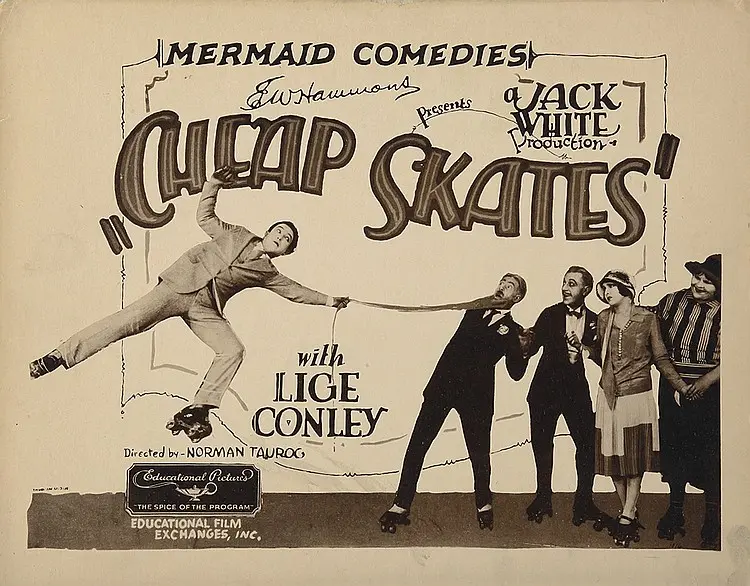
Is Cheap Skates worth watching today? Short answer: yes, absolutely, especially if you have a penchant for the foundational slapstick that defined early cinema. This short film is an essential watch for enthusiasts of silent comedy, film historians, and anyone seeking a pure, unadulterated dose of physical humor. However, it is decidedly not for those who demand intricate plots, sophisticated dialogue, or modern comedic sensibilities.
This film works because of its relentless comedic energy and Lige Conley's masterful physical performance.
This film fails because its narrative structure is deliberately thin, serving merely as a framework for gags, which might frustrate viewers accustomed to more robust storytelling.
You should watch it if you appreciate the raw, unadulterated spectacle of silent-era slapstick and the pioneers who perfected it.
Yes, Cheap Skates absolutely warrants a viewing, particularly for those curious about the roots of physical comedy. It offers a fascinating glimpse into the unrefined, yet utterly effective, humor of the silent era.
The film’s brevity, clocking in at just over ten minutes, makes it an easily digestible piece of cinematic history. It’s perfect for a quick escape into a world of pure, unpretentious fun.
For students of film, it exemplifies the early techniques of gag construction and crowd manipulation. For casual viewers, it’s simply a good laugh, proving that genuine humor transcends time and technological advancements.
It's a testament to the timeless appeal of a well-executed fall. You don't need dialogue to understand the universal language of a pratfall.
Lige Conley, though perhaps not as widely celebrated as some of his contemporaries like Chaplin or Keaton, delivers a performance in Cheap Skates that is nothing short of a revelation. His portrayal of an accidental champion, a man utterly out of his depth yet propelled by circumstance, is a masterclass in physical comedy.
Conley's genius lies in his ability to make his character's ineptitude not just believable, but hilariously endearing. Every stumble, every flailing arm, every desperate attempt to maintain balance is meticulously choreographed to appear utterly spontaneous.
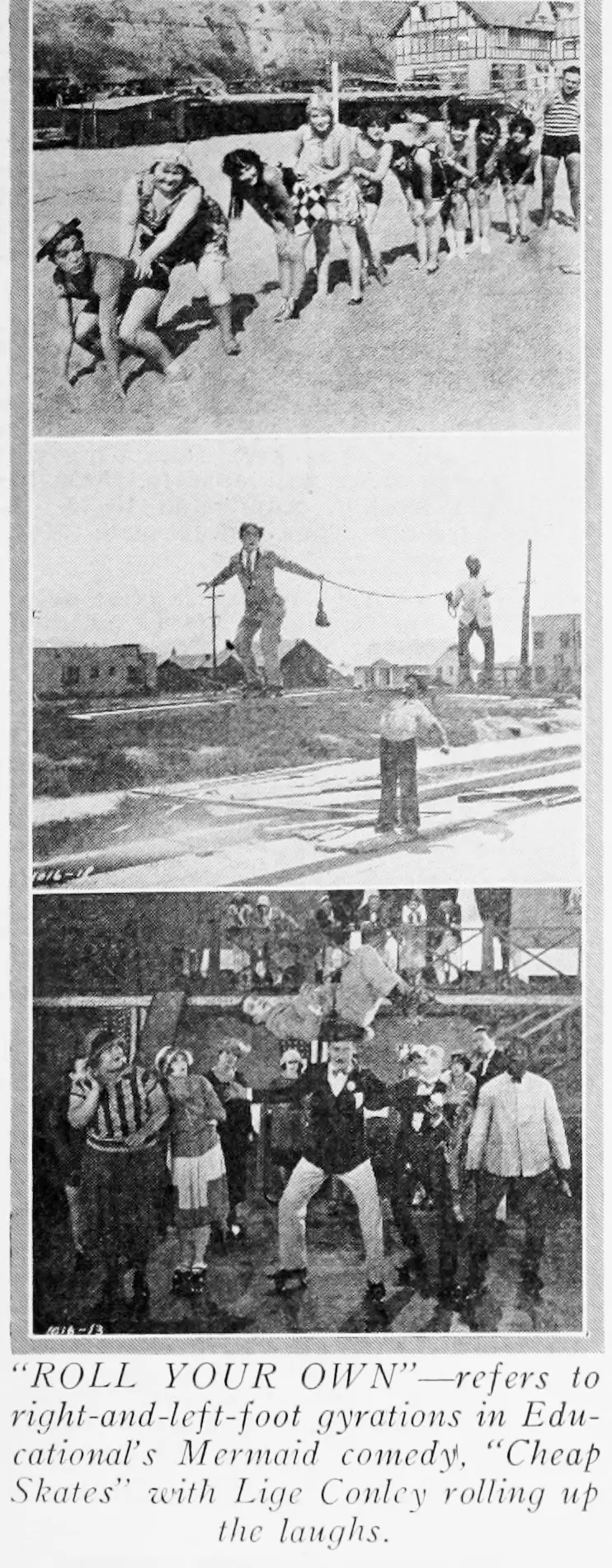
Consider the scene where he first takes to the rink, his legs splayed, arms windmilling wildly. It’s not just a fall; it’s a symphony of controlled chaos. The audience within the film, mistaking his awkwardness for avant-garde showmanship, roars with approval. This meta-commentary on perception is surprisingly sharp for a film of its vintage.
His facial expressions, too, are pivotal. The wide-eyed panic, the grimacing effort, the fleeting moments of bewildered triumph – they all communicate volumes without a single intertitle. It’s a testament to the power of pure visual storytelling.
Lige Conley's performance here, while overshadowed by contemporaries, demonstrates a comedic timing that rivals Chaplin's early work in its raw, unpolished energy. It’s a bold claim, perhaps, but one rooted in the sheer, unadulterated joy his antics evoke. He doesn't just fall; he makes an event of it.
The supporting cast, including Spencer Bell and Jack Lloyd, play their roles effectively as the bewildered companions and the increasingly agitated crowd. Their reactions amplify Conley's central performance, creating a believable environment for the escalating farce.
Norman Taurog, credited as a writer, clearly understood the mechanics of silent-era comedy. The direction in Cheap Skates is brisk, efficient, and perfectly attuned to the demands of slapstick. There's no wasted motion, no lingering shots that detract from the comedic momentum.
The film moves with an almost relentless energy, transitioning seamlessly from the beach frolic to the roller rink chaos. This rapid pacing is crucial for a short film, ensuring that the audience is constantly engaged and amused.
Taurog’s staging of the roller rink sequences is particularly noteworthy. The camera often captures the full breadth of the rink, allowing the audience to appreciate the scale of Lige’s accidental performance and the reactions of the sprawling crowd. This wide framing enhances the sense of spectacle.
The escalation of Lige’s predicament, from simply being mistaken for a champion to being compelled to perform increasingly dangerous stunts, is handled with a masterful comedic rhythm. Each new demand builds upon the last, tightening the comedic screw.
The climax, involving the chase after the false accusation of theft, is a whirlwind of kinetic energy. It’s a classic silent comedy trope – the innocent man pursued by an angry mob – executed with a sharp sense of urgency and humor. It harks back to the chaotic chases seen in films like My Hero!, but with its own distinct flavor.
This film, despite its age, feels surprisingly modern in its understanding of comedic timing. It works. But it’s flawed in its simplicity, perhaps, for those who crave more.
The cinematography of Cheap Skates, while adhering to the technical limitations of its era, is remarkably effective in conveying the story and enhancing the comedy. The camera is not just a passive observer; it actively participates in the visual gags.
The use of medium and wide shots allows the physical comedy to play out fully. We see Lige’s entire body contort and collapse, allowing the audience to appreciate the full extent of his comedic agony and the reactions of those around him.
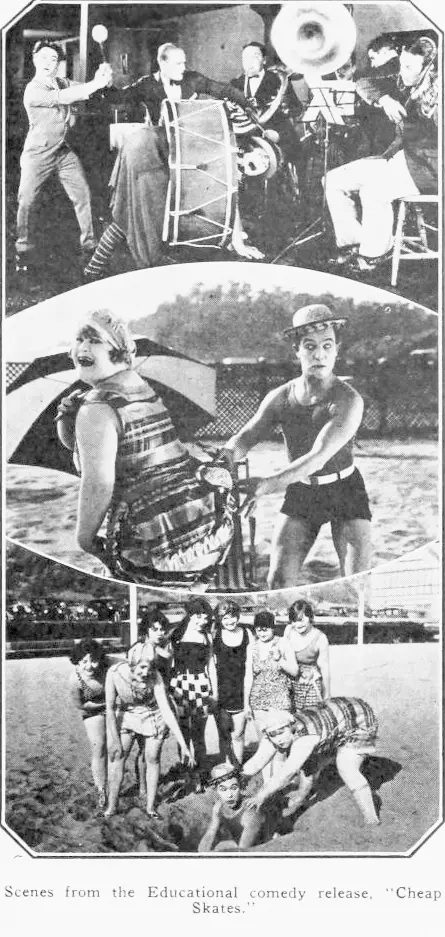
There are clever instances of framing that emphasize the scale of the crowd’s misunderstanding. When Lige performs what they perceive as a death-defying feat, the camera often cuts to a shot of the awestruck faces in the audience, their expressions of delight and astonishment selling the gag.
The film relies entirely on visual cues to tell its story. There are no intertitles to explain Lige’s confusion or the crowd’s misconception; it’s all communicated through performance and camera work. This makes it a pure example of silent cinema’s unique narrative power.
The visual clarity of the skating sequences is particularly impressive. Despite the chaotic nature of Lige’s movements, every fall and recovery is captured with precision, making the physical comedy easy to follow and appreciate. It’s a testament to the skill of the camera operators of the time.
The tone of Cheap Skates is one of pure, unadulterated farce. It’s a comedy of errors from start to finish, built on a foundation of mistaken identity and escalating misunderstandings. There’s a delightful innocence to its humor, a lack of cynicism that is refreshing in today’s landscape.
The film revels in the absurdity of its premise. It asks the audience to suspend disbelief and simply enjoy the ride, a characteristic shared with other early comedies like Day Dreams.
One unconventional observation is how the film, perhaps inadvertently, comments on herd mentality. The crowd's willingness to believe in Lige's 'championship' status, despite overwhelming evidence of his clumsiness, speaks volumes about the human desire for spectacle and the power of collective delusion. They don't see what's actually happening; they see what they're told to see.
The shift in tone from celebratory applause to angry pursuit after the theft accusation is abrupt but effective, highlighting the fickle nature of public opinion. It’s a sharp, albeit brief, commentary embedded within the slapstick.
Silent slapstick, particularly of this era, is inherently superior to much of modern physical comedy due to its reliance on universal visual gags rather than cultural references. Cheap Skates epitomizes this, offering humor that requires no translation or cultural context.
The resolution, with the girl clarifying the situation, brings a satisfying, if somewhat abrupt, conclusion to the chaos. It ensures the film ends on a note of lighthearted reconciliation, rather than lingering injustice.
Cheap Skates is more than just a relic; it’s a vibrant, laugh-out-loud testament to the enduring power of physical comedy. Lige Conley’s performance alone is worth the price of admission (or, more accurately, the click of a button). He embodies the spirit of early slapstick with an energy and precision that many modern comedians would struggle to replicate.
While its plot is as thin as an ice rink, the film never pretends to be anything more than a vehicle for pure, unadulterated fun. It succeeds wildly in its modest ambitions, proving that sometimes, all you need is a clumsy hero, a pair of skates, and a misunderstanding to create cinematic magic.
It's a foundational piece, a precursor to the more elaborate silent comedies, and offers a crucial insight into the development of the genre. Don't go in expecting the philosophical depth of a Forever or the intricate melodrama of The Ancient Highway. Expect instead a riotous, unpretentious romp that will leave you smiling.
For anyone with an appreciation for the pioneers of cinematic humor, Cheap Skates is an absolute must-see. It's a short, sharp dose of joy that reminds us why silent comedy continues to captivate nearly a century later. It’s not just worth watching; it’s an education in laughter.
IMDb —
1931
Community
Log in to comment.