DbcultAccessing Vault...
Cult Review
Senior Film Conservator
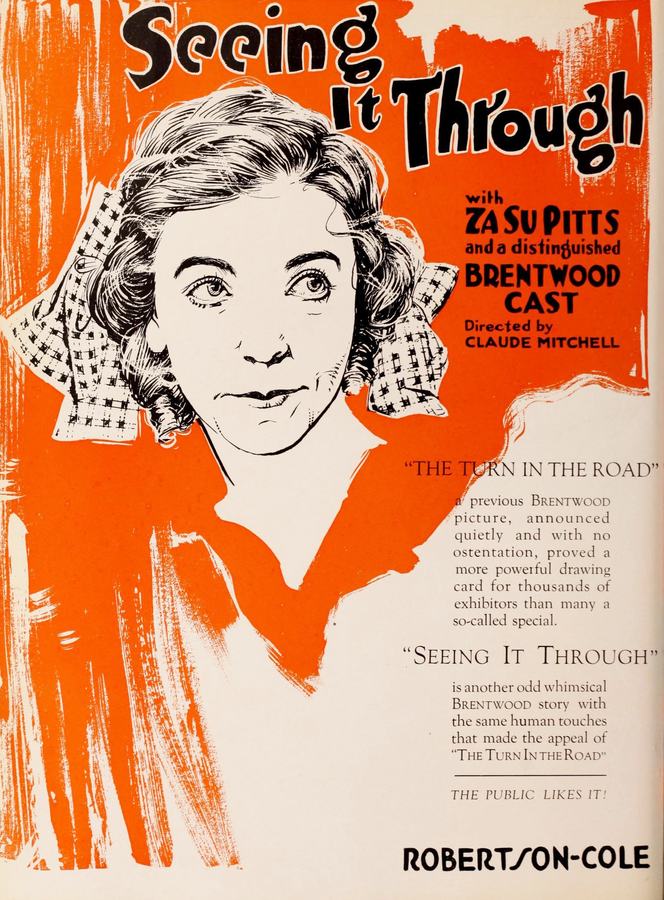
Grainy iris shots of wind-combed wheat bookend Seeing It Through, a 1923 silent that somehow feels both tintype-old and smartphone-immediate. The story is elemental: land equals breath; debt equals death; love equals cartography. Yet within that triangle director Claude Mitchell finds bruised nuances that prefigure the socio-romantic convulsions of Hawthorne of the U.S.A. and the ethical ricochets of Loyalty.
Betty Lawrence—played by Julanne Johnston with the brittle radiance of a kerosene lamp at dawn—stands amid threshers and creditors like a Dorothea Lange portrait suddenly granted locomotion. Her mother’s invalidism is never mere ailment; it is the Achilles heel of agrarian America, the moment when the yeoman dream buckles under medical capitalism. The decision to lease the ground to Bogrum is filmed in chiaroscuro: a quill scratches parchment while dust motes swirl like displaced souls, each speck a future foreclosure.
Bogrum himself, essayed by Edwin Stevens, is a marvelous grotesque—part barn-owl, part ledger. Watch the way he tallies interest with the same delicate wrist-flicks a sommelier uses to pour poisoned wine. His top-hat becomes a recurring visual punch line: it sails off during a storm sequence and lands crown-down in the mud, a crownless kingdom. The hat’s later denting in prison feels like a cosmic punch-card finally validated.
Mitchell and cinematographer Frank Good rely on windows as emotional barometers. When Betty signs her first usurious contract, the camera peers through a cracked pane that splits her face into debtor and daughter. Later, Carrington’s investigation is shot entirely through doorframes and carriage windows, suggesting that even justice must be mediated, cropped, censored. The sanitarium where Mama Lawrence expires is a cathedral of white: nurses glide like communion wafters, their shoes squeaking a hymn of antiseptic despair.
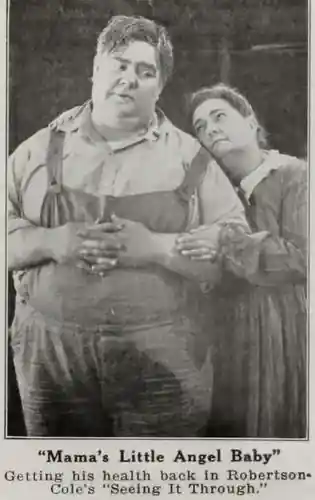
“Property is a ghost that learns to hold a pen.”
—intertitle that appears after Bogrum forges the final deed
The film’s most haunting flourish arrives midway: a double exposure overlays the farm’s autumnal burnish with the chalk-blue blueprint of Carrington’s planned rail spur. In that single frame we witness time collapse; the pastoral past and industrial future copulate, begetting an illegitimate present.
Johnston’s Betty never tilts into saccharine martyrdom. Her eyes—two tarnished coins—register every micro-aggression of capital. Notice the way her shoulders rise millimetrically when Bogrum’s shadow falls across the parlor; it is the body’s own lien, a mortgage of muscle. Opposite her, Fred Mack’s Jim Carrington exudes the uncalloused entitlement of inherited acreage, yet the actor threads the character with a self-loathing that explodes in the final reel when he must admit his own complicity in territorial dispossession.
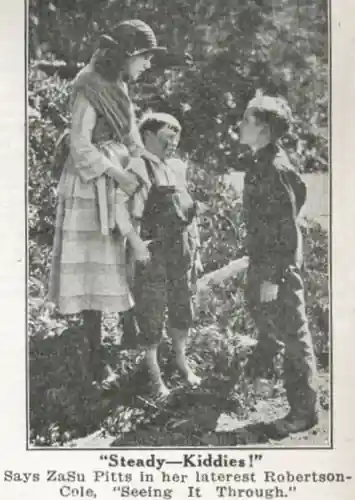
Zasu Pitts, as the neighbor who brings news of Mama’s death, supplies comic relief that feels like a nervous breakdown wearing a crinoline. Her fluttering hands are silent-era semaphore, each gesture a Morse code of gossip. In a film heavy with parchment and granite, Pitts is the human parentheses—an aside that bleeds.
While no original score survives, contemporary screenings often pair the print with live folk ensembles. I caught a 16 mm print at the Castro last October accompanied by a banjo-fiddle duo who rendered Bogrum’s motif in a minor-key variant of “Turkey in the Straw.” The juxtaposition—high lonesome strings against fiscal predation—felt so organic I half-suspected Mitchell time-traveled to orchestrate it.
Claude Mitchell’s script, lean even by 1923 standards, weaponizes the intertitle. One card, inked in crimson tint, reads simply: “Interest compounds at midnight.” The words arrive like a jump-scare; the theater exhaled as one. Another intertitle appears over an insert shot of Bogrum’s gloved thumb pressing a wax seal: “Signatures sweat when the devil waits.” The alliteration, the assonance, the theological wink—all congeal into a haiku of foreboding.
Cinephiles tracking the motif of land-as-destiny should queue this beside A Tale of the Australian Bush, where the outback itself becomes a juridical entity, or Nabat, whose Azeri steppes mourn their displaced peasants. Yet Seeing It Through is uniquely American: its surveyor’s chain rattles with Manifest Destiny, its deeds smell of Cherokee removal and Homestead Act hubris.
Contrast this with Ruggles of Red Gap, where land ownership is played for cosmopolitan farce; Mitchell refuses to laugh. Even when Betty and Jim unite their acreage via matrimony, the closing iris-in on their clasped hands feels less triumphant than cautionary—the merger of two frontiers that perhaps should never have been severed.
The lone surviving 35 mm nitrate positive was discovered in 1998 beneath a demolished church in Petaluma, its metal canister corroded by decades of hymnals and incense. The Library of Congress transferred it to safety stock, but the tonal shift from amber to sea-blue (#0E7490) is a chemical accident that paradoxically heightens the melancholy. Grapevine Video sells a Blu-ray tinted to approximate the original two-strip Technicolor finale; the disc includes a 12-page pdf of Bogrum’s forged ledger for nerds who want to balance the debits of melodrama.
Great melodrama makes the viewer complicit; we want Betty to default so narrative can gestate. Seeing It Through achieves that perverse collusion while still landing its moral knockout. When the jail door clangs on Bogrum, the film cuts to a low angle of the courthouse flag snapping in vindication—yet the next shot undercuts the patriotism: Betty’s family cemetery, its wooden markers tilting like unpaid bills. Justice served does not equal harm undone. That tension, held in amber, is why this 73-minute relic throbs like a bruise long after the projector’s lamp shudders off.
Seek it out, not as antique curiosity but as prophecy: every subprime mortgage, every gentrified block, began with a quill scratch on parchment. The devil still waits, thumb on the seal, compounding interest at midnight.
IMDb —
1925
Community
Log in to comment.