DbcultAccessing Vault...
Cult Review
Senior Film Conservator
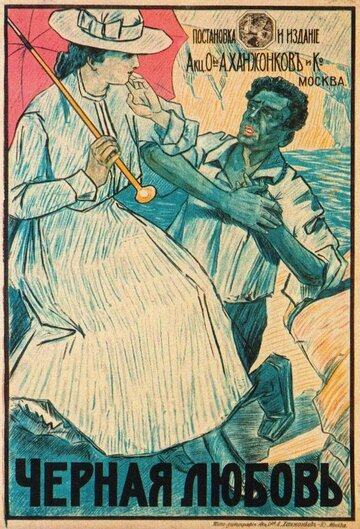
There are films that merely tell a story, and then there are those that rip through the fabric of your understanding, leaving an indelible mark on your cinematic soul. Chernaya Lyubov, or 'Black Love,' is unequivocally one of the latter. Emerging from an era where the nascent language of cinema was still being fiercely forged, this film stands as a monumental testament to raw human emotion, rendered with an almost unbearable intensity. It's a work that doesn't just invite you to witness a narrative; it demands your full immersion, pulling you into its suffocating embrace of forbidden desire and tragic consequence. From its opening frames, you sense a palpable tension, a foreboding atmosphere that clings to every character like the oppressive Russian winter.
The directorial vision, often attributed to the collaborative genius of its lead actors and writers, particularly Vladimir Strizhevsky, feels remarkably coherent and singular. While Lev Kuleshov is primarily known for his groundbreaking theoretical work and experiments in montage, his performance here, alongside Zoya Barantsevich and Strizhevsky himself, suggests a profound understanding of dramatic staging and character psychology that transcends mere academic exercise. The film’s aesthetic, steeped in the stark realism of its setting, yet imbued with a deeply expressionistic undercurrent, creates a world where external bleakness mirrors internal turmoil. The cinematography, though perhaps rudimentary by today's standards, masterfully employs shadow and light, close-ups and wide shots, to articulate the characters' escalating desperation. It's an early example of how visual storytelling, even without spoken dialogue, can convey the most complex and devastating of human experiences.
At its core, Chernaya Lyubov is a searing indictment of societal hypocrisy and the destructive power of suppressed desire. Zoya Barantsevich's portrayal of Anna is nothing short of mesmerizing. Her face, a canvas of shifting emotions, communicates volumes without uttering a single sound. We witness her transformation from a dutiful, albeit restless, fiancée into a woman consumed by a passion she neither sought nor could resist. Her eyes, at first alight with a quiet longing, slowly darken with the heavy burden of her illicit affair, reflecting the very 'blackness' of the love that ensnares her. It's a performance of exquisite control and raw vulnerability, reminding one of the poignant expressiveness seen in films like The Ordeal of Elizabeth, where female protagonists grapple with overwhelming societal pressures and personal tragedy.
Lev Kuleshov, as Ivan, is the brooding catalyst, the enigmatic force that disrupts Anna's preordained existence. His performance is less about overt histrionics and more about an internalized intensity, a smoldering gaze that promises both ecstasy and ruin. He embodies the dangerous allure of the 'outsider,' the individual who dares to defy convention, and in doing so, unleashes chaos. The chemistry between Barantsevich and Kuleshov is electric, a silent symphony of longing and fear that electrifies every frame they share. Their stolen moments, fraught with peril and pulsating with an undeniable magnetism, are among the film's most powerful sequences. It's a testament to their skill that even in the absence of dialogue, the audience feels the profound, almost spiritual connection that binds these two doomed souls. This level of unspoken communication is a hallmark of the era, perfected by masters and evident in films like The Lily and the Rose, which also explored intense, often tragic, romantic entanglements through purely visual means.
Vladimir Strizhevsky, not only contributing to the film's narrative architecture but also delivering a nuanced performance as Sergei, Anna's fiancé, adds another layer of complexity. Sergei is not a villain in the traditional sense, but rather a man blinded by expectation and tradition, unable to see the burgeoning despair in Anna's eyes. His growing suspicion, subtly conveyed through a tightening jawline or a lingering, questioning glance, builds a slow, agonizing dread. His eventual realization of Anna's infidelity is depicted with a raw, heartbreaking dignity that prevents him from becoming a mere caricature. It’s a masterful stroke of character development, adding depth to what could have been a simplistic love triangle, instead elevating it to a profound exploration of betrayal and shattered trust. The way Strizhevsky conveys Sergei's inner turmoil, often through subtle gestures and powerful stillness, reminds me of some of the great character studies in films like The Silence of Dean Maitland, where moral quandaries are etched onto the very countenances of the performers.
The narrative, masterfully crafted by Strizhevsky, eschews simplistic moralizing in favor of a devastatingly realistic portrayal of consequences. There are no easy answers, no clear heroes or villains, only individuals caught in the inexorable current of their desires and the rigid dictates of their society. The pacing is deliberate, allowing the emotional weight of each scene to fully resonate, building an almost unbearable tension as the clandestine affair hurtles towards its inevitable, catastrophic climax. The village itself, a silent, judgmental entity, plays a crucial role, its whispers and watchful eyes forming an invisible prison around the lovers. This sense of an oppressive, omnipresent community judgment is a theme often explored in early cinema, such as in The Ragamuffin, where social ostracization forms a central conflict.
The film's use of symbolism is particularly striking. The recurring motif of the harsh, desolate landscape mirrors the barren emotional terrain of Anna's life before Ivan, and the treacherous path their love takes. The 'black' in 'Black Love' isn't just a descriptor of illicit passion, but also of the profound despair and moral darkness that consumes its protagonists. It speaks to the societal shadows, the hidden desires that fester beneath the veneer of respectability, and the ultimate tragedy that awaits those who dare to transgress. This symbolic depth elevates the film beyond a mere melodrama, transforming it into a profound meditation on fate, free will, and the human condition. It’s a stark contrast to the more straightforward action narratives of its time, such as The Apaches of Paris, which focused on external conflicts rather than internal ones.
The climax, when it arrives, is not a sudden explosion but a slow, agonizing unraveling, meticulously orchestrated to maximize its emotional impact. The final scenes are a masterclass in cinematic despair, leaving the audience with a profound sense of loss and the lingering question of whether such all-consuming passion, however destructive, was worth the shattering price. It’s a powerful conclusion that resonates with the tragic grandeur of literary classics, akin to the devastating outcomes depicted in A Tale of Two Cities, where individual fates are irrevocably intertwined with larger social forces and personal sacrifices.
Beyond its narrative and performances, Chernaya Lyubov is a significant historical document. It offers a glimpse into the early experimental phases of Soviet cinema, showcasing a bold willingness to explore complex psychological themes and push the boundaries of visual storytelling. While Kuleshov would go on to be celebrated for his theoretical contributions to montage, this film demonstrates his practical aptitude for eliciting powerful, nuanced performances and crafting a compelling narrative. It stands as a powerful counterpoint to the more overt propaganda films that would later dominate Soviet output, proving that deeply human stories, even tragic ones, could resonate profoundly. Its influence, though perhaps subtle due to its specific historical context, can be felt in the subsequent development of psychological drama in cinema. One can draw parallels to the psychological depth attempted in films like The Moral Code, which also grappled with internal struggles and ethical dilemmas.
For modern viewers, Chernaya Lyubov might demand a certain patience, an adjustment to the stylistic conventions of silent cinema. Yet, those willing to surrender to its unique rhythm will be richly rewarded. It’s a film that transcends its historical origins, speaking to timeless themes of love, betrayal, and the crushing weight of societal expectation. It is a work of enduring power, a stark and beautiful testament to the human heart’s capacity for both profound connection and devastating self-destruction. It reminds us that long before dialogue, cinema had already mastered the art of speaking directly to the soul. Its emotional resonance rivals that of any contemporary drama, proving that true artistry transcends technological limitations. This film, like a rare, perfectly preserved artifact, offers invaluable insights into the dawn of cinematic expression and the enduring power of human stories. It's a challenging watch, but one that leaves an indelible imprint, prompting introspection on the nature of love, choice, and consequence. Truly, a cinematic experience that stays with you, long after the final frame fades to black.
IMDb —
1919
Community
Log in to comment.