DbcultAccessing Vault...
Cult Review
Senior Film Conservator
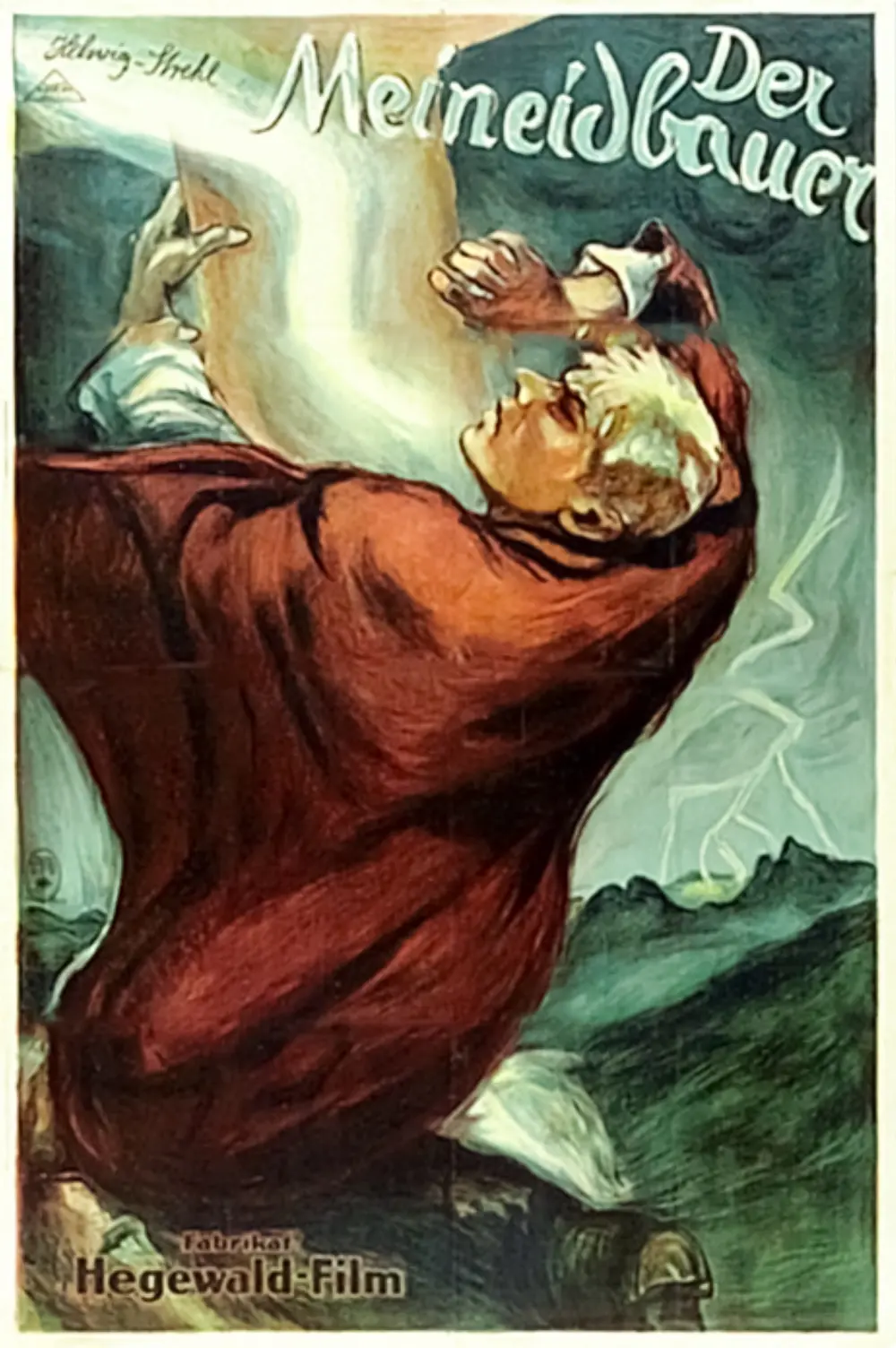
Is Der Meineidbauer a lost masterpiece or a dusty relic of a bygone era? Short answer: It is a vital, if grueling, psychological study that demands patience but rewards the viewer with a hauntingly visceral experience.
This film is for the cinephile who finds beauty in the breakdown of the human spirit and the student of German expressionism who wants to see its influence bleed into rural settings. It is absolutely not for those seeking a lighthearted 'Heimatfilm' or a fast-paced action romp like Blue Blazes.
1) This film works because it treats a single act of perjury as a cosmic horror, making the weight of a lie feel physically heavy on the screen.
2) This film fails because its secondary romantic subplots occasionally feel like they belong in a different, lesser movie, distracting from the central moral decay.
3) You should watch it if you want to see how silent cinema used shadows and landscape to articulate the internal agony of a guilty conscience.
The story of Matthias Ferner, the 'Perjury Farmer,' is one of the most enduring pieces of German-language folk literature, and Siegfried Philippi’s 1926 adaptation captures the source material's inherent cruelty. Unlike the more whimsical The Secret Kingdom, this is a story rooted in the dirt and the law. When Ferner burns the will, the camera doesn't just show the act; it lingers on the smoke as if it’s infecting the very air of the farmhouse.
Alfred Gerasch delivers a performance that is surprisingly restrained for the era. While many silent actors leaned into pantomime, Gerasch uses his eyes to convey a man who is constantly looking over his shoulder for a God he no longer believes in but still fears. It’s a performance that rivals the psychological depth found in The Applicant, though with a much more sinister edge.
The visual language of Der Meineidbauer is where the film truly shines. The mountains are not presented as majestic escapes but as jagged, indifferent observers of human folly. The cinematography uses high-contrast lighting to separate the 'clean' world of the disinherited from the dark, shadow-drenched interior of Ferner’s stolen home.
Consider the scene where Ferner stands before the village court. The composition is tight, almost claustrophobic, forcing the viewer to feel the same pressure as the protagonist. It’s a stark contrast to the open-air freedom seen in Just Cowboys. Here, every frame is a cage. The use of the crucifix as a recurring visual motif serves as a constant reminder of the oath Ferner broke, turning a symbol of hope into a symbol of impending judgment.
The pacing, however, is where the modern viewer might struggle. There are long stretches where the film leans heavily on intertitles and static shots of characters staring into the middle distance. It lacks the kinetic energy of The Tornado, but that slowness is intentional. It forces you to sit with the guilt. It makes you a co-conspirator in the silence.
If you are looking for a historical perspective on how cinema transitioned from stage-bound drama to visual storytelling, then yes, this is essential viewing. It bridges the gap between the theatrical roots of Ludwig Anzengruber’s play and the burgeoning cinematic language of the Weimar Republic. It deals with themes of class, inheritance, and religious hypocrisy that remain uncomfortably relevant today.
However, if your interest in silent film is limited to slapstick or big-budget spectacles, you might find this a chore. It is a film that requires you to lean in. It doesn't offer easy catharsis. It is a cold, hard look at a cold, hard man. It works. But it’s flawed.
Pros:
Cons:
Siegfried Philippi’s direction is surprisingly modern in its focus on character over plot. He understands that the real action isn't the burning of the will, but the way Ferner’s face changes in the years following. The ensemble cast, including Eduard von Winterstein and Margarete Thumann, provides a solid foundation, but they often feel like they are orbiting Gerasch’s gravitational pull.
There is a specific scene involving a tavern confrontation where the tension is built purely through eyelines and editing. It’s a masterclass in silent tension, far more effective than the broad strokes of Tire Trouble. The film understands that the most terrifying thing isn't a monster, but a man who has convinced himself his crime was necessary.
The soil remembers. That is the unspoken thesis of the film. Every time Ferner walks across his fields, the camera angles suggest that the earth itself is ready to swallow him whole. This environmental storytelling is something modern filmmakers could still learn from.
Der Meineidbauer is a somber, striking piece of work that refuses to look away from the ugliness of human greed. It lacks the polish of later sound versions of the same story, but it possesses a raw, flickering energy that is unique to the 1920s. It is a film about the high cost of a free farm. It is a film about the fact that you can’t bury the truth deep enough to keep it from growing.
While it shares some of the melodramatic DNA of Eve's Lover or A Petal on the Current, it stands apart due to its grim atmosphere and Gerasch's powerhouse performance. It’s not an easy watch, but it is an important one. The perjury farmer might have won the land, but the film ensures he loses the audience's soul in the most fascinating way possible.
"A haunting reminder that in the silent era, a single look could convey a lifetime of damnation."
In the end, Der Meineidbauer is a testament to the power of the 'Volksstück' when translated to the silver screen. It avoids the artifice of The Soul of Buddha or the lightheartedness of Just Suppose. It is, quite simply, a story of a man who sold his soul for a few acres of dirt and found that the dirt was far too heavy to carry. It’s a heavy, essential piece of cinema history that deserves a spot in the conversation of early psychological dramas like The Pretenders.

IMDb —
1923
Community
Log in to comment.