DbcultAccessing Vault...
Cult Review
Senior Film Conservator
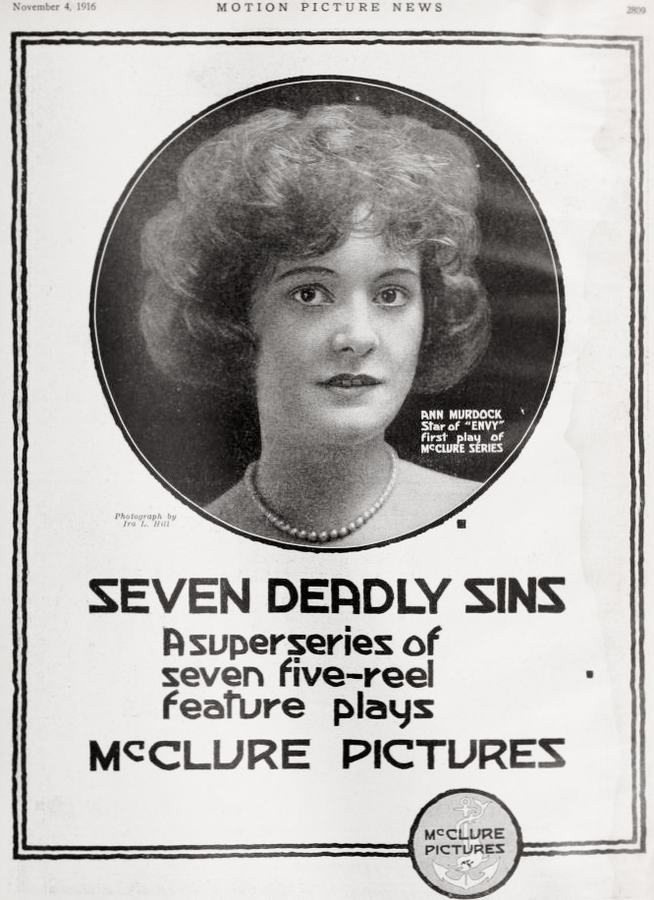
In the annals of early cinema, where narratives often served as moral parables cloaked in dramatic flourish, Florence Morse Kingsley's "Envy" emerges as a remarkably prescient meditation on the deceptive nature of appearances and the often-misguided pursuit of happiness. Released in 1917, a tumultuous year marking the height of World War I, this silent drama transcends its era, offering a timeless critique of societal aspirations and the profound ironies that underscore human desire. It's a film that, even a century later, resonates with a piercing truth about what we covet versus what truly nourishes the soul. The title itself is a stark declaration, promising a deep dive into one of humanity's most corrosive emotions, and the film delivers on this promise with a nuanced narrative that challenges simplistic notions of wealth and contentment.
At the heart of "Envy" lies a compelling juxtaposition embodied by its two central female characters. On one side stands Eve Leslie, portrayed with a captivating blend of innocence and yearning by Shirley Mason. Eve is the quintessential country girl, her days spent amidst the bucolic simplicity of rural life. Yet, her spirit yearns for something far removed from her humble existence. She craves the glittering accoutrements of urbanity: sumptuous garments, sleek automobiles, and the company of the elite. Her gaze is fixed not on her immediate surroundings, but on the distant, shimmering world of fame and fortune, personified by the illustrious actress, Betty Howard. This initial premise sets up a classic narrative of aspiration, reminiscent of other early films that explored class mobility and the allure of the metropolitan dream. One might draw parallels to the aspirational themes found in Ready Money, where the pursuit of wealth, real or imagined, drives the entire plot, though "Envy" delves deeper into the psychological cost.
Conversely, we have Betty Howard, brought to life by the nuanced performance of Anna Murdock. Betty is, to Eve's eyes, the epitome of success and glamour. A celebrated actress, she seemingly possesses everything Eve desires. Yet, the film masterfully peels back this veneer of perfection to reveal a life steeped in profound sorrow and disillusionment. Betty's personal history is a tapestry woven with threads of longing and betrayal. For years, she has been consumed by the search for a particular man, Rocco Erwin, a quest that ultimately led her to a devastating revelation: he is not the man she idealized but a desperate criminal, one who, in a cruel twist of fate, attempts to blackmail her, misinterpreting her genuine kindness as weakness or complicity. Beyond this emotional torment, Betty's demanding career has taken a severe toll on her physical health, necessitating a doctor's order to abandon the stage for a prolonged period of rest. The irony is poignant and heartbreaking: Betty, the object of Eve's intense envy, longs for nothing more than the tranquil, unburdened existence that Eve so blithely undervalues. Her desire for peace and anonymity echoes the weariness of characters in films like The Heart of a Painted Woman, where public perception often masks private anguish.
The narrative gains further complexity with the introduction of key male figures who act as catalysts for the unfolding drama. Adam Moore, portrayed by Lumsden Hare, is the scion of a wealthy family and, significantly, a 'pal' of Betty Howard. It is through Adam's casual anecdotes that Eve's idealized vision of Betty's life is reinforced, inadvertently deepening her sense of discontent. Adam represents a connection to the world Eve aspires to, yet he is also a grounding force, a character who ultimately embodies genuine affection and stability, contrasting sharply with the film's more nefarious male figures. George LeGuere's performance as Adam likely conveys a quiet strength and unwavering loyalty, qualities that become crucial as the plot thickens.
Then there is Stanton Skinner, an unscrupulous man with a singular ambition: to marry Betty Howard. Played by William Wadsworth, Skinner embodies a darker facet of the wealthy elite, driven by possessiveness rather than genuine affection. His presence introduces an element of danger and manipulation into Betty's already fragile life. It is during a motor outing with Skinner that Betty, weakened by illness and emotional strain, collapses. This pivotal moment leads her directly to Eve's country home, a seemingly innocuous event that forges an unexpected, yet profound, friendship between the two women. This forced proximity allows them to glimpse beyond their initial perceptions, offering Betty a taste of the simple life she craves and Eve a more human, less glamorous understanding of her idol.
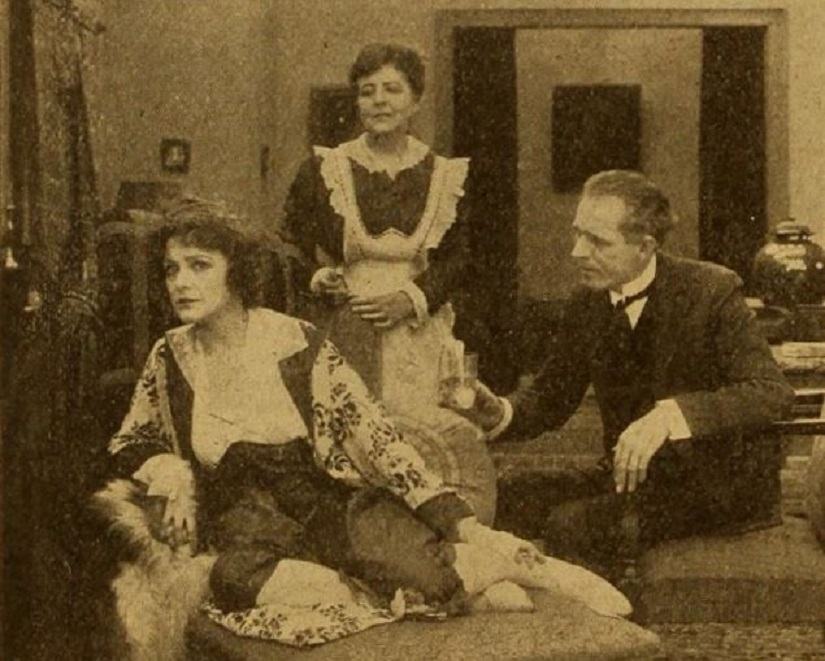
The re-emergence of Rocco Erwin, portrayed by Robert Cain, injects a potent dose of melodrama and criminal intrigue. Rocco, the man Betty has fruitlessly sought, attempts to rob Skinner. His capture and subsequent release, secured only by Betty's heartfelt pleas, highlight her enduring, if misguided, compassion. In a moment charged with dramatic irony, Betty confides Rocco's true identity and their shared history to Skinner, a secret Rocco himself remains oblivious to. This tangled web of relationships—unrequited love, familial connection, and criminal desperation—lays the groundwork for the film's climactic confrontations. Rocco's character, a man driven by desperation and seemingly devoid of moral compass, is a stark contrast to the film's other figures, creating a palpable sense of tension. His actions, from attempted blackmail to violent assault, propel the narrative forward with relentless urgency, echoing the high-stakes drama found in films like Sentenced for Life, where characters grapple with dire consequences and moral failings.
In the silent era, the burden of conveying complex emotions and intricate character arcs fell squarely on the shoulders of the actors' physical expressions and nuanced gestures. Anna Murdock, as Betty Howard, must navigate a wide emotional spectrum, portraying both the public glamour of a star and the private anguish of a woman haunted by a tragic past and failing health. Her performance would have required a delicate balance between outward composure and inner turmoil, making her character deeply sympathetic despite her perceived advantages. One can imagine her subtle trembles, her mournful glances, and the weariness etched into her posture, all communicating a life far from idyllic. Murdock's ability to convey Betty's resilience and her ultimate act of selflessness would be crucial to the film's emotional impact.
Shirley Mason, as Eve Leslie, faces the challenge of depicting a character whose journey is one of profound transformation. Initially defined by her naive longing and discontent, Eve must evolve into a woman who recognizes the true value of her own life and the illusion of external glamour. Mason's performance would likely emphasize Eve's youthful exuberance and her initial wide-eyed fascination, gradually transitioning to a more mature understanding born from direct experience. The contrast between her initial starry-eyed wonder and her later terror and eventual contentment would be key to her portrayal. The supporting cast, including William Wadsworth as the conniving Stanton Skinner and Robert Cain as the desperate Rocco Erwin, would have been instrumental in creating the film's dramatic tension. Wadsworth's Skinner would need to exude a predatory charm, while Cain's Rocco would demand a raw, desperate energy, driving the film's darker plot points. The ensemble's collective ability to communicate without dialogue, relying on the universal language of human emotion, is what elevates these early cinematic endeavors.
The narrative of "Envy" hurtles towards a series of explosive confrontations, meticulously orchestrated by Florence Morse Kingsley, that bring all the simmering tensions to a dramatic head. After Rocco's initial attempt to extort money from Betty, he escalates his violence, throttling her and leaving her for dead. This shocking act underscores the depth of his desperation and the perilous world Betty inhabits beneath her celebrity façade. Simultaneously, Stanton Skinner, whose affections have shifted from Betty to Eve, invites the unsuspecting country girl aboard his yacht. This luxurious setting, initially a symbol of Eve's aspirations, quickly transforms into a confined arena of danger.
Rocco, relentless in his pursuit, tracks Skinner to the yacht, seeking assistance in his escape. When Skinner, true to his unscrupulous nature, refuses, a violent struggle ensues. It is amidst this chaotic melee that the film delivers its most potent revelation: Rocco discovers, to his profound shock, that Betty Howard is his sister. This twist, a classic melodramatic device, recontextualizes much of the preceding narrative, adding layers of tragic irony to Betty's years of searching and Rocco's criminal acts. Overwhelmed by this truth and perhaps a sudden, twisted sense of betrayal or misplaced rage, Rocco turns his fury on Skinner, attempting to slay him, all while Eve crouches nearby, paralyzed by frantic terror. The scene on the yacht, with its confined space and escalating violence, would have been a masterclass in silent film suspense, likely employing rapid cuts and close-ups to heighten the audience's anxiety. The peril Eve faces, and the dramatic rescue that follows, draws thematic comparisons to the gripping serials of the era, such as Zudora, where heroines are constantly imperiled and saved in thrilling fashion.
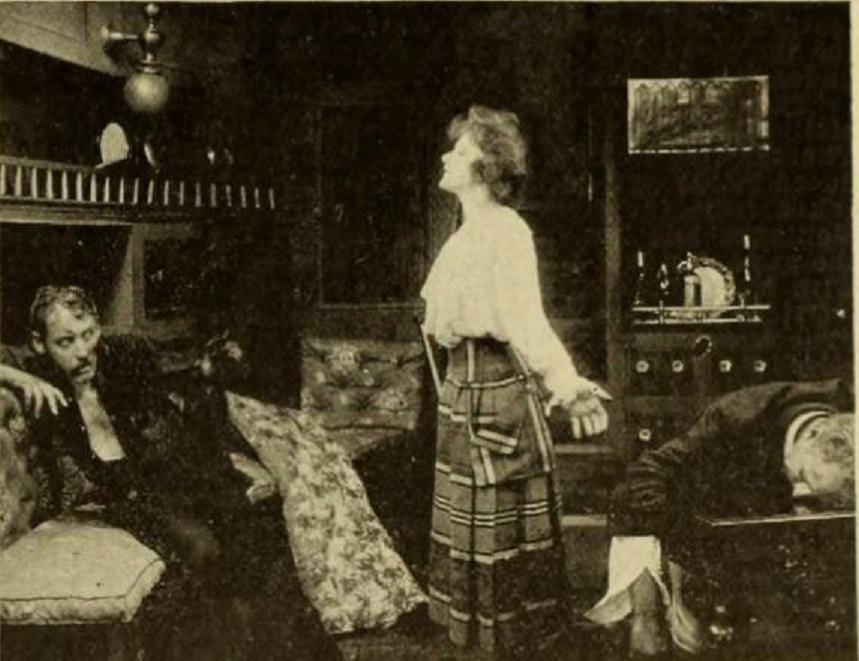
Miraculously, Betty recovers from Rocco's assault and, upon learning of Eve's precarious situation, immediately sets off with Adam Moore to the yacht. The ensuing rescue is depicted as a series of "exciting scenes," suggesting a dynamic and action-packed climax. Adam and Betty, united by their concern for Eve, successfully extricate her from the immediate danger. The film concludes with Eve resting securely in Adam's arms, a symbolic tableau of newfound peace and protection. Crucially, the narrative emphasizes that Eve is "envious no longer." Her journey from discontented longing to a profound appreciation for genuine connection and simple happiness is complete. The revelations and near-tragedy have stripped away her illusions, allowing her to see the true value of love and security over superficial glamour. This arc, from misplaced desire to enlightened contentment, is the film's ultimate triumph, offering a satisfying emotional resolution.
"Envy" is more than a mere melodrama; it's a poignant social commentary, subtly critiquing the superficial values that often define societal success. Florence Morse Kingsley's screenplay, while rooted in the dramatic conventions of its time, skillfully dissects the psychological toll of aspiration. The film argues that true happiness does not reside in the accumulation of wealth or fame, but in authentic relationships and an appreciation for one's current circumstances. Betty Howard's character serves as a tragic warning: the pinnacle of public adoration can mask a deeply unhappy private life, riddled with personal sorrow and physical ailments. Her longing for Eve's simple country life is perhaps the most powerful statement the film makes about the true nature of contentment.
The revelation of Rocco and Betty's sibling relationship is a classic device, yet it functions effectively to underscore the tragic miscommunications and hidden histories that can shape lives. This kind of familial secret, driving conflict and revelation, is a recurring motif in literature and early cinema, often used to unravel complex moral dilemmas, much like the hidden pasts explored in The Dead Secret. The film's resolution, with Eve finding security and contentment with Adam, represents an embrace of genuine, unvarnished affection over the false promises of material wealth. Her transformation from an envious girl to a woman who understands true value is the core emotional journey that elevates "Envy" beyond a simple cautionary tale.
The directorial choices, though uncredited in the provided details, would have been paramount in conveying these intricate themes without spoken dialogue. The use of visual storytelling—costumes to denote class, settings to reflect emotional states (the tranquil countryside versus the opulent yet dangerous yacht), and the nuanced expressions of the actors—would have been essential. The pacing, fluctuating between moments of quiet contemplation and sudden, violent outbursts, would have kept audiences engaged. "Envy" serves as a testament to the power of early cinema to deliver complex moral messages wrapped in thrilling entertainment, reminding us that the human condition, with its desires and disappointments, remains a universal subject for artistic exploration. The film, in its quiet intensity and dramatic flair, manages to critique the very illusions it initially presents as desirable, leaving the audience with a profound sense of the true cost of chasing shadows.
Ultimately, "Envy" stands as a compelling artifact from the golden age of silent film, not merely for its historical significance, but for its enduring thematic relevance. It is a narrative that speaks to the universal human tendency to compare one's lot with that of others, often to our own detriment. The film's strength lies in its ability to dismantle the myth of effortless glamour, revealing the profound sorrows that can lie beneath even the most glittering exteriors. Through the intertwined fates of Eve and Betty, Florence Morse Kingsley crafts a narrative that is both entertaining and deeply thought-provoking, a testament to the enduring power of storytelling to illuminate the complexities of the human heart. The performances by Anna Murdock and Shirley Mason, alongside the compelling supporting cast, undoubtedly brought these intricate characters to life with a vibrancy that resonated with audiences of the time and continues to intrigue those who delve into the rich history of cinema. This film, a century past its debut, still holds up a mirror to our own aspirations, prompting us to question what truly constitutes a life well-lived and reminding us that often, what we seek most desperately is already within our grasp, if only we choose to see it.

IMDb 6.2
1930
Community
Log in to comment.