DbcultAccessing Vault...
Cult Review
Senior Film Conservator
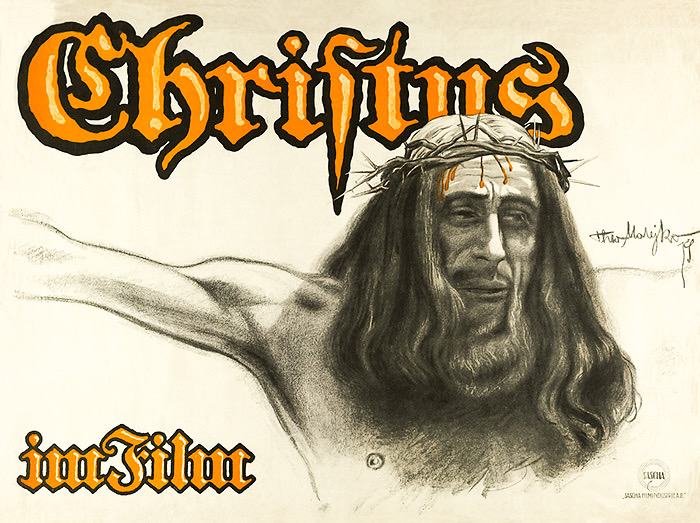
Stepping back into the cinematic past, one encounters works that, despite the passage of a century, retain a startling resonance. Among these, Paul Lerch and Georg Fuchs's 1919 opus, Christus, stands as a monumental testament to the ambition and spiritual yearning of early filmmaking. This isn't just a film; it's an experience, a grand, silent meditation on one of humanity's most enduring narratives. In an era where cinema was still finding its voice, Christus dared to tackle the life of Jesus of Nazareth with an earnestness and scale that few contemporaries could rival. Its very existence speaks volumes about the power of the moving image to transcend mere entertainment and delve into the profound.
The film opens not with grand pronouncements, but with a quiet dignity, transporting us to ancient Judea. The initial scenes, depicting the Nativity, possess a tender simplicity, a stark contrast to the epic sweep that will soon unfold. Ludwig Rex, in the titular role, embodies Jesus with a captivating blend of gravitas and compassion. His portrayal relies heavily on nuanced facial expressions and deliberate gestures, conveying profound emotion without a single spoken word. This reliance on visual storytelling is a hallmark of the silent era, and Rex masters it, projecting an inner light that is both compelling and deeply moving. One cannot help but be drawn into the narrative, observing the growth of his ministry, the gathering of disciples, and the initial stirrings of both devotion and dissent.
As the narrative progresses, the film unfolds like a living tableau, each scene meticulously composed to convey not just plot points, but spiritual weight. The Sermon on the Mount, for instance, is rendered with a panoramic sweep, Rex standing against a vast landscape, his silent exhortations seemingly echoing across the ages. The miracles, from the healing of the blind to the feeding of the five thousand, are handled with a blend of theatrical ingenuity and reverent restraint, allowing the audience to marvel without resorting to overt special effects, which were, of course, nascent at best. This approach often imbues the proceedings with a raw, almost documentary-like authenticity, despite the inherent theatricality of the subject matter. The film's ability to create such an immersive world, despite the technological limitations of 1919, is nothing short of remarkable.
The supporting cast, too, delivers performances that are both impactful and memorable. Dora Bergner, as Mary Magdalene, brings a poignant humanity to her role. Her expressions of remorse and subsequent unwavering devotion are conveyed with a powerful intensity that transcends the silent medium. One particular scene, depicting her anointing Jesus' feet, is imbued with a quiet power, her every gesture speaking volumes of repentance and love. August Benzinger, as Judas Iscariot, masterfully portrays the conflicted disciple, his descent into betrayal depicted with a chilling subtlety that avoids caricature. The internal struggle is palpable, a testament to Benzinger's skill in conveying complex psychology through purely visual means. His scenes are fraught with a tension that builds inexorably towards the inevitable, tragic climax.
The film's dramatic arc truly intensifies as the story moves towards Jerusalem. The mounting opposition from the Sanhedrin, led by figures like Caiaphas and Annas, is depicted with a growing sense of foreboding. Heinrich Peer as Pontius Pilate offers a nuanced portrayal of a man caught between political expediency and a burgeoning sense of justice. His internal conflict, particularly during the trial scenes, is conveyed through subtle shifts in posture and expression, making him a more complex figure than a mere antagonist. Theodor Burghardt and Ludwig Rex, among others, round out a cast that consistently elevates the material, each actor contributing to the rich tapestry of human emotion and spiritual struggle. The sheer scale of the crowd scenes, particularly during the entry into Jerusalem and the crucifixion, is breathtaking, demonstrating the logistical prowess of the filmmakers. These moments serve to emphasize the public nature of Jesus' life and death, underscoring the profound societal impact of his presence.
Comparatively, while other films of the era might have focused on grand spectacle or personal melodrama, Christus sought a deeper, more resonant impact. One might consider the contemporary The Little American (1917) for its patriotic fervor and wartime drama, or The Sea Wolf (1920) for its intense character study and moral ambiguities. Yet, Christus stands apart in its ambitious attempt to translate sacred texts into a compelling cinematic experience. It doesn't merely tell a story; it endeavors to evoke a spiritual awakening, a contemplation of faith and sacrifice. The film's influence can be seen in later biblical epics, establishing a visual language for such narratives that would be refined over decades. It's a foundational text in the genre, setting a high bar for reverence and dramatic scope.
The Last Supper sequence is particularly striking, rendered with an almost painterly quality. The composition, the interplay of light and shadow, and the solemn expressions of the disciples create a moment of profound intimacy and impending tragedy. Rex’s portrayal of Jesus at this juncture is imbued with a quiet resignation, a deep understanding of the fate that awaits him. This scene, more than many others, showcases the ability of silent film to convey immense emotional weight through visual artistry alone. The subsequent betrayal in Gethsemane, with August Benzinger’s Judas grappling with his conscience before succumbing to his dark purpose, is a masterclass in silent psychological drama. The flickering lamplight, the desolate garden, and the anguished expressions combine to create a truly haunting sequence. This focus on the internal turmoil of its characters elevates Christus beyond mere historical reenactment.
The trial before Pilate and the subsequent journey to Calvary are depicted with an unflinching realism that, while not overtly graphic, conveys the brutality and injustice of the events. The sheer weight of the cross, the jeering crowds, and the stoic suffering of Rex's Jesus are presented with a stark honesty. The crucifixion itself is handled with appropriate solemnity, focusing on the emotional impact rather than gratuitous detail. The film understands the power of suggestion and the audience's own imagination to fill in the unspoken horrors. This delicate balance ensures that the film remains impactful without becoming exploitative. One might draw parallels to the emotional intensity found in films like Love (1919) or The Secret Sin (1915), though Christus operates on a far grander, spiritual canvas.
The writers, Paul Lerch and Georg Fuchs, deserve immense credit for crafting a narrative that, while deeply familiar, feels fresh and compelling within the silent film paradigm. They understood the visual grammar required to translate complex theological concepts and emotional arcs into a medium reliant solely on imagery and intertitles. Their script, or rather, their structural blueprint, allowed for the expansive visual storytelling that director Paul Lerch so skillfully brought to life. The film's pacing, while deliberate, never feels sluggish, maintaining a consistent rhythm that guides the viewer through its epic scope. It's a testament to their collaboration that the film manages to feel both intimate in its character portrayals and sweeping in its historical scope.
The final act, depicting the Resurrection, is handled with a sense of transcendence. It avoids sensationalism, instead opting for a spiritual awe that resonates deeply. The empty tomb, the bewildered disciples, and the eventual appearances are depicted with a quiet majesty, leaving the viewer with a sense of hope and spiritual upliftment. This concluding segment solidifies the film's overarching message, transforming a story of suffering into one of ultimate triumph and enduring faith. It’s a powerful close to a saga that has meticulously built towards this moment, providing a cathartic release after the preceding trials and tribulations.
The visual aesthetics of Christus are a marvel for its time. The set designs, particularly for Jerusalem and the Temple, are ambitious and detailed, lending a sense of authenticity to the ancient world. The costumes are meticulously researched, contributing significantly to the film’s immersive quality. Walter Formes, Anna von Palen, and Viktor Senger, among others, contribute to the vibrant tapestry of characters, their presence adding depth and texture to the bustling scenes of ancient life. The cinematography, though limited by early film technology, often employs striking compositions and effective use of natural light, particularly in outdoor scenes. The landscapes themselves become characters, vast and imposing, mirroring the spiritual journey unfolding within them. The deliberate framing and lighting choices contribute significantly to the film's overall mood and thematic weight.
While some might compare its scope to other large-scale productions of the era, such as Jan Vermeulen, der Müller aus Flandern (1916) with its historical drama, or even the ensemble work of Little Women (1918), Christus occupies a unique space. It’s not merely about historical recreation or domestic drama; it’s an exploration of the divine made manifest in human form. The film, in its own silent way, asks profound questions about faith, sacrifice, and redemption, questions that resonate far beyond its immediate narrative. Its ambition to tackle such a universally significant story, and to do so with such artistic integrity, speaks volumes about the early pioneers of cinema.
The enduring appeal of Christus lies not just in its historical significance, but in its ability to still move and inspire. For a film produced over a century ago, it possesses a timeless quality, a testament to the power of its source material and the skill of its creators. It stands as a powerful reminder that compelling storytelling doesn't require sound or advanced special effects; it requires vision, conviction, and a deep understanding of the human condition. The film is a masterclass in non-verbal communication, where every gesture, every glance, every meticulously crafted scene carries immense narrative and emotional weight. It's a journey into the past that illuminates universal truths.
In a world grappling with the aftermath of a global conflict, a film like Christus offered solace and a return to foundational narratives. Its message of hope, sacrifice, and ultimate redemption would have resonated deeply with audiences seeking meaning in a fractured world. This socio-historical context adds another layer of appreciation to the film. It wasn't just entertainment; it was a cultural touchstone, a collective reflection on spiritual resilience. One could draw parallels to the search for moral clarity found in films like The Single Code (1917) or The Breaker (1916), but Christus elevates these themes to a cosmic level.
The technical aspects, while primitive by today's standards, were cutting-edge for 1919. The use of intertitles is artful, providing necessary exposition and dialogue without disrupting the flow of the visuals. The editing, though perhaps less frenetic than modern cinema, is purposeful, guiding the viewer's eye and building dramatic tension effectively. Consider the rapid cuts in a film like The Third Degree (1919) for contrast – Christus opts for a more stately, deliberate rhythm, allowing scenes to breathe and emotions to register fully. This measured pace contributes to the film's contemplative atmosphere, inviting reflection rather than simply demanding attention. The artistry lies in what is shown, and what is implied, rather than what is explicitly stated.
Ultimately, Christus is more than a historical artifact; it is a living document of early cinematic ambition and spiritual artistry. It’s a film that demands patience and an appreciation for the nuances of silent storytelling, but rewards the attentive viewer with a profound and moving experience. For anyone interested in the evolution of cinema, the history of religious film, or simply a powerful retelling of a seminal story, Christus is an indispensable watch. It reminds us that even without spoken words, the screen can speak volumes, touching the deepest parts of the human spirit. Its legacy continues to echo, a silent but powerful sermon from the silver screen, proving that true artistry transcends temporal boundaries and technological limitations.

IMDb —
1924
Community
Log in to comment.