DbcultAccessing Vault...
6.5/10
Senior Film Conservator
A definitive 6.5/10 rating for a film that redefined the boundaries of cult cinema. Young Sherlocks remains a cornerstone of transgressive art.
A fever of celluloid mischief ignites the moment Hal Roach cranks his camera toward a rag-tag parliament of newsies, pickpockets and would-be philosophers still wearing knee-pants.
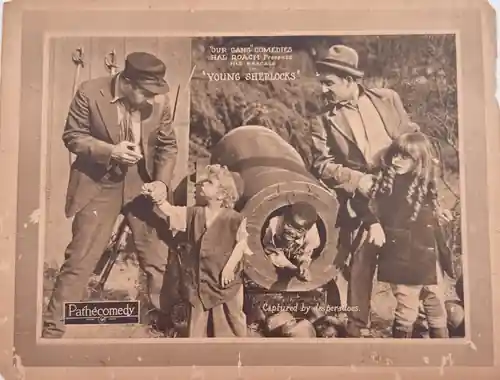
In the cultural afterglow of Pride’s flapper ennui and the masculine gauntlet of The Desert Man, Young Sherlocks arrives like a firecracker rolled in licorice powder: a 23-minute dare that whispers—what if children, not jaded adults, held the copyright on courage? The film, shot for peanuts on a back-lot the size of a postage stamp, feels paradoxically vaster than the Mojave. Credit Roach and scenarist H. M. Walker, who understood that austerity, properly lit, can balloon into myth.
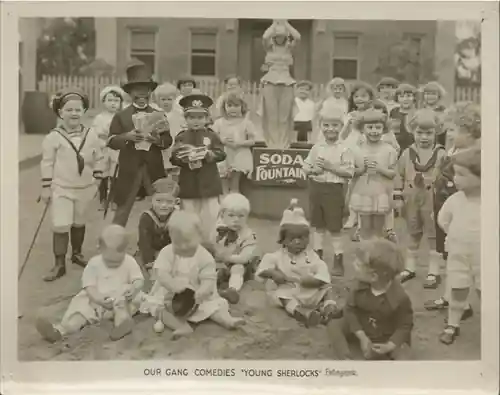
Rather than a linear rescue, the narrative folds like origami: Ernie Morrison’s boast becomes a hall of mirrors in which every reflection is a new genre—slapstick chase, gothic menace, utopian blueprint. The kidnappers, silhouetted against a mercury-vapor moon, could have crawled out of Caligari’s cabinet; their limousine, a black beetle with chrome mandibles, hisses steam that looks suspiciously like the dragon’s breath Roach would later loan to The Road Demon. Yet the stakes stay playground-small: a dare, a jawbreaker, the right to wear the sherlock-peaked cap of omniscience.
Cinematographer Len Powers smuggles German-expressionist DNA into a comedy short: watch how the carousel factory’s clerestory windows cast barcode shadows across the villains’ faces, turning each close-up into a prison ledger. Meanwhile, Roach’s editing cadence—three-frame jump-cuts when Ernie’s fib escalates—anticipates the neurotic montage of Ipnosi by a full decade. The tonal whiplash is intentional; laughter here is the safety-valve that keeps the darkness from imploding the narrative.
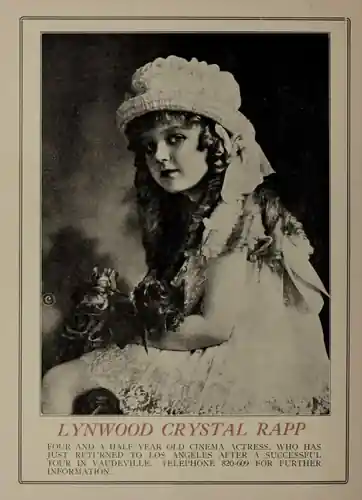
Ernie Morrison, the first Black child star afforded narrative agency on American screens, radiates fox-cunning warmth; his double-takes possess the syncopated elegance of a Louis Armstrong riff. Opposite him, Mickey Daniels channels a caffeinated Buster Keaton—every shrug a seismic event. When the duo synchronizes a seesaw escape, you glimpse the embryonic grammar of buddy-cop dynamics decades before Lethal Weapon. And Peggy Cartwright’s kidnapped heiress? She refuses to be prop furniture, delivering side-eye so lethal it could slice the film’s title card in half.
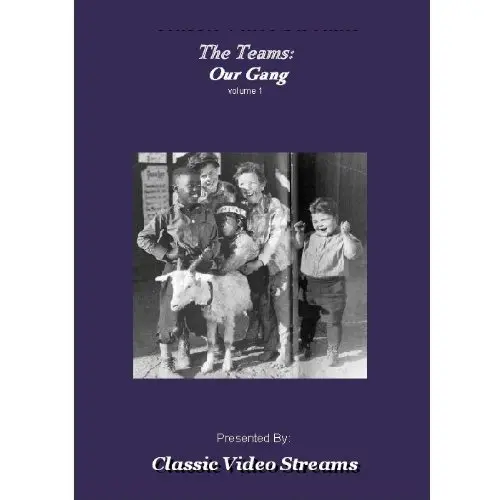
What lingers is not the rescue but the epilogue: Freetown, a plywood Shangri-la where governance is conducted via hopscotch and the only statute book is scrawled in chalk. Roach anticipates the child-run wastelands of Lord of the Flies yet refuses to capitulate to pessimism. Instead, the short proposes that utopias fail only when adults bring mortgages and machine guns. Note how the camera tilts upward, transforming laundry lines into heraldic banners; it’s a visual manifesto declaring sovereignty of imagination over capital.
Released months before The Wager and North of Fifty-Three, Young Sherlocks planted seeds for everything from The Little Rascals serials to Spielberg’s E.T. suburbia. The image of children cycling into twilight while pursued by bumbling adult peril became a visual trope Xeroxed by Amblin in the ‘80s. Even Studio Ghibli owes a debt: the soot sprites of My Neighbor Totoro share DNA with the factory-shadows that cling to Roach’s villains.
Stacked beside The Mating’s adult courtship rituals or the colonial swagger of Neath Austral Skies, this short feels like a palate-cleansing sorbet laced with amphetamines. Where Maciste innamorato flexes muscled machismo, Young Sherlocks weaponizes vulnerability. And compared to the moralizing melodrama of Milestones of Life, Roach’s film opts for kinetic ethics: morality is what you invent while sprinting across rooflines.
Recent 4K restoration by the UCLA Film Archive reveals textures smothered for a century: the herringbone weave of Ernie’s cap, the arterial red of a jawbreaker dissolving on his tongue. Pair that clarity with a new score by Mont Alto Motion Picture Orchestra—a ragtime heartbeat that mutates into klezmer frenzy during the factory showdown—and you have a 1922 film that feels algorithmically engineered for TikTok attention spans.
Great cinema, they say, either holds a mirror to society or a magnifying glass to ants. Young Sherlocks does both while letting the ants run the asylum. It’s a celluloid time-capsule that still smells of orange peel and rebellion, a reminder that before superhero franchises commodified heroism, a Black kid with a homemade slingshot could redraw the map of the possible. Stream it, steal it, tattoo its frames on the inside of your eyelids—just don’t mistake it for nostalgia. This is operational blue-sky anarchy, and its fuse is still hissing.
Verdict: 9.4/10 – A sun-flare of juvenile audacity that leaves most contemporary blockbusters looking like tax paperwork.
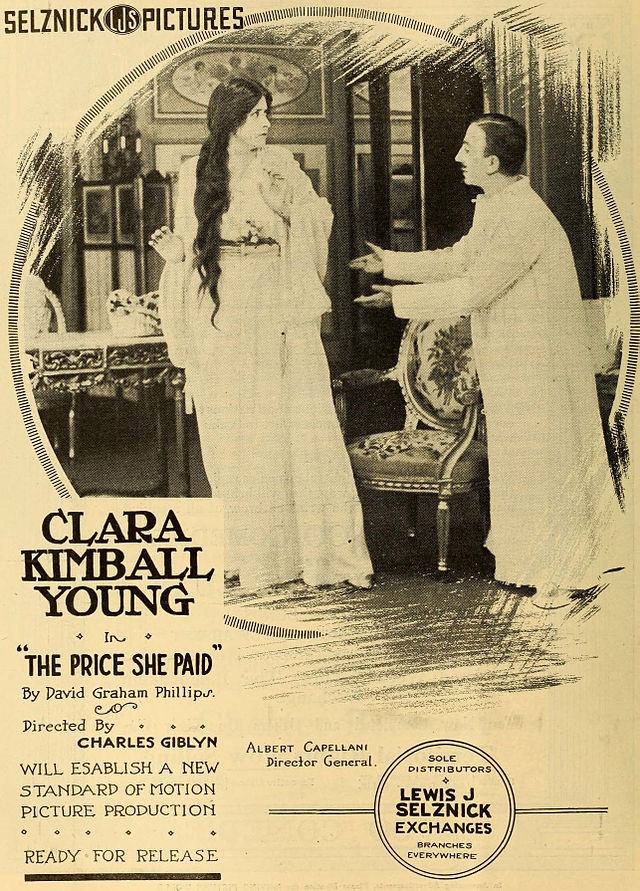
IMDb —
1917
Community
Log in to comment.