DbcultAccessing Vault...
5.5/10
Senior Film Conservator
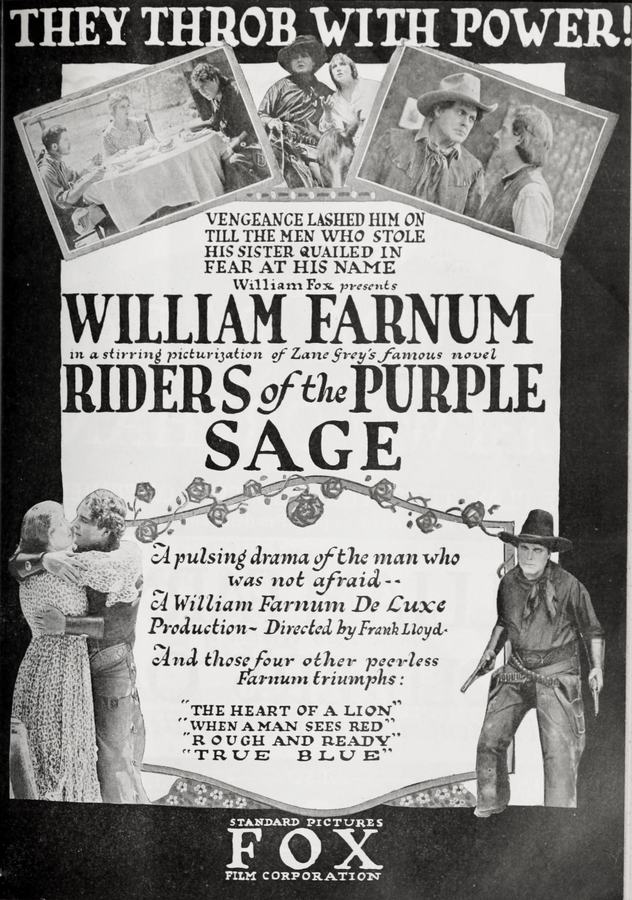
A definitive 5.5/10 rating for a film that redefined the boundaries of cult cinema. Riders of the Purple Sage remains a cornerstone of transgressive art.
Zane Grey's Western saga, brought to the silver screen with a potent blend of rugged landscapes and raw human drama, remains a foundational pillar in the genre's enduring appeal. Riders of the Purple Sage is more than just a tale of cowboys and outlaws; it's a profound exploration of faith, vengeance, and the unyielding spirit of individuals confronting overwhelming systemic oppression. This cinematic rendition, steeped in the stark realities of the American frontier, transcends mere adventure, delving into the moral complexities that defined an era. It asks viewers to ponder the true cost of justice and the boundaries of personal sacrifice in a world where law often bends to the will of the powerful.

At its heart lies Lassiter, portrayed with an almost stoic intensity by William Farnum, a Texas Ranger whose quest for his abducted sister, Millie, propels the narrative forward. His journey is not merely physical; it is a pilgrimage through a moral wilderness, a stark testament to the relentless pursuit of truth and retribution. Lassiter embodies the archetypal Western hero—a man of few words, but whose actions speak volumes, driven by a personal code that often clashes with the corrupted institutions around him. His unwavering resolve in the face of fanatical religious zealots who have claimed his sister is a powerful motif, echoing the timeless struggle against tyranny. The film masterfully crafts his character arc, showing how personal loss can forge an unshakeable determination, transforming a lawman into an instrument of singular, potent justice.
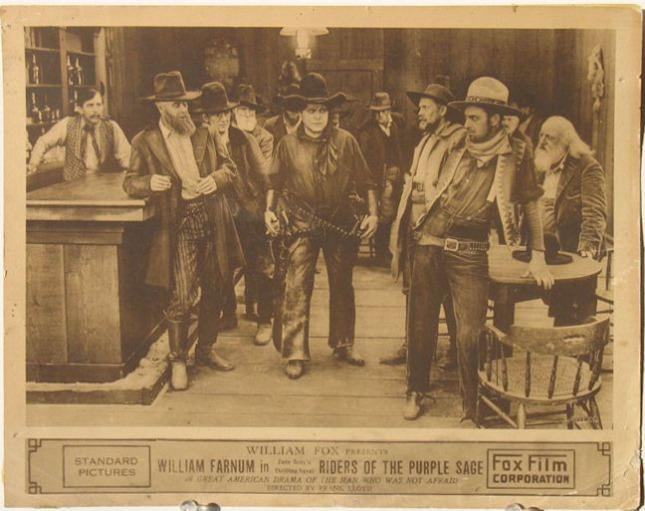
The desolate beauty of the setting itself becomes a character, mirroring the harsh realities faced by its inhabitants. The purple sage, symbolic of both the untamed wilderness and the mysteries it conceals, sets a tone of rugged individualism and isolation. Against this backdrop, Jane Withersteen (Kathryn Adams), a woman of considerable wealth and influence, finds herself ensnared in a web of manipulation and control orchestrated by the very sect Lassiter seeks to dismantle. Her struggle for autonomy, her faith tested by the hypocrisy of those who claim divine authority, provides a compelling counterpoint to Lassiter’s more direct approach. Jane’s character is a nuanced portrayal of strength tempered by vulnerability, a woman caught between her convictions and the oppressive forces threatening to strip her of everything she holds dear. Her plight highlights the pervasive nature of the sect’s power, extending its grasp not just over individuals but over entire communities and their resources.
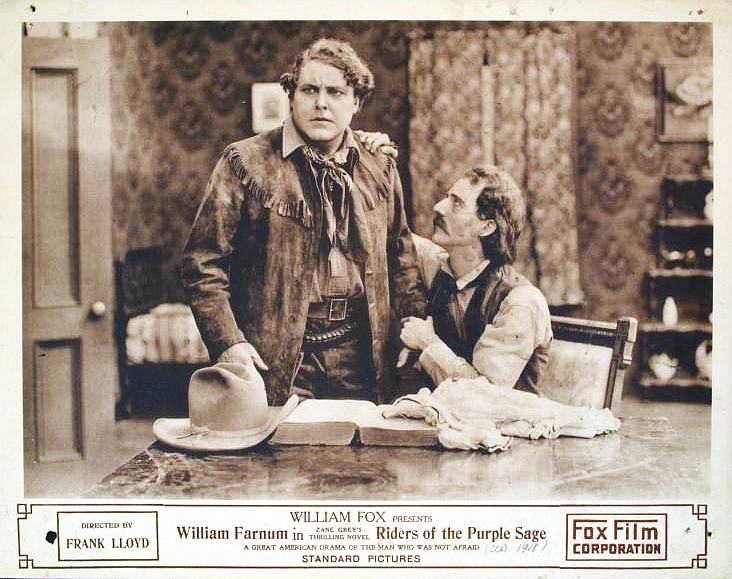
The narrative ingeniously weaves in a parallel storyline involving Venters (Buck Jones), a young man wrongly accused and saved by Lassiter's timely intervention. Venters' journey, initially one of aimless pursuit of cattle thieves, quickly transforms into an odyssey of self-discovery and an unexpected romance. His encounter with a masked rider, later revealed to be a woman named Bess (Mary Mersch), adds layers of intrigue and moral ambiguity. Bess, a complex figure operating outside societal norms, challenges Venters’ preconceived notions of right and wrong, forcing him to confront his own biases. Their blossoming relationship, born out of shared adversity and a surprising tenderness amidst the violence, offers a glimmer of hope and human connection in an otherwise bleak landscape. This subplot, in its depiction of a reformed outlaw finding love and a new path, is reminiscent of the moral quandaries explored in early Westerns like The Secret Man, where redemption often comes at a personal cost.

The revelation of Millie's tragic fate deepens Lassiter's already profound sense of loss, transforming his quest for justice into a more personal crusade. His subsequent adoption of the orphaned Fay Larkin (Nancy Caswell) is a poignant moment, showcasing his inherent decency and capacity for compassion despite his hardened exterior. When Fay, too, falls victim to the same insidious sect that claimed his sister, the narrative reaches a fever pitch. Lassiter's vengeance against Dyer, the malevolent leader, is swift and brutal, a cathartic release of pent-up rage and sorrow. This cyclical pattern of abduction and rescue underscores the pervasive threat posed by the cult, making Lassiter's actions not just about personal vendetta but about protecting the innocent from systemic evil. The film does not shy away from depicting the harsh realities of frontier justice, where personal grievances often dictated the enforcement of right and wrong.
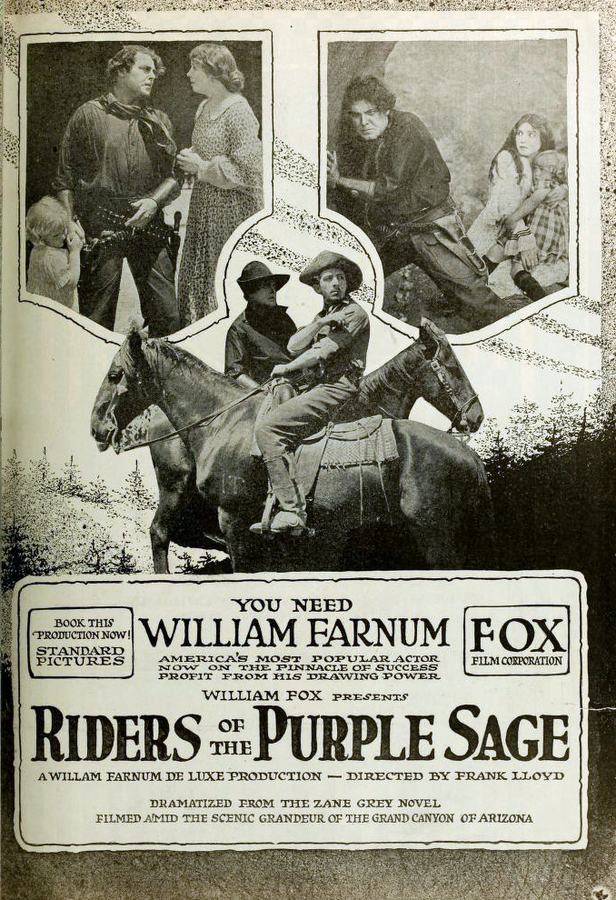
The convergence of these disparate storylines—Lassiter’s pursuit, Venters’ reformation, and Jane’s struggle—culminates in a breathtaking climax. The reunion of Lassiter, Fay, Venters, and Bess is fraught with emotional weight, particularly the stunning revelation that Bess is Lassiter's own niece, Millie's daughter. This twist adds a profound layer of familial tragedy and unexpected joy, cementing the intricate connections between all the characters. The decision for Venters and Bess to ride east, seeking a new beginning away from the shadow of the purple sage, offers a poignant glimpse of a future free from the past's burdens. Their departure, however, leaves Lassiter, Jane, and Fay in a perilous position, their escape route cut off by the relentless Elder Tull and his fanatical followers. The tension builds to an almost unbearable degree, placing the protagonists in an impossible bind.
The film's denouement, set within the confines of a desolate canyon, is a masterclass in dramatic storytelling. Lassiter’s final, desperate act—dislodging a colossal boulder to crush their pursuers—is one of profound sacrifice. It is a moment of heroic finality, ensuring the safety of Jane and Fay, but at the cost of sealing himself, and them, within the canyon’s stony embrace. This ambiguous ending, rather than providing neat closure, leaves a lasting impression, prompting reflection on the nature of freedom, the price of protection, and the ultimate isolation that often accompanies true heroism. It’s a powerful, almost mythical conclusion that elevates the narrative beyond a simple adventure story into the realm of enduring legend. This act of sealing oneself away from the world for the sake of others is a thematic echo found in many tales of heroic sacrifice, where the hero's ultimate triumph often involves a withdrawal from conventional society.
Frank Lloyd's direction, while constrained by the technological limitations of early cinema, effectively conveys the vastness of the landscape and the intensity of human emotion. The cinematography, though black and white, uses light and shadow to great effect, emphasizing the stark contrasts between good and evil, hope and despair. The performances are largely compelling, with William Farnum's Lassiter being particularly memorable for his understated power. Kathryn Adams brings a nuanced portrayal to Jane Withersteen, capturing her internal conflict and resilience. Even in the silent era, the actors' expressive movements and facial acting conveyed a wealth of character depth, allowing audiences to fully immerse themselves in the unfolding drama. The meticulous attention to detail in the set design and costuming further immerses the viewer in the period, lending an air of authenticity to the frontier setting.
Riders of the Purple Sage transcends its genre confines to explore universal themes that resonate even today. The corrupting influence of unchecked power, the unwavering pursuit of justice against impossible odds, and the complex tapestry of human relationships—all are rendered with compelling force. The film’s lasting impact lies not just in its thrilling plot, but in its exploration of moral quandaries and the sacrifices demanded by a harsh, unforgiving world. It cemented Zane Grey's status as a master storyteller and contributed significantly to the evolving lexicon of the Western genre, influencing countless films that followed. Its nuanced portrayal of characters, from the stoic Lassiter to the conflicted Jane, offers more than simple hero-villain dynamics, inviting audiences to ponder the deeper motivations driving each individual.
This cinematic adaptation stands as a testament to the enduring power of classic storytelling, where the vastness of the landscape mirrors the epic scale of human passions and conflicts. It reminds us that even in the most desolate corners of the world, the human spirit can find both profound darkness and incandescent light. The film, much like The Courage of the Common Place, champions the resilience of ordinary people in extraordinary circumstances, transforming their struggles into a narrative of universal appeal. The dramatic conclusion, while leaving much to the imagination, ensures that the film's imagery and themes linger long after the credits roll, a true mark of its artistic and narrative prowess. It continues to be studied and appreciated for its contribution to cinematic history, showcasing how early filmmakers tackled complex moral narratives with ingenuity and emotional depth. The film's legacy is intertwined with the very fabric of American mythology, shaping our understanding of the frontier and the individuals who dared to tame it, or were ultimately consumed by its untamed essence.
The interplay between personal vendetta and communal survival is a powerful undercurrent throughout the narrative. Lassiter’s journey, initially driven by a singular, personal grievance, gradually expands to encompass the protection of others, symbolizing a broader fight for justice in a lawless land. This evolution of purpose, from self-interest to altruism, is a cornerstone of classic heroic arcs. The film’s exploration of religious fanaticism, particularly through the insidious actions of Elder Tull and Dyer, serves as a timeless cautionary tale about the dangers of unchecked power and dogmatic belief. These antagonists are not mere caricatures; they represent a societal ill, a pervasive threat to individual liberty and moral integrity. The struggle against them is not just a physical battle but a philosophical one, challenging the very foundations of right and wrong in a burgeoning civilization. The stark choices faced by characters like Jane, who must reconcile her faith with the corruption around her, add a layer of psychological depth that elevates the film beyond a simple action-adventure. Her internal conflict is as compelling as any gunfight, reflecting the broader societal tensions of the era. This intricate weaving of personal and communal struggles, set against a backdrop of breathtaking natural beauty and unforgiving wilderness, makes Riders of the Purple Sage an enduring masterpiece of early cinema, a film that continues to provoke thought and stir the imagination with its timeless depiction of the human condition under duress.

IMDb —
1918
Community
Log in to comment.