DbcultAccessing Vault...
6.4/10
Senior Film Conservator
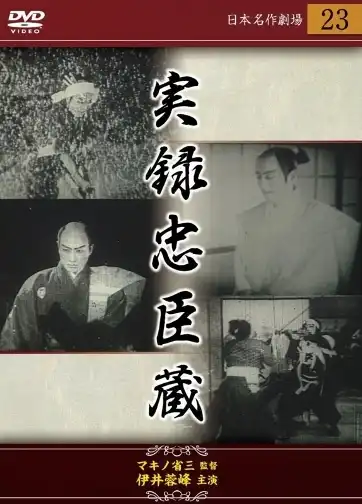
A definitive 6.4/10 rating for a film that redefined the boundaries of cult cinema. Chushingura: The Truth remains a cornerstone of transgressive art.
If you have a spare afternoon and you actually like seeing how movies used to look before they became loud and shiny, give this a go. It is definitely worth it for anyone who likes samurai history or just wants to see what a 1934 blockbuster looked like in Japan.
But if you are looking for John Wick with katanas, you are going to absolutely hate this. It is mostly people in very large pants sitting on floors and talking about how to greet guests from Kyoto.
I watched this on a grainy copy and honestly, the crackle of the audio adds something to the vibe. It makes the whole thing feel like you’re looking at a moving museum piece that’s somehow still alive.
The story kicks off with Lord Asano, who is played by Kanjūrō Arashi with this weirdly intense, wide-eyed look. He’s supposed to be hosting these big-shot envoys, but he doesn’t know the rules, which seems like a major oversight for a guy in his position.
Enter Lord Kira, the guy who’s supposed to teach him. Kira is played as such a petty, annoying jerk that you kind of want to reach into the screen and nudge him into a well.
There is this one scene where they are discussing the ceremony, and the camera just lingers on Asano’s face while Kira insults him. It goes on for so long that I started counting the patterns on the sliding doors behind them.
The pacing is… well, it’s 1934 pacing. It’s slow.
I noticed that the extras in the background of the palace scenes look like they are trying really hard not to move a single muscle. One guy in the far left of a wide shot looks like he might actually be a statue, until he blinks once about five minutes in.
The costumes are the real stars here. The hats they wear are so tall I kept wondering how they didn’t hit the top of the doorframes every time they walked into a room.
It’s funny how much time the movie spends on the technicalities of bowing. You really get the sense that if Asano had just bowed three inches lower, the whole massacre at the end could have been avoided.
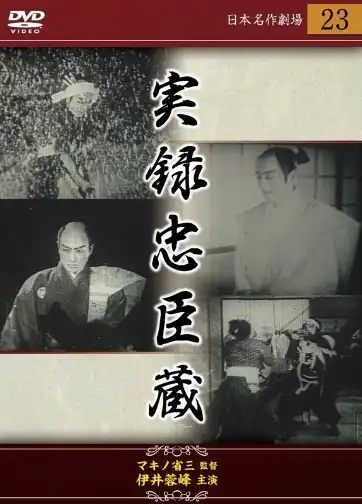
Kanjūrō Arashi has this way of walking that is almost like a dance. It’s very theatrical, which I guess makes sense because a lot of these guys came from a Kabuki background. 🏯
Sometimes the film cuts to a close-up that is slightly out of focus. It’s a little mistake, but it makes the movie feel more human, like someone was actually turning the knobs on the camera and just missed the mark by a hair.
I found myself thinking about Nonkina tosan ryugu mairi while watching this, mostly because of how different the energy is. That one is all about surreal animation, while this is trying so hard to be "The Truth" and stay grounded in reality.
The middle of the movie drags quite a bit. There is a lot of walking through hallways. So many hallways.
I actually think the movie is better when it stops trying to be a grand epic and just focuses on how much Asano hates being told what to do. You can feel his blood pressure rising every time Kira opens his mouth to correct his posture.
There is a specific moment where Asano finally snaps and draws his sword in the palace. The sound of the blade coming out is this thin, metallic scrape that sounds way more dangerous than the loud "shing" sounds we get in modern movies.
The aftermath of that scene is handled with a lot of silence. It’s effective, but it also feels like the movie didn't quite know how to transition into the next part of the story.
I missed some of the 47 Ronin themselves because the movie focuses so much on the lead-up. By the time we get to the actual revenge part, it feels like the movie is running out of steam (or maybe just film stock).
It’s not as polished as some of the later versions of this story, but there is a raw honesty to it. It doesn’t feel like it’s trying to be a masterpiece; it just feels like it’s trying to tell a story people already knew by heart.
One reaction shot of a court official lingers so long that it becomes almost funny. He just stares into the distance with this look of mild indigestion while everything falls apart around him.
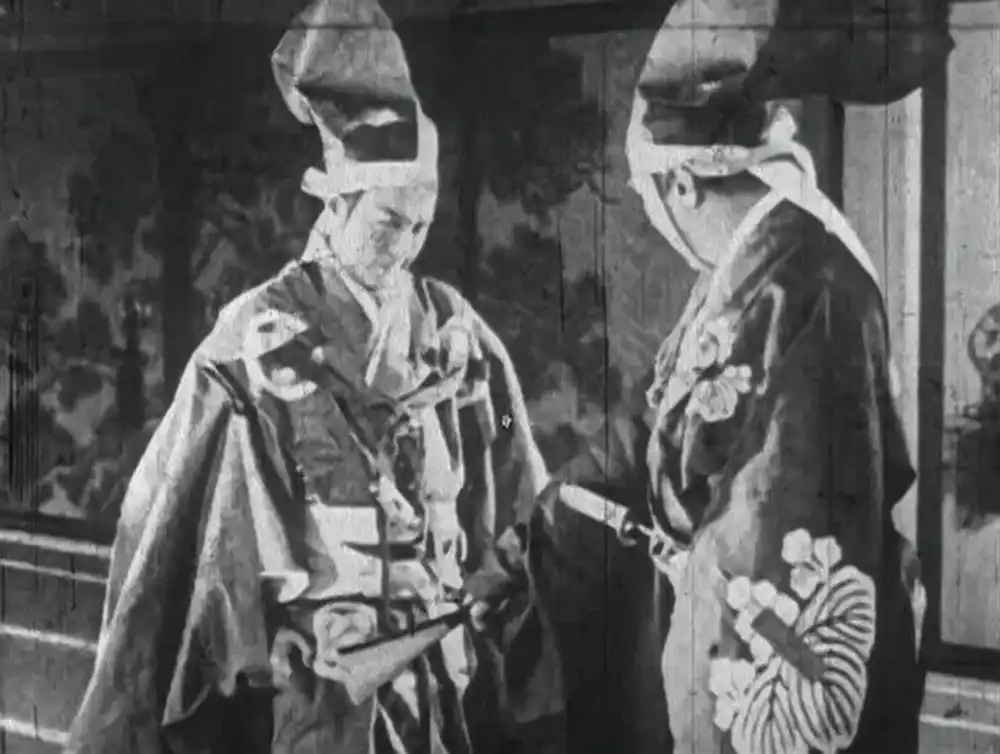
The set design is surprisingly detailed for the time. You can see the texture of the tatami mats and the way the light hits the paper screens. 💡
I did find myself wondering why the music kicks in at the oddest times. It’ll be dead silent for ten minutes, and then suddenly a flurry of strings starts up just because someone stood up from a chair.
If you’ve seen other stuff from this era, like maybe Fire Fighters, you know how hit-or-miss the technical side can be. Here, it’s mostly a hit, even if the editing feels like it was done with a pair of kitchen scissors.
The ending is what you expect if you know the history, but it’s filmed with a lot of dignity. It doesn't feel exploitative or overly bloody, just very sad and inevitable.
I think I liked the first half better than the second half. The tension of the "instruction" period is just much more interesting than the fallout.
Kira’s face when he realizes he’s pushed Asano too far is gold. It’s that perfect mix of shock and "oh no, I’ve actually done it now" that makes the whole build-up worth it.
The subtitles I had were a bit weird, using words like "scoundrel" and "vile knave," which probably isn't exactly what they were saying, but it fit the mood of the robes.
Is it the definitive version of the 47 Ronin? Probably not. But it feels like a real person made it, with all the weird choices and long silences that come with that.
It’s a bit of a slog, but a rewarding one if you don't mind the dust. Just make sure you have some tea ready, because you're going to be watching people drink a lot of it on screen.
Anyway, it’s a solid piece of film history. Just don't expect any explosions. ⛩️
IMDb 4.1
1935
Community
Log in to comment.