DbcultAccessing Vault...
6.8/10
Senior Film Conservator
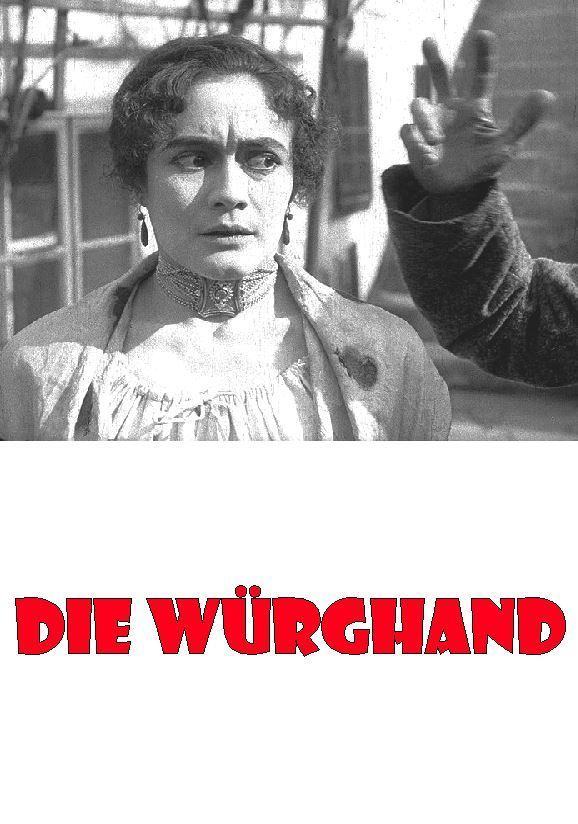
A definitive 6.8/10 rating for a film that redefined the boundaries of cult cinema. Die Würghand remains a cornerstone of transgressive art.
Cornelius Hintner's 1920 cinematic offering, Die Würghand, emerges from the silent era as a poignant and often unsettling exploration of class disparity, moral compromise, and the corrupting influence of desire. This film, though a century removed from its original release, resonates with a timeless quality, its narrative threads woven with the universal struggles of poverty, ambition, and the human heart's bewildering capacity for both selflessness and destruction. At its core lies a simple yet profound premise: a young, impoverished flower seller, whose fragile beauty and burgeoning spirit become the unwitting battleground for competing forces of love and avarice. It is a story told not through dialogue, but through the exaggerated gestures, expressive gazes, and stark visual contrasts that defined the silent film lexicon, demanding a particular kind of interpretive engagement from its audience.
The central figure, a nameless or barely named girl (as was often the convention, allowing her to represent a broader archetype), is portrayed with a delicate intensity that immediately draws the viewer into her plight. Her daily existence is a stark tableau of hardship, her hands, accustomed to the delicate petals of flowers, also bear the invisible calluses of ceaseless toil. The contrast between the natural beauty she peddles and the harsh reality of her life is a recurring visual motif, subtly underscoring the film's thematic concerns. Her brother, a character defined by his insatiable greed, acts as both her oppressor and, paradoxically, her only remaining family. This familial bond, twisted by his mercenary nature, becomes one of the film's primary sources of tension, forcing the protagonist into an agonizing dilemma. His demands are not merely for survival but for a lifestyle far removed from their station, pushing her ever closer to the precipice of moral degradation. This dynamic immediately brings to mind the desperate familial pressures seen in films like Paid in Advance, where economic necessity dictates profound personal sacrifice, or even the more sinister manipulations found in The Woman and the Beast, albeit with a different flavor of exploitation.
Into this already fraught existence step three wealthy aristocrats, each representing a different facet of the upper echelons of society, and each captivated by the flower seller. This trio is not a monolithic entity; rather, they are distinct personalities, their intentions ranging from genuine affection to possessive infatuation. One might offer a semblance of true love, a desire to lift her from her circumstances without demanding undue compromise. Another might present a more pragmatic, perhaps transactional, form of affection, offering security and luxury in exchange for her presence. The third could embody a darker, more predatory interest, seeing her as a beautiful object to be acquired, a conquest rather than a companion. The film, through its visual storytelling, masterfully delineates these nuances, allowing the audience to discern the subtle differences in their gazes, their gestures, and the environments they inhabit. This intricate interplay of potential benefactors and their underlying motives creates a complex web of choices for the protagonist, each path laden with its own set of promises and perils. The narrative architecture here echoes the multi-faceted romantic entanglements and societal pressures found in works like Pique Dame, where a character's fate is often decided by the confluence of powerful external forces and internal moral struggles.
The performances, a cornerstone of silent cinema, are particularly noteworthy. Carmen Cartellieri, in the lead role, likely conveyed the character's internal turmoil with a compelling blend of vulnerability and nascent strength. Her expressive eyes and carefully calibrated body language would have been crucial in communicating the nuanced emotional landscape of a girl torn between filial duty, personal yearning, and the crushing weight of societal expectations. Adolf Weisse, Victor Kutschera, and Eugen Preiß, presumably playing the aristocrats, would have needed to embody distinct archetypes of wealth and desire, their portrayals needing to be clear and impactful without the aid of spoken dialogue. Hugo Werner-Kahle and Hans Rhoden, in supporting roles, likely contributed to the film's atmospheric depth, perhaps intensifying the sense of a world both alluring and dangerous. The effectiveness of a silent film often hinges on the actors' ability to convey complex emotions through purely visual means, and in Die Würghand, this seems to have been executed with considerable skill, allowing the audience to project their own understanding onto the characters' unspoken thoughts and feelings.
Cornelius Hintner, as the writer, meticulously crafted a narrative that transcends mere melodrama, elevating it to a commentary on the societal ills of the era. The conflict between the flower seller's humble origins and the aristocrats' extravagant lives is not merely a backdrop but an active participant in the drama. It highlights the vast chasm between the 'haves' and the 'have-nots,' a theme that resonated deeply in post-World War I Europe and continues to hold relevance today. The 'greed of her brother' is not just a personal failing but a symptom of a system that offers little upward mobility for the poor, often forcing desperate measures. This desperation is a powerful motivator, capable of twisting moral compasses and pushing individuals to make choices they might otherwise abhor. The film, in essence, becomes a microcosm of a larger societal struggle, echoing the stark economic realities depicted in films like Krigsmillionæren, where the pursuit of wealth can lead to moral decay, or Limousine Life, which scrutinizes the allure and dangers of upper-class aspirations.
The title itself, Die Würghand (The Strangling Hand), suggests a pervasive sense of oppression and suffocation. Is it the hand of poverty, strangling opportunity? Is it the hand of the greedy brother, choking his sister's innocence? Or is it the invisible hand of societal expectations and class structures, stifling individual freedom and authentic love? The ambiguity allows for multiple interpretations, enriching the film's thematic depth. It hints at a narrative where the protagonist is not merely making choices but is being squeezed, pressured, and ultimately, perhaps, choked by the circumstances she finds herself in. This metaphorical title adds a layer of psychological tension, foreshadowing a potentially tragic or profoundly challenging outcome for the flower seller. The film's power lies in its ability to evoke this sense of impending doom and the existential weight of her decisions without resorting to overt exposition.
As a product of the early 1920s, Die Würghand would have relied heavily on visual composition, lighting, and editing to convey its complex narrative and emotional landscape. Silent films of this era, particularly those emerging from German expressionism's burgeoning influence, often employed stark contrasts between light and shadow to symbolize moral dilemmas or internal psychological states. Imagine dimly lit, cramped quarters for the flower seller and her brother, emphasizing their poverty and the suffocating nature of their existence, juxtaposed against brightly lit, expansive ballrooms or gardens inhabited by the aristocrats, symbolizing their freedom and privilege. The use of close-ups on the actors' faces, especially Cartellieri's, would have been paramount in conveying her anguish, confusion, or fleeting moments of hope. The film's aesthetic choices would have been integral to its storytelling, shaping the audience's perception of good and evil, innocence and corruption.
The direction, even without sound, would have guided the viewer's eye, emphasizing key details and emotional beats. Editing rhythms could accelerate during moments of tension or slow down to linger on a character's internal struggle, manipulating the audience's emotional response. The mise-en-scène – the arrangement of everything that appears in the frame – would be meticulously planned: the props, the costumes, the set designs, all contributing to the narrative and thematic resonance. For instance, the quality of the flowers she sells, perhaps wilting or vibrant, could subtly mirror her own emotional state. The opulent attire of the aristocrats versus her simple garments would visually hammer home the class divide. This meticulous attention to visual detail is a hallmark of effective silent cinema, allowing the film to communicate profoundly without a single spoken word, much like the evocative visual narratives found in The Girl from Bohemia or even the more abstract imagery of Beach Birds, though in a dramatically different context.
While specific details of Die Würghand's critical reception at the time may be scarce for modern audiences, its thematic concerns ensure its enduring relevance. The struggle between love and money, between individual autonomy and external pressures, remains a perennial human conflict. The film’s exploration of a young woman's agency, or lack thereof, in a patriarchal and class-stratified society, speaks volumes about the challenges faced by women across different eras. The narrative, by presenting a protagonist caught between various powerful men – her brother and the three suitors – delves into the complexities of female experience and the difficult choices often imposed upon them. This aspect of the film might find thematic kinship with the struggles for self-determination seen in Patria nueva, though in a vastly different geopolitical context, or the personal battles against societal constraints in Fate's Frame-Up.
Hintner's work contributes to the rich tapestry of early European cinema, offering insights into the social anxieties and moral preoccupations of its time. It is a reminder of the power of visual storytelling, demonstrating that profound emotional and intellectual impact can be achieved without dialogue. For contemporary viewers, watching Die Würghand is not merely an exercise in historical appreciation; it is an opportunity to connect with fundamental human dilemmas presented in a raw, unadorned form. The film, stripped of modern cinematic embellishments, forces us to engage with the performances and visual cues on a deeper, more intuitive level, fostering a unique and intimate viewing experience. It invites contemplation on how much, or how little, human nature and societal structures have truly evolved over the past century. Its narrative echoes the timeless struggles of characters in films like Courts and Convicts, where moral quandaries are placed under intense scrutiny, or the intricate psychological drama of The Face in the Dark, where hidden motives drive the plot.
In conclusion, Die Würghand stands as a compelling artifact of silent cinema, a potent blend of social commentary and psychological drama. Its narrative of a flower seller navigating the treacherous waters of familial greed and aristocratic desire is a testament to the enduring power of classic storytelling. The film, through its evocative visuals and the expressive performances of its cast, especially Carmen Cartellieri, compels us to consider the price of ambition, the nature of true affection, and the suffocating grip of circumstance. It is a work that deserves rediscovery, not just for its historical significance, but for its timeless exploration of the human heart's capacity for both resilience and ruin. Its themes are as relevant today as they were a hundred years ago, reminding us that the 'strangling hand' of external pressures and internal conflicts continues to shape our destinies, often in ways we least expect.
IMDb 6.1
1918
Community
Log in to comment.