DbcultAccessing Vault...
Cult Review
Senior Film Conservator
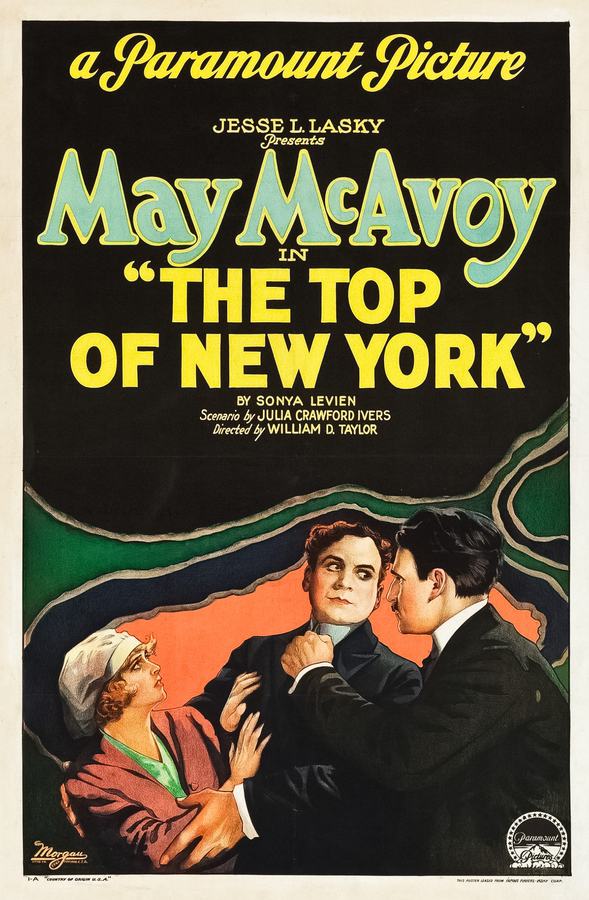
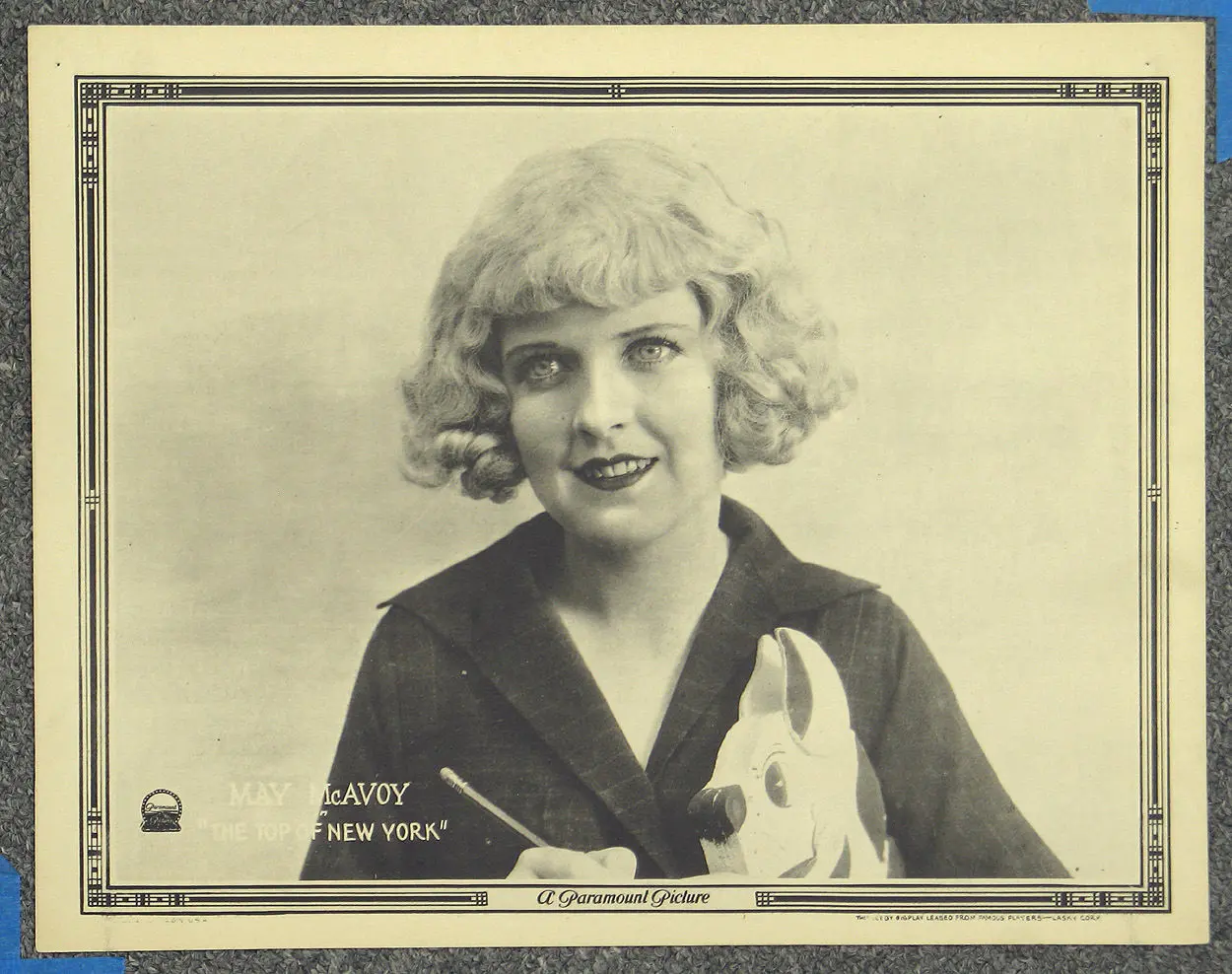
The first time we see Hilda O’Shaunnessey she is reflected—literally—in the polished copper of a toy-train track that spirals through the store’s holiday window like a gilded serpent. May McAvoy plays her with the brittle radiance of a candle burned at both ends yet somehow still standing upright; her pupils are twin soot-smears that know the exact weight of every nickel in the till. Director George James Hopkins (pulling double duty as co-writer) keeps the camera at doll-eye level so that skyscrapers skew outward like drunk guardians, a visual confession that adult Manhattan is nothing but a taller form of childhood nightmare.
Silent cinema lives or dies on the calculus of gesture, and McAvoy solves the equation with wrists, not eyes. Watch the way she unpins her hat after a fourteen-hour shift: fingers hesitate, tremble, then yank the feather as though ripping out her own wishbone. The feather droops, defeated, and for a heartbeat the entire city exhales carbon sorrow. It is one of 1922’s most economical performances of fatigue, worthy to be shelved beside Renée Falconetti’s later ecstasies yet here pitched at the register of mere survival.
Across the alley, Walter McGrail’s Emery Gray smokes Turkish cigarettes whose paper is so thin you expect the East River breeze to carry ember and all into the next reel. McGrail, usually pegged as urbane cad, instead conjures a man hollowed by grief yet still flammable. His painter’s smock is streaked with vermilion that might be blood or merely sunset—Hopkins refuses certainty, letting the ambiguity pool like turpentine. When Emery first spots Hilda lugging crates of wind-up harlequins up the service stair, the film jump-cuts to his canvas: an unfinished female silhouette with the face scraped off. In that abrasion we read the ghost of his wife, and we understand why he will risk everything to keep another woman from being erased.
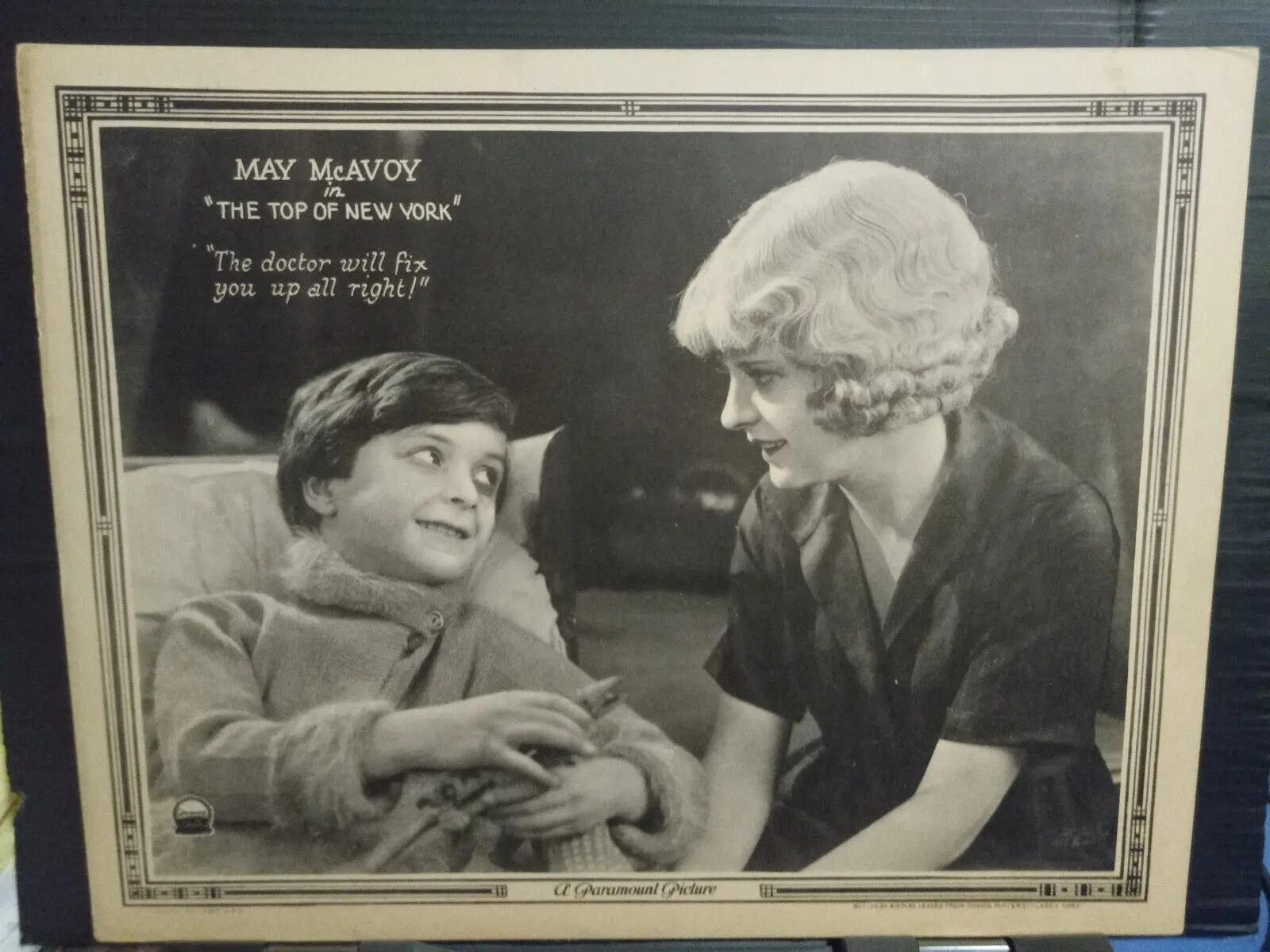
Children, notoriously unreliable witnesses in melodrama, here operate as the moral Geiger counters. Mary Jane Irving’s Susan Gray flits across the roofline in scarlet mittens, a color that bleeds against the monochrome snow like a wound that refuses to clot. She befriends Pat Moore’s Mickey, whose cough is scored with intertitles of white-on-black silence so stark you hear the rasp inside your own sternum. Their rooftop kingdom—milk bottles for turrets, kites for pennants—becomes the film’s ethical summit, the single place where need never curdles into transaction. When Gregory Stearns ascends the fire escape to purchase Hilda’s body, the camera tilts downward so that his polished Oxfords crush a chalk hopscotch court: the first audible crack in the film’s otherwise silent universe.
Edward Cecil plays Stearns with the oleaginous charm of a man who has never needed to imagine consequences. His store, a cathedral of consumption, is staged like a Busby Berkeley number before Berkeley: aisles fan into ziggurats of porcelain dolls whose eyes have been replaced by coins. When he circles Hilda during the staff Christmas tableau, Hopkins overlays a double exposure: Stearns’s predatory grin superimposed on a window Santa whose cotton beard is flammable. The subtext is as delicate as a thrown brick—capitalism itself is the jolly old elf sliding down chimneys to steal more than cookies.
Yet the film’s boldest stroke arrives when Hilda, cornered, weaponizes the very commodity Stearns covets. She requests the fur coat not as bribe but as invoice, a move that flips the patriarchal script so hard it lands spine-cracked on the parquet. The coat itself—described in an intertitle as “the pelt of a thousand slaughtered nights”—is never fully shown; we glimpse only collar and cuff, like a beast half-loosed from legend. Once pawned, its absence onscreen feels more obscene than its presence, a phantom limb of luxury that continues to strangle. The pawnbroker’s ticket becomes the Holy Grail of the third act, traded, crumpled, smoothed, finally tucked inside Mickey’s recovery telegram like a confession that cannot be absolved.
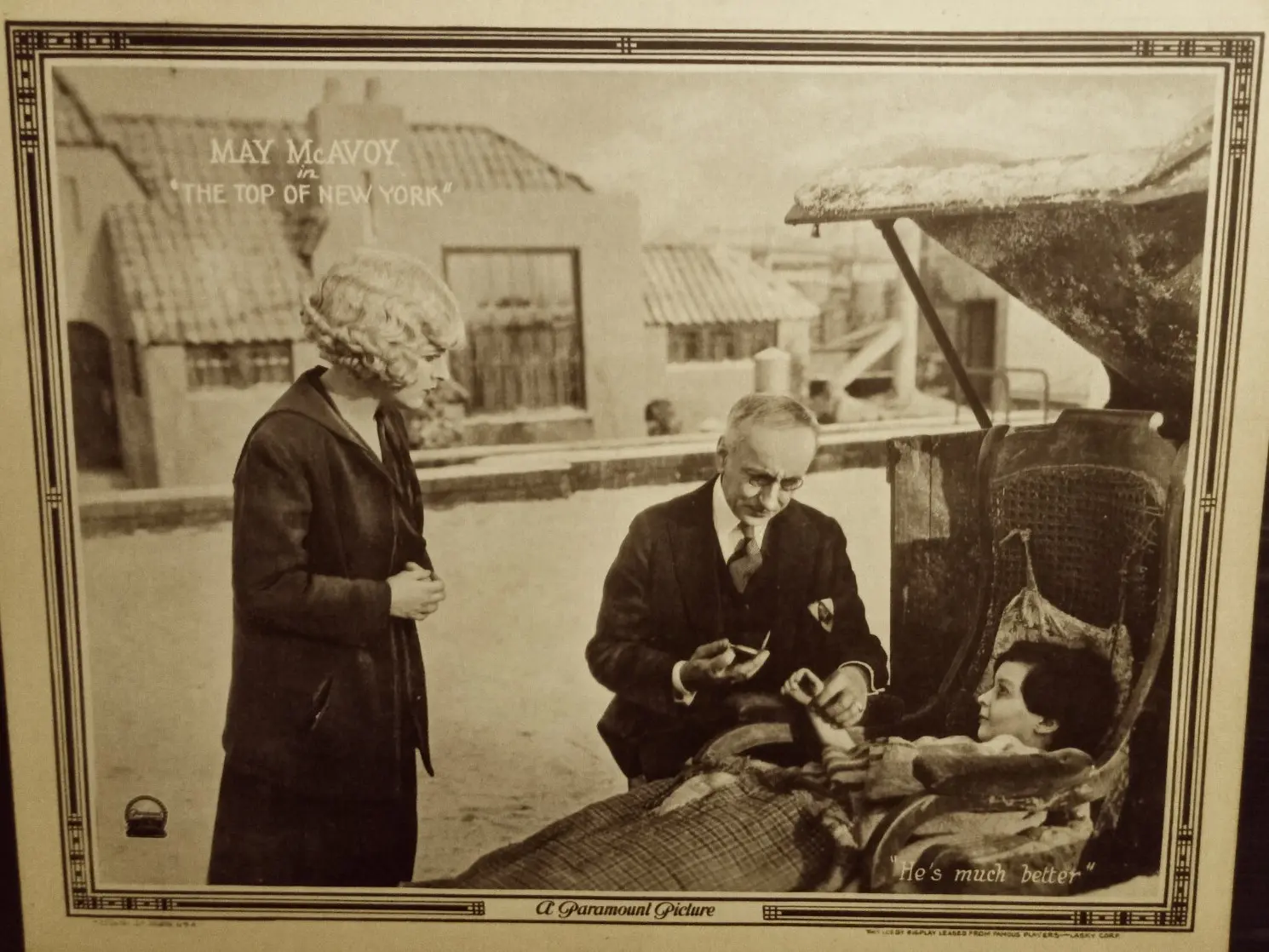
Suicide, in most silent films, is a vertical affair—bodies plummet, curtains fall. Here it is horizontal: Hilda attempts to walk off the roof’s edge into sky, a trajectory so impossible it circles back to poetic. Hopkins films the moment from inside the chimney stack, so the screen’s rectangle becomes a proscenium arch and we are voyeurs at the opera of despair. Just as her heel hovers over 200 feet of nothing, Emery bursts through the skylight, canvas still clamped under his arm. The rescue is not physical but pictorial: he unfurls the portrait he has painted—her face restored, eyes unbroken—and holds it between her and the void. Art, quite literally, becomes the backstop against death.
The revelation that Stearns once stole Emery’s wife arrives via a dissolve so brief you might mistake it for a projection error, yet it re-casts the entire narrative as revenge tragedy wearing masque of melodrama. Suddenly the store is not mere playground of capital but battleground of cuckoldry, and Hilda’s body the disputed territory. The film refuses to punish her for capital leverage; instead, the final intertitle grants her a sly benediction: “Virtue, when it borrows vice’s sword, need not return it dull.” In 1922 such sentiment was incendiary enough to prompt several municipal bans, yet the picture prospered on roadshows where morality leagues feared to tread.
Comparative lenses sharpen its singularity. Against The Conquering Power’s continental decadence, this is gutter baroque; beside Reckless Wives’ jazz-age cynicism, it clings to tenderness like frost on iron. Where A Militant Suffragette shouts polemic from street corners, The Top of New York whispers revolution inside a Christmas carol. Its DNA echoes through Frank Capra’s rooftop angels and even Irving Berlin’s snow-globe New York, yet its DNA is more ferric, more willing to taste rust.
Restoration devotees should note the 2022 4K scan by Eye Filmmuseum, which recovered a lavender tint for dusk sequences previously seen only in charcoal. The new print reveals that the toy-train copper gleam is actually hand-painted gold, so every revolution of its wheels throws off sparks like a comet grinding itself alive. Meanwhile, Matti Bye’s commissioned score—piano, musical saw, and toy xylophone—plays counterpoint to the city’s clang, turning Mickey’s cough into a percussion motif that haunts waltz time.
Criticism must concede flaws: the subplot involving Arthur Hoyt’s bumbling rent collector evaporates without resolution, and Carrie Clark Ward’s Mrs. Brady is saddled with dialect intertitles that betray the film’s otherwise progressive heart. Yet these are hairline cracks in a vessel that still holds its mercury. When the final iris closes on Hilda and Emery watching Mickey chase Susan through rooftop snow, the image lingers like breath on glass: proof that early cinema could be both artifact and prophecy, both nickelodeon and oracle.
To watch The Top of New York today is to remember that every city skyline began as a dare, every fur coat as an animal still twitching. The film survives not because it is quaint but because it is ruthless—because its rooftops still echo with the sound of a girl who tried to sell her future and discovered she could not afford the down-payment on her own extinction. That she lived to tell the tale feels, in 2024, like the most audacious special effect of all.
IMDb —
1933
Community
Log in to comment.