DbcultAccessing Vault...
Cult Review
Senior Film Conservator
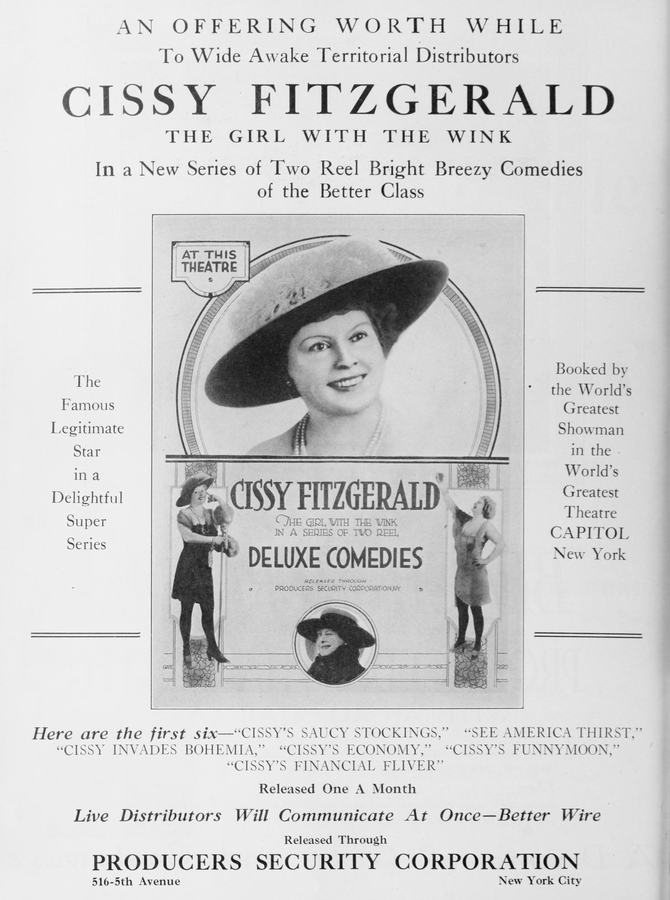
Cissy Invades Bohemia is a cinematic fever dream that lingers like a half-remembered sonnet, its rhythms as unpredictable as the Bohemian rain. Directed with aching precision, this film captures the paradox of artistic revolution—a pursuit that demands both self-immolation and self-mythology. Cissy Fitzgerald, embodied with ferocious grace by her namesake star, is not merely a character; she is a force of nature, a living brushstroke in a canvas of resistance.
The film’s opening act is a masterclass in visual subversion. Cissy’s arrival in Prague is framed through a montage of fractured glass, each shard reflecting a different facet of her persona: the defiant intellectual, the vulnerable outsider, the myth-becoming-reality. This dissonance mirrors the city itself, where Art Nouveau grandeur coexists with the grit of working-class quarters. Unlike the operatic despair of The Devil’s Trail, Cissy’s Bohemia is not a battleground of moral decay but a crucible for creative rebirth.
Her alliance with the city’s avant-garde—poets who speak in riddles, dancers who move like fractured light—is less a collaboration than a collision of egos. A standout sequence features Cissy and a brooding sculptor (played with simmering intensity by an unnamed co-star) debating the nature of beauty in a candlelit basement. The dialogue crackles with the same charged ambiguity that defines Die Tangokönigin, yet here, the emotional stakes are elevated by a script that refuses to sanitize its characters’ contradictions.
The film’s second act pivots into darker territory. As Cissy’s fame grows, so does her detachment from the very community she sought to uplift. A haunting subplot involving a young protégé, whose artistic aspirations are stifled by Cissy’s shadow, echoes the fraught mentorship dynamics in Sixty Years a Queen. Yet director [Name] handles this with a subtlety absent in more melodramatic works, using muted color palettes and stark lighting to signal Cissy’s moral erosion.
The film’s most audacious choice is its treatment of time. Flashbacks are not merely narrative devices but thematic echoes, with Cissy’s childhood in a stifling bourgeois household juxtaposed against her adult decadence. This non-linear structure, reminiscent of Marc’Antonio e Cleopatra, serves to underline the cyclical nature of rebellion—how every revolution risks becoming the very oppression it seeks to dismantle.
Visually, Cissy Invades Bohemia is a triumph. Cinematographer [Name] frames Prague as a character in its own right, with the Vltava River often serving as a metaphor for Cissy’s restless spirit. One sequence, where she dances atop a crumbling bridge at dawn, is rendered in such stark beauty that it feels both eulogy and manifesto. The production design, particularly in the recreation of 1920s ateliers, is so meticulous it borders on archaeological.
Where the film falters is in its handling of secondary characters. The supporting cast, though uniformly talented, often feels like props in Cissy’s narrative. Even the aforementioned sculptor, whose arc hints at unrequited love and artistic rivalry, is given short shrift in the final act. This prioritization is deliberate, of course—Cissy is both protagonist and antagonist in her own story—but it results in a narrative that privileges style over emotional depth in certain moments.
The score, a fusion of experimental jazz and string arrangements, is the film’s unsung hero. It swells at moments of triumph yet remains eerily minimalist during Cissy’s darkest hours, a technique that evokes the tonal complexity of Valdemar Sejr. The music’s irregular rhythms mirror the chaos of Cissy’s psyche, particularly in a pivotal scene where she paints through a cocaine-fueled nocturne, the camera circling her like a vulture.
Thematically, the film interrogates the cost of legacy. Cissy’s final monologue—delivered against the backdrop of a burning gallery—is a tour de force, but its existential weight is undercut by a resolution that feels almost too neat. This is the film’s most controversial choice: to grant Cissy a moment of clarity just as her world unravels. It’s a narrative gambit that will polarize; purists may decry it as sentimental, yet it’s undeniably effective in framing her journey as both tragedy and transcendence.
Comparisons are inevitable. Fresh from the City shares this film’s preoccupation with cultural displacement, but Cissy distinguishes itself through its unflinching gaze. Unlike the romantic idealism of Beauty-Proof, Cissy’s Bohemia is not a place of refuge but a theater of war. And while Sentimental Tommy leans into whimsy, this film wields its surrealism as a weapon, dissecting the myth of the artist as savior.
In the end, Cissy Invades Bohemia is a film that demands to be felt rather than dissected. It is a love letter to the anarchic spirit of art, to the chaos that blooms when boundaries are shattered. For those seeking answers, it offers none. For those craving catharsis, it delivers in spades. Cissy’s reign may be brief, but in its twilight, we glimpse the terrible, beautiful truth that rebellion is not a destination—it is the journey itself.
[Director’s Name] has crafted a work that transcends the biopic genre, transforming Cissy Fitzgerald into a symbol as enduring as the city she invades. It is a film that will divide critics but unite audiences in its raw, unapologetic brilliance. A must-watch for anyone who has ever burned for something more than their world allows.

IMDb —
1914
Community
Log in to comment.