DbcultAccessing Vault...
6.8/10
Senior Film Conservator
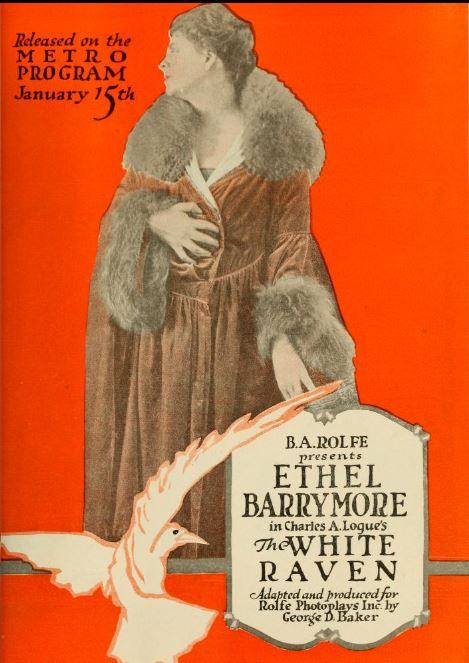
A definitive 6.8/10 rating for a film that redefined the boundaries of cult cinema. The White Raven remains a cornerstone of transgressive art.
The silent era of cinema often functioned as a laboratory for the intersection of Victorian melodrama and the burgeoning modernism of the early 20th century. George D. Baker’s The White Raven (1917) stands as a monumental testament to this transition, serving not merely as a vehicle for the luminous Ethel Barrymore, but as a complex exploration of economic predation, female agency, and the cyclical nature of retributive justice. The film’s architecture is built upon a foundation of stark contrasts: the claustrophobic, icy desolation of the Yukon against the opulent, gilded artifice of the Metropolitan Opera House.
The prologue of the film is a masterclass in narrative efficiency and psychological cruelty. When William Baldwin is stripped of his dignity and assets by John Blaisdell, the rejection he receives is not merely financial but existential. The five-dollar bill, marked with the instruction to buy a gun and end her life, serves as a recurring motif of the film’s preoccupation with the transactional nature of human existence. This is not unlike the thematic weight found in Bought and Paid For, where the commodification of the self is the primary conflict. Baker captures this initial ruin with a somber palette, emphasizing the fragility of the bourgeois class when faced with the rapaciousness of unbridled capitalism.
The migration to the Yukon is depicted not as a journey of hope, but as an exile. The cinematography—primitive yet evocative—transforms the Alaskan landscape into a liminal space where the laws of New York society no longer apply. Here, Nan Baldwin is forged in the fires of penury. Her evolution into 'Nightingale Nan' is a performance of survival. Barrymore, even in this early stage of her career, possesses a gravitas that transcends the often-hyperbolic gestures of silent film acting. She occupies the frame with a stillness that suggests a reservoir of untapped power, a quality also glimpsed in the intense character studies of The Stain in the Blood.
One of the most arresting sequences in The White Raven is the card game in the rough-hewn dance hall. When Nan discovers her Bear Creek claim is a hollow promise, her reaction is not one of traditionally feminine collapse, but of a radical, albeit desperate, defiance. By putting herself up as the stakes in a poker game, she subverts the role of the victim, attempting to seize control of her own commodification. This scene is thick with atmosphere—the smoke-filled room, the desperate glint in the miners' eyes, and the pervasive sense of moral decay. It mirrors the high-stakes social maneuvering found in Won on the Post, though with a much darker, more visceral edge.
The arrival of the bearded stranger, winning with a mere pair of deuces, introduces a touch of the uncanny. The 'deuces' become a recurring symbol of low-value cards carrying high-value consequences. The stranger’s payment of $1,000 per card is an act of absurd generosity that immediately establishes him as an outlier in this Darwinian environment. The subsequent signing of the I.O.U. is a brilliant narrative pivot. It transforms the immediate threat of physical possession into a looming, psychological debt. The stranger’s prophecy—that he will claim her at the hour of her greatest triumph—infuses the middle act of the film with a sense of impending doom, a sword of Damocles hanging over the protagonist’s eventual success.
The transition to Milan and subsequently the Metropolitan Opera House marks a radical shift in the film’s aesthetic. The grime of the Yukon is replaced by the velvet and marble of the operatic world. Nan’s transformation into Mlle. Nanon Boldini is a triumph of will. In this segment, the film explores the concept of the 'White Raven'—a rarity, a miracle of nature that exists despite the odds. Barrymore’s portrayal of the diva is nuanced; she masks her thirst for vengeance with the practiced elegance of a world-class soprano. The use of 'Lucia di Lammermoor' for her debut is no accident; the opera’s themes of forced marriage and madness resonate deeply with Nan’s own history of being 'sold' in a barroom.
The film’s engagement with technological modernity is most evident during Nan’s orchestrated downfall of Blaisdell. The use of the telephone as an instrument of surveillance and ruin is a remarkably forward-thinking plot device for 1917. It positions Nan as a conductor of her own symphony of revenge, manipulating the very business secrets that Blaisdell once used to destroy her father. The scene where Blaisdell collapses in a drunken stupor, unaware that his rival Van Brunt is listening to his every confession, provides a catharsis that is both intellectual and emotional. This sophisticated use of plotting elevates the film above the standard melodramas of the era, such as Man of the Hour.
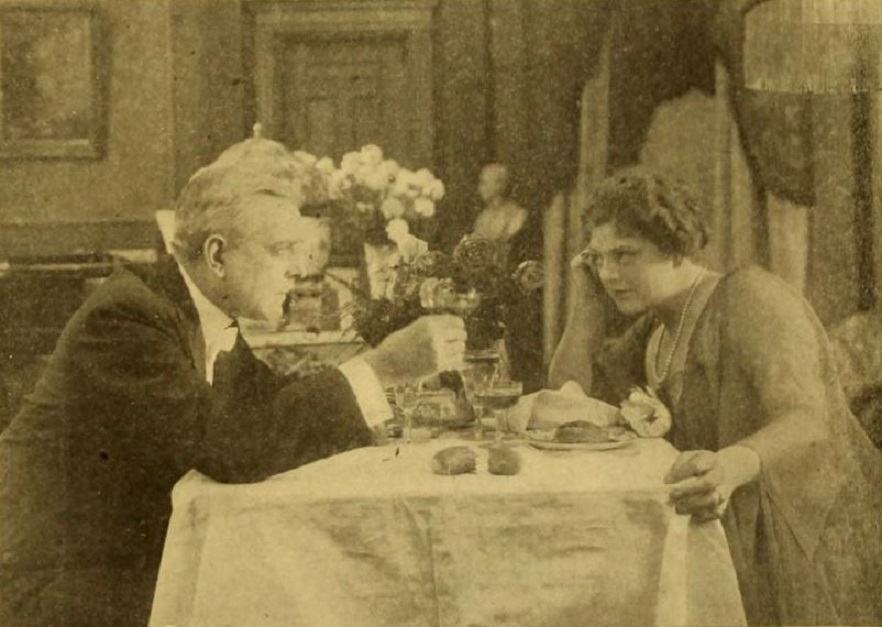
The climax of The White Raven is a masterstroke of dramatic irony. Just as Nan achieves her ultimate victory over Blaisdell, the appearance of the two deuces serves as a chilling reminder of her unresolved past. Her fainting spell is not a sign of weakness, but a recognition of the cosmic balance being restored. The journey back to the Yukon is a pilgrimage to her origins. The discovery of her cabin, now sumptuously furnished, suggests that the stranger has been a silent guardian throughout her five-year odyssey. This revelation of the stranger’s identity—as the man she has already grown to love—is a quintessential romantic resolution, yet it is handled with a poetic grace that avoids the saccharine.
When she presents the torn I.O.U. back to him, it is an act of total surrender and total liberation. The debt is not paid with money or service, but with the authentic self. This thematic resolution of 'debts of the soul' is a recurring motif in silent cinema, often explored in works like The Island of Surprise or The Upheaval. However, Baker’s direction ensures that the emotional stakes feel uniquely personal to Nan’s journey from the 'Nightingale' to the 'Raven.'
In the broader context of 1917 cinema, The White Raven is a sophisticated outlier. While contemporary films like Nuori luotsi focused on more localized, folk-driven narratives, Baker’s work aimed for a global, operatic scale. The film shares a certain DNA with the grand spectacles of the time, such as A hercegnö pongyolája, yet it remains grounded in a gritty realism during its Alaskan sequences. The casting of Ethel Barrymore was a coup; her theatrical pedigree brought a level of sophistication to the screen that helped legitimize the medium in its infancy.
Comparing the film to later works, one can see the early seeds of the 'woman in peril' tropes that would later be subverted in the noir era. The film’s focus on identity and the masks we wear—from the dance hall girl to the operatic queen—prefigures the psychological depth of much later character studies. Even in its moments of pure melodrama, there is a core of truth about the resilience of the human spirit. It avoids the simplistic morality of Children of the Feud, opting instead for a world where justice must be meticulously engineered rather than simply hoped for.
The supporting cast, including Ned Finley and William B. Davidson, provide solid anchors for Barrymore’s ethereal presence. The writing by Charles Logue and George D. Baker is remarkably tight, ensuring that the five-year time jump feels earned rather than jarring. The visual motifs—the deuces, the five-dollar bill, the I.O.U.—are woven through the narrative with the precision of a master weaver. This is a film that understands the power of the image to convey complex emotional states without the need for excessive intertitles.
Ultimately, The White Raven is a profound meditation on the cost of success and the impossibility of escaping one’s past. It suggests that while we may reinvent ourselves in the halls of Milan or New York, our true reckoning always awaits us in the wilderness of our origins. The film’s ending, while romantic, carries a weight of solemnity. Nan doesn't just find a lover; she finds the architect of her freedom. The 'White Raven' finally finds her nest, not through the elimination of her debt, but through its fulfillment.
For modern viewers, the film offers a fascinating window into the early 20th-century psyche. It captures a world on the brink of total technological transformation while still clinging to the moral structures of the previous century. It is as much a historical document as it is a piece of entertainment. Whether viewed as a showcase for Barrymore’s talent or as a sophisticated narrative experiment, The White Raven remains a compelling, visually arresting piece of cinema that deserves its place in the pantheon of silent greats. It stands tall alongside other ambitious works of its year, such as A Hyeroglyphák titka or the epic Valdemar Sejr, proving that the language of film was already well on its way to becoming the universal tongue of the 20th century.
In an era where digital spectacles like Avatar dominate our screens with synthetic wonder, there is something deeply grounding about the tactile, monochrome beauty of a film like The White Raven. It reminds us that the most powerful special effect will always be the human face in the throes of a life-altering decision.
IMDb 6.6
1928
Community
Log in to comment.