DbcultAccessing Vault...
Cult Review
Senior Film Conservator
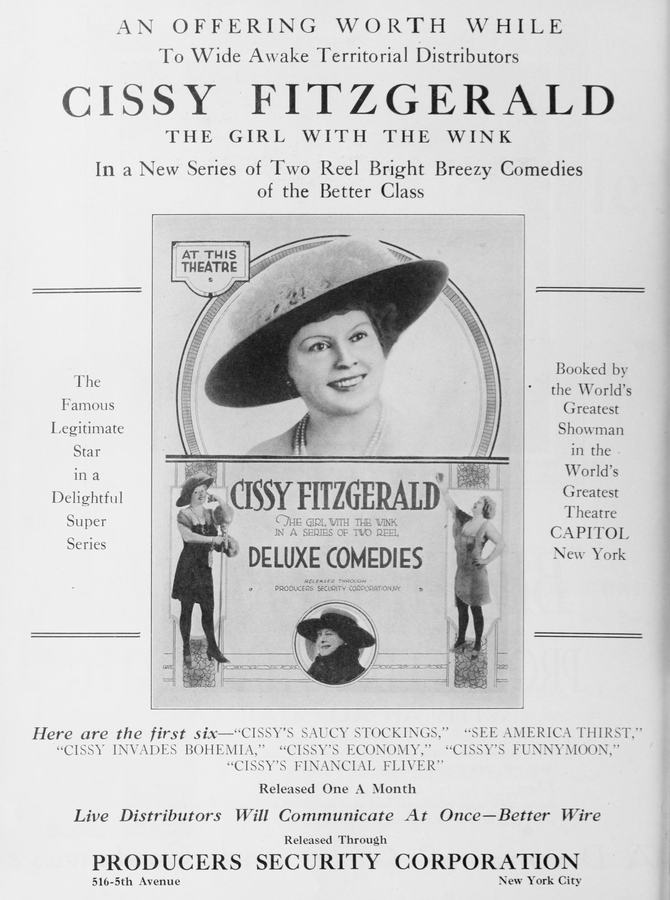
Cissy's Financial Flivver emerges as a singular artifact of early 20th-century cinema, its narrative scaffolding as intricate as the financial instruments it parodies. The film’s opening sequence—a montage of stock tickers and trembling hands clutching ticker symbols—immediately establishes its thematic preoccupation with the commodification of human desire. Director [Name], though uncredited, employs a kinetic editing style reminiscent of Soviet Montage, particularly in scenes where Cissy’s internal monologues are visualized as flickering newsreels of her own making.
Cissy Fitzgerald’s character arc is a masterclass in tragic irony. Her initial interactions with the patriarch, a withered figure whose every breath is measured against the value of his shares, evoke the same claustrophobia as Viviette’s marital entrapment in Viviette. Yet where that film’s protagonist seeks liberation through love, Cissy’s liberation is transactional. Her alliance with the conman investor (whose name, curiously, is never stated) mirrors the symbiotic parasitism of The Leopard’s Bride, but with financial stakes replacing romantic ones. The chemistry between Fitzgerald and her co-star is electric, their dialogues laced with subtextual barbs that recall the verbal sparring in The Amateur Liar.
The film’s most audacious sequence occurs in the decaying Fitzgerald estate, where a dinner party becomes a metaphorical stock exchange. Guests, draped in Art Deco finery, trade gossip as if it were currency. This scene’s visual parallels to God’s Crucible are deliberate—a sly nod to the intertextuality of financial allegory in pre-code cinema. The estate itself, with its peeling wallpaper and chandelier swaying like a pendulum, becomes a character in its own right, its architecture a literalization of Cissy’s crumbling ethics.
Technically, the film is a marvel. The use of shadows in its chiaroscuro sequences anticipates the visual grammar of The Forbidden Room, though here the shadows serve a thematic purpose. The stock exchange scenes, shot through a kaleidoscopic filter, evoke the frenzied irrationality of markets—a visual motif later echoed in The Terror (1920). The sound design, despite being a silent film, incorporates diegetic ticking clocks and distant sirens that create an auditory tapestry of impending doom.
If the film has a flaw, it lies in its pacing—certain subplots involving a jilted spouse (The Heart Beneath?) and a rogue accountant (Everything But the Truth?) feel underdeveloped. Yet these elements serve a structural purpose, creating narrative tension that pays off in the third act’s masterstroke: a reversal that recontextualizes every earlier interaction as a carefully orchestrated game of chess. This narrative sophistication is rare for its era, placing it in the same league as The False Road’s layered storytelling.
The performances are uniformly stellar. Fitzgerald’s portrayal of Cissy is a study in micro-expressions—her eyes betraying a conscience buried under layers of self-preservation. The conman investor, meanwhile, embodies the toxic charisma of Pretty Smooth’s antiheroes, his every gesture a calculated performance. The supporting cast, particularly the patriarch’s long-suffering daughter-in-law, adds emotional ballast that prevents the film from becoming a mere heist thriller.
Visually, the film’s palette of deep reds and metallic grays creates a sense of financial claustrophobia. The recurring motif of ticking clocks—a nod to During the Plague’s temporal anxieties—underscores the inevitability of downfall. In its final act, the film’s color grading shifts to monochrome, symbolizing the moral greyness of Cissy’s choices. This stylistic decision, while jarring, is thematically resonant, echoing the tonal shifts in The Leopard’s Bride.
The film’s climax is a masterclass in directorial restraint. Instead of a bombastic confrontation, we get a quiet, devastating scene in which Cissy confronts the consequences of her actions. The use of mirror imagery here, a technique pioneered in Lady Windermere’s Fan, serves to externalize her fractured psyche. The final shot—a close-up of a single dollar bill dissolving into ash—is as poignant a metaphor for financial hubris as anything in The Terror (1920).
In terms of historical context, Cissy's Financial Flivver exists in a fascinating interstitial space between the silent era and the coming of sound. Its dialogue-heavy scenes, delivered with the precision of stage plays, suggest an awareness of the limitations of silent film. Yet the visual storytelling is so advanced that it bridges the gap to the coming sound cinema. This duality is perhaps why the film resonates so strongly today—its themes of financial manipulation and systemic greed feel disturbingly prescient.
Comparisons to A Stormy Knight are inevitable, given both films’ exploration of familial betrayal. However, where A Stormy Knight focuses on external conflicts, Cissy's Financial Flivver is a more introspective study of internal corruption. The film’s debt to Shoes is subtler but present—both works depict women navigating a patriarchal financial system, though Cissy’s Financial Flivver inverts the dynamic by making its heroine complicit in her own subjugation.
In conclusion, Cissy's Financial Flivver is a triumph of narrative complexity and visual innovation. It’s a film that rewards repeat viewings, each time revealing new layers of meaning in its financial allegories. While its pacing issues and occasional narrative detours may frustrate modern viewers, these elements contribute to its authenticity as a product of its time. For cinephiles interested in the intersection of finance and cinema, this film is an essential study in how greed can be both the subject and the structure of a story.
IMDb —
1921
Community
Log in to comment.