DbcultAccessing Vault...
7/10
Senior Film Conservator
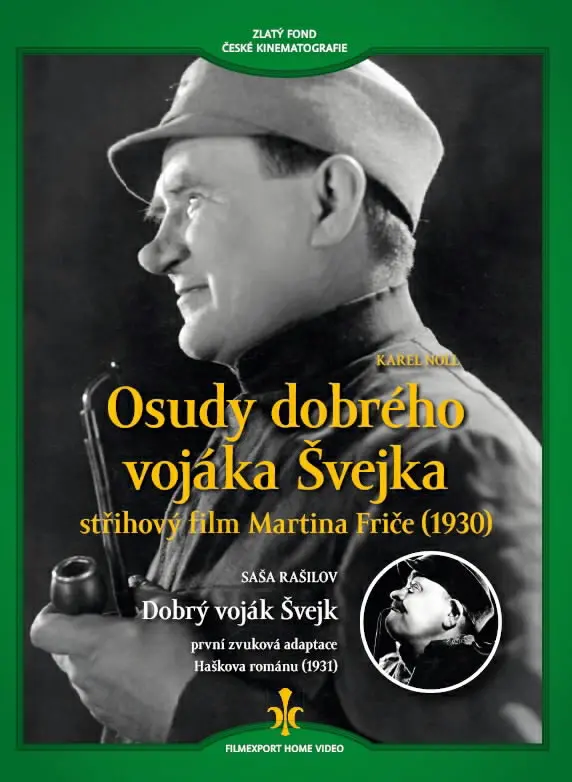
A definitive 7/10 rating for a film that redefined the boundaries of cult cinema. Dobrý voják Svejk remains a cornerstone of transgressive art.
Is this film worth watching today? Short answer: yes, but only if you can handle a protagonist who wins by refusing to play the game. It is a mandatory viewing for anyone who feels crushed by modern bureaucracy, but it is certainly not for those seeking a traditional, high-stakes war hero story.
Direct Answer: This film works because it transforms 'stupidity' into a strategic defense mechanism against an oppressive state. It fails because the silent-era title cards occasionally interrupt the comedic timing of Švejk’s circular logic. You should watch it if you believe that the world is run by people far more insane than those in the asylums.
Dobrý voják Švejk is not a war movie in the traditional sense. It is a movie about the paperwork of war. While other films from the mid-1920s, such as Hands Up!, utilized physical slapstick to navigate historical conflict, Karel Lamač’s direction here focuses on the absurdity of the spoken (or written) word. The central conceit is brilliant: Švejk is so eager to serve the Emperor that he becomes a liability. He follows every rule to its most ridiculous conclusion.
Take the scene in the psychiatric ward. Švejk is surrounded by doctors who are desperate to prove he is a malingerer. Instead of acting 'sane,' Švejk leans into his diagnosis with a smile that borders on the terrifying. He is happy to be an imbecile. By accepting the label, he becomes immune to the threats of the state. You can't punish a man who is too 'dumb' to understand he’s being punished. It’s a chillingly effective form of rebellion.
Karl Noll’s performance is the heartbeat of this production. Unlike the exaggerated pantomime seen in many silent comedies, Noll plays Švejk with a terrifyingly consistent pleasantness. His eyes are always wide, his posture slightly slumped, and his face a mask of total compliance. It is a performance of subtraction. He removes any hint of guile, leaving the audience to wonder: is he a genius or truly a fool? I argue he is neither; he is a survivor who has realized that the only way to survive a mad world is to be the maddest person in the room.
Compared to the more frantic energy found in Sally of the Sawdust, Noll is a pillar of stillness. He doesn't need to fall down stairs to be funny. He just needs to agree with a colonel until the colonel’s head explodes from frustration. This is a rare example of a silent film where the humor is purely psychological. The way Noll handles the scene regarding the 'injured majesty' of the Emperor is a masterclass in deadpan delivery without the benefit of a voice.
Karel Lamač, working with cinematographer Václav Vích, captures Prague not as a romantic city, but as a series of cramped rooms and interrogation chambers. The lighting is often harsh and flat, which serves the satirical tone well. There is no room for shadows or mystery here; everything is out in the open, and everything is ridiculous. The pacing is deliberate, perhaps too much so for modern audiences used to rapid-fire editing, but it mirrors the slow, grinding nature of the Austro-Hungarian bureaucracy.
One of the most striking visual elements is the way the military uniforms are framed. They are always slightly too large or too stiff, making the officers look like children playing dress-up. This visual choice underscores the film's primary argument: that the entire structure of the empire is a fragile facade. When Švejk enters the frame, his casual, unkempt appearance immediately deconstructs the authority of those around him. It is a visual clash between the organic human and the rigid institution.
Yes, Dobrý voják Švejk is essential for fans of political satire and silent cinema history. It offers a unique perspective on World War I from the 'losers' side of the conflict. While it lacks the spectacle of big-budget Hollywood silents, its intellectual weight is much heavier. It is a film that demands your attention but rewards you with a profound sense of irony that still feels relevant in today's world of corporate and political jargon.
The most debatable aspect of the film is its treatment of mental health. In the 1920s, the asylum was a common trope for comedy, but here it is used as a metaphor for the state itself. The doctors are depicted as more obsessed with protocol than the patients are with their delusions. There is a specific moment where a physician accuses Švejk of 'simulating' idiocy. Švejk’s response—that he is an 'officially approved' imbecile—is the ultimate checkmate. He has the paperwork to prove he isn't responsible for his actions. It is a brilliant, if cynical, observation on how we use labels to navigate social systems.
This film doesn't offer a happy ending or a grand resolution. It offers a survival manual. It suggests that when the world goes to war, the only sane response is to go to the pub and wait for the paperwork to get lost. It is a brutally simple philosophy. It works. But it’s flawed because it requires a level of emotional detachment that most people simply cannot maintain. Švejk is a hero of the void.
Pros:
- Exceptional lead performance that defines the character for generations.
- A sharp, timeless script that avoids the sentimentality of many 1920s films.
- Authentic Prague locations provide a tangible sense of place.
- A unique 'passive' approach to the anti-war genre.
Cons:
- Some of the supporting characters are caricatures that haven't aged as well as Švejk.
- The technical limitations of 1926 Czech cinema are apparent in the flat lighting.
- It requires a familiarity with the historical context to fully appreciate the stakes.
Dobrý voják Švejk is a masterpiece of subversion. It is a film that laughs in the face of death, not because it is brave, but because it finds death to be just another administrative error. While it may not have the technical polish of Lille Dorrit or the narrative sweep of other contemporary dramas, its central character remains one of the most important figures in 20th-century fiction. It is a film about the power of saying 'yes' until the person asking the question gives up and goes home. In a world that constantly demands our outrage, Švejk’s weaponized pleasantness is a radical alternative. It is a difficult, slow, but ultimately rewarding experience that proves that the most dangerous thing you can be in a war is a man who doesn't care about winning.
IMDb —
1935
Community
Log in to comment.