DbcultAccessing Vault...
5.9/10
Senior Film Conservator
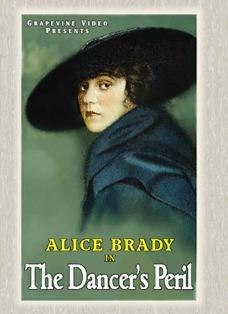
A definitive 5.9/10 rating for a film that redefined the boundaries of cult cinema. The Dancer's Peril remains a cornerstone of transgressive art.
Snowflakes like powdered sugar drift across the black-and-white cinematography, each flake a tiny white lie told by the Romanov regime to itself. When Lola—once the diamond-bright prima of the Mariinsky—slips through a side gate of the Winter Palace clutching nothing but a sealskin muff and a terror-blanched husband, the film announces its intent: this will be a ballet of banishments, a choreography of crossings-out.
Director Travers Vale (working from Harriet Morris’s ferociously feminist script) refuses to let exile look romantic; the cutting-room floor is littered with shots of frost-nipped nostrils and fabric frozen stiff. Cut to a time-lapse montage: the same snow now slushes grey outside the Imperial Ballet School where Marta Antonovitch—Augusta Burmeister in a performance that could sand paint off a battleship—counts tendus like a prison warden clicking tumblers into place. The camera lingers on her key ring, a medieval cluster of iron promises that she will decide who exits the mausoleum of Russian art.
Enter Vasta, played by Cecil Fletcher with the coltish kineticism of someone who learned to walk on marble corridors soaked in rosin. Watch the way Vale frames her first solo: not the expected full-body arabesque, but an extreme close-up of her arch as it peels away from the floor—an intimate insurgency against every wide-shot cliché the era peddled. The foot becomes a question mark: whose blood pulses beneath these tendons? Answer: the exiled Grand Duke Alexis, Montagu Love’s cheekbones sharpened to a guillotine edge, watching from the doorway like a man inhaling opium smoke made of memory.
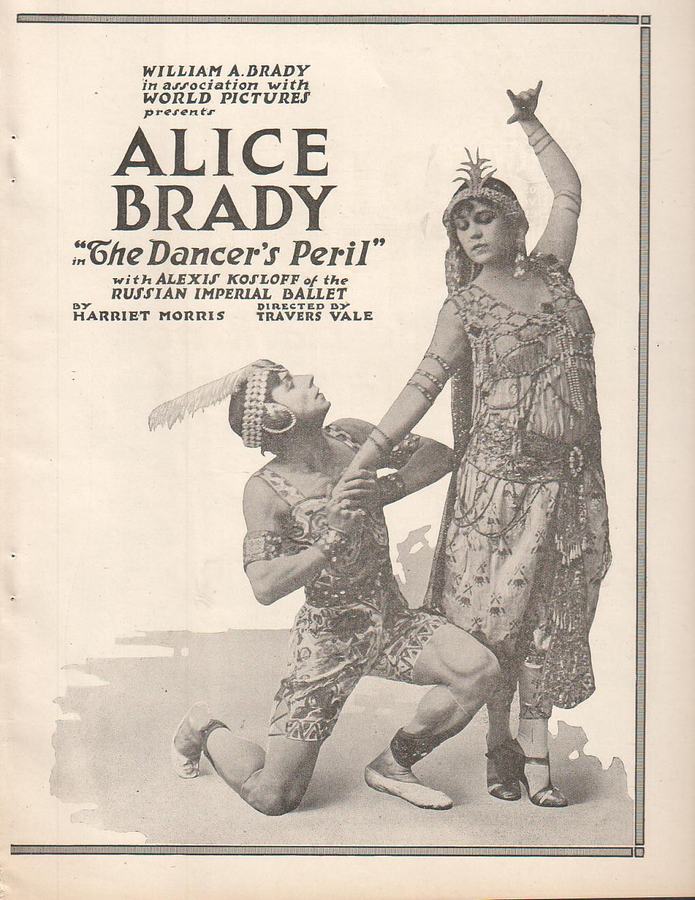
The narrative hinge—a gender-bent train ride—should feel like Shakespearean trouser-role froth, yet Vale shoots the substitution with documentary stealth. Vasta shears her waist-length plait in a single off-screen snip; we only glimpse the severed rope of hair sliding across wet cobblestones like a cast-off serpent. The substitution is not played for giggles but for existential roulette: a girl wagering her body against the map of Europe.
Paris, when it arrives, erupts in sulphur-yellow title cards that scream OPÉRA in jittery font. Vale and cinematographer Philip Hahn bathe the Folies Bergère in sodium glare; every champagne bubble is a miniature sun, every can-can kick a semaphore of libido. Yet the real spectacle is Lola’s re-entrance. Alice Brady, swaddled in jet-bead mourning that absorbs light like crushed velvet at a funeral, moves through the café tables as if she’s perpetually late for her own assassination. Watch the micro-gesture: she adjusts a glove by tugging the wristbone, a flicker of the old stagecraft that once made Tsars stammer. Pavloff—played by Alexis Kosloff with the oil-slick smile of a man who collects other people’s childhoods—leans in to whisper the genealogical bombshell. The camera records Brady’s pupils dilating, two eclipses occurring simultaneously.
The kidnapping sequence is a master-class in chiaroscuro tension. Vale kills the electrician first—a prolepsis of darkness—so that when the stage blacks out the audience inside the film and outside it share the same suffocation. The abduction happens in a three-second splice: one frame Vasta’s muslin skirt mid-pirouette, next frame a velvet sack swallowing the spotlight. The ensuing hunt, rather than sprawling across arrondissements, compresses into Pavloff’s lamplit apartment where Rococo mirrors multiply the damsel into infinity yet none of her selves can escape. It’s Beauty and the Beast re-staged as Beauty in the Beast’s pocket.
The maternal rescue pivots on sound we cannot hear: a half-stifled sob travelling through mahogany. Lola, tipsy on cognac and suppressed maternal instinct, follows the acoustic breadcrumb until her palm rests on the locked door. Vale holds here for an almost sadistic duration—seven full seconds of Brady’s silent communion with the woodgrain—before cutting to the key entering the keyhole like a lover sliding home. When mother and daughter finally occupy the same sliver of celluloid, the film refuses swelling strings (this is 1917, after all) and instead gives us the hush of two women learning the shape of each other’s faces by gaslight.
The shooting, when it comes, is less catharsis than cosmic bookkeeping. Pavloff’s death thud is accompanied by a vase of lilacs toppling—petals across the carcass, a funeral staged by a still-life painter. Lola’s confession spills in intertitles lettered with trembling punctuation: “I have killed what hunted my child. Let history call it murder; I call it Monday.” The line, radical for 1917, still scalps the scalp of anyone who’s had to explain survival in a court designed by predators.
Alexis’s eleventh-hour arrival could have capsized the film into patriarchal pardon. Instead, Montagu Love plays it like a man swallowing broken glass: every syllable of apology cuts his mouth on the way out. His offer to shoulder the blame is not gallant but genealogical penance—an aristocrat finally grasping that titles are just tin unless corroded by accountability. The closing shot—Lola’s smile dissolving into a dissolve—feels like sunrise on an ice floe: fragile, inevitable, and already melting into whatever revolution will come next.
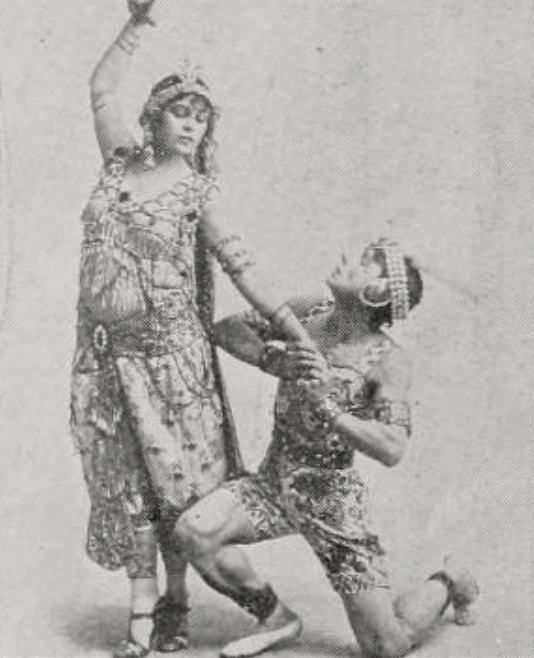
Alice Brady’s Lola predates Gloria Swanson’s Norma Desmond by seven years yet carries the same radioactive glamour of someone who has weaponised nostalgia. Notice how she ages only her hands—fingers curl ever so slightly inward, as if forever cradling an invisible stage-prop crown. Cecil Fletcher’s Vasta dances not with airy perfection but with the muscular aggression of someone who knows the barre is both altar and cage. In an era when female dancers in film were often interchangeable sylphs, Fletcher gives us calves that look like they could kick through Empire.
Montagu Love, usually cast as cardboard aristocrats, here injects Alexis with the hollowed eyes of a man who realises that bloodline is just another word for brand, and brands can be rewritten by revolutions. His final confession—“I will tell the Tsar I shot him to save what remains of his honour”—is delivered in medium-shot so we catch the twitch under his left eye, a tell that betrays the performance inside the performance.
Vale’s collaboration with cinematographer Philip Hahn yields textures that feel polychromatic even sans pigment. The St. Petersburg sequences are filtered through mesh netting, giving faces the granular softness of pastel dust. Paris, by contrast, is shot through yellow gels so that the screen appears steeped in cognac—appropriate for a city drunk on its own modernity. When Pavloff prowls the backstage corridors, the camera adopts his POV: gas-jets streak into comet tails, a pre-figuration of film noir sodium glare still a decade away.
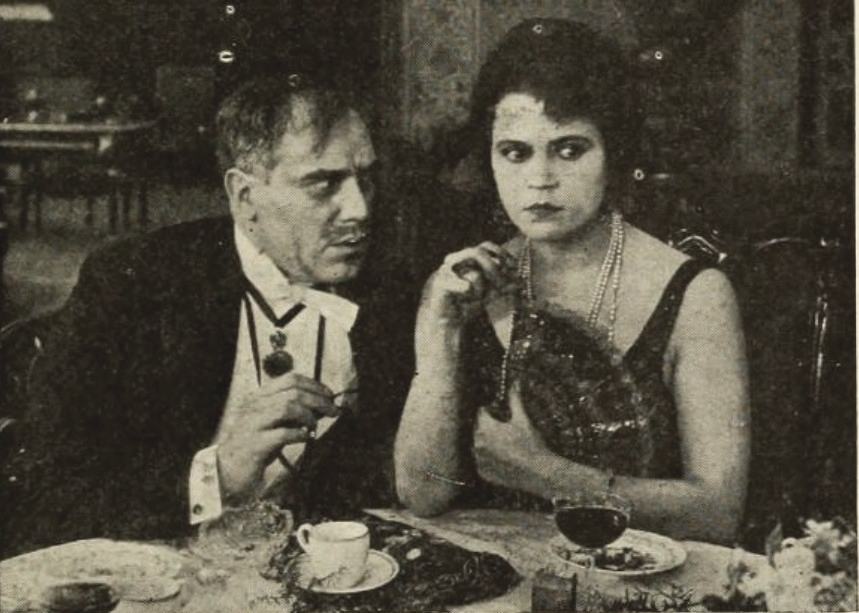
Costuming deserves a monograph. Lola’s midnight-blue velvet cloak (rendered in shimmering grey on the print) bears a collar so high it grazes her earlobes—effectively a portable proscenium arch framing her face. Vasta’s boy-disguise is not the usual dolled-up “look-it’s-a-girl-in-pants” farce but a credible street-urchin ensemble: jacket too wide, trousers cinched with rope, newsboy cap casting a shadow that obliterates gender signifiers. When the cap comes off in Pavloff’s parlour, the reveal of her shorn head feels like a second birth—messy, bloody, and utterly devoid of maternal softness.
Harriet Morris’s script sneaks in a feminist manifesto disguised as melodrama. Every male attempt to “protect” women—Alexis hiding Vasta, Marta sequestering her from Paris, Pavloff coveting her as muse—translates into spatial imprisonment. The film’s true radicalism lies in showing women’s solidarity as the skeleton key: Lola’s bullet liberates not just Vasta but herself from the Tsarist fairy-tale that exiled her in the first place. In 1917, while the actual Russian Empire was cracking under a real revolution, American audiences saw a parallel uprising staged in tutus and top-hats.
Note too how the camera itself is complicit in the male gaze, then sabotages it. Pavloff’s first view of Vasta onstage is a lecherous tilt from ankles to visage, yet Vale immediately cuts to Vasta’s own point-of-view of the orchestra pit: rows of balding men drooling into their programmes. The reversal indicts not just Pavloff but every spectator—us included—who assumes the dancer’s body is public domain.
Like so many silents from World’s Pictures, the negative of The Dancer’s Peril vanished in the 1935 Fox vault fire. What circulates among collectors is a 9.5 mm Pathéscope abridgement—roughly 34 minutes—missing the entire first-reel St. Petersburg prologue. The Parisian kidnapping survives intact, hence the film’s reputation as a brisk thriller rather than the languid maternal epic it truly is. A 4 K restoration would ideally re-insert production-still montages of the snow-blinded exile, accompanied by a newly commissioned score blending balalaika with Parisian accordion dissonance.
Until then, viewers can splice context from kindred titles: compare Lola’s exile to the bartered bride in Lika mot lika, or Vasta’s gender-bent escape with the tomboy heroics of Up or Down? For maternal revenge, see The Woman and the Beast; for backstage criminality, The Gilded Spider offers a similarly predatory impresario.
The Dancer’s Peril understands that exile is not a location but a choreography: one keeps fleeing until the music stops or until one rewrites the score. Lola’s gunshot is the fermata that lets mother and daughter compose their own tempo, a syncopated future no longer dictated by Tsars, impresarios, or even lovers who promise canvases instead of cages. In 1917 that was a revolutionary idea; in 2024 it still feels scandalously new.
IMDb —
1927
Community
Log in to comment.