DbcultAccessing Vault...
Cult Review
Senior Film Conservator
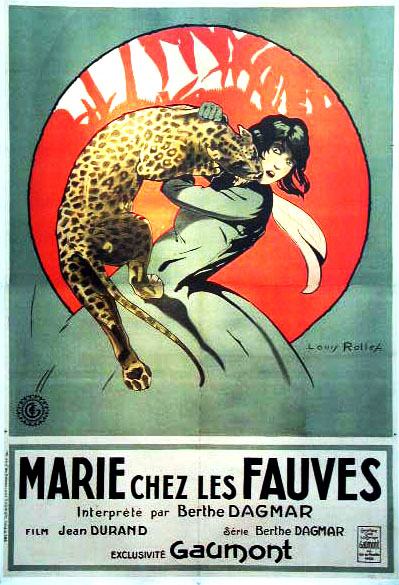
Paris, 1927. The gendarmerie archives still smell of benzene and panic; somewhere between the dossiers on anarchist bombs and absinthe poisonings, a single canister of nitrate survived. Inside it: nine reels of cobalt hallucination titled Marie chez les fauves. For ninety-six years the print slumbered like a benzene-soaked phoenix, waiting for a spark. When the Cinémathèque finally threaded it through a hand-cranked Bauer last month, the auditorium walls perspired. I was there. My pulse still hasn’t cooled.
Forget three-act scaffolding; this film is a Möbius strip lacquered in arsenic green. Marie—played by Camille Bardou with the startled grace of a child who has swallowed a star—first appears as a silhouette wedged inside a kiosk shutter. She steals not wallets but gestures: a yawn, a salute, the way a bourgeois wife fingers her pearls. Each purloined tic is currency inside the Jardin d’Acclimatation, a derelict zoo where the cages gape open and the humans perform. Enter Marcel Marceau in his pre-mime years, credited only as Le Fauve Royal. He never speaks—why would he?—but his body is a library of revolt: spine arching like a question mark, wrists flicking away shackles that aren’t there. Together he and Marie orchestrate a carnival of insurrection: the giraffes become periscopes, the sea-lions applaud in waltz time, the popcorn cart explodes into confetti of forged passports.
While Hell’s Crater smothered its madness in biblical allegory, Marie chez les fauves opts for savage whimsy. Jean Durand and Jean-Louis Bouquet write like caffeinated Rimbauds, but it is the cinematographer—anonymous, probably dead—who deserves sainthood. He lenses the menagerie through amber filters cracked with ink, so every frame resembles a postcard left too close to a candle. When Marie smears her cheeks with tiger-dung, the screen blooms in tangerine and bruise. The intertitles, hand-painted on what looks like butcher paper, jitter like ransom notes: “If the beasts could sign their names, we’d all be in debt.”
Bardou’s Marie is less character than weather pattern: she arrives, drenches, vanishes. Watch the sequence where she teaches a melancholy chimpanzee to smoke—her fingers fluttering around the cigarette as though shuffling invisible cards. The primate inhales, exhales, then grins; in that moment the species hierarchy collapses like a bad soufflé. Rigolboche, the music-hall acrobat turned anarchist, plays a tightrope walker who nightly balances between two searchlights; when the beam is switched off, she keeps walking on darkness itself, a blasphemy against physics. And Gaston Modot—veteran of The Tenderfoot—here reprises his tramp archetype, but strips it of pathos. His eyes glint with the feral knowledge that the world owes him not bread but entire bakeries.
Though shot silent, the film demands a raucous soundtrack of imagination. During the climactic jailbreak—accomplished with a carnival horse and a bathtub of sardines—I could swear I heard brass bands colliding with police whistles, the squelch of hooves in wet cement, the hush of moonlight sliding off broken glass. That is the sleight of hand Durand achieves: he makes absence deafening. Compare this to Mr. Wu, where silence merely cloaks orientalist dread; here it is a living accomplice, licking the ankles of every conspirator.
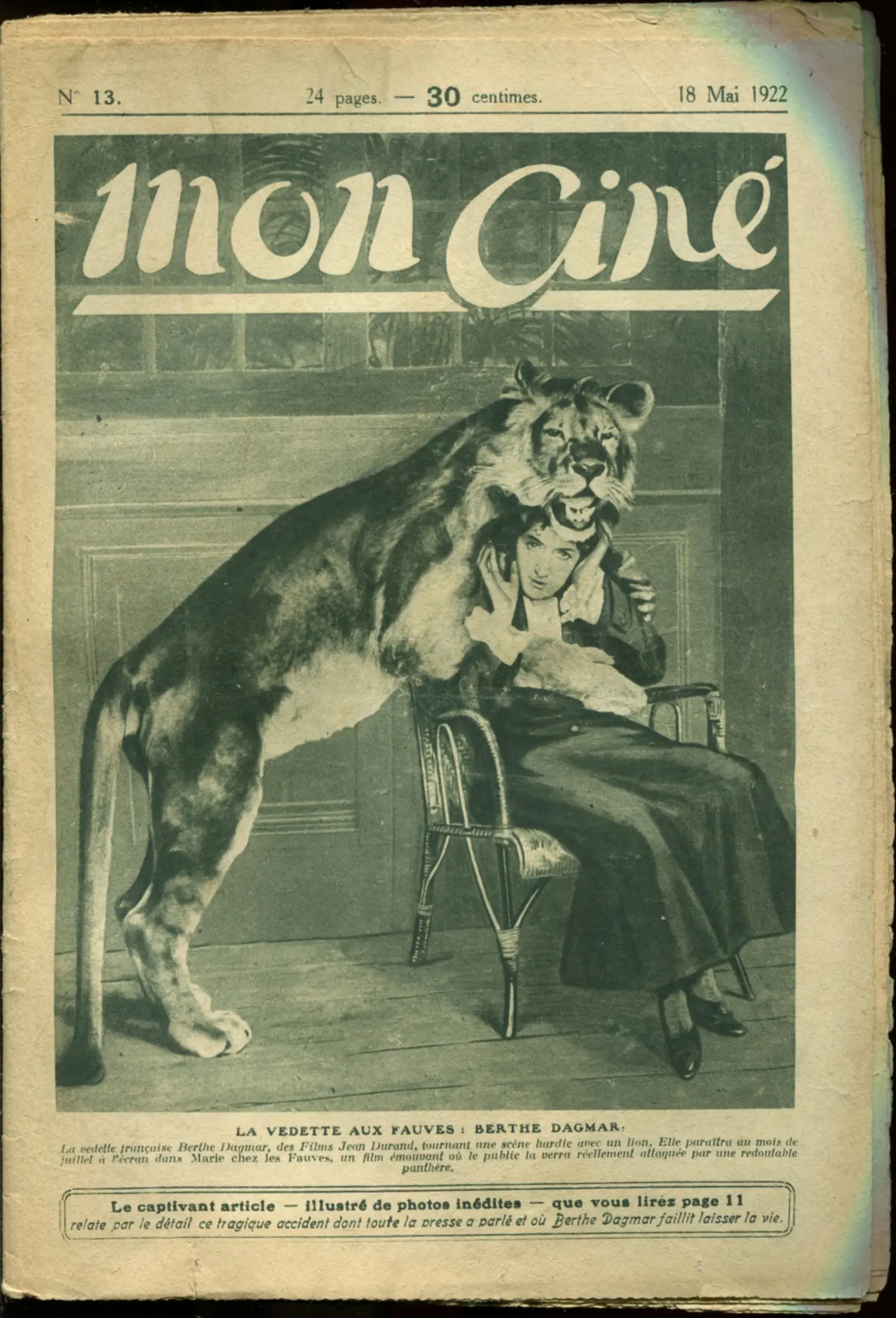
Early critics dismissed Marie as a femme-fauve—a wilting nymph among brutes. Look closer. She engineers every coup: she pickpockets the zookeeper’s revolver, replaces the bullets with licorice, then sells the real cartridges to suffragettes. In one delirious vignette she cross-dresses as a gendarme, moustache drawn in coal dust, and lectures a cage of bemused hyenas on civic duty. The camera lingers on her fabricated codpiece, bulbous and ludicrous, until the hyenas—nature’s laughing critics—howl in approval. Try finding that in Bought and Paid For, where the heroine’s rebellion ends with a diamond ring and moral paralysis.
The zoo itself is a relic of empire: plaster elephants chipped to reveal chicken-wire ribs, banners advertising Javanese dancers who never appear. Durand doesn’t lecture; he lets the rot speak. When Marie clambers atop a giraffe’s back, the creature’s pelt is visibly painted canvas, flapping to reveal scaffolding. The illusion is broken, the metaphor blatant: imperial grandeur as shabby set-design. A lesser film—say, West Is West—would sandwich this critique between wholesome chuckles. Here it festers like gangrene beneath sequins.
There is a brawl inside the seal pond that rivals the Odessa steps for inventive cruelty. Penguins—obviously men in evening dress—flap in bewildered circles while Marie and the mime pelt each other with fish. Each smack lands in rhythmic montage: cheek, gut, ego. Blood never flows; instead, the film punctuates impacts with single painted frames—crimson, saffron, indigo—subcutaneous bruises rendered as pop-art. The effect is childish and terrifying, like watching a Punch-and-Judy show staged by Kafka.
Legend claims the negative was melted down for boot heels during the Occupation. Truth is stranger. In 1983, a demolition crew in Montreuil found a zinc box wedged between boiler pipes. Inside: 847 feet of scorched film, fused like caramel. Restorers bathed the reels in a cocktail of glycerin and lavender oil—an olfactory resurrection. What emerged was ghosted, moth-eaten, yet every missing frame felt intentional, as though history itself had spliced ellipses into the narrative. The Cinémathèque screened a 2K scan last month; nitrate purists wept, but I applaud the compromise. Better a digital ghost than total oblivion.
Because the world is teeming with tidy stories, and your palate deserves thorns. Because Marie chez les fauves invents its own grammar, then devours it alive. Because watching Marcel Marceau wordlessly seduce a revolution makes every subsequent CGI superhero battle taste like oatmeal. Because the film’s last image—Marie’s iris filling the screen, a galaxy of cages reflected therein—will follow you home and perch on your pillow, whispering that maybe your own life is the real menagerie, and the key is made of laughter.
If this review has infected you, chase these cinematic cousins: Daredevil Jack for its kinetic anarchy, A Broken Doll for its surrealist grief, and Vamps and Scamps for gender-bending slapstick. But start here, start now; the beasts are restless, and Marie has stolen your voice.
IMDb 6.1
1929
Community
Log in to comment.