DbcultAccessing Vault...
Cult Review
Senior Film Conservator
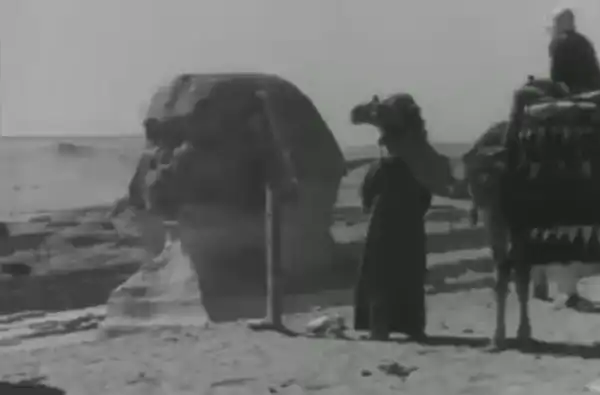
If you like old-school travel logs or just want to see what Cairo looked like before the world went sideways in the 40s, you’ll probably dig this. If you need a plot or characters, steer clear. You’ll be bored to tears within five minutes.
There is something inherently strange about watching footage from 1939. You know what's coming, even if the people on screen are just trying to sell rugs or pose by the Sphinx.
André de la Varre has this very specific, slightly stiff way of framing things. It’s not poetic, but it’s honest. You get the sense he was just trying to get the shot before the sun moved too far.
The markets in Cairo look absolutely chaotic. People are everywhere. There’s this one guy in the background of a wide shot who just stares directly into the lens for a solid ten seconds. He probably had no idea we’d be watching him nearly a century later. It’s a bit eerie.
The film doesn't try to hide the modernization of the city. It actually leans into it. There are shots of traffic that feel like a nervous breakdown compared to the silence of the desert scenes.
It’s short. Thank goodness. Any longer and the charm of the grainy film stock would start to wear thin. Sometimes, a quick glance at the past is all you need.
It’s not a masterpiece, but it’s a record. And sometimes, that’s enough. 🐪
—

Editorial
Deciphering the legacy of transgressive cult cinema.
Community
Log in to comment.