DbcultAccessing Vault...
Cult Review
Senior Film Conservator
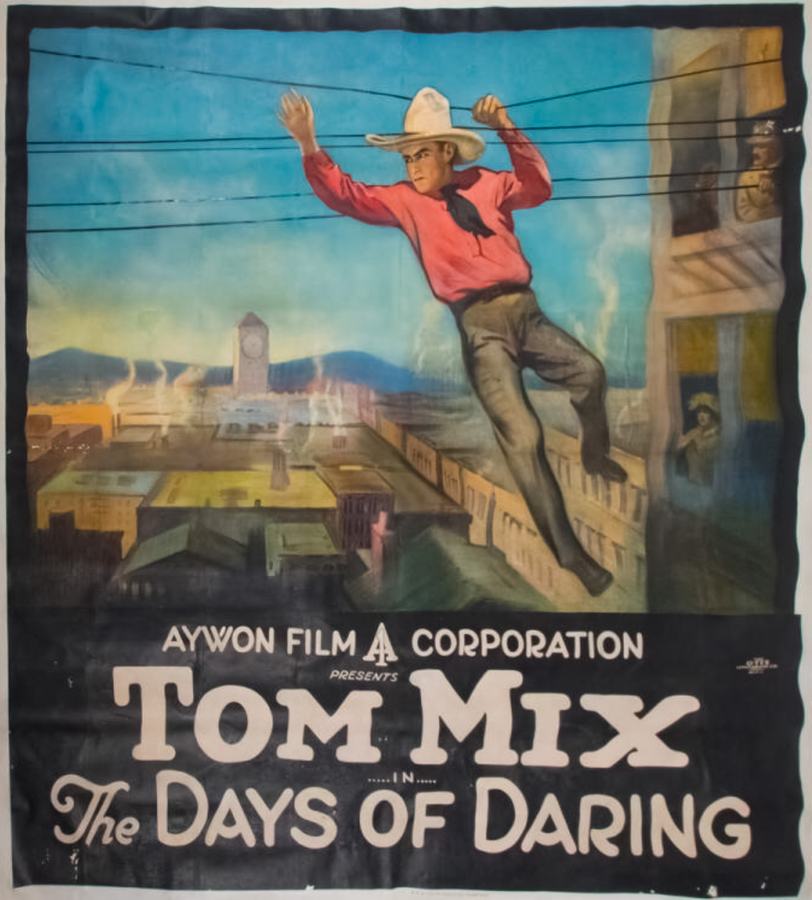
Stepping into the cinematic landscape of 'Days of Daring' is akin to unearthing a time capsule, a vibrant relic from an era when the American West was not just a geographical location but a boundless canvas for myth-making. This isn't merely a film; it's a pulsating artifact, a testament to the raw, unadulterated power of silent storytelling, elevated by the magnetic presence of Tom Mix and the narrative genius of Zane Grey. Even without the spoken word, the film communicates with an astonishing clarity, etching its narrative into the viewer's consciousness through grand gestures, dynamic action, and an almost poetic visual language.
The brilliance of 'Days of Daring' lies in its elegant simplicity, a directness that belies a profound understanding of human nature and the inherent conflicts of the frontier. We are introduced to Dusty Ryder, a character who embodies the archetypal Western hero – a man of few words but decisive action, whose moral compass points true north even in the most morally ambiguous terrains. Tom Mix, in a performance that solidifies his iconic status, doesn't just play Dusty; he *is* Dusty. Every flick of his wrist, every powerful stride of his horse, every glint in his eye speaks volumes, portraying a man shaped by the harsh realities of the open range yet possessing an unwavering commitment to justice. His portrayal is a masterclass in physical acting, a ballet of daring stunts and nuanced expressions that captivates and persuades without uttering a single syllable.
Zane Grey's influence, even in its cinematic translation, is palpable. His literary hallmarks – the reverence for the untamed landscape, the stark delineation between good and evil, and the romantic idealization of the cowboy as a solitary figure of rectitude – are woven into the very fabric of the film. The plot, a classic tale of land dispute and villainy, resonates with the universal struggle against oppression. Bartholomew 'Black Bart' Thorne isn't just a generic antagonist; he's a manifestation of unchecked greed, a force that seeks to corrupt the pristine wilderness and exploit the vulnerable. His machinations against the homesteaders, particularly the Vance family, provide the emotional core that fuels Dusty's righteous indignation. The film meticulously builds the tension, allowing Thorne's villainy to fester and grow, making Dusty's eventual intervention all the more satisfying.
The visual storytelling is, for a silent film of its era, remarkably sophisticated. The cinematography captures the sweeping grandeur of the Western landscape with an almost painterly quality, transforming vast plains and rugged mountains into characters in their own right. These vistas are not mere backdrops; they are integral to the narrative, reflecting the characters' struggles and aspirations. The pacing, a delicate balance between contemplative moments and exhilarating action sequences, keeps the audience perpetually engaged. The horseback chases, a signature of Mix's films, are executed with breathtaking precision and a palpable sense of danger, making them feel as immediate and thrilling today as they must have been a century ago. The ingenuity in staging these sequences, the sheer physicality involved, speaks to a dedication to authenticity that few contemporary films can match.
Beyond the thrilling spectacle, 'Days of Daring' delves into themes that remain profoundly relevant. It's a meditation on justice, not merely as a legal concept but as a moral imperative that transcends man-made laws. Dusty Ryder's actions are driven by an innate sense of fairness, a personal code that dictates the protection of the innocent and the punishment of the wicked. This resonates with the enduring human desire for balance and rectitude in a chaotic world. The film also explores the fragility of community in the face of avarice, highlighting how a single malevolent force can threaten to dismantle the collective dreams of many. It’s a powerful reminder that vigilance and courage are ceaselessly required to safeguard the common good.
The love story, subtly woven into the fabric of the larger conflict, adds another layer of emotional depth. Elara Vance is not merely a damsel in distress; she's a woman of resilience and spirit, a fitting counterpart to Dusty's quiet strength. Their connection isn't overtly declared but is communicated through shared glances, protective gestures, and a mutual understanding born of shared adversity. This understated romance feels authentic, a natural outgrowth of the circumstances rather than a forced plot device, adding warmth and humanity to the often-harsh frontier narrative. It's a stark contrast to the more melodramatic and often overwrought romantic entanglements seen in films like Dorian's Divorce, where emotional turmoil is often the primary driver. Here, romance serves to underscore the stakes and humanize the hero.
Comparing 'Days of Daring' to other films of its era, one can appreciate its unique position. While it shares the dramatic intensity of a film like Isterzannye dushi (Tormented Souls), its focus remains firmly rooted in the physical and moral landscape of the West rather than psychological introspection. The ingenuity Dusty displays in outmaneuvering Thorne's men, often through clever horsemanship and strategic thinking, echoes the cunning and resourcefulness found in the investigative narratives of Detective Craig's Coup, albeit with six-shooters and galloping steeds instead of magnifying glasses and city streets. The fight for survival against overwhelming odds, a core tenet of this film, finds a spiritual cousin in the relentless struggle for dignity and freedom depicted in Les Misérables, Part 1: Jean Valjean, demonstrating how universal themes transcend genre and setting.
The enduring appeal of Tom Mix cannot be overstated. He wasn't just an actor; he was a living embodiment of the cowboy ideal, a figure of aspirational heroism for generations. His real-life experience as a rodeo star and rough rider lent an unparalleled authenticity to his on-screen persona, blurring the lines between performer and character. This authenticity is a cornerstone of 'Days of Daring', making every stunt, every daring leap, feel genuinely earned. He brought a kinetic energy to the screen that was both thrilling and reassuring, establishing a template for the Western hero that would influence countless actors for decades to come. His presence alone was often enough to draw audiences, much like the star power of actors in films such as The Matinee Girl or The Joyous Liar, but with a unique, rugged charm.
The film's impact extends beyond its immediate entertainment value. It contributed significantly to the solidification of the Western as a cinematic genre, establishing tropes and narrative conventions that would become foundational. It painted a romanticized, yet deeply resonant, portrait of America's frontier past, contributing to the national mythology of self-reliance and rugged individualism. While films like Pigtails and Peaches offered lighter, more whimsical fare, and Social Hypocrites critiqued urban morality, 'Days of Daring' championed a straightforward, almost elemental morality, where right and wrong were clear, and justice, though hard-won, was ultimately attainable through courage and conviction.
The climax of the film, a whirlwind of action and suspense, is a masterclass in silent film spectacle. The final confrontation between Dusty and Thorne is not just a physical battle but a clash of ideologies – the honorable individual against corrupt power. The resolution, while satisfying, isn't simplistic. It underscores the idea that while one battle may be won, the eternal struggle for justice is ongoing, a sentiment echoed in the more somber reflections of films like The Light That Failed. Yet, 'Days of Daring' ultimately leaves the viewer with a sense of hope, a belief in the inherent goodness of humanity and the power of a single individual to make a profound difference.
Revisiting 'Days of Daring' today is not merely an exercise in historical appreciation; it's a genuine cinematic experience. It reminds us of the artistry inherent in silent film, the power of visual storytelling, and the timeless appeal of a well-crafted narrative. The film, much like its hero, stands tall and resolute, a beacon of adventure and integrity from a bygone era. It's a testament to the fact that compelling cinema doesn't require dialogue, only vision, passion, and a profound understanding of the human heart. It is a vibrant chapter in the annals of film, one that continues to speak volumes without uttering a single word, inviting us to revel in its audacious spirit and its unwavering belief in the triumph of good over evil. The sheer audacity of its stunts, the emotional resonance of its characters, and the moral clarity of its narrative ensure its place as a truly remarkable piece of cinematic history, a bold brushstroke on the vast canvas of the early American motion picture industry.
From the meticulous framing of wide-open spaces to the intimate close-ups capturing the raw emotion on Mix's face, every element of 'Days of Daring' is crafted with purpose. The intertitles, often a point of contention for modern viewers, are here concise and impactful, serving to advance the plot and deepen character understanding without unnecessary exposition. They are carefully integrated, not as a crutch, but as an elegant narrative device, a lost art in itself. This film, for all its vintage charm, possesses a kinetic energy that belies its age, proving that true cinematic prowess transcends technological limitations. It's an essential watch for anyone seeking to understand the foundational elements of American genre filmmaking, particularly the Western, and the indelible mark left by its pioneering stars and storytellers.
The film also serves as a fascinating historical document, reflecting societal values and anxieties of the early 20th century. The struggles of homesteaders against powerful, often corrupt, land barons were not just fictional constructs but echoed real-life conflicts shaping the American frontier. In this sense, 'Days of Daring' functions as more than entertainment; it’s a cultural touchstone, reflecting the collective aspirations and fears of a nation still defining itself. It offers a glimpse into a world where courage was a tangible commodity, and the vastness of the land offered both peril and unparalleled opportunity. This contextual richness adds another layer to its appreciation, making it not just a story, but a window into a pivotal moment in American history.
Ultimately, 'Days of Daring' stands as a towering achievement in silent cinema. It’s a film that doesn't just entertain; it inspires. It reminds us of the power of individual conviction, the timeless allure of the hero's journey, and the enduring magic of the moving image, even in its earliest forms. It’s a vibrant, essential piece of film history, a wild ride across the untamed frontier that continues to captivate and resonate with its daring spirit and its profound sense of justice. Its legacy, much like the Western landscape it so beautifully portrays, remains expansive and deeply influential, proving that some stories, and some heroes, are simply timeless.
IMDb 6.7
1925
Community
Log in to comment.