DbcultAccessing Vault...
Cult Review
Senior Film Conservator
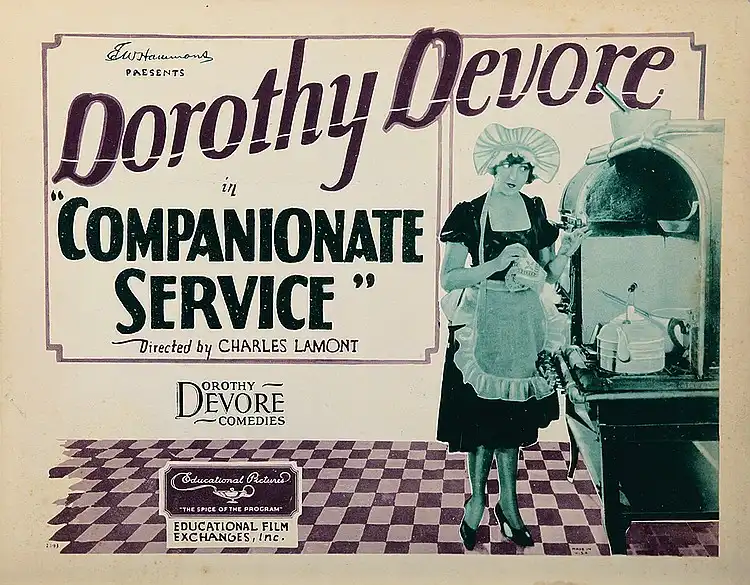
Okay, "Companionate Service" isn't exactly a lost classic, but it's got something if you're into those early talkies that were still figuring things out. For folks who dig into the nuances of pre-Code era dramas, or just wanna see Betty Boyd navigate some tricky situations, yeah, give it a shot. If you're looking for slick storytelling or big explosions, you'll probably hate it. Go watch something else, honestly. 🤷♀️
The whole setup is pretty straightforward. A young woman, played by Betty Boyd, ends up in this… *arrangement*. She’s meant to be a companion, a sort of live-in help for a fellow, Harold Goodwin.
But you can tell right away that "companionate service" means more than just fetching slippers. It’s got that quiet hum of implication throughout, you know? Like, what are we *really* talking about here?
Boyd, she carries a lot of this film. Her eyes, especially. There’s a scene where she’s just staring out a window, and the camera just *stays* on her. You see this mix of hope and just, utter resignation.
It goes on about 10 seconds longer than you’d expect, and it really lets the feeling sink in. It’s not a big dramatic cry, just a quiet settling. That’s where the film actually works best.
Then you have Harold Goodwin’s character. He’s supposed to be the refined gentleman, but there's this weird tension around him. He's always a little too stiff, a little too proper.
It's almost like he's acting *at* the audience sometimes, not just being in the scene. There's this one bit where he adjusts his tie for what feels like the fifth time in a single conversation. You almost wonder if it was a nervous tic of the actor, or a director's choice. Hard to tell.
Dorothy Devore shows up as another woman in the picture, and her presence changes the whole vibe. Suddenly, Boyd's character isn't just dealing with Goodwin's peculiar expectations, but also this other, more… knowing gaze.
Devore has this way of delivering lines, super calm, almost a little too knowing. It makes you lean in. The way she sips her tea in that one drawing-room scene? Chef's kiss for subtle shade.
The plot, such as it is, kind of ambles along. It's less about grand events and more about the small, uncomfortable interactions.
You can feel the film trying to tell you that these *small* things are actually *huge*. Sometimes it works, sometimes it just feels like everyone is waiting for something to happen.
There’s a moment where Robert Graves’ character, who feels like a bit of an afterthought sometimes, suddenly pops in with some really earnest advice. He just appears, says his piece, then kind of fades into the background again. It’s a little clunky, like they realized they needed a voice of reason but didn't know where to properly place it.
The lighting in some of the interior shots is really interesting. Like, during one of the arguments, half of Boyd’s face is just completely in shadow, even though the room seems pretty bright. It's a nice touch, whether intentional or not, making you think about what she's hiding.
Or maybe it was just a happy accident with the studio lights. Who knows with these old films?
What sticks with me isn't the grand speeches or big reveals, because there aren’t many. It’s more the quiet pauses, the way someone avoids eye contact, or the *slightest* tremor in Betty Boyd's voice when she finally speaks her mind. You get the sense that a lot is being said without actual words.
And sometimes, those silences stretch out a bit too long, becoming almost awkward.
The movie sort of... ends. It doesn't give you a neat little bow. It just stops. You're left to wonder what happens next for these characters, especially Boyd. It’s not unsatisfying, exactly, but it’s not conclusive either. Like life, I guess.
IMDb 6.8
1933
Community
Log in to comment.