DbcultAccessing Vault...
Cult Review
Senior Film Conservator
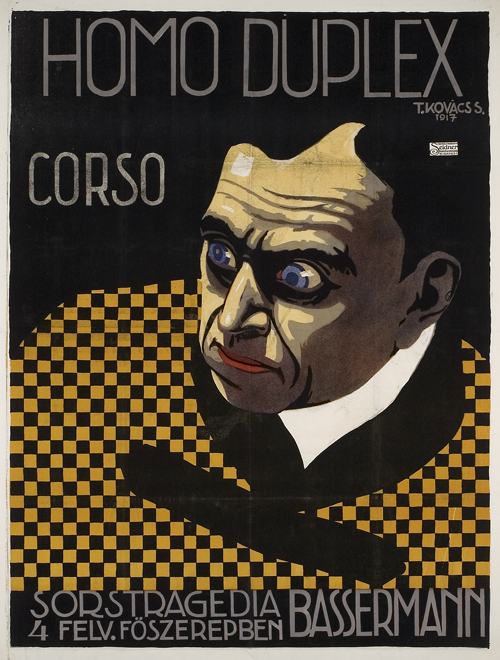
There are films that merely tell a story, and then there are those that ignite a dialogue, challenging the very bedrock of our social constructs. "Herr und Diener," a cinematic artifact from an era when moving pictures were finding their eloquent voice, undeniably belongs to the latter category. This isn't just a film; it's a social treatise, a psychological study, and a romantic drama all woven into a tapestry of silent grandeur. The brilliance lies not just in its ambitious premise but in the nuanced performances that breathe life into a narrative that, even a century later, feels startlingly relevant. Elsa Bassermann's screenplay, a tour de force of narrative economy and thematic depth, establishes her as a writer whose foresight into human nature was nothing short of profound.
At its core, "Herr und Diener" unfurls a tale of audacious deception and profound self-discovery. Baron von Walden, portrayed with a captivating blend of ennui and intellectual curiosity by the incomparable Albert Bassermann, finds himself suffocated by the gilded cage of his aristocratic existence. The endless balls, the superficial pleasantries, the pre-arranged marriage to the ambitious Lady Eleonora (Margarete Ferida, whose portrayal of icy grace is exceptional) – it all rings hollow. In a moment of existential crisis, he proposes a radical experiment to his long-serving valet, Johann, brought to life with understated brilliance by Reinhold Schulz. They will swap identities: the Baron will become a humble estate manager, 'Herr Schmidt,' on a remote corner of his own vast property, while Johann will assume the Baron's persona, navigating the treacherous waters of Berlin society. It’s a premise that immediately draws the viewer into a world of intrigue and philosophical inquiry, reminiscent perhaps of the social commentary found in works like The Christian, though here the focus is less on religious morality and more on the inherent morality of class.
The ensuing narrative is a masterclass in parallel storytelling. As 'Herr Schmidt,' Walden finds an unexpected liberation in the simplicity of manual labor and the unvarnished honesty of rural life. It's here he encounters Anna (Asta Hiller), a vibrant and independent young woman whose spirit is as untamed as the landscape she inhabits. Hiller’s performance is a beacon of authenticity, her eyes conveying a depth of emotion that transcends the spoken word. Their burgeoning romance is depicted with a tender sincerity, a stark contrast to the transactional relationships of the Baron's former life. It’s a love forged in shared toil and genuine admiration, a refreshing departure from the contrived affections of the aristocracy. The subtle glances, the shared smiles, the unspoken understanding between them – these are the moments that truly elevate the film, showcasing the power of visual storytelling in the silent era.
Meanwhile, Johann, as the 'Baron von Walden,' embarks on his own perilous journey. Schulz's portrayal of Johann is a revelation. He doesn't merely mimic Bassermann's Baron; he imbues the role with a subtle vulnerability, a quiet awe at the power he temporarily wields, and a newfound confidence born of his meticulous observations over years of servitude. He navigates the labyrinthine social circles with an uncanny precision, his innate intelligence and years of studying the aristocracy allowing him to mimic their mannerisms, their conversational quirks, and even their political machinations with remarkable success. The film cleverly uses Johann's perspective to highlight the performative nature of high society, a world built on appearances rather than genuine substance. Edith Nest, in a supporting role, adds a layer of subtle intrigue, her character perhaps a former acquaintance of Johann who notices the unsettling shift in the 'Baron's' demeanor, adding an additional layer of suspense to the unfolding drama.
The thematic richness of "Herr und Diener" is truly compelling. It's a profound meditation on the fluidity of identity, questioning whether our essence is defined by birthright, circumstance, or the choices we make. The film posits that perhaps the 'lord' and the 'servant' are not so different after all, merely individuals thrust into different roles by the arbitrary hand of fate. The swap exposes the artificiality of class distinctions, suggesting that true nobility lies not in a title but in character. This echoes, in some ways, the universal struggles for dignity and recognition seen in films like The Sparrow, where social vulnerability is a central theme, or even the grand narratives of social upheaval found in Robin Hood, albeit on a more personal scale.
Elsa Bassermann's screenplay is a marvel of construction. She avoids simplistic moralizing, instead presenting a nuanced portrayal of human motivations and consequences. The narrative never feels forced, allowing the characters' transformations to unfold organically. Her writing imbues each character with a compelling interiority, even within the confines of silent cinema, where emotions are often conveyed through exaggerated gestures. Here, the subtlety is paramount, a testament to her skill. One can only imagine the meticulous planning that went into crafting such a complex dual narrative, ensuring that both storylines resonated with equal weight and emotional impact. Her ability to weave together social critique, romance, and psychological drama into a cohesive whole is truly commendable, setting a high bar for cinematic storytelling of the era.
The visual language of "Herr und Diener" is equally sophisticated. While specific directorial credits might be debated or lost to time, the aesthetic choices are undeniable. The cinematography employs stark contrasts to delineate the two worlds: the opulent, often claustrophobic interiors of the Baron's estate, bathed in dramatic shadows and artificial light, versus the expansive, sun-drenched landscapes of the countryside, where 'Herr Schmidt' finds his freedom. These visual cues are not merely decorative; they are integral to the film's thematic resonance, underscoring the suffocating nature of high society versus the liberating power of nature and honest labor. The framing often emphasizes the isolation of the characters, even when surrounded by others, highlighting their internal struggles and the weight of their respective deceptions. The use of close-ups, particularly on Bassermann and Hiller, allows the audience to connect intimately with their emotional journeys, revealing layers of thought and feeling that are often left unsaid.
The performances across the board are nothing short of captivating. Albert Bassermann's Baron is a study in quiet desperation and intellectual curiosity. His transformation from world-weary aristocrat to invigorated 'commoner' is utterly convincing, his body language shifting from stiff formality to relaxed openness. Reinhold Schulz, as Johann, carries the weight of his borrowed identity with remarkable grace and tension. His subtle shifts in demeanor, from tentative imitation to confident command, are a testament to his acting prowess. Margarete Ferida's Lady Eleonora is the embodiment of aristocratic ambition, her elegant facade barely concealing a shrewd, calculating mind. Her unexpected attraction to the 'new' Baron (Johann) adds a delicious layer of irony and complication to the plot, serving as a powerful catalyst for the film's climax. Asta Hiller’s Anna is the film’s moral compass, her natural beauty and unaffected sincerity providing a stark counterpoint to the artifice of Berlin society. Even Elsa Bassermann, in a cameo, likely adds a touch of authentic period flavor to the ensemble.
The tension escalates brilliantly as the two narratives converge. Johann, emboldened by his success and genuinely falling for Eleonora, begins to chafe under the temporary nature of his role. He tastes power, luxury, and affection, and the thought of returning to his former station becomes increasingly unbearable. Simultaneously, 'Herr Schmidt' (the real Baron) faces a crisis on his estate – a land dispute that threatens Anna's family and requires the immediate intervention of a powerful figure. He is trapped, unable to reveal his true identity without shattering his newfound love and jeopardizing the entire experiment. The film masterfully builds to a dramatic crescendo, forcing both men to confront the profound ethical and emotional consequences of their actions. The question isn't just whether they will be discovered, but what they will have become in the process, and what they will lose.
The ending, without revealing too much, is a poignant reflection on sacrifice and the enduring power of class structures. It avoids a simplistic 'happily ever after,' opting instead for a more complex, bittersweet resolution that resonates long after the credits roll. The film challenges the audience to consider the true cost of identity, love, and societal expectations. It's a narrative that, in its quiet intensity, holds its own against more overtly dramatic silent films like Den sorte Varieté, offering a different kind of suspense – one rooted in psychological tension rather than overt thrills. The emotional depth here is comparable to the profound familial dilemmas explored in His Daughter's Second Husband, though focused on personal identity rather than marital complexity.
"Herr und Diener" is more than just a historical curiosity; it's a vibrant, living piece of cinema that speaks volumes about the human condition. Its exploration of class, identity, and the search for authenticity remains as potent today as it was upon its release. The film's enduring legacy lies in its ability to provoke thought, to stir empathy, and to remind us that the lines we draw between people are often far more arbitrary than we imagine. It’s a testament to the power of silent film to convey complex ideas and profound emotions without uttering a single word, relying instead on the artistry of its performers, the vision of its creators, and the universal language of human experience. For anyone seeking a deeper understanding of cinematic history and the timeless narratives that define it, "Herr und Diener" is an indispensable viewing experience, a true jewel in the crown of early German cinema. Its impact, in its quiet power, is as significant as the grander epics of its time, offering a mirror to society that is both beautiful and unflinching. It reminds us that true drama often lies not in explosions or grand gestures, but in the silent, internal battles waged within the human heart.
IMDb 7.1
1937
Community
Log in to comment.