DbcultAccessing Vault...
Cult Review
Senior Film Conservator
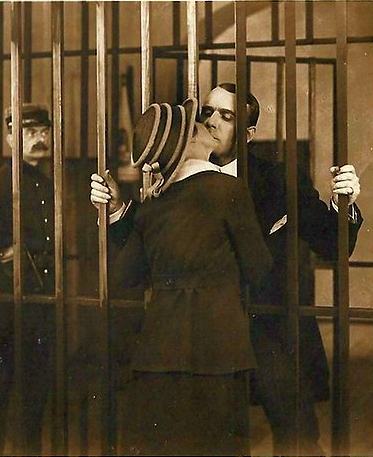
Stepping back into the nascent years of cinematic storytelling, one occasionally stumbles upon a forgotten gem that, despite the passage of a century, retains an astonishing power to captivate. Such is the case with Hans Hyan's 'Der Fürst der Diebe und seine Liebe,' a silent film that, even without the benefit of a modern soundtrack or crisp digital restoration, articulates a narrative of romance, rebellion, and social conscience with remarkable clarity and emotional depth. It's a testament to the foundational artistry of early cinema, demonstrating how compelling characters and an engaging plot could transcend the technical limitations of their era. This particular viewing experience wasn't merely an academic exercise; it was an immersion into a world where gesture, gaze, and carefully composed frames conveyed volumes, inviting the audience to actively participate in the narrative's construction.
At its heart, the film is a poignant exploration of duality, personified by the charismatic Viggo Larsen in the titular role of 'Der Fürst der Diebe.' Larsen, a titan of early European cinema, brings an almost effortless magnetism to a character who is simultaneously a daring criminal and a benevolent figure, a paradox that anchors the film's moral compass. His Fürst is not merely a thief; he is an urban legend, a symbol of defiance against an entrenched, unjust system. The narrative cleverly positions him as a social equalizer, targeting the city's most avaricious industrialists and redistributing their ill-gotten gains among the struggling populace. This thematic thread of social justice, while perhaps less overtly didactic than some later works, is woven throughout the film's fabric, offering a subtle critique of turn-of-the-century class disparities. One might draw a thematic parallel to the more direct social commentary seen in films like Social Hypocrites, though 'Der Fürst' couches its critique within a more romanticized, almost mythical framework.
The 'Liebe'—the love—of the title blossoms from an unexpected encounter during one of the Fürst's audacious nocturnal forays. Erra Bognar, as Elara, the niece of a targeted industrialist, imbues her character with an ethereal grace and an understated strength that perfectly complements Larsen's dynamic portrayal. Their initial meeting, fraught with the tension of imminent discovery, is a masterclass in silent film acting. The lingering glances, the subtle shifts in posture, the almost imperceptible tremor of a hand—these minute details convey a profound, instantaneous connection. It's a spark that transcends the chasm between their disparate worlds, suggesting a shared understanding that defies societal boundaries. Bognar's performance is particularly noteworthy for its delicate balance; Elara is not a damsel in distress, but a woman of burgeoning agency, increasingly disillusioned with the gilded cage of her aristocratic existence. Her internal conflict, eloquently expressed through her expressive eyes, becomes a powerful counterpoint to the Fürst's external acts of rebellion.
The development of their romance is handled with a tender discretion that was characteristic of the era, yet it feels remarkably modern in its emotional resonance. Their clandestine meetings, often bathed in the atmospheric glow of gaslight or moonlight, become stolen moments of vulnerability and burgeoning affection. The film allows their relationship to unfold organically, showing rather than telling, relying on the actors' nuanced non-verbal communication to convey the depth of their feelings. This understated approach to romance, where unspoken sentiments carry immense weight, sets it apart from more melodramatic contemporaries. Compare this to the often more overt and theatrical expressions of love in some American productions of the same period, where gestures could be grander, sometimes bordering on the histrionic. 'Der Fürst' opts for a more European sensibility, valuing emotional subtlety.
No compelling hero exists without an equally compelling antagonist, and Franz Verdier's portrayal of Obersturmführer Gruber provides precisely that. Verdier crafts a character of unwavering resolve, a man whose dedication to law and order borders on obsession. Gruber is not a cartoonish villain; rather, he is a figure of rigid principle, convinced of the absolute necessity of justice, even if it means relentlessly pursuing a man whose motives are arguably noble. His presence introduces a constant undercurrent of tension, a ticking clock against the Fürst's increasingly daring exploits and his blossoming romance with Elara. Verdier's performance, marked by his stern demeanor and methodical approach, brings a necessary gravitas to the role, preventing the film from descending into mere romantic fantasy. The cat-and-mouse game between Fürst and Gruber is intelligently conceived, showcasing not just physical chases but also a battle of wits, a strategic chess match played out across the city's rooftops and drawing rooms.
The dynamic between the Fürst and Gruber also touches upon deeper philosophical questions regarding justice and the law. Is it always right to uphold the letter of the law, even when the spirit of justice seems to be on the side of the lawbreaker? This moral ambiguity elevates 'Der Fürst der Diebe und seine Liebe' beyond a simple crime caper. It forces the audience to consider the complexities of societal order and individual conscience. This thematic depth, exploring the nuances of morality within a thrilling narrative, can be seen in other films that challenge conventional heroism, like The Masked Rider, which often presents protagonists operating outside legal boundaries for a greater good. However, 'Der Fürst' distinguishes itself with its distinctly European romanticism and the tragic undertones inherent in its central love story.
Hans Hyan's direction, while perhaps less overtly experimental than some of his contemporaries, demonstrates a clear command of visual storytelling. The pacing is deliberate, allowing scenes to breathe and emotions to register, a hallmark of early silent film. He understands the power of the close-up to reveal internal states and the grandeur of wide shots to establish the urban landscape as a character in itself. The cinematography, though lacking the sophisticated camera movements of later eras, is remarkably effective. The use of natural light and carefully constructed artificial illumination creates distinct moods for different scenes: the stark shadows of the Fürst's illicit activities, the soft glow of Elara's drawing room, the harsh glare of official interrogation. These choices are not merely aesthetic; they serve the narrative, enhancing the emotional impact and thematic resonance of each sequence.
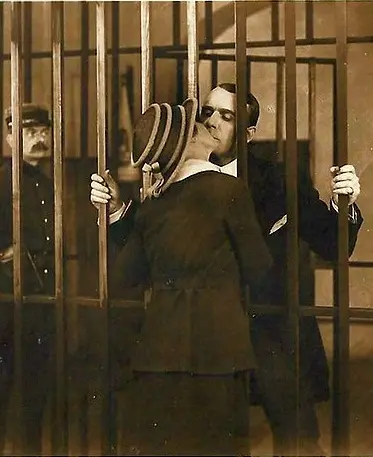
The set design and art direction are also worthy of commendation. The film meticulously recreates the contrasting environments of the city: the opulent, somewhat suffocating interiors of the wealthy, replete with heavy drapes and ornate furniture, stand in stark contrast to the gritty, labyrinthine alleyways and humble dwellings of the poor. This visual juxtaposition reinforces the film's underlying social commentary without needing explicit intertitles. The costumes, too, are carefully chosen to reflect character and status, from the Fürst's elegant, almost theatrical disguises to Elara's refined, yet somewhat constrained, attire. These elements collectively build a believable and immersive world, drawing the audience into the narrative despite the absence of synchronized sound. The attention to detail in creating these distinct worlds is reminiscent of the efforts seen in grand historical epics of the time, such as Pyotr Velikiy, though on a more intimate, urban scale.
The true genius of 'Der Fürst der Diebe und seine Liebe' lies in its actors' ability to convey complex emotions and intricate plot points without spoken dialogue. Viggo Larsen, as mentioned, is exceptional. His physical presence, his posture, the way he carries himself—all contribute to the Fürst's mystique and authority. His eyes, in particular, are incredibly expressive, capable of conveying cunning, tenderness, resolve, and vulnerability with equal conviction. Erra Bognar's portrayal of Elara is a masterclass in subtlety. Her character's journey from sheltered innocence to defiant love is charted through a series of delicate gestures and heartfelt expressions. She doesn't need to shout; a tear, a hesitant smile, a defiant glare—these are her dialogue. Franz Verdier's Gruber, too, communicates his unwavering determination through his rigid stance and piercing gaze, making him a formidable presence without uttering a single audible word.
This reliance on purely visual storytelling demands a different kind of engagement from the audience. It invites interpretation, allowing viewers to project their own understanding onto the characters' internal worlds. This active participation is one of the unique pleasures of silent cinema. The film's use of intertitles is judicious, providing essential exposition or dialogue when absolutely necessary, but never overwhelming the visual narrative. They serve as guideposts, not crutches, allowing the images and performances to do the heavy lifting. This contrasts with some films of the period, where intertitles could be overly verbose, sometimes breaking the immersive flow. The balance struck here is admirable, showcasing a mature understanding of the medium's strengths.
The narrative culminates in a poignant exploration of sacrifice and the possibility of redemption. As the net tightens around the Fürst, and his love for Elara deepens, he is forced to confront an impossible choice: continue his crusade for social justice, risking everything, or abandon his life in the shadows for a chance at conventional happiness with the woman he loves. Elara, in turn, must decide how far she is willing to go to protect him, challenging the very foundations of her upbringing. The climax, set against the backdrop of a grand charity ball—a public spectacle designed to expose the Fürst—is a masterstroke of dramatic tension. Here, all the narrative threads converge: the relentless pursuit of Gruber, the Fürst's daring plans, and Elara's desperate attempts to intervene. The film doesn't offer easy answers, instead opting for a resolution that is both emotionally resonant and dramatically satisfying, leaving a lasting impression on the viewer.
The enduring question posed by 'Der Fürst der Diebe und seine Liebe' is whether love can truly redeem a life forged in defiance of the law, or if some destinies are irrevocably intertwined with the shadows they inhabit. It's a universal theme, explored countless times in cinema, yet here it feels fresh and immediate, thanks to the compelling performances and Hans Hyan's sensitive direction. The film’s exploration of love against a backdrop of social unrest and personal peril finds echoes in other period dramas that grapple with similar themes, such as The Border Legion, where protagonists often navigate moral compromises for love or perceived justice. However, 'Der Fürst' maintains a distinctly European romantic tragedy flavor that sets it apart.
While 'Der Fürst der Diebe und seine Liebe' may not possess the same widespread recognition as some of the canonical silent films from other regions, its artistic merit and historical significance are undeniable. It stands as a powerful example of early German cinema's ability to craft intricate narratives with compelling characters and profound thematic depth. The performances by Viggo Larsen, Erra Bognar, and Franz Verdier are exemplary, demonstrating the sophisticated acting techniques that flourished in the silent era. For students of film history, or simply for those who appreciate compelling storytelling, this film offers a fascinating glimpse into a pivotal period of cinematic development.
Its themes of social inequality, the allure of rebellion, and the transformative power of love remain as relevant today as they were a century ago. The film reminds us that the fundamental human experiences—love, loss, justice, and redemption—are timeless, capable of being communicated across generations and through various artistic mediums. Viewing 'Der Fürst der Diebe und seine Liebe' is not just watching an old film; it's engaging with a foundational piece of cinematic art that continues to resonate, proving that true artistry transcends technological advancements. It's a reminder that sometimes, the most profound stories are told not with booming voices, but with the eloquent silence of a glance, a gesture, and the power of a well-crafted image. Unlike the more lighthearted fare, such as Beaches and Peaches, which might offer a momentary escape, 'Der Fürst' invites deeper contemplation, proving that early cinema was capable of delivering both profound entertainment and thoughtful social commentary.
In a cinematic landscape often dominated by spectacle and noise, returning to a film like 'Der Fürst der Diebe und seine Liebe' is a profoundly rewarding experience. It's a testament to the enduring power of storytelling, the ingenuity of early filmmakers, and the timeless appeal of a compelling narrative driven by complex characters. It certainly holds its own against other significant works of the period, showcasing the diverse range of narratives and styles that were burgeoning across the world, from the dramatic tension of Their Compact to the more adventurous spirit of Bull Arizona. This film, with its potent blend of romance and social critique, truly stands as a compelling piece of cinematic history, deserving of its place in the annals of film, and a compelling watch for any connoisseur of the moving image.
IMDb —
1918
Community
Log in to comment.