DbcultAccessing Vault...
Cult Review
Senior Film Conservator
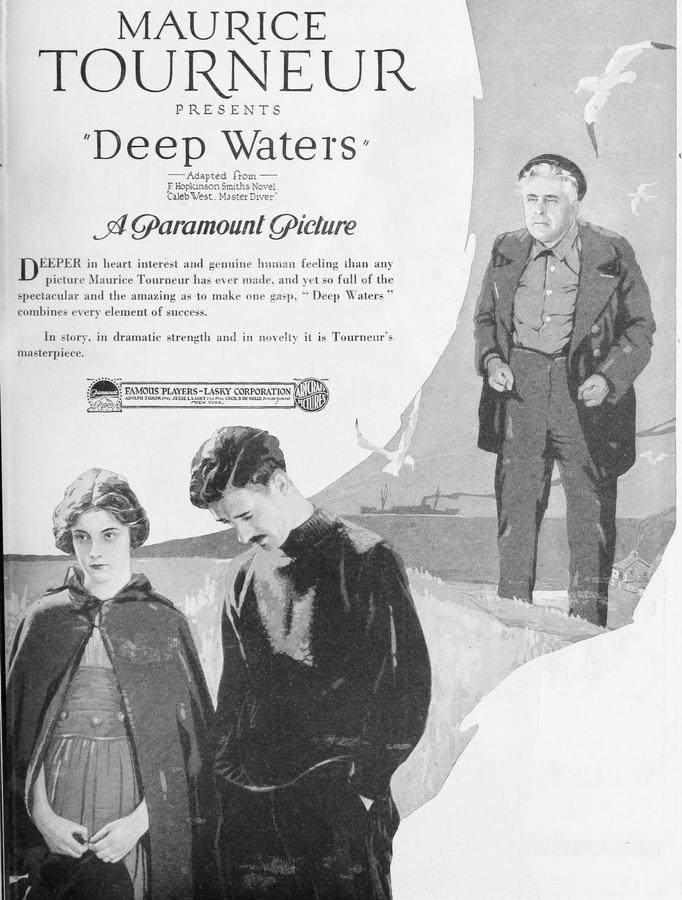
Step back into an era when storytelling relied not on spoken dialogue but on the profound power of expressive gestures, stark visual compositions, and a meticulously crafted narrative arc. The year is 1920, and the cinematic landscape is graced by Deep Waters, a silent film that, even a century later, continues to resonate with its exploration of human fallibility, the complexities of love, and the often-unforgiving hand of fate. Penned by the collaborative talents of Michael Morton, John Gilbert (who also features in the cast), and F. Hopkinson Smith, this picture is far more than a simple melodrama; it’s a poignant study of character set against the formidable backdrop of a burgeoning lighthouse and the vast, indifferent ocean.
At its core, Deep Waters masterfully interweaves two distinct, yet thematically linked, romantic entanglements. One narrative thread follows Henry Sanford, portrayed with a compelling earnestness by James Gibson, a man of purpose contracted to erect a lighthouse, a beacon of safety, at Keyport. Yet, his gaze, and indeed his heart, finds itself drawn to Kate, the captivating wife of the wealthy, and increasingly possessive, Morgan Leroy. Marie Van Tassell embodies Kate with a delicate balance of allure and inner turmoil, while Rudolph Christians’ Morgan provides a chilling portrait of escalating jealousy. This triangle, simmering beneath the surface of societal decorum, introduces a tension that crackles through their every interaction, a quiet storm brewing even as the physical lighthouse takes shape.
Parallel to this, the film introduces us to the grizzled, experienced master diver Caleb West, a figure of strength and quiet dignity, whose life is irrevocably tied to the sea. George Nichols delivers a performance of profound gravitas, painting Caleb as a man whose wisdom is etched onto his very being. His domestic life, however, is far from tranquil. His pretty, young wife, Betty, brought to life with a nuanced vulnerability by Barbara Bedford, becomes the object of illicit desire for Bill Lacey, one of Caleb's crewmembers. Jack McDonald imbues Bill with a dangerous charm and a palpable sense of entitlement, making him a compelling antagonist in this deeply personal drama. This particular narrative thread, focusing on the temptation and subsequent regret, bears a striking thematic resemblance to films like Chains of the Past, where the ramifications of impulsive decisions cast long shadows over characters' lives.
The narrative truly ignites when Bill Lacey suffers a debilitating injury at the lighthouse construction site. The irony is not lost: the very endeavor meant to bring light and safety becomes a catalyst for darkness in their personal lives. Taken to Caleb's home for recuperation, Bill finds himself under Betty's solicitous care. It is during this period of intimacy, born of necessity, that Bill’s persuasive machinations take hold, leading Betty to a fateful decision: to abandon her loyal husband and flee with him to Portland. This swift, emotionally charged sequence is a testament to the silent film era's ability to convey profound psychological shifts without a single spoken word, relying instead on the actors' formidable command of expression and body language.
Betty’s journey, however, is not one of simple escape. Her regret is almost immediate, a gnawing remorse that compels her back to Keyport, to the home she so carelessly abandoned. But reconciliation is not easily granted. Caleb, a man of principle and deep-seated emotions, finds himself unable to forgive her perceived betrayal. His refusal to take her back is not born of cruelty, but of a profound hurt, a breach of trust that feels irreparable. This emotional standoff, where love battles pride and pain, is a hallmark of timeless drama, mirroring the internal struggles found in many a classic narrative of the period.
As these personal dramas unfold, the external world continues its relentless march. Kate, too, finds herself entangled in a bitter quarrel with her husband Morgan, their once-solid foundation now fractured by suspicion and unspoken desires. The film expertly uses these parallel narratives to heighten the sense of emotional fragility permeating the lives of these characters. The sea itself, an ever-present character, looms large, reminding us of both its beauty and its terrifying power.
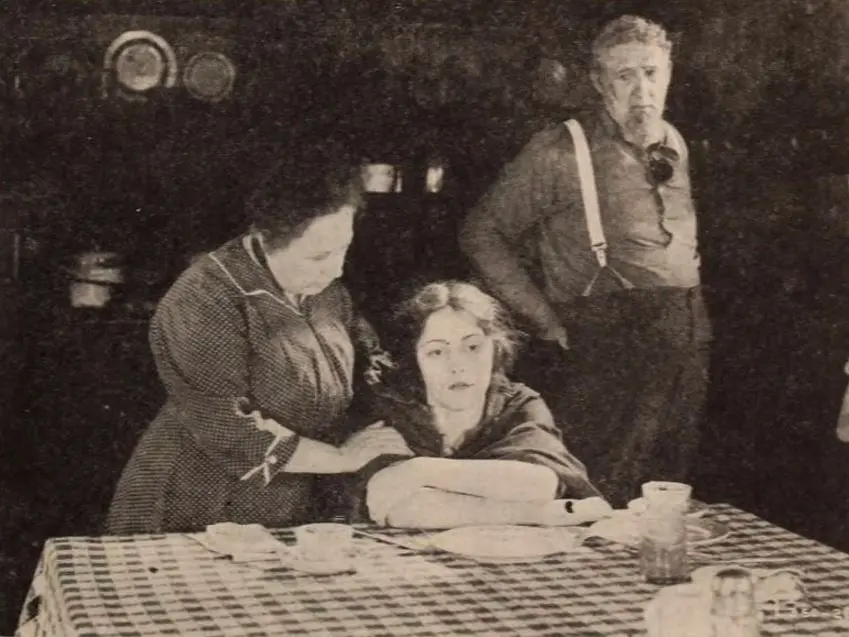
The climax of Deep Waters arrives with a dramatic shipwreck, a moment of profound peril that brings all the simmering tensions to a head. In a cruel twist of fate, Bill Lacey, the catalyst for so much heartache, is involved in this maritime disaster. It is here that Caleb West, the master diver, is called upon to perform his duty, descending into the murky depths to retrieve a body from the wreckage. This sequence, undoubtedly a technical marvel for its time, would have captivated audiences with its visceral portrayal of danger and the sheer bravery of the diver.
Yet, it is not the physical act of diving that provides the ultimate resolution, but a revelation that follows. Captain Bell, played with a steady hand by B. Edgar Stockwell, informs Caleb of a truth that shatters his preconceived notions and melts the ice around his heart. During Caleb's perilous dive, it was Betty, his estranged wife, who had tirelessly worked the air pumps, ensuring his very breath, his very survival. This profound act of selfless devotion, a silent testament to her enduring love, transcends all past transgressions. It’s a moment of stunning clarity, a realization that true affection often manifests not in grand pronouncements, but in quiet, life-sustaining actions. This dramatic pivot, where a character's true colors are revealed under duress, echoes the intense emotional stakes found in films like The Danger Game, where choices made in moments of crisis define destinies.
The impact of this revelation on Caleb is immediate and profound. He finally understands the depth of Betty's love, the sincerity of her regret, and the strength of her character. The hardened shell around his heart crumbles, leading to a poignant and deeply moving reconciliation. This embrace, unspoken yet overflowing with emotion, signifies not just the mending of a marriage but the triumph of forgiveness over pride and pain. It's a testament to the enduring human capacity for redemption, a theme that resonates powerfully even today.
In a satisfying parallel, the other couple, Morgan and Kate, also arrive at a newfound understanding. Their journey, though less overtly dramatic, culminates in a similar recognition of their bond and a willingness to move past their disagreements. The film subtly suggests that the crucible of external events, the shared experience of peril and emotional turmoil, can often strip away superficial grievances and reveal the fundamental truths of a relationship. The ensemble cast, including Lydia Yeamans Titus, Ruth Wing, John Curry, Henry Woodward, Siggrid McDonald, and Charles Millsfield, contribute to the rich tapestry of Keyport’s community, lending authenticity to the backdrop against which these personal dramas unfold.
From a purely cinematic perspective, Deep Waters is a fascinating artifact of its time. The visual storytelling, characteristic of the silent era, relies on exaggerated expressions, dramatic staging, and intertitles to convey dialogue and internal monologues. While some modern viewers might find these conventions archaic, they are precisely what give the film its unique charm and historical significance. The use of natural settings, particularly the sea and the lighthouse under construction, provides a powerful, almost elemental, backdrop to the human drama, emphasizing the insignificance of individual struggles against the vastness of nature, yet highlighting the profound impact of human choices.
The film's exploration of themes like jealousy, betrayal, temptation, and the arduous path to forgiveness remains timeless. It delves into the universal struggle between desire and duty, between impulsive actions and their long-term consequences. The characters, though products of their time, grapple with emotions that are eternally human. The writers, Michael Morton, John Gilbert, and F. Hopkinson Smith, crafted a narrative that, despite its period trappings, speaks to the core of the human condition, making it relatable across generations. The strength of the performances, particularly from Barbara Bedford and George Nichols, elevates the material, allowing their characters' emotional journeys to resonate deeply with the audience.
In conclusion, Deep Waters is more than just a relic of early cinema; it is a compelling and emotionally rich drama that reminds us of the power of visual storytelling. It’s a testament to the fact that profound narratives do not require spoken words to convey the deepest human sentiments. Its intricate plot, well-drawn characters, and ultimately hopeful message of reconciliation make it a noteworthy entry in the annals of silent film. For anyone interested in the evolution of cinema or simply in a story that delves into the complex currents of the human heart, this film offers a journey well worth taking. It stands as a powerful reminder that even in the deepest waters, love, sacrifice, and forgiveness can ultimately guide us back to shore.

IMDb 5.8
1935
Community
Log in to comment.