DbcultAccessing Vault...
Cult Review
Senior Film Conservator
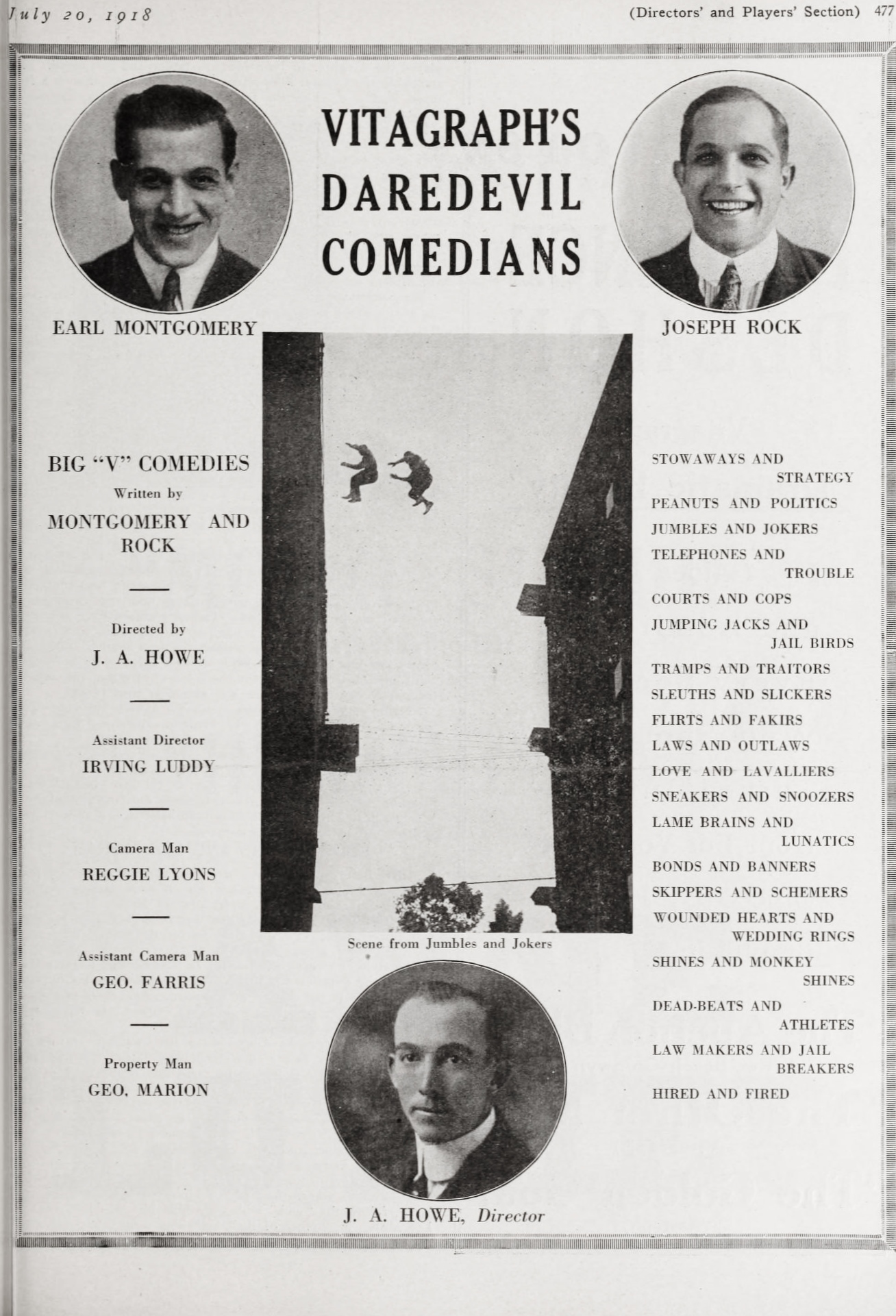
Stepping back into the hallowed halls of early cinema, one encounters a myriad of narratives that, despite their age, continue to echo with profound relevance. Among these, 'Courts and Convicts' emerges as a particularly potent exploration of justice, societal judgment, and the indomitable human spirit. Released during a pivotal era for filmmaking, a period marked by both technical innovation and a burgeoning maturity in storytelling, this silent drama, penned by the talented duo Earl Montgomery and Joe Rock, offers more than just a glimpse into the past; it provides a mirror reflecting timeless ethical dilemmas.
The film plunges into the tumultuous life of Arthur Sterling, portrayed with earnest conviction by Earl Montgomery. Sterling, a promising young architect, finds his world irrevocably altered when he is falsely implicated in an elaborate embezzlement scheme. The narrative meticulously constructs a web of deceit, spun by the nefarious Silas Thorne, a character brought to life with chilling effectiveness by Joe Rock, who embodies the archetype of the conniving antagonist with palpable menace. The initial sequences establish Sterling’s idyllic existence, a stark contrast to the grim reality that swiftly encroaches upon him. His engagement to the virtuous Eleanor Vance, a beacon of unwavering faith, underscores the depth of his loss and the emotional stakes involved.
What truly sets 'Courts and Convicts' apart is its unflinching gaze at the imperfections of the legal system. The courtroom scenes are not mere procedural formalities; they are agonizing spectacles of a man's reputation being systematically dismantled. The film deftly uses visual cues and the inherent drama of the silent medium to convey the crushing weight of circumstantial evidence and the pervasive influence of public opinion. Montgomery’s performance here is particularly striking, his expressive eyes and subtle gestures communicating a profound sense of betrayal and despair, yet also a flicker of defiant innocence. It’s a masterclass in silent acting, conveying complex emotional states without a single spoken word, a feat that would resonate with audiences who appreciated the nuanced performances in contemporary dramas like The Cheat, where emotional intensity often overshadowed dialogue.
The subsequent descent into the penal system is depicted with a raw, almost verité-like quality. The film avoids gratuitous sensationalism, opting instead for a portrayal of prison life that emphasizes its dehumanizing aspects. Arthur’s struggle behind bars is not just a physical ordeal but a profound psychological one. He grapples with the injustice of his situation, the loss of his freedom, and the agonizing separation from Eleanor. This segment of the film is crucial, as it transforms Arthur from a mere victim into a symbol of resilience, a man whose inner fortitude is tested to its absolute limits. The stark visual contrast between the oppressive grey of the prison walls and the vibrant, albeit distant, world outside serves as a constant reminder of what has been lost.
Meanwhile, Eleanor Vance refuses to succumb to despair. Her character is not merely a damsel in distress; she is an active, intelligent force driving the narrative towards resolution. Her relentless investigation into Thorne’s past, her tireless efforts to gather evidence, and her unwavering belief in Arthur’s innocence provide the much-needed counterpoint to the film’s darker themes. Eleanor embodies a proto-feminist strength, a characteristic often subtly woven into the fabric of silent cinema heroines, much like the determined protagonists seen in films such as The Huntress of Men. Her journey is one of perseverance against institutional inertia and personal betrayal, culminating in a dramatic discovery that promises to unravel Thorne’s meticulously constructed lies.
The directorial choices, likely influenced heavily by Montgomery and Rock as both writers and performers, are particularly astute. The pacing, while deliberate, never drags, maintaining a persistent tension that keeps the audience invested. The use of intertitles is economical yet impactful, conveying crucial dialogue and narrative shifts without bogging down the visual flow. Cinematographically, the film employs stark lighting to emphasize the emotional states of its characters and the oppressive atmosphere of their surroundings. Shadows are not just aesthetic elements; they are narrative tools, symbolizing the moral ambiguities and hidden truths that permeate the story. The close-ups on the actors' faces, particularly Montgomery's and Rock's, are used to great effect, allowing their nuanced expressions to convey volumes of unspoken emotion, a technique perfected in the silent era and vital for a film centered on deception and revelation.
The film's exploration of societal judgment and the ease with which reputations can be tarnished feels remarkably contemporary. It asks profound questions about the nature of truth, the fallibility of human perception, and the power of conviction, both legal and personal. In an era where public perception could easily sway legal outcomes, 'Courts and Convicts' served as a cautionary tale, urging audiences to look beyond superficial appearances. This thematic depth positions it alongside other socially conscious films of its time, such as Appearance of Evil, which similarly grappled with the devastating consequences of moral misjudgment and societal scrutiny.
The performances by Earl Montgomery and Joe Rock are pivotal to the film’s success. Montgomery, known for his versatility, delivers a portrayal of Arthur Sterling that is both vulnerable and resilient. His character arc, from naive optimism to hardened endurance and eventual vindication, is rendered with compelling authenticity. Rock, on the other hand, embraces his role as the antagonist with relish, crafting a villain who is not merely evil but subtly manipulative, his actions driven by greed and a chilling lack of empathy. The dynamic between these two actors provides the narrative's central conflict, a battle of wits and wills that is visually captivating.
The climax of 'Courts and Convicts' is a masterclass in silent film suspense. As Eleanor meticulously pieces together the final evidence, the tension escalates, leading to a confrontation that is both emotionally charged and dramatically satisfying. The film's resolution, while providing the catharsis of justice served, does not shy away from acknowledging the lasting scars of Arthur’s ordeal. It's a nuanced ending that suggests while truth may prevail, the journey towards it often leaves an indelible mark. This thoughtful approach to resolution prevents the film from descending into simplistic melodrama, elevating it to a more profound commentary on the human condition.
From a historical perspective, 'Courts and Convicts' stands as an exemplary piece of early cinematic craftsmanship. It demonstrates the profound capabilities of the silent film era to tackle complex themes with sophistication and emotional resonance. The collaboration between Montgomery and Rock, both as writers and performers, highlights a period where multi-hyphenate talents were common, shaping the nascent art form with their diverse contributions. Their understanding of visual storytelling and character development allowed them to create a work that transcends its technical limitations, speaking directly to the universal anxieties surrounding justice and personal integrity.
While specific comparative works like Enlighten Thy Daughter might explore moral purity through a different lens, 'Courts and Convicts' grounds its ethical discourse in the stark realities of the legal system. It eschews overt moralizing in favor of a narrative that allows the audience to witness and interpret the consequences of actions, both virtuous and villainous. The film's enduring power lies in its ability to provoke thought long after the final frame, prompting reflection on our own perceptions of guilt and innocence, and the often-fragile nature of truth.
The legacy of 'Courts and Convicts' is found not just in its compelling plot or its strong performances, but in its contribution to the evolution of cinematic narrative. It showcases a growing sophistication in screenwriting, moving beyond simple episodic structures to embrace more intricate character arcs and thematic explorations. The film’s ability to generate intense emotional engagement without spoken dialogue serves as a powerful reminder of the expressive potential inherent in purely visual storytelling. It’s a testament to the artistry of its creators and a significant marker in the journey of cinema from novelty to a profound art form. Revisiting such films is not merely an act of historical appreciation; it is an opportunity to connect with foundational narratives that continue to shape our understanding of cinematic language and its capacity for social commentary.
In an age where information is abundant yet often contradictory, the central premise of 'Courts and Convicts' — the struggle for truth against overwhelming odds — resonates with renewed urgency. It reminds us that the pursuit of justice is a continuous endeavor, fraught with challenges, yet ultimately essential for the integrity of society. This silent film, more than a century after its creation, speaks volumes, a testament to its timeless narrative and the enduring power of its message.
IMDb 7.8
1919
Community
Log in to comment.