DbcultAccessing Vault...
Cult Review
Senior Film Conservator
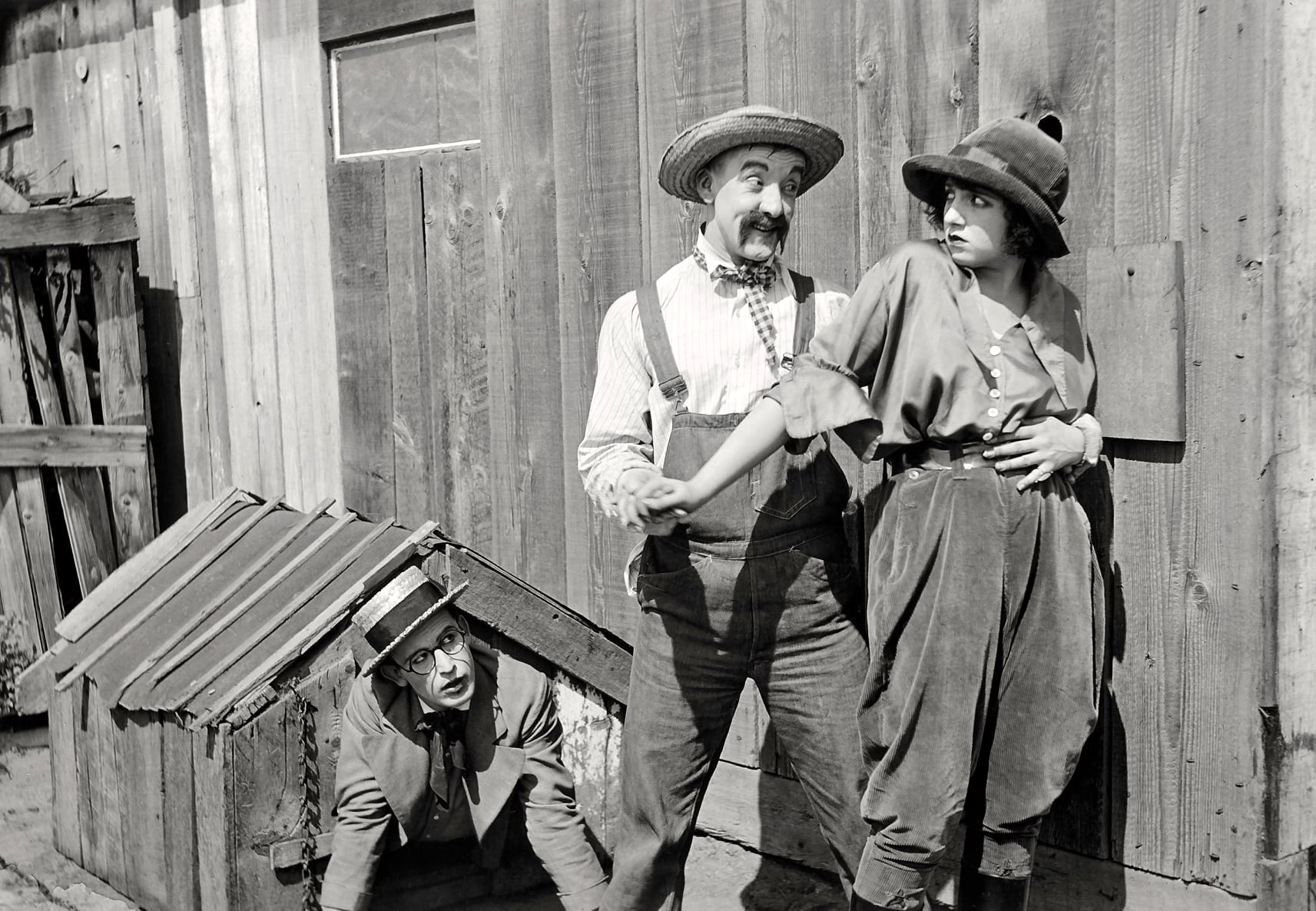
In the bustling, nascent era of silent cinema, where narrative was conveyed through exaggerated gestures, expressive close-ups, and the rhythmic cadence of a live orchestra, certain stars emerged to define an entire generation of entertainment. Among them, Harold Lloyd carved out an indelible niche, not as a slapstick anarchist or a melancholic tramp, but as the relatable 'Glasses Character' – an everyman brimming with optimism, resourcefulness, and an endearing vulnerability. 'Crack Your Heels,' a delightful entry from 1919, serves as a fascinating precursor to his more celebrated, vertigo-inducing spectacles, offering a charming glimpse into the foundational elements of his enduring appeal. It's a film that, despite its simplicity, masterfully encapsulates the spirit of an age and the universal allure of the underdog triumphing against odds, all wrapped in a wonderfully executed package of comedic ingenuity and budding romance.
The narrative commences with Harold, portrayed by the inimitable Harold Lloyd, a figure of endearing ineptitude and a profound, almost philosophical, aversion to manual labor. He drifts onto a rural farm, not by design, but by a kind of gravitational pull towards the path of least resistance, only to find himself ensnared in the very predicament he sought to evade: employment. This initial premise sets the stage for a delightful exploration of character transformation. Harold isn't a hero by nature; he's a hero by necessity, a testament to the idea that extraordinary circumstances can forge unexpected virtues within the most unassuming individuals. His initial fear of finding work, a sentiment perhaps relatable to many in a different context, quickly gives way to the practical realities of farm life, which are depicted with a gentle humor that highlights his fish-out-of-water status. The comedic potential of a city-dweller grappling with agricultural demands is fully exploited, offering a series of gags that are both timeless and genuinely amusing, showcasing Lloyd's burgeoning mastery of physical comedy.
The farm itself becomes a character in its own right, a pastoral idyll soon to be disrupted. One can almost feel the sun-drenched fields and hear the distant lowing of cattle, elements that provide a stark, tranquil contrast to the impending chaos. The film, under the directorial vision of Fred C. Newmeyer, along with the uncredited but undoubtedly collaborative spirit of the era's filmmaking, crafts a believable environment where Harold’s antics, initially clumsy, gradually evolve into moments of genuine competence. This subtle shift is crucial; it’s not merely about gags, but about the arc of a character learning, adapting, and ultimately, excelling when it truly matters. The supporting performances, particularly from Estelle Harrison as the charming farm girl and the formidable presence of Noah Young, lend a robust authenticity to this rustic setting, grounding Harold’s more exaggerated reactions in a tangible reality.
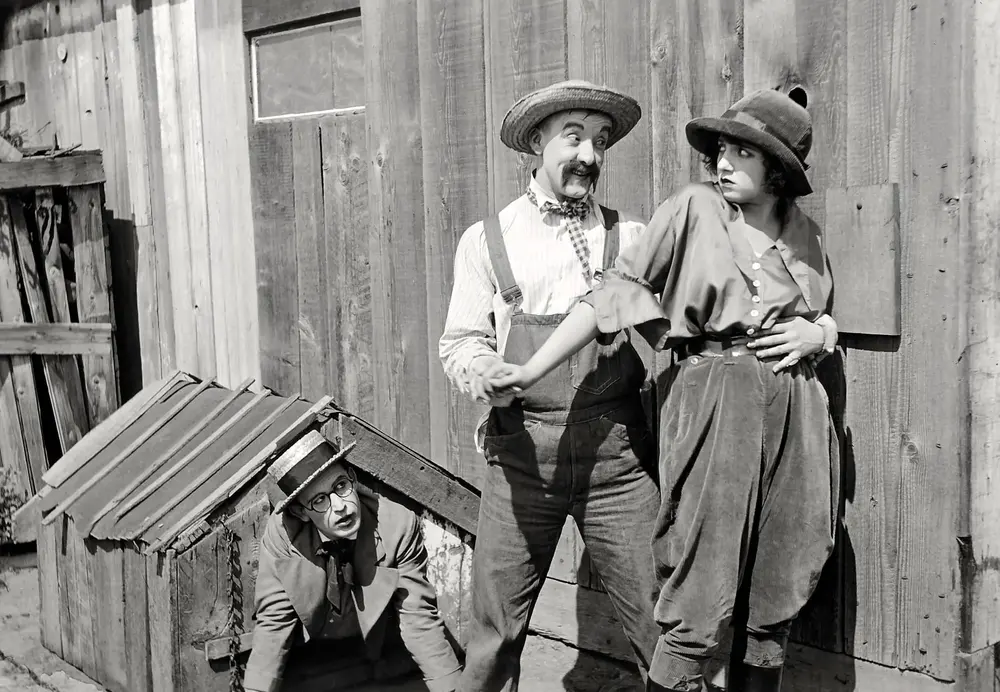
The plot thickens with the arrival of a pair of nefarious burglars, played with a blend of menace and comedic clumsiness by James Parrott and 'Snub' Pollard. Their intent is clear: to relieve the farm of its valuables, specifically targeting a safe. This introduces an element of genuine suspense into the comedic framework, elevating the stakes beyond mere slapstick. The transition from lighthearted rural mishaps to a more urgent, almost thriller-like scenario is handled with remarkable finesse, a hallmark of well-structured silent comedies. Harold, who initially seemed barely capable of handling a pitchfork, is now faced with a challenge that demands not brute strength, but cunning and quick thinking. This is where the true brilliance of Lloyd’s character begins to shine. He's not a muscle-bound hero; he's a cerebral one, a master of improvisation.
The methods by which Harold thwarts the burglars are a masterclass in silent film comedy. Rather than confronting them directly, he employs a series of ingenious, often absurd, stratagems that capitalize on their own incompetence and the unique environment of the farm. We see him utilizing everyday objects in unexpected ways, setting up traps that are both effective and hilariously inconvenient for the villains. This segment of the film is a tour de force of visual gags, demonstrating the creative potential of physical comedy when paired with intelligent plotting. The cat-and-mouse game unfolds with a delightful rhythm, each near-miss and successful deception building the tension and the audience's investment in Harold's burgeoning heroism. It’s reminiscent of the ingenious problem-solving found in other silent era romps, where everyday objects become tools for grand escapades.
While Harold Lloyd naturally commands the screen, the success of 'Crack Your Heels' is undoubtedly a collaborative achievement, bolstered by a strong ensemble cast. Estelle Harrison brings a refreshing vivacity to her role as the object of Harold’s affections and the catalyst for his heroic transformation. Her performance, though often understated by modern standards, conveys a genuine warmth and charm that makes her a truly desirable prize. The chemistry between Lloyd and Harrison is palpable, a subtle romance that blossoms amidst the comedic chaos, providing a sweet emotional core to the narrative. One might draw a parallel to the earnest courtship seen in early romantic comedies like The Grip of Jealousy, where character interactions, even without spoken dialogue, convey profound sentiment.
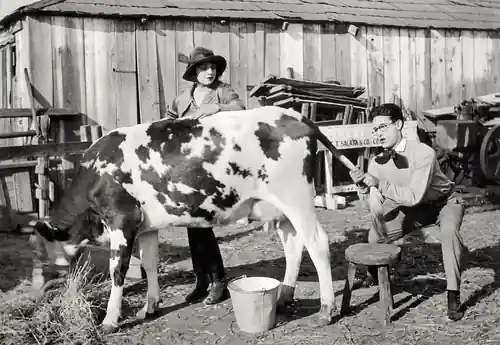
The burglars, James Parrott and 'Snub' Pollard, are perfectly cast as bumbling antagonists, their villainy tempered by an almost endearing ineptitude that makes their eventual comeuppance all the more satisfying. Their physical comedy, often reacting to Harold's traps, provides much of the film's broader humor. The supporting cast, including Sammy Brooks, William Petterson, Noah Young, Dee Lampton, Margaret Joslin, Wally Howe, Billy Fay, Emmy Wallace, Marie Mosquini, Bebe Daniels, and Lew Harvey, each contribute to the rich tapestry of the farm's inhabitants, adding background texture and occasional comedic flourishes. Even in bit parts, the silent era's reliance on expressive faces and distinct physicalities ensured that every character, no matter how minor, left an impression. The collective talent on display underscores the collaborative nature of filmmaking in this period, where a cohesive vision was built upon the individual contributions of a dedicated ensemble.
'Crack Your Heels' is a masterclass in the mechanics of silent comedy. The film’s pacing is impeccable, building from gentle situational humor to escalating tension and rapid-fire gags during the burglary sequence. Unlike some contemporary features that sometimes struggled with maintaining momentum without dialogue, this film demonstrates a keen understanding of visual rhythm. Each scene flows seamlessly into the next, propelled by the characters' actions and reactions. The physical comedy is precise, yet never feels overly choreographed; it retains a spontaneous, organic feel that enhances its authenticity. Lloyd's ability to convey a range of emotions – from trepidation to cunning to romantic adoration – purely through facial expressions and body language is truly remarkable, a testament to his innate talent as a performer.
The visual storytelling is concise and effective. Intertitles are used sparingly, allowing the action to speak for itself, a sign of confident direction. The camera work, while perhaps not as innovative as some avant-garde experiments of the time, is always functional and clear, ensuring that the audience never misses a crucial detail of the comedic setups or character expressions. The use of depth and space within the farm setting is particularly noteworthy, allowing for intricate chase sequences and hide-and-seek scenarios that maximize the comedic potential of the environment. In a sense, it shares a common thread with films like Jubilo, where the rural backdrop becomes an active participant in the unfolding drama and humor, rather than merely a static stage.
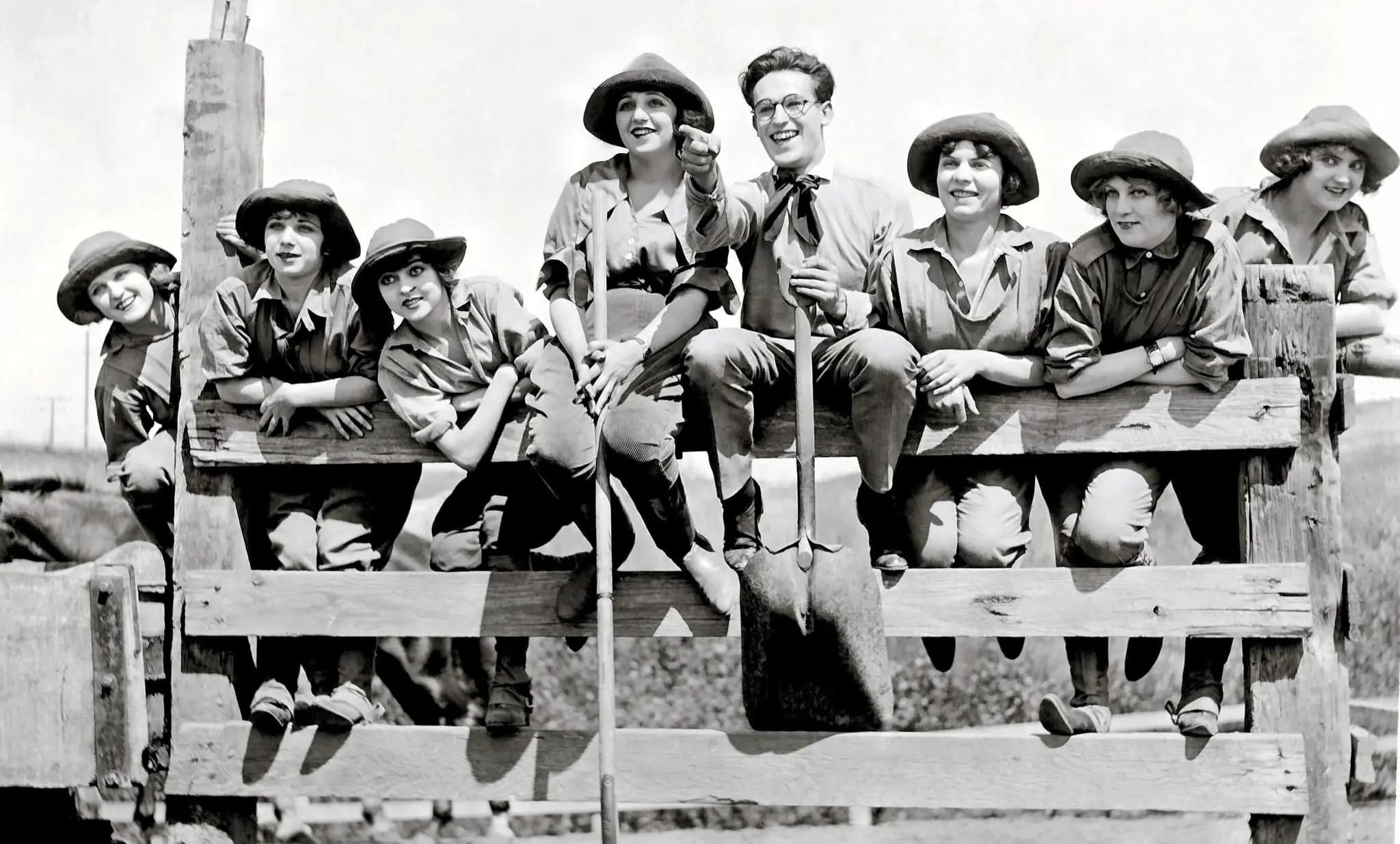
While 'Crack Your Heels' might not possess the sheer spectacle of Lloyd’s later, more ambitious features like 'Safety Last!' or 'The Freshman,' it is an essential piece in understanding his evolution as a cinematic icon. Here, we see the 'Glasses Character' in an earlier, perhaps slightly less defined, iteration. He's still the earnest, somewhat awkward young man, but the audacious confidence that would later define his persona is still germinating. This film helps contextualize his journey, illustrating how he honed his craft and refined his character through a series of successful shorts and early features. It stands as a testament to the prolific output of the era, where stars and studios were experimenting constantly, pushing the boundaries of what cinematic storytelling could achieve.
Comparing 'Crack Your Heels' to other films of its period reveals both its unique strengths and commonalities. The theme of an outsider finding purpose and love is a recurring motif in early cinema, seen in various forms from melodramas like Who Pays? to more action-oriented narratives. However, Lloyd’s particular blend of wholesome humor and genuine peril sets his work apart. The portrayal of farm life, though stylized for comedy, also offers a fascinating historical snapshot, albeit an idealized one. Even the portrayal of villains, often cartoonish yet threatening, was a standard trope that Lloyd and his collaborators perfected. The film’s ability to combine romance, comedy, and a dash of thrilling adventure within a relatively short runtime speaks to the efficiency and narrative economy often found in the best silent films, much like the compact yet engaging stories of The Mystery of 13, albeit with a comedic rather than suspenseful focus. It demonstrates that even without spoken dialogue, complex emotions and intricate plots could be conveyed with remarkable clarity and impact.
Over a century after its initial release, 'Crack Your Heels' continues to charm and entertain, a testament to the timeless quality of Harold Lloyd's artistry and the universal appeal of its narrative. It’s a film that reminds us of the power of ingenuity, the unexpected wellsprings of courage within us, and the simple joy of a well-earned happy ending. The resolution, where Harold not only outwits the burglars but also wins the affection of the girl, is a classic Hollywood trope, yet it feels earned here. His transformation from a work-shy drifter to a capable hero, worthy of love and respect, is completed with satisfying grace. It’s a narrative arc that speaks to aspirational dreams, where effort is rewarded and virtue triumphs.
For cinephiles and casual viewers alike, 'Crack Your Heels' offers a delightful window into a bygone era of filmmaking. It’s a reminder that compelling storytelling doesn't require elaborate special effects or complex soundscapes; sometimes, all it takes is a charismatic performer, a clever script (or scenario, as was often the case in silent films), and a clear vision. The film doesn't just entertain; it educates, providing insight into the comedic sensibilities and narrative structures that laid the groundwork for decades of cinematic development. Its historical significance is undeniable, positioning it as a key stepping stone in Lloyd's illustrious career and a valuable artifact of silent cinema. The film, much like a carefully preserved vintage photograph, allows us to glimpse the vibrant, innovative spirit of early Hollywood, a spirit that continues to inspire and influence filmmakers to this day. It’s a film that truly deserves to be rediscovered, its quiet brilliance a beacon of silent era craftsmanship.
In conclusion, 'Crack Your Heels' is far more than just another early silent comedy. It’s a foundational piece in the Harold Lloyd canon, a film that showcases his unique blend of humor, athleticism, and heartfelt sincerity. It’s a narrative that celebrates the transformation of the ordinary into the extraordinary, proving that even the most reluctant individual can rise to the occasion when love and justice are on the line. Its charm is undeniable, its historical value immense, and its entertainment factor remains remarkably high, offering a joyful, engaging experience for anyone willing to immerse themselves in the magic of silent film. The film is a joyous affirmation of the human spirit’s capacity for growth and surprising heroism, wrapped in a package of lighthearted amusement and genuine sentiment. Its legacy is not just in its gags, but in its ability to tell a simple, yet profoundly resonant, human story with enduring appeal, making it a compelling watch even today.
IMDb —
1919
Community
Log in to comment.