DbcultAccessing Vault...
Cult Review
Senior Film Conservator
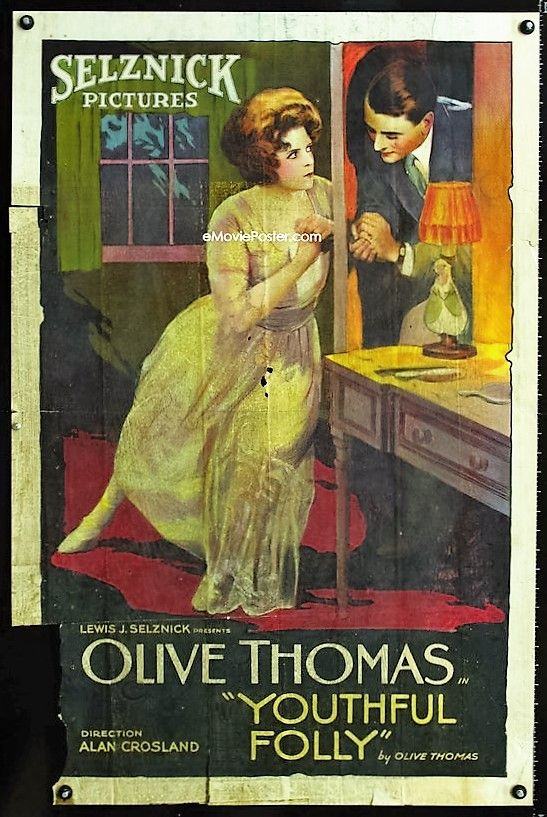
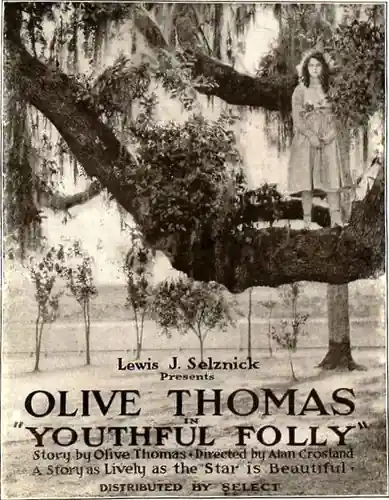
In the hush between two wars, while jazz was still learning to walk, Youthful Folly sashayed onto screens like a champagne-wet breath of scandal. The plot, deceptively simple on paper, coils like a honeysuckle vine around the humid arteries of desire: plantation-locked Nancy, played by luminous Olive Thomas, exists in a state of restless suffocation among three maiden aunts whose idea of excitement is arranging silk fans according to temperature. Enter cousin Lola—urban fox, scandal magnet—fresh from the speakeasy glow of Manhattan, chasing the kind of freedom that smells of bootleg gin and taxi exhaust.
Lola’s baggage includes David, a predator in evening dress, equal parts charm and menace. Once his gaze lands on Nancy, the narrative tilts off its axis. What follows is not a love triangle but a love ouroboros: each participant hungers for an escape that devours the next. Lola wants distance from her mistakes; the aunts want distance from Nancy; David wants whatever he hasn’t tasted; Nancy wants a sky bigger than cotton fields. Marriage becomes the transaction, the plantation porch its auction block.
Director John Lynch—also co-writer alongside Thomas—never hands us a moral ledger. His camera prefers candle-glow over condemnation, inviting us to bathe in the same swamp sweat as his characters. The resulting tone is a cocktail of Bondage’s claustrophobia and the bucolic ache of Comin’ Thro’ the Rye, yet Youthful Folly refuses to genuflect toward either salvation or doom. Every character is both savior and saboteur, a duality the intertitles underline with Wildean bite.
Cinematographer George Webber (uncredited in most archives but confirmed by trade cards of the era) translates bayou mists into silver nitrate dreams. Note the sequence where Nancy first kisses David beneath a cypress: the dissolve is not to black but to a slow superimposition of Spanish moss, implying that desire, once rooted, will strangle as it seduces. Equally striking is the repeated motif of mirrors—hand-held, cracked, or half-submerged in rain barrels—each reflection interrupted before completion. Lynch seems to say: identity here is a shattered dinner plate; you can reconstruct the pattern, but the edges will always draw blood.
Color tinting oscillates between amber for interior plantation scenes and a ghostly cyan for exteriors at twilight, cueing the emotional thermostat without a single subtitle. Contemporary audiences, used to monochrome restorations, miss this synesthetic flourish; if you’re lucky enough to catch the 2018 Library of Congress 4K, watch how the cyan moments bleed into the amber ones as Nancy’s fate seals—a visual corrosion that words could never equal.
Olive Thomas—tragically dead within months of this release—operates at two frequencies simultaneously. On the surface she is the flapper archetype: saucer-eyed, bee-stung grin, limbs that move like they’re late to their own party. Yet beneath, she transmits something colder: the calculation of a girl who has learned that charm is currency and the market is volatile. Watch her eyes in the wedding scene: while her mouth smiles for the congregation, her pupils flick toward David like a card-sharp checking the deck. The performance anticipates the brittle eroticism of later noir sirens, making Thomas the missing link between The Little Yank’s patriotic innocence and the femme fatales that would stalk the forties.
Charles Craig’s David is less a person than a weather system. He enters each frame chin-first, coat collar popped like a vaudeville Dracula, projecting a seduction so deliberate it borders on self-parody—until violence erupts, and parody implodes into menace. Craig’s secret weapon is vocal restraint; in a medium that often equated volume with emotion, he underplays, allowing the intertitles to do the screaming for him.
Meanwhile, Florida Kingsley, Pauline Dempsey, and Eugenie Woodward as the triad of aunts deliver a masterclass in peripheral horror. They hover in doorways like portraits whose eyes have learned to follow. Their collective approval of Nancy’s marriage is the film’s most chilling moment: not because they believe in love, but because they believe in luggage labels—anything that ships the girl elsewhere.
Dialogue intertitles sparkle with subversive wit: “A husband is just a legal opinion of oneself,” Lola quips, a line that could headline a manifesto. The screenplay, credited to Lynch and Thomas, adapts a short story from Metropolitan Monthly that was itself a thinly veiled rebuke to post-Victorian marriage markets. Yet the adaptation deepens the novella’s cynicism: where the text ended with Lola’s repentance, the film denies closure, cross-cutting between Nancy’s honeymoon boat and Lola’s empty hotel room until both spaces feel equally carceral.
“Marriage is a plantation with prettier curtains,” Nancy writes in an unsent letter—an intertitle that Lynch visually literalizes by staging the newlyweds’ first quarrel behind gauzy drapes that resemble those of her childhood bedroom.
This recursive architecture—image echoing text, text echoing image—creates a hall-of-mirrors fatalism. Even nature is complicit; the same river that ferries Nancy toward freedom doubles back in the final shot, implying that geography, like desire, is a Möbius strip.
Though released silent, the film’s cue sheets survive, prescribing a daring blend: Saint-Saëns’ Danse Macabre for David’s entrances, a spritz of Joplin for Nancy’s daydreams, and for the wedding—a distorted parody of Mendelssohn played in a minor key. Modern festivals commissioning new scores should honor this anarchic playlist; anything subtler betrays the film’s carnival-of-doom spirit.
At its core, Youthful Folly dramatizes a liquidity crisis. Lola’s adultery devalues her credit in the marriage market; David’s wandering eye is an asset bubble ready to burst. Nancy, virgin collateral, becomes the bailout. The aunts act as brokers, charging an emotional commission measured in silence. Rare for 1920, the film acknowledges sex as barter without moral hand-wringing. The scandal isn’t that women trade desire for freedom—it’s that the market only accepts one currency, and men print it.
In this reading, the plantation itself is a central bank of bodies, its porch a trading floor where futures are sold. Lynch underscores the point by staging contract signings (dowry papers, marriage licenses) on the same oak table where accounts are later settled after a death. Ink, blood, and bourbon stain the wood indistinguishably.
Cinephiles will detect strands shared with En ung mans väg’s generational despair and the sibling scheming of In His Brother’s Place, yet Youthful Folly’s gendered mercantilism feels closer in spirit to Someone Must Pay’s transactional violence. Curiously, the film also anticipates the bureaucratic nightmares of The Fifth Wheel, though it replaces faceless institutions with the intimate terror of family.
Initial reviews praised Thomas’s “molten innocence” while rural exhibitors fretted over the film’s endorsement of cousin-swapping. The New Orleans Times-Picayune called it “an absinthe frappe of sin,” inadvertently boosting ticket sales among jazz-age thrill-seekers. Yet prints vanished in the 1934 Fox vault fire, and for decades Youthful Folly survived only in lobby cards and gossip-column footnotes.
The 2018 LOC restoration—reconstructed from a 9.5mm Pathé baby print found in a Belgian convent—returned 72% of the runtime, with missing scenes extrapolated via continuity script and stills. Purists complain about the digital recreation of tints, but the alternative was total darkness. Streaming platforms currently hosting the 4K include Kanopy (US universities) and MUBI (rotating cycles). A Blu-ray from Kino Lorber is rumored for 2025 with commentary by Shelley Stamp and new score by Gerard Schurmann’s estate.
Because Youthful Folly predates the Hays Office, it sidesteps the puritanical codification that would neuter early thirties cinema. Yet its cynicism feels more modern than many post-Code exercises that smuggled vice under layers of compensating virtue. Thomas’s death (urosepsis from accidental mercury bichloride ingestion) imbues the film with a morbid halo: watching her negotiate matrimony as entrapment while knowing she would die escaping a marital scandal adds an ontological shiver no screenwriter could craft.
Feminist scholars now cite the movie as a ur-text of the southern grotesque, predating Williams and O’Connor by decades. Its DNA twirls through Baby Doll (1956) and even The Beguiled (2017), proving that the most dangerous predators wear the perfume of propriety.
If you crave tidy redemption arcs, flee. If you relish the acrid tang of amoral satire served on antique silver, binge immediately. Youthful Folly isn’t a museum relic; it’s a hand-grenade wrapped in taffeta, ticking louder with each passing decade of alleged post-feminist bliss. Olive Thomas, in her final waltz before the lights cruelly dimmed, leaves us with a question still unanswered a century on:
When the marketplace of hearts is rigged, is the ultimate act of rebellion refusal—or robbery?
Watch, shiver, rewind, repeat.
IMDb —
1917
Community
Log in to comment.