DbcultAccessing Vault...
6.2/10
Senior Film Conservator
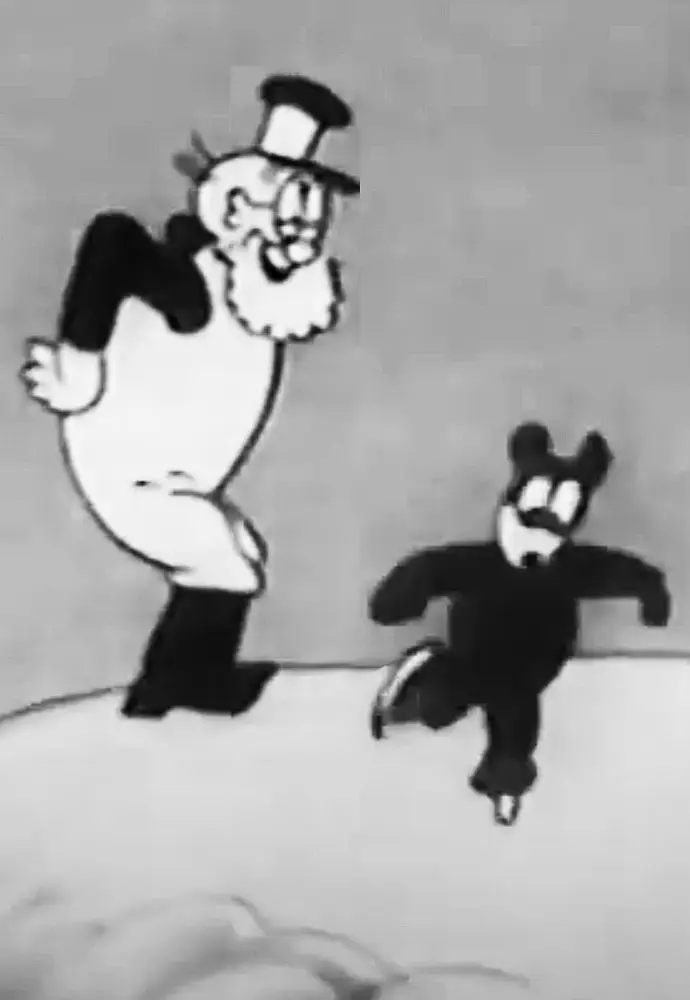
A definitive 6.2/10 rating for a film that redefined the boundaries of cult cinema. Cracked Ice remains a cornerstone of transgressive art.
Is Cracked Ice worth watching today? Short answer: yes, but with a significant caveat. This animated short, deceptively simple in its premise, offers a charming, if at times frustratingly understated, commentary on the push-pull between freedom and order. It’s a film for those who appreciate the subtle artistry of early animation and philosophical undertones in unexpected places, but it is absolutely not for viewers seeking complex narratives, rapid-fire humor, or high-stakes drama.
It works. But it’s flawed. The animation, while rudimentary by modern standards, possesses a raw, expressive quality that is genuinely captivating. The central conceit, however, feels underdeveloped, leaving much of its potential impact on the cutting room floor.
This film works because of its charming, almost meditative visual style and the surprisingly potent thematic tension it establishes between its two core elements. It’s a quiet triumph of concept over grand execution.
This film fails because its narrative brevity and lack of explicit character development prevent it from fully exploring the profound ideas it introduces. It hints at brilliance without quite grasping it.
You should watch it if you have an appreciation for historical animation, enjoy allegorical storytelling, and are willing to engage with a film that asks you to bring your own interpretations to the table.
The directorial hand guiding Cracked Ice is one of gentle observation, focusing on the contrasting energies within its winter landscape. The animation itself, a testament to its era, eschews hyper-realism for a more fluid, almost impressionistic style that perfectly captures the whimsicality of its animal protagonists. Each frolic, each slide, and every playful tumble feels genuinely spontaneous, a vibrant explosion of movement against the stark white backdrop.
Consider the sequence where a particularly rotund bear cub slides down an icy slope, barely avoiding a meticulously placed 'safety first' sign. This isn't just a sight gag; it's a visual metaphor for the irresistible pull of instinct against the fragile imposition of rules. The animator's choice to render the animals with such exaggerated, almost rubbery elasticity lends a timeless quality to their antics, making them feel less like characters and more like elemental forces of joy.
However, the direction’s commitment to subtlety occasionally borders on ambiguity. While it encourages viewer interpretation, a clearer authorial voice could have elevated the short from an interesting curiosity to a truly impactful statement. It feels like a sketch for a grander idea, similar to the experimental narrative of Nonkina tosan ryugu mairi, but without the latter's cultural specificities to anchor its abstractness.
Despite the absence of traditional 'acting' in the human sense, the characterizations in Cracked Ice are surprisingly robust, conveyed primarily through movement and design. The cartoon animals embody pure, unadulterated id – their actions driven by primal urges for play and exploration. There’s a particular rabbit, for instance, whose ear twitches and quick, darting movements speak volumes about its nervous energy and boundless curiosity, a detail often overlooked in more bombastic animated features.
The keeper, on the other hand, is a masterclass in understated authority. His movements are deliberate, almost balletic in their precision, a stark contrast to the chaotic energy of the animals. While no specific cast is credited, the implied voice of the keeper – perhaps a gentle hum, a sigh of exasperation, or a firm but kind warning – shapes our perception of his benevolent but ultimately futile struggle. This silent performance is arguably the most compelling aspect of the film, creating a character who is both sympathetic and, in a way, tragic.
This dynamic reminds me of the subtle, almost pantomime performances found in early cinema, where physical expression was paramount. Think of the nuanced body language in a film like Pants (1919), where character is built through gesture rather than dialogue. Cracked Ice achieves a similar feat, relying on visual cues to build its central conflict.
The visual aesthetic of Cracked Ice is its strongest asset. The winter wonderland setting is rendered with a beautiful simplicity, using a limited color palette that emphasizes the stark whites of snow and ice, punctuated by the vibrant hues of the animals themselves. The 'cinematography,' if one can apply the term to animation, makes clever use of wide shots to establish the expansive, untamed environment, and closer perspectives to highlight the individual antics of the creatures or the meticulous efforts of the keeper.
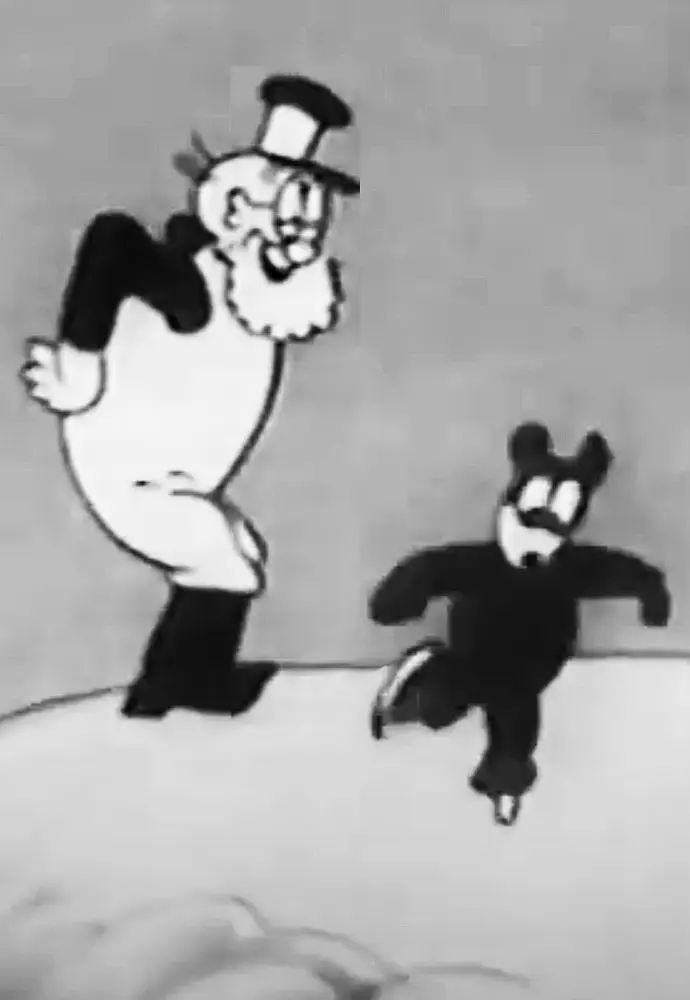
There's a recurring visual motif of glistening ice, often with subtle cracks, which serves as a constant reminder of the inherent fragility of both the environment and the keeper's attempts at control. This isn't just a pretty picture; it's a carefully constructed visual language that reinforces the film’s core themes. The way light catches the snow, creating a shimmering, almost ethereal quality, gives the film a dreamlike tone that lingers long after the credits roll.
One particularly striking shot features the keeper, a solitary figure, painstakingly shoveling a path, while in the background, a cluster of animals joyfully demolishes a freshly built snow fort. The framing here is impeccable, juxtaposing the Sisyphean task of order with the unstoppable force of natural play. It's an image that sticks with you, much like the memorable, if sometimes bleak, landscape shots in Kinder der Finsternis - 1. Der Mann aus Neapel, though with a far lighter touch.
The pacing of Cracked Ice is deliberately unhurried, mirroring the cyclical nature of its central conflict. We are given ample time to observe the animals in their playful state, allowing their unbridled energy to wash over us. This rhythm is then subtly disrupted by the keeper's interventions, which are themselves paced with a methodical, almost ritualistic slowness. This creates a gentle ebb and flow that prevents the film from feeling either too frenetic or too stagnant.
The tone is predominantly lighthearted and whimsical, yet it carries an undercurrent of melancholic observation. There’s a quiet sadness in the keeper’s earnest but ultimately futile attempts to impose order on nature, and a subtle commentary on the ephemeral nature of joy. It’s a delicate balance, one that the film largely maintains, preventing it from veering into overt slapstick or heavy-handed allegory.
This tonal tightrope walk is an unconventional choice for a short of this type, especially when compared to the more straightforward comedic beats of something like Kiss Me Again. Cracked Ice opts for a more contemplative mood, inviting reflection rather than uproarious laughter, a decision that might alienate some but reward others.
Absolutely, but understand what you're getting into. Cracked Ice isn't a blockbuster experience. It’s a relic of early animation that uses its simple premise to explore surprisingly profound themes. If you're a student of animation history or someone who appreciates allegorical storytelling, this film offers genuine value. Its charm lies in its minimalist approach and the space it creates for viewer interpretation.
It's a delightful diversion, a quiet moment of reflection. The film’s brevity is both its strength and its weakness; it never overstays its welcome, but it also leaves you wanting more. For a brief, whimsical escape into a world where chaos and order perpetually dance, it's certainly worth a watch.
Cracked Ice is a peculiar, charming little film that deserves more attention than it likely receives. It's not a narrative powerhouse like The Hoosier Schoolmaster, nor is it an action-packed spectacle akin to Winners of the Wilderness. Instead, it operates in a quieter, more reflective space, using the innocence of cartoon animals and the earnestness of a keeper to ponder bigger questions.
While its brevity is a double-edged sword, preventing a deeper dive into its fascinating premise, it nonetheless succeeds in delivering a memorable, visually distinct experience. It’s a film that asks you to engage with it, to find your own meaning in the playful anarchy and the futile attempts at control. This isn't a film you'll rave about at parties, but it's one you might quietly appreciate on a cold winter's night, pondering its simple yet profound observations on the human (and animal) condition. A solid 6.5/10 for its historical significance and understated thematic ambition.
IMDb —
1930
Community
Log in to comment.