DbcultAccessing Vault...
Cult Review
Senior Film Conservator
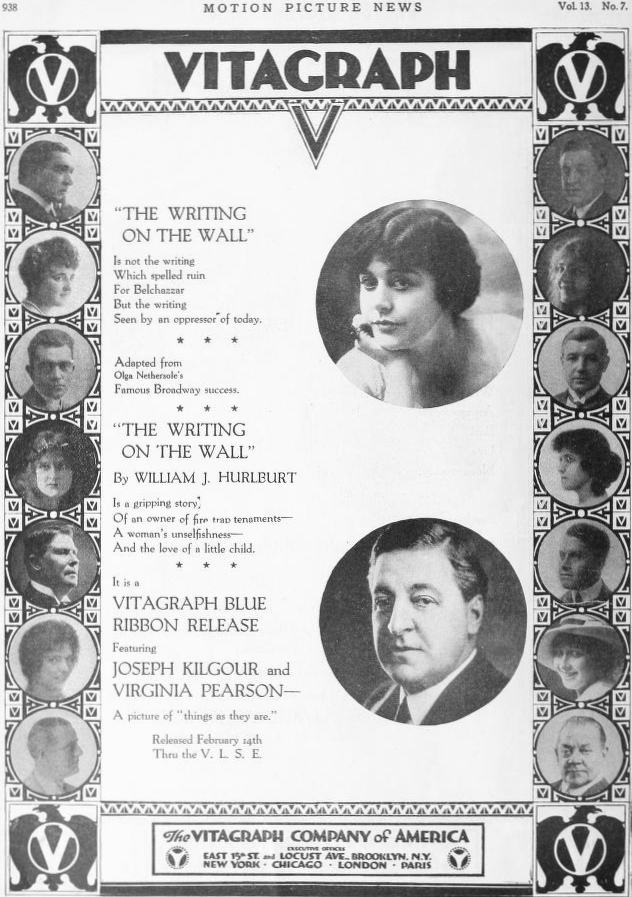
In the annals of early cinema, certain narratives transcend their temporal confines, speaking to universal human failings and societal injustices with an enduring resonance. Such is the case with The Writing on the Wall, a compelling drama that, even over a century after its inception, offers a stark mirror to the eternal struggle between avarice and altruism, moral decay and the persistent quest for redemption. This isn't just a story; it's a profound social commentary, cloaked in the guise of a gripping melodrama, charting the precipitous downfall of a man consumed by his own insatiable desires and the collateral damage he inflicts upon those in his orbit.
The film introduces us to Irving Lawrence, a figure of considerable wealth and influence, whose empire is built, quite literally, upon the backs of the city's most vulnerable. His vast portfolio of tenements in the impoverished sectors stands as a monument to neglect, their squalor a stark testament to his profound disregard for human dignity. These aren't just buildings; they are cages of destitution, breeding grounds for despair, and their very existence underscores the profound chasm between the opulent few and the suffering many. Irving's character is not merely flawed; he is a man whose moral compass is utterly shattered, his personal life a reflection of his professional ethics. His casual philandering and pervasive selfishness paint a portrait of a soul utterly devoid of empathy, a man for whom others exist merely as instruments for his gratification or obstacles to be brushed aside. It's a chilling depiction, one that resonates deeply even today, reminding us of the insidious nature of unchecked power and the corrosive effects of a purely self-serving existence.
Standing in stark contrast to Irving's moral wasteland are his wife, Barbara, and his brother, Schuyler. These two characters embody the burgeoning social reform movements of the era, their hearts brimming with a genuine desire for societal uplift. They are the film's moral anchors, their persistent, albeit often futile, attempts to sway Irving toward benevolence forming a central tension. Barbara, initially perhaps somewhat naive to the full extent of her husband's depravity, possesses an innate sense of justice that compels her to advocate for the betterment of the tenement dwellers. Schuyler, too, is driven by a similar philanthropic spirit, his concern for his brother's soul intertwined with his compassion for the downtrodden. Their struggle against Irving isn't just a domestic squabble; it's a microcosm of the larger societal battle between entrenched privilege and the burgeoning calls for social equity. Their inability to secure Irving's cooperation highlights the entrenched resistance to change, a frustrating reality for many reformers of the period. One might draw parallels here to the thematic undercurrents of films like The Undesirable, which often explored the plight of those marginalized by society, or perhaps even The Stubbornness of Geraldine, if Geraldine herself embodied a similar unyielding commitment to principles against formidable opposition. Barbara and Schuyler represent the glimmer of hope, the persistent voice of conscience in a world too often deafened by the clinking of coins.
The precarious equilibrium of the Lawrence household is shattered with the arrival of Payne, Barbara’s brother, and his radiant new bride, Muriel. This seemingly joyous occasion quickly morphs into a crucible of past sins when it becomes agonizingly clear that Muriel is one of Irving's former victims, a woman whose innocence he had callously disregarded in an earlier chapter of his profligate life. The painful reunion is a masterstroke of dramatic tension, instantly transforming domestic bliss into an arena of silent torment. Muriel, now a bride, is desperate to shield her adoring husband from the ugly truth of her past entanglement with his brother-in-law. Her silent suffering, the constant gnawing fear of exposure, becomes a poignant counterpoint to Irving’s sadistic pleasure in her predicament. He, a master manipulator, seizes upon her vulnerability, tormenting her unmercifully, relishing in her palpable distress. This psychological warfare is a chilling exposé of Irving’s depravity, demonstrating a cruelty far more insidious than mere physical abuse. It speaks to a deeper, more malicious aspect of his character, one that delights in the subjugation and suffering of others. The film expertly crafts this dynamic, building an unbearable tension around Muriel’s secret, a ticking time bomb waiting to detonate within the fragile edifice of their intertwined lives. The dramatic weight of such a hidden past, threatening to unravel a new life, resonates with the emotional complexities explored in narratives like The Road to Love or even the fraught relationships depicted in A Suspicious Wife, where secrets and misgivings often drive the narrative forward.
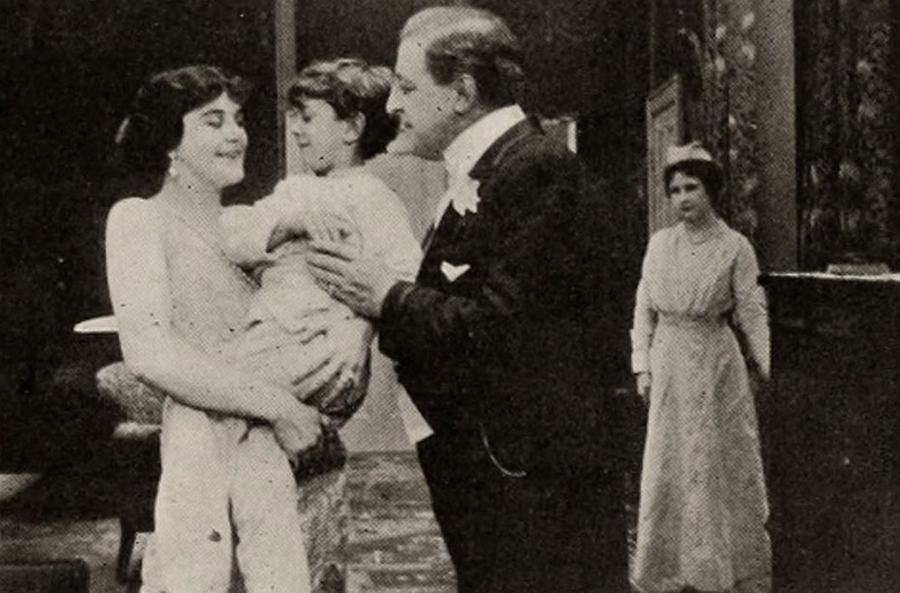
The escalating tension reaches a fever pitch as Barbara, growing increasingly aware of her husband's moral transgressions, misinterprets a fraught interaction between Irving and Muriel. In a moment of righteous indignation and profound misunderstanding, she openly accuses them, igniting a devastating conflagration of truth and lies. This pivotal scene is a dramatic tour de force, forcing the hidden shame into the harsh glare of public scrutiny. Muriel, cornered and desperate, is compelled to reveal the true nature of her past with Irving, unequivocally proving her innocence in the present misunderstanding. The revelation, while vindicating Muriel, simultaneously exposes Irving’s monstrous deceit and cruelty to his wife. Enraged by his public humiliation and the unraveling of his carefully constructed façade, Irving lashes out with venomous fury. He retaliates by fabricating a scandalous counter-charge, accusing Barbara and Schuyler of an illicit affair. This desperate, malicious act is the final, devastating blow, designed to inflict maximum pain and discredit those who dared to challenge him. The subsequent estrangement that rips through the family is immediate and absolute, leaving a landscape of shattered trust and broken relationships. It’s a powerful portrayal of how one man’s unchecked ego and vengeful spirit can obliterate all vestiges of familial bonds, leaving only bitterness and resentment in its wake. The narrative's careful construction of these emotional betrayals and their devastating consequences showcases a sophisticated understanding of human psychology, reminiscent of intense domestic dramas of the period.
Just as the personal conflicts reach their agonizing peak, the external world intrudes with cataclysmic force. A terrible fire erupts in one of Irving’s neglected tenements, a place where Barbara, with her unwavering humanitarian spirit, is hosting a party for the slum children, including young Harry. This catastrophic event is more than a mere plot device; it is a profound symbolic reckoning, the literal manifestation of the societal rot that Irving’s greed has fostered. The flames consume not just the physical structures but also the illusion of safety and impunity that Irving has long enjoyed. The frantic rush to the scene, the desperate cries, the sheer chaos of the inferno – all converge into a powerful indictment of systemic negligence. In a sudden, desperate impulse that hints at a flicker of dormant humanity, Irving plunges into the blaze, determined to rescue Harry. His mad attempt, however, is ultimately futile and tragically ironic, for the boy had already been safely carried out. Irving needlessly sacrifices his life, his death a grim, poetic justice. The crumbling of his rusty, decrepit fire escapes under the weight of the terrified tenants is the ultimate, visceral symbol of his moral bankruptcy. These weren't just emergency exits; they were the physical representation of his responsibility, or rather, his utter lack thereof. Their collapse, leading to the loss of countless lives, serves as his posthumous, albeit involuntary, atonement. It’s a brutal, yet undeniably satisfying, conclusion to his reign of self-serving tyranny, echoing the karmic justice often found in morality plays. The sheer visceral impact of this climax places it alongside other films that use disaster as a catalyst for revelation or retribution, such as perhaps the implied chaos in Le Cirque de la Mort, if one imagines a similar scale of tragedy, or the destructive forces at play in The Green Swamp, where nature itself might reflect moral decay.
The Writing on the Wall is far more than a simple melodrama; it is a piercing social critique wrapped in a compelling personal drama. The film bravely confronts the stark realities of urban poverty and the moral culpability of those who profit from it. The character of Irving Lawrence is a timeless archetype of the unscrupulous capitalist, a figure whose single-minded pursuit of wealth blinds him to the human cost of his enterprises. His story serves as a cautionary tale, a stark reminder that unchecked greed inevitably leads to ruin, not just for the individual, but for the entire social fabric. Barbara and Schuyler, on the other hand, represent the burgeoning social conscience of the Progressive Era, embodying the tireless efforts of reformers striving to alleviate suffering and demand accountability from the powerful. The film's exploration of betrayal, forgiveness, and the possibility of redemption—even if posthumous and born of tragedy—gives it a profound emotional depth. The themes of personal responsibility versus systemic injustice are handled with a nuance that belies the film's early cinematic origins. It compels viewers to consider the 'writing on the wall' in their own societies, the often-ignored warnings of impending disaster stemming from neglect and exploitation. The very title itself is a biblical allusion, hinting at an inevitable judgment for unheeded warnings, a powerful metaphor for the social unrest brewing in many industrial cities of the time. This thematic richness allows the film to transcend its specific historical context, making its message resonate with contemporary audiences grappling with similar issues of economic disparity and corporate accountability. It’s a testament to the power of narrative to hold a mirror to society, urging introspection and advocating for change.
While a detailed analysis of individual performances without the visual aid of the film itself is challenging, the narrative structure crafted by Marguerite Bertsch and William Hurlbut strongly suggests that the cast, particularly Naomi Childers as Barbara and the actor portraying Irving Lawrence, would have delivered powerful, emotionally charged portrayals. Childers, known for her strong screen presence, likely imbued Barbara with a compelling blend of vulnerability, resilience, and moral conviction. The character of Irving demands a performer capable of conveying both outward charm and an inner core of ruthless venality, a complex antagonist whose actions drive the entire dramatic thrust. The plot's intricate layering of personal betrayal with broad social commentary speaks volumes about the sophisticated storytelling prevalent in early cinema. The writers meticulously construct a world where private vices have public consequences, and where individual decisions ripple through an entire community. The pacing, from the initial exposition of Irving's character to the slow reveal of Muriel's past, and culminating in the explosive fire, demonstrates a keen understanding of dramatic escalation. The use of misunderstanding, revelation, and counter-accusation keeps the audience engaged, constantly shifting their sympathies and expectations. It's a testament to the craftsmanship that, even solely through its plot outline, the film's emotional intensity and thematic depth shine through. The narrative avoids simplistic black-and-white morality, instead delving into the complex interplay of human motivations, making it a compelling study of character and consequence. One can imagine the subtle gestures, the fraught expressions, and the silent suffering conveyed by actors like Josephine Earle as Muriel, or the earnest conviction of George Stevens as Schuyler, all contributing to a rich tapestry of human experience. The film’s ability to evoke such strong reactions and detailed imagery from a mere plot synopsis is a true mark of its narrative power and the skill of its creators.
In the aftermath of the devastating fire and Irving's dramatic, self-sacrificing end, the narrative finds a path toward healing and renewed hope. Barbara, demonstrating her innate capacity for compassion and reconciliation, plays a crucial role in mending the fractured relationship between Payne and Muriel. This act of grace underscores her character's moral strength and her ability to look beyond personal pain toward a brighter future. The film concludes with a sense of cautious optimism, suggesting a promising future for Barbara and Schuyler. Irving’s death, while tragic, functions as a necessary catharsis, purging the narrative of its central antagonist and allowing for the possibility of genuine progress and happiness for those he tormented. It is a resolution that doesn't shy away from the harsh realities of loss but ultimately affirms the enduring power of human connection and moral rectitude. The 'writing on the wall' has been read, its dire warnings tragically fulfilled, but from the ashes emerges the potential for a society built on justice and empathy rather than greed and exploitation. The film leaves us with the poignant message that while individual acts of depravity can wreak havoc, the human spirit's capacity for good, for social reform, and for personal healing ultimately prevails. It's a legacy that speaks volumes about the social conscience of early filmmakers and their desire to not only entertain but also to provoke thought and inspire change. Such narratives, where personal tragedies lead to broader societal understanding and the promise of a better tomorrow, often find their echoes in other classic tales of moral awakening and societal transformation, perhaps even hinting at the redemptive arcs found in films like The Wishing Ring: An Idyll of Old England, albeit in a vastly different setting, or the triumph of spirit in M'Liss. The Writing on the Wall remains a powerful, compelling piece of cinematic history, a testament to the enduring power of storytelling to illuminate the darkest corners of human nature and celebrate the unyielding light of hope.

IMDb —
1928
Community
Log in to comment.