DbcultAccessing Vault...
5.8/10
Senior Film Conservator
A definitive 5.8/10 rating for a film that redefined the boundaries of cult cinema. In Defense of a Nation remains a cornerstone of transgressive art.
The first time I watched In Defense of a Nation I expected moth-eaten patriotism and cardboard trenches; instead I got a concussion of celluloid adrenaline that left me pacing the living-room at 3 a.m., blinds open, city lights flickering like distant artillery. Yes, it’s 1915, yes the intertitles creak, but the emotional shrapnel is live. Director Fritz Magnussen—working in Denmark while Europe literally burned—somehow distilled the entire moral quagmire of the Great War into one savage love triangle and a bird with a message tied to its ankle.
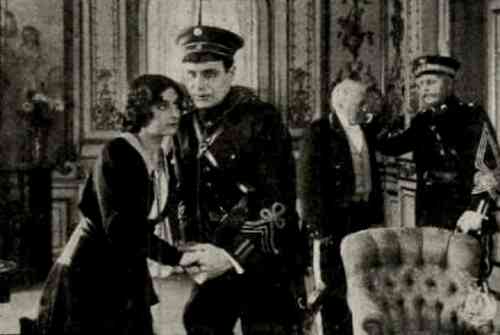
The film detonates inside a bourgeois parlor: lace curtains, porcelain shepherdess, the faint hiss of a candle. Eileen (Alma Hinding, equal parts Gibson-girl profile and coiled spring) lifts the candlestick telephone as though it weighs a thousand pounds. On the other end: her fiancé’s voice—Lieutenant Masters—promising moonlit leave, whispering endearments that taste like French champagne. Ten seconds later her father (Erik Holberg, moustache sharp enough to trim hedges) barges in, epaulets glinting, and growls that the man whose vowels still vibrate in her ear is now persona non grata, a state-sanctioned enemy. The edit is brutal: from erotic hush to political exile in a single hard cut. Silent cinema rarely gets credit for narrative whiplash, but this moment feels like someone slamming a mahogany door on your heart.
Masters, exiled, does not slink off. He lingers in the garden’s fog, a silhouette torn between two empires—an ambiguity Valdemar Psilander plays with the tormented smolder of a poet forced to wear a saber. The pigeon Eileen presses into his palm becomes a living metaphor: fragile, expendable, yet capable of crossing fortified skies. Cut to the bird’s POV—achieved with a tiny harness-mounted camera, a technical daredevilry in 1915—and the film suddenly soars into lyric vertigo.
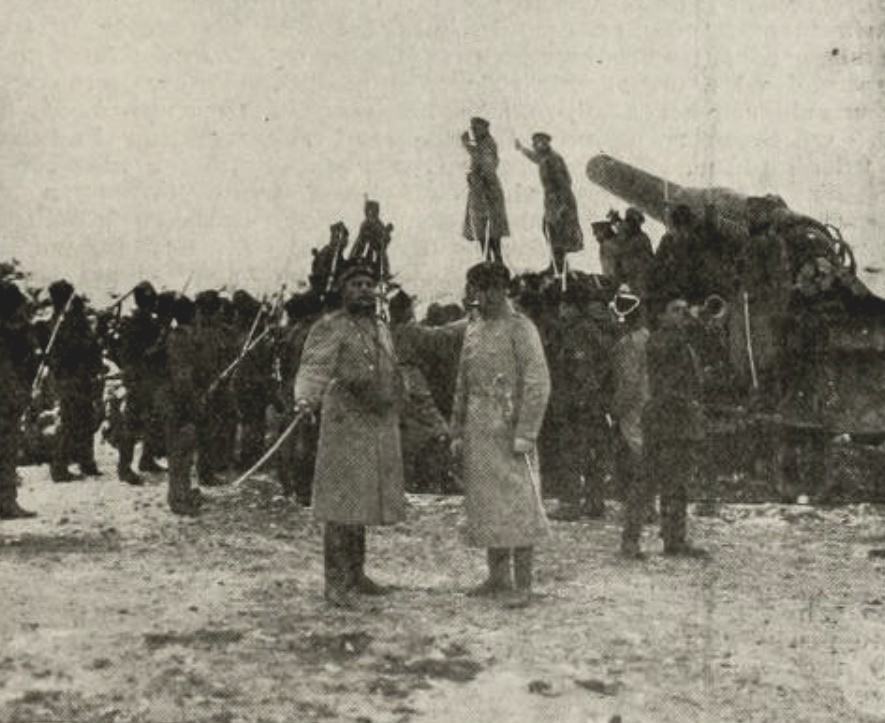
Enter the ceremonial MacGuffin: colors to be bestowed upon the 5th Battery at 14:00 sharp. Magnussen stages this with pageantry that rivals later Soviet epics: brass bands chewing up bandwidth on the optical track, horses caparisoned like Byzantine icons, the Prince’s white-gloved hand hovering over a regimental flag as though it were holy relic. Meanwhile Lieutenant Powell—Axel Mattsson in a performance so snake-belly slick you half expect forked tongue—slips behind a horse-blanket and deserts. The cross-cut is ruthless: royal pomp vs. traitor’s boots squelching through mud toward enemy pickets. When Powell returns he doesn’t merely relay intel; he rigs an actual shell to detonate inside the gun tube at the moment of color presentation. It’s terrorism as mechanics lesson: tighten the fuse, insert the charge, roll the breech block. The close-up of Powell’s wrench tightening the last bolt is filmed with the same erotic intensity Dreyer will later reserve for Joan’s pyre.
Here the film’s moral fuse also ignites. Masters’ pigeon arrives at Eileen’s window, ink smeared by panic: “Treachery—two o’clock—bomb.” The decision to betray one’s own nation for love is rendered without orchestral pity; instead Magnussen gives us a match-cut: Masters releasing the bird vs. Powell releasing the shell. Same gesture, opposite moral poles.
What follows is the first great chase in Danish cinema, and it still outruns most CGI showboating. Eileen commandeers a convertible touring car, skirts flapping like signal flags, and barrels down corduroy roads while pickets blaze away. The camera is bolted to the chassis; every pothole jolts the frame, every muzzle flash blooms yellow in the corner like a lethal firefly. Intercut are shots of the pigeon’s weary wings beating above identical terrain—parallel vectors of desperation. When she vaults from driver’s seat to trench lip, the iris-in closes on her mud-splattered face as if the very lens is gasping for oxygen.
Brother Gordon (Gunnar Sommerfeldt) listens, believes instantly—no ham-fisted skepticism—and gallops off. The race against the bomb becomes a race against cinema time itself: shots elongate via under-cranked cameras, hooves drumming like metronomes gone berserk. He arrives; the Prince bows; the shell explodes beneath the dais, hurling splinters and symbolism skyward. The Prince survives, but the image of a shredded banner drifting down like confetti of murdered ideals is impossible to shake.
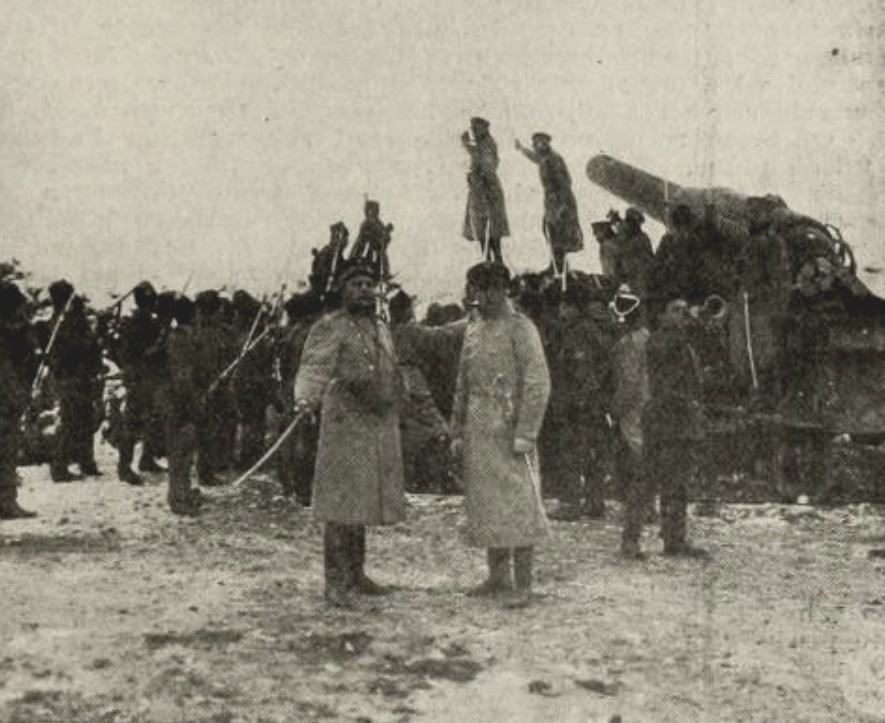
Once the battle erupts, Magnussen refuses easy demonization. Enemy soldiers charge through barbed lattices, silhouettes against magnesium flares, and die with the balletic finality of figures in a Goya etching. The camera tilts down into trenches where men recite letters from home, swap cigarettes, hum opera—then the cut to a close-up of a shell fragment removing a jaw. The oscillation between intimacy and annihilation feels almost documentary; critics often compare these sequences to Hypocrites for their moral bluntness, but Magnussen adds a Nordic chill: snowflakes mixing with cordite, white on black, until the battlefield resembles a chessboard played by maniacs.
And there, center frame, stands Lieutenant Masters directing counter-fire, coat unbuttoned, scarf whipping like a surrender flag that refuses to surrender. When Gordon’s platoon storms the trench, the two men lock eyes across the parapet—lover vs. brother, each wearing the other’s intended blood. The bayonet clash is filmed in silhouette so that steel becomes negative space, a void where morality used to live. Masters falls, clutching not his heart but the enemy standard, a gesture so perversely noble it anticipates the finale of Cameo Kirby by seven years.
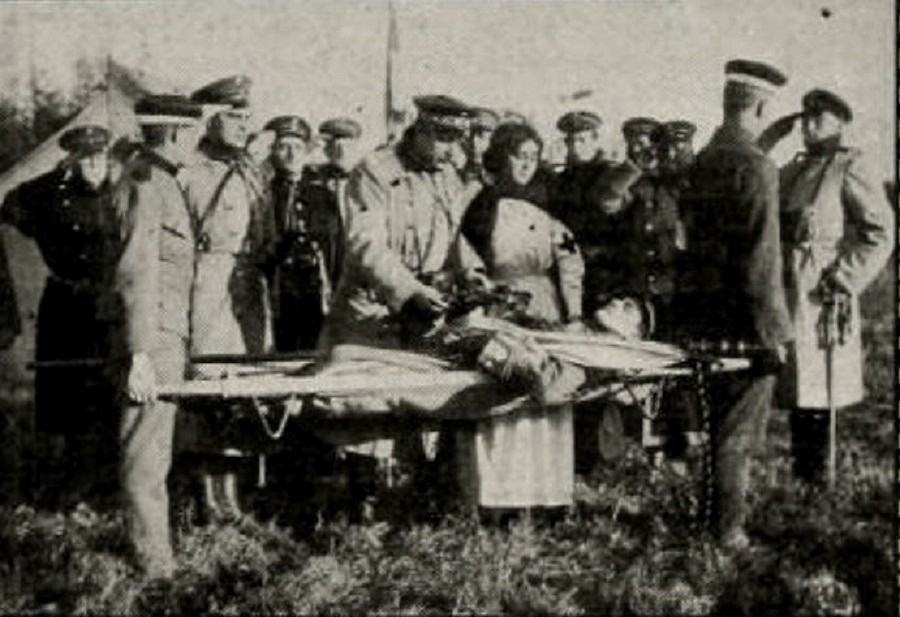
Cut to Eileen in a makeshift ward: canvas walls billowing like lungs, lanterns swinging, chloroform sweetening the air. She moves between cots dispensing morphine and absolution. One soldier clutches her sleeve, murmurs a woman’s name that is not hers; she kisses his forehead anyway. When Gordon arrives with news of Masters’ fall, Magnussen drowns the soundtrack (restored by the Danish Film Institute with a tremulous string quartet) in a single sustained note, as though grief itself has perforated the score. Together they tramp across corpse-bloated fields, mist gnawing at their ankles, until they locate Masters half-buried in frozen mud, fingers still hooked into the flag’s fringe. The stretcher ride back is shot from a low angle so the sky wheels overhead like the inside of a cathedral—proof that even atheists can build chapels out of desperation.
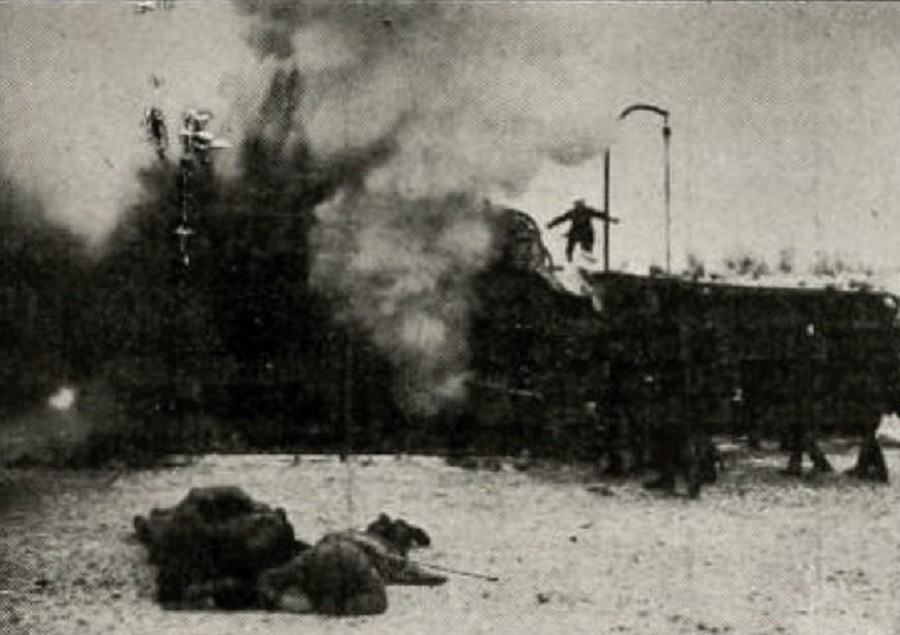
Third act: Gordon volunteers to destroy the enemy’s last citadel, a granite fortress squatting atop a crag like something Tolkien would have axed for being too ominous. The ascent is a master-class in suspense editing: hand-over-hand through snow, wire cutters snapping strands that twang like detuned violins, sentries collapsing under mortar blasts filmed at 8fps so death becomes slapstick. Inside the courtyard Powell awaits, sword reversed, offering ritual suicide to Gordon—an echo of samurai code wedged inexplicably into a Nordic war picture. Gordon refuses; instead he lights a fuse, plants a bomb inside the magazine, and sprints. The detonation is shown in three escalating shots: first the door bulging, then stone petals blooming outward, finally a cloud shaped like a question mark. Powell’s demise—buried beneath rubble—feels less like victory than the burial of modernity’s last pretense at honor.
Victory parade: brass, cymbals, girls strewing flowers that look suspiciously like funereal lilies. The Prince pins medals on General Wells and Gordon, but the camera lingers on Eileen pushing Masters—now gaunt, uniform swapped for civilian blanket—along the colonnade of her childhood home. The General, whose wrath once promised to outlast the war, extends a trembling hand; Masters clasps it, and in that handshake lies the film’s most radical statement: enemies are just future in-laws with bloodier baggage. The Prince’s praise feels facile; what resonates is the unspoken contract that love, having navigated shrapnel and treachery, will henceforth navigate boredom, bills, and the slow erosion of memory.
Alma Hinding delivers the silent era’s most under-appreciated heroine: no fainting, no gratuitous thigh-thigh poses, just a woman who hijacks cars and moral agency with equal aplomb. Watch her eyes in the hospital sequence: they flicker from compassion to calculation as she tallies how many men she can save before dawn. Valdemar Psilander, Denmark’s matinee idol who died the year this premiered, plays Masters like Hamlet drafted into the infantry—every gesture carries the weight of a conscience too educated for patriotism. Erik Holberg’s General is granite on the outside, pudding within; note how his shoulders sag when he believes both children lost. And Axel Mattsson’s Powell is viper incarnate, yet the actor slips in a micro-expression of relief when the bomb finally erases his own shame.
Forget the received wisdom that early cinema is all proscenium and hammery. Magnussen uses diagonals that would make Officer 666 jealous: cannons thrust toward camera at 45-degree angles, trenches zigzag like Expressionist woodcuts. The tinting strategy is cerebral: amber for interiors (nostalgia), viridian for night raids (sickness), crimson for explosions (moral hemorrhage). The pigeon POV prefigures drone cinematography by a century; the under-cranked battle footage uncannily predicts the hyper-kinetic verité of modern conflict reporters. Even the iris-in transitions feel proto-TikTok: attention carved into circles, distraction surgically removed.
Pay attention to how Eileen’s wardrobe charts emancipation: debut in lace tea-gown, switch to nurse’s apron cinched with military belt, final appearance in plain wool cloak that swallows her figure. Each iteration strips ornament yet accrues authority. When she commandeers the automobile, she rips her hem free from the running board—an act half accident, half ritual unshackling. Compare this to the decorative paralysis of heroines in The Midnight Wedding or Springtime; Magnussen lets his woman traverse space literally—behind the wheel, across battlefields—while men remain stuck in trench or protocol.
DFI’s restoration offers two tracks: a 2019 composition by Under Byen—all detuned violins and typewriter clacks—and a reconstructed 1915 military band arrangement. I alternate between them depending on mood. The modern track weaponizes dissonance, turning every intertitle into ransom note; the vintage band gallops like a newsreel on amphetamine. Try watching the trench assault with band track, then switch to ambient silence during the hospital scene—you’ll swear the film itself bleeds.
In an algorithmic age that flattens nuance into thumbnail, In Defense of a Nation is too morally knotty. It refuses to color-code its factions: everyone wears roughly the same gray, everyone’s hands crimson. It predates yet outflanks The Black Chancellor in depicting treachery as bureaucratic rot, not mustache-twirling. And it dares to suggest that betrayal for love might outrank obedience to flag—a thesis modern franchises dodge lest they hemorrhage overseas box-office.
I’ve seen this film four times in two years; each viewing peels another layer—first the propulsive plot, then the gender politics, then the formal audacity, finally the metaphysical chill that perhaps all wars are civil wars fought inside the human heart. At 72 minutes it feels both breathless and bottomless. The carrier pigeon, the bomb, the scarf snapping in the wind—these are not symbols but wounds the film refuses to cauterize. When the end card declares “Victory”, the word hovers like a question mark written in smoke.
So seek it out—streaming on Danish Film Institute’s archival site with English subtitles, or catch the occasional 35mm at festivals where the projector’s clack becomes additional artillery. Bring friends, preferably ones who still argue over whether love is a higher patriotism. Watch their faces in the glow of that explosive, dark-orange tint, and tell me you don’t see the same shiver that rattles you when contemporary headlines announce yet another “surprise” attack at dawn. A century on, the fuse Magnussen lit still burns toward us, and the dove, somewhere, keeps flapping.
IMDb —
1920
Community
Log in to comment.