DbcultAccessing Vault...
5.6/10
Senior Film Conservator
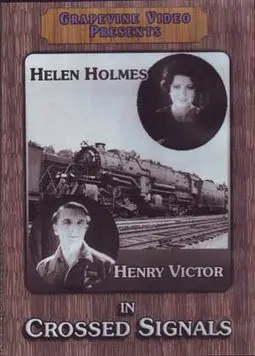
A definitive 5.6/10 rating for a film that redefined the boundaries of cult cinema. Crossed Signals remains a cornerstone of transgressive art.
Crossed Signals
The cinematic landscape has long been populated by films that deftly navigate the complex interplay between deception and redemption, often yielding riveting tales that captivate audiences and inspire introspection. George Saxton's Crossed Signals, a relatively obscure yet masterfully crafted film, exemplifies this phenomenon with its intricate plot, bolstered by strong performances from its cast, including Nelson McDowell, Henry Victor, and Milla Davenport.
At its core, Crossed Signals
revolves around the convergence of two disparate narrative threads: the clandestine counterfeiting operation headquartered in the local railway station and the federal agent tasked with dismantling this illicit ring. The station's manager, framed for the crime, finds herself inexorably linked to the agent, forming an unlikely alliance that serves as the film's emotional and narrative linchpin.
Thematically, Crossed Signals
recalls the likes of You Find It Everywhere and The Counterfeit Trail, films that similarly explore the world of organised crime and the cat-and-mouse games that often ensue between law enforcement and those who seek to evade justice. However, Crossed Signals distinguishes itself through its nuanced character development and the moral complexity that permeates its narrative.
The character of the federal agent, dispatched to the rural town to disrupt the counterfeiting operation, serves as a compelling focal point for the film's exploration of justice and morality. His portrayal, imbued with a sense of dogged determination and an unwavering commitment to upholding the law, provides a sturdy counterpoint to the station manager's plight, highlighting the human cost of corruption and the redemptive power of unlikely alliances.
In a similar vein, the characterisation of the station manager, whose reputation has been so callously tarnished by the counterfeiters, serves as a powerful testament to the resilience of the human spirit in the face of adversity. Her performance, characterised by a measured intensity and a deep-seated desire for justice, adds a rich layer of emotional depth to the film, underscoring the ways in which the pursuit of truth can serve as a powerful catalyst for personal growth and redemption.
The supporting cast, including Nelson McDowell and Henry Victor, add a welcome texture to the film's narrative, their performances imbued with a sense of verisimilitude that serves to further enhance the overall sense of tension and suspense. The cinematography, while not overly complex, effectively captures the claustrophobic atmosphere of the railway station, serving to heighten the sense of unease that permeates the film's more intense moments.
In terms of its broader cultural significance, Crossed Signals
can be seen as part of a larger cinematic tradition that seeks to explore the complexities of human nature and the often fraught relationship between individuals and the institutions that govern their lives. This is a theme that is similarly explored in films such as Aura o las violetas and Der König ihres Herzens, both of which offer nuanced explorations of the human condition, albeit through different narrative lenses.
The film's score, while not particularly noteworthy, effectively complements the on-screen action, adding a sense of dynamism to the film's more intense moments. The editing, similarly, is workmanlike, serving to heighten the overall sense of tension and suspense that permeates the narrative.
In conclusion, Crossed Signals
is a gripping and thought-provoking film that masterfully weaves together themes of corruption, loyalty, and redemption. Its intricate plot, bolstered by strong performances from its cast, makes for a compelling viewing experience that will resonate with fans of crime dramas and character-driven narratives alike. If you're a cinephile with a penchant for films that explore the complexities of human nature, then Crossed Signals
is an absolute must-see.
Grade: 4.5/5
IMDb —
1928
Community
Log in to comment.