DbcultAccessing Vault...
5.4/10
Senior Film Conservator
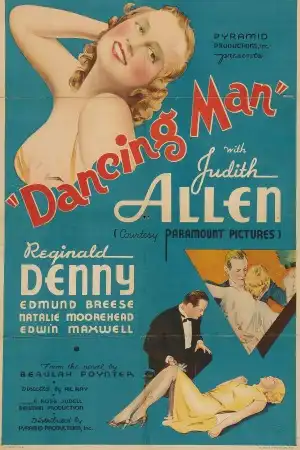
A definitive 5.4/10 rating for a film that redefined the boundaries of cult cinema. Dancing Man remains a cornerstone of transgressive art.
So, Dancing Man from way back in 1935. Is it worth digging up today? Well, for folks who love a good old-fashioned mystery wrapped in a bit of melodrama, maybe even with some slightly stiff dialogue, then yeah, it’s a pretty neat little watch. If you’re looking for fast-paced thrills or super nuanced characters, you might want to skip this one. It’s got a certain charm, but it’s definitely a product of its time. 🕰️
Reginald Denny plays Paul Dtexel, our titular 'dancing man.' He’s a professional dance partner, essentially, escorting wealthy women around town. You know, making a living. He meets Diana Trevor, played by Judith Allen, and they hit it off right away. It’s a sweet enough romance, a bit rushed maybe, but that’s how these old movies roll sometimes.
The whole thing really kicks into gear when Diana finds out her stepmother, Tamara (Natalie Moorhead), is one of Paul’s regular clients. This awkward reveal scene, where Diana walks in on them dancing, is actually one of the film’s stronger moments. The camera lingers a little too long on Diana’s face, letting you really feel her dismay. You can see the shift from happy-go-lucky to *oh no* right there.
Then Tamara ends up dead. Naturally, Paul is the prime suspect. I mean, the setup pretty much screams 'him,' doesn't it? It’s a classic setup for a murder mystery. The police are on him pretty quick. Detective work feels a bit… simplified, which is common for films of this era. It’s more about the drama surrounding the accusation than the actual investigative process.
Judith Allen, as Diana, really does carry the emotional weight once the murder plot takes hold. She’s determined to clear Paul’s name, and you can sense her desperation. There’s a scene where she confronts one of Tamara’s former acquaintances, trying to find clues. Her voice gets this sharp edge to it. It’s a small thing, but it makes her feel a bit more real than some of the other characters.
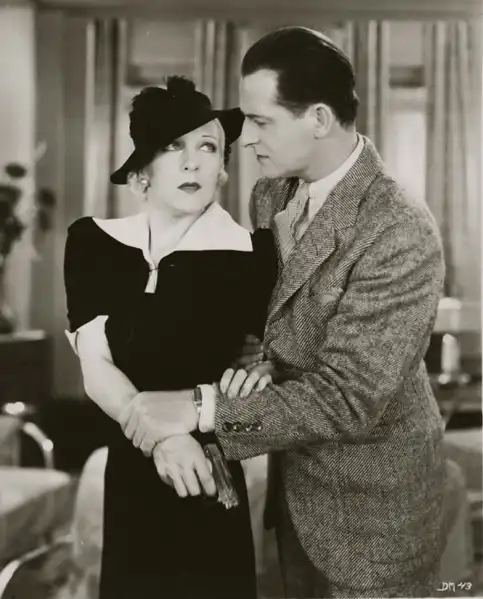
Paul, for his part, spends a good chunk of the movie looking bewildered or stoic. Reginald Denny’s performance is, shall we say, consistent. He’s very much the 'gentleman accused' type. He doesn't have a lot of big emotional outbursts, which actually makes some of the moments where he *does* show frustration stand out.
One detail I found interesting: the dance hall scenes. They’re pretty lively. You can almost feel the music, even without a surround sound system. The extras are really going for it, not just standing around. It adds a nice bit of energy that contrasts with the heavier, more dramatic parts of the film. It makes Paul’s world feel tangible before it all comes crashing down.
The pacing of the movie is a bit... *uneven*. Some scenes zip by, especially the early romance bits. Other times, the plot sort of meanders. There’s a subplot about another character, a rival maybe, that just kinda fades out without much resolution. It feels like they had a few ideas and just didn't quite connect them all perfectly. But that’s fine, not every movie needs to be a tightly wound machine. 🤷♀️
There are a few moments where the dialogue feels a bit stilted, even for the 1930s. You can almost hear the actors enunciating every syllable. But then, you get a line that’s just *perfectly* delivered, usually by Natalie Moorhead as Tamara, even though she's not on screen for too long. Her character, even in a small role, leaves an impression. She’s got this cool, almost icy demeanor that makes her a believable target for, well, whatever happened to her.
The courtroom scene near the end, it’s a bit over-the-top, but in a fun way. The prosecutor is *really* trying to paint Paul as a scoundrel. It’s less about legal realism and more about dramatic tension. You know how these things go in old movies. The twists come a little fast, maybe too convenient, but it brings everything to a close.
So, Dancing Man isn't a masterpiece, not by a long shot. But it’s got a genuine heart to it, especially in Diana’s fierce loyalty. It’s a decent way to spend an evening if you’re into cinema history and don't mind a story that doesn't always hit every single note perfectly. It’s a curiosity, a glimpse into what audiences were watching back then. And sometimes, that’s exactly what you want. ✨

IMDb —
1930
Community
Log in to comment.