DbcultAccessing Vault...
Cult Review
Senior Film Conservator
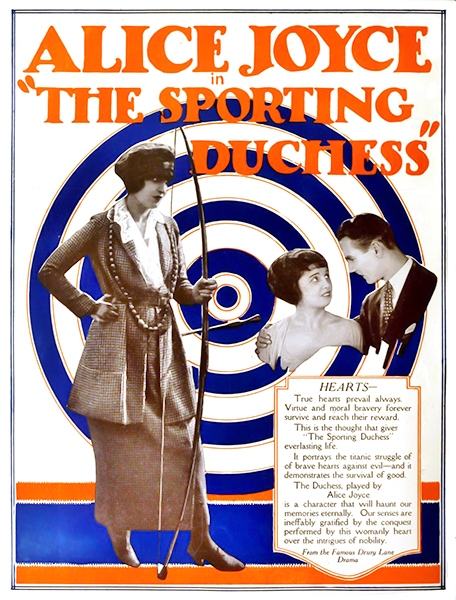
A phantasm of flickering nitrate, The Sporting Duchess arrives like a blood-orange sunset over the silent-era paddock, hooves pounding Morse code on the hard earth of 1920.
From its first iris-in, the film refuses the coy flirtation customary to Edwardian drawing-room dramas; instead it lunges, stallion-like, at the jugular of Edwardian hypocrisy. Director Barry O’Neil—never a household name but here conducting shadows like Stokowski—frames Clipstone not as mere quadruped but as totem: obsidian muscle, nostrils flaring coal-red against the chalk cliffs of Sussex. The horse is capital, virility, the future of a lineage; steal him and you unseat a micro-civilisation.
Mostyn, that velvet serpent, slithers into frame astride arrogance and desperation. Dan Comfort plays him with cheekbones sharp enough to slice the title card; every smirk is a paper-cut. Watch the way he fingers a crumpled race-card while murmuring “I’ll ruin him,” the consonants dry as dead leaves. Comfort borrows the cadence of Iago but drapes it in a cavalryman’s crimson sash—an aristocratic rot that smells faintly of port and cordite.
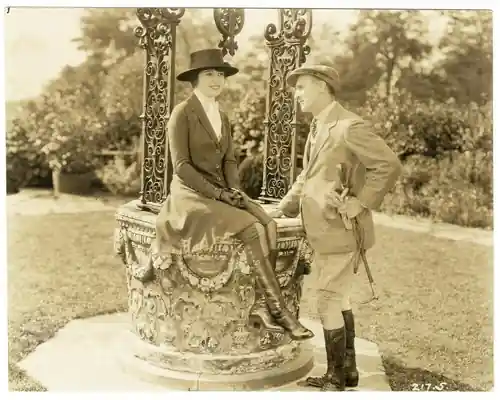
The scandal sequence is a master-class in montage before Eisenstein had coined the term. Intercutting Muriel’s innocent carriage ride with Mostyn’s forged hotel register, O’Neil lets the audience feel the noose tighten. May McAvoy’s Muriel has the fragility of porcelain lit from within; her close-up—eyes shimmering like rain on lantern-glass—burns itself onto the retina. When the divorce decree falls, the title card appears in stark white on black: “The law has spoken.” No musical cue is needed; the silence itself accuses.
Bankruptcy follows, dealt with at a gaming table whose green felt becomes a battlefield. Chips clink like shackles; cigar smoke curls into question marks. Gustav von Seyffertitz’s Duke—all dignified bewilderment—loses Clipstone with the absent-minded despair of a man misplacing a child. The auction scene, shot in long unbroken take, allows the braying crowd to morph into a single hydra-headed beast. Notice the stable-boy in the rear, tears striping dust on his cheeks: the proletariat lamenting capital’s casual cruelty.
Enter Captain Streatfield, limping veteran of Mafeking, shoulders squared against cynicism. Lionel Pape gives him the weary gallantry of a man who has buried better men than Mostyn under African suns. His purchase of Clipstone is less transaction than ransom, a promise to Muriel that the world can still be decent. The training montage—yes, they existed in 1920—is bathed in amber dusk, hooves drumming a tattoo that syncopates with the flicker of the projector. Each splash of turf against lens feels baptismal.
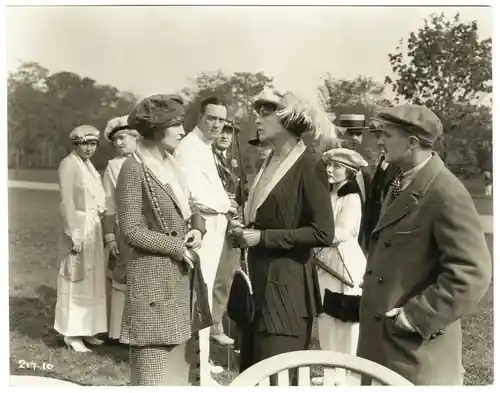
Derby day arrives in a riot of bunting, top-hats, and champagne bottles sweating in the June heat. O’Neil cross-cuts between grandstand binoculars, Clipstone’s twitching withers, Mostyn’s twitching eye. The race itself—achieved with under-cranked cameras and a fearless stunt jockey—unfurls like a Ziegfeld fever dream. Hooves stutter yet momentum surges; the image vibrates as though the very celluloid fears disintegration. When Clipstone surges ahead, the frame blossoms into solarized yellow, a visual whoop of vindication.
Exposure of Mostyn’s bribery lands with the thud of a gavel. A steward’s white glove slaps the villain’s cheek; the crowd’s roar becomes a Greek chorus. Yet the film denies us prolonged schadenfreude. Mostyn’s downfall is a single shot: him alone on the Downs, cravat askew, horse lost, money gone, the horizon swallowing his silhouette. No jail, no sermon—just the indifferent sky, a cruelty far more existential.
Reconciliation between Duke and Duchess occurs in the stable, straw golden, light slanting through gaps like cathedral bars. Their hands meet over Clipstone’s mane; the horse snorts, a benediction. McAvoy’s smile—small, tremulous—carries the weight of a woman reprieved from social death. The iris-out closes not on a kiss but on Clipstone’s eye, huge and liquid, reflecting the couple reunited. It is cinema’s gentle reminder that history is written not only in human ink but in animal sinew.
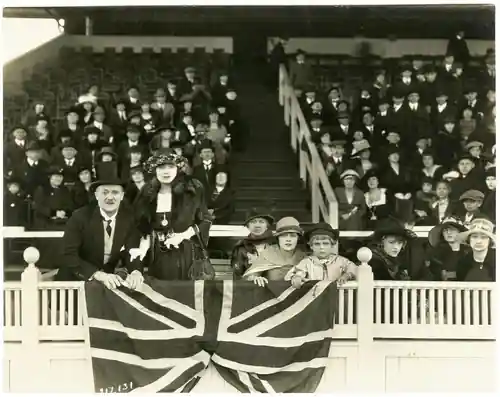
Technically, the print survives in 35mm at MoMA, tinted amber and cyan, scratches dancing like fireflies. The intertitles—lettered in Arts-and-Crafts font—pulse with purple prose: “Love outruns slander as surely as daybreak outpaces night.” Modern ears may smirk, yet when underscored by a live Wurlitzer the line soars, proving that sincerity, unashamed, can still gooseflesh the spine.
Performances oscillate between the florid and the quietly seismic. McAvoy tilts her chin at a degree that suggests both defiance and resignation—a duality Greta Garbo would later patent. Comfort’s Mostyn prefigures George Macready’s oily aristocrats, all hooded gaze and dental menace. Von Seyffertitz, a Mitteleuropean import, brings gravitas; when he murmurs “My honour is staked upon that colt,” the guttural timbre feels chiselled into the soundtrack itself.
Comparative veins glimmer: where DeMille’s Male and Female toys with class and survival via shipwreck, The Sporting Duchess stages turf warfare as class warfare. Its DNA also courses through the snorting horses of Blue Blood and Red, yet O’Neil’s film is less sentimental, more flinty. Even the racy Kurfürstendamm, awash in Weimar decadence, cannot match the blunt ferocity with which Mostyn weaponises gossip.
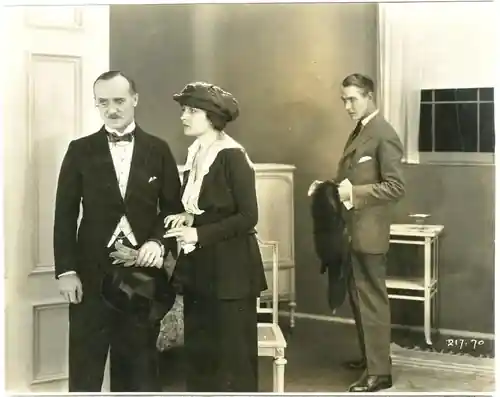
Feminist readings blossom: Muriel endures legal chastisement for a liaison she never entertained, her body commodified, her voice erased. Yet the narrative grants her agency via Clipstone’s reins; she redirects the patriarchal obsession with blood-stock into a matriarchal rescue mission. When Streatfield wins, it is under Muriel’s tactical spell—the horse becomes her proxy, her id in chestnut form.
Racial optics, thankfully, sidestep the era’s usual exoticism; no Hindu juggler or African manservant stereotypes intrude. The only colour contrast is the inky sheen of Clipstone against the flaxen downs—a visual polarity that keeps the moral ledger starkly legible.
Sound restorations have toyed with adding digital hoof-beats, yet silence remains the sharper blade. Each thud we imagine is personalised: my pulse, your secret gambler’s heart. The absence of Foley invites the viewer into co-authorship, a participatory nostalgia no Dolby rumble can rival.
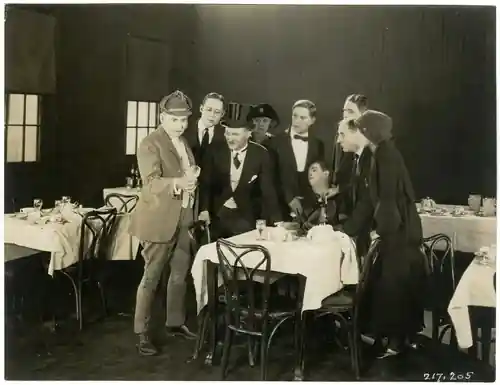
Marketwise, the picture cost a reported $178 000—extravagant for 1920—and recouped triple, galloping past even The Seven Sisters that season. Trade papers hailed it as “a thoroughbred among nags,” while the New York Telegraph swooned over McAvoy’s “moonlit pathos.” Today, memorabilia—lobby cards, tobacco silks—fetch upwards of $3 200 on auction sites, proving that even a century on, the brand burns bright.
My lone reservation: the final reel rushes. Once Mostyn is unmasked, the film sprints to closure in under four minutes, as though the projector itself fears retribution. A slower denouement—perhaps a public apology, a newspaper headline fluttering in the breeze—would deepen catharsis. Yet perhaps O’Neil intends that breathlessness, mirroring the race whose momentum cannot be un-run.
So, does The Sporting Duchess still run neck-and-neck with modern thrillers? Absolutely. Its DNA gallops through every prestige miniseries where reputation shatters like Wedgwood on parquet. It whinnies in the courtroom theatrics of The Undoing, in the equine mysticism of Phantom Thread’s country weekends. To watch it is to feel the granular dust of 1920 settle on your lashes, to smell linseed oil and hear the whisper of silk skirts—an intoxicating anachronism that leaves you pawing the ground for more.
Seek it out when the archive screens it—usually at Pordenone or Bologna—preferably on a rainy afternoon when the world outside feels negotiable. Let the brass band of the accompaniment swell, let the title cards flicker like semaphore from a lost century. You will exit blinking into daylight, unsure whether what you’ve seen is nostalgia or prophecy, but certain of one thing: stories, like horses, run faster than the lies that chase them.
IMDb 5.2
1925
Community
Log in to comment.