DbcultAccessing Vault...
Cult Review
Senior Film Conservator
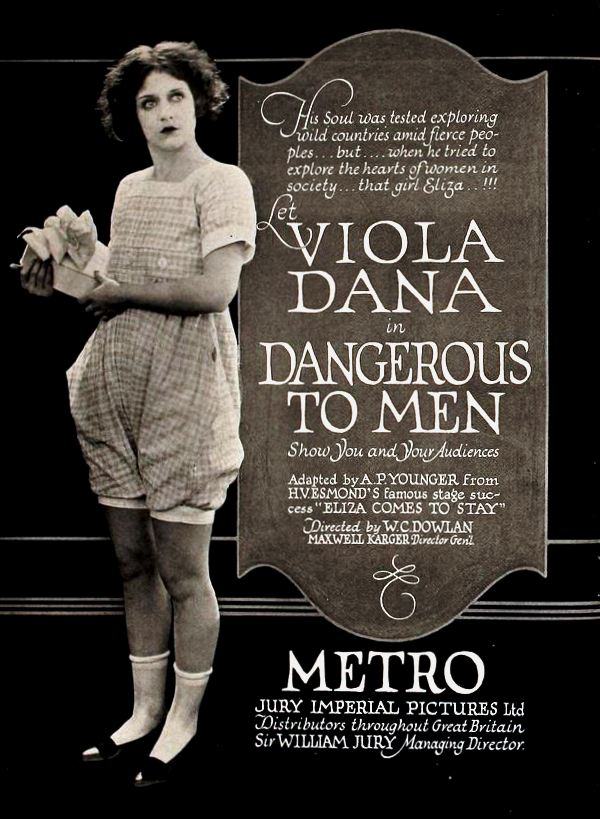
A champagne-cork pop of subversion, Dangerous to Men fuses the drawing-room farce of Daddy-Long-Legs with the venomous sparkle of a Lubitsch postcard, then spikes the punch with something wilder: a heroine who weaponizes infantilism the way Mata Hari wielded silk stockings.
Viewed today, the film feels like finding a razor blade inside a chocolate bonbon—its 65-minute runtime glides from Saigon harbor fog to Nob Hill ballrooms without pausing for breath, let alone moralizing. The camera, restless as Eliza’s temper, glides through lace-curtained parlors, opium-tinged docks, and a Chinatown apothecary where incense coils suggest dragon’s breath. Cinematographer John P. Morse renders skin tones like alabaster heated from within; every close-up is a séance where 1923 audiences must have sworn Esther Ralston’s iris necklace quivered with lust.
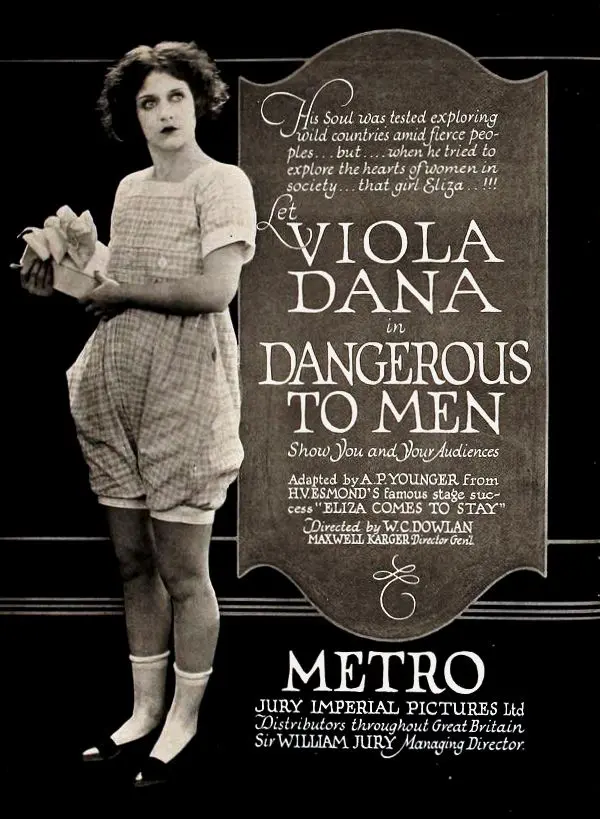
Forget the cutesy governess tales then clogging the box-office; Andrew Percival Younger’s scenario treats guardianship as a blood-sport. The moment Sandy Verrall (Milton Sills) signs the parchment, he unknowingly enters a gladiatorial ring where the opponent is both ward and jail-bait. Eliza’s opening gambit—pigtails, gum, a toy trumpet—reads like a Dadaist prank hurled at patriarchal order. Yet each squeak of that trumpet chips away at Sandy’s composure, revealing the frazzled bachelor beneath the pith-helmet rationalism.
Meanwhile, the script refuses to grant Eliza the moral high ground. Her sabotage of Sandy’s engagement is less righteous than riotous: she blackmails a butler, forges love-letters, and flirts with Uncle Gregory (James O. Barrows) whose toupee flaps like a wounded crow. The film’s genius lies in letting us relish her chaos without sanitizing it. When Eliza finally locks Vera (Helen Raymond) inside a walk-in icebox—an image that prefigures Trouble Makers’ slapstick sadism—the moment is both hilarious and faintly disturbing, a reminder that flapper freedom could be a switchblade.
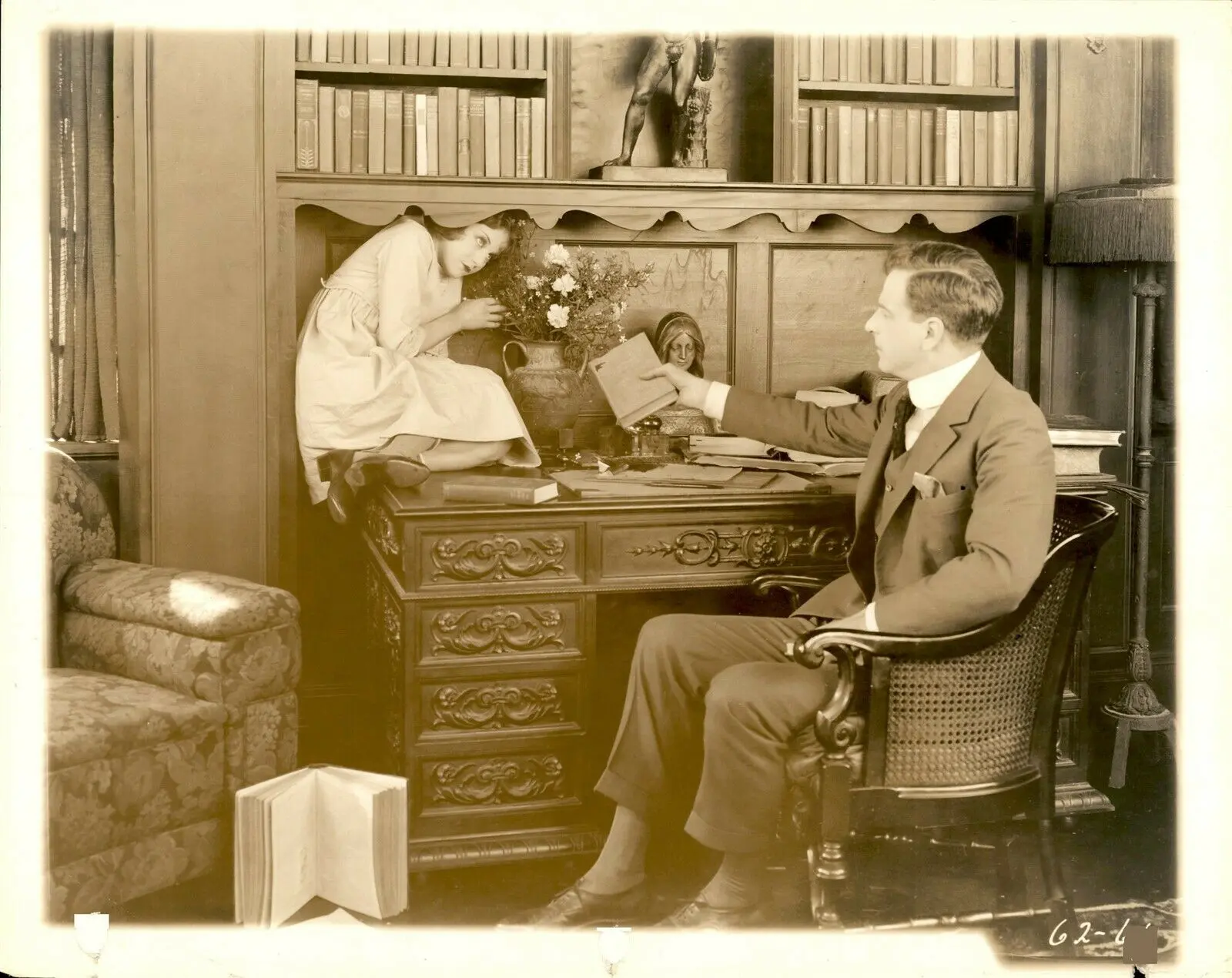
Esther Ralston, aged nineteen during production, executes a thespian triathlon: gamboling urchin, regal ingénue, femme fatale—sometimes within a single take. Watch her pupils in the conservatory scene: they dilate like ink spills the instant Sandy calls her "infant." Without title-card assistance she telegraphs a vow of revenge so fierce you half-expect the greenhouse glass to crack.
Milton Sills, saddled with the thankless straight-man role, counters with micro-gestures: the way his fingers tighten around a teacup saucer becomes a Morse code of repressed desire. In the third-act confrontation, when he finally hauls Eliza across a chaise longue, the camera frames them in chiaroscuro so that their silhouettes merge—an erotic eclipse that slipped past every censor board in 1923.
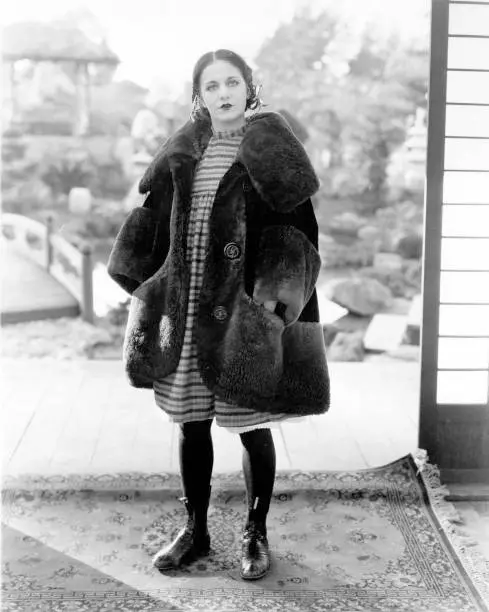
As the gold-digging Vera, Helen Raymond essays a vamp who doesn’t hiss but purrs—her voiceless purr conveyed via a slow tilt of cigarette holder and a smile sharp enough to slice Camembert. She is the film’s broken mirror to Eliza: both women perform femininity as strategy, yet Vera’s performance curdles the moment her pupils register the bank-balance zeros.
Art director Carol Jackson drenches the frame in a palette that anticipates two-strip Technicolor daydreams. Eliza’s first adult gown—sea-blue silk—matches the exact hue of San Francisco Bay glimpsed through French windows, suggesting that the city itself conspires in her metamorphosis. Later, when she crashes Uncle Gregory’s masquerade, she appears in a blood-orange mantle that bleeds into the same tone as the censor-baiting subtitle cards, a visual confession that passion and peril share pigments.
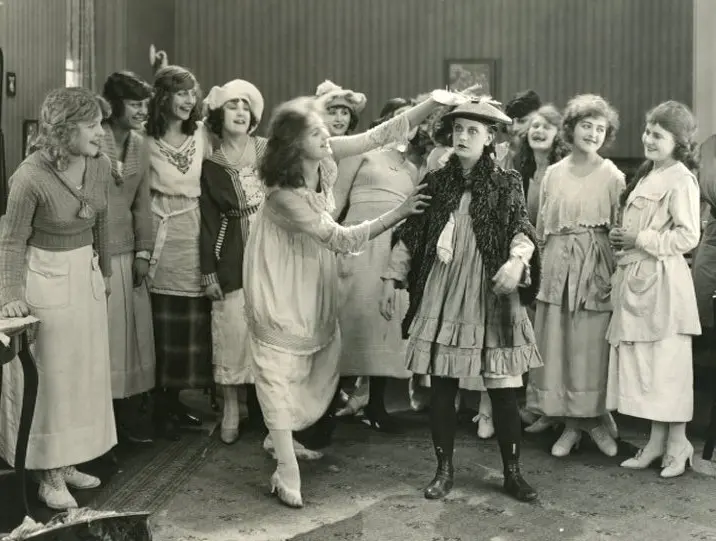
Camera movement, rare for 1923 independents, glides via makeshift wheelchair-dolly through the ballroom: couples waltz in diaphanous masks, their faces dissolving into a kaleidoscope of desire. The effect feels like stumbling into a lost reels of Northern Lights—only with jazz syncopation pulsing on the intertitles.
Beneath its screwball surface, the movie charts the continental drift between Victorian guardianship and proto-feminist self-ownership. Eliza’s child-drag mocks the era’s fetish for female innocence; by overplaying the doll, she exposes the dollhouse as a prison. Yet the film also acknowledges the limits of flapper rebellion: once she wins Sandy’s heart, marriage still serves as narrative closure. Still, the final shot—a lingering close-up of Eliza’s gloved hand dropping the trumpet into a steamer trunk—hints that the performance is far from over; she has merely swapped one mask for another, and the trunk lid slams like a wink at the audience.
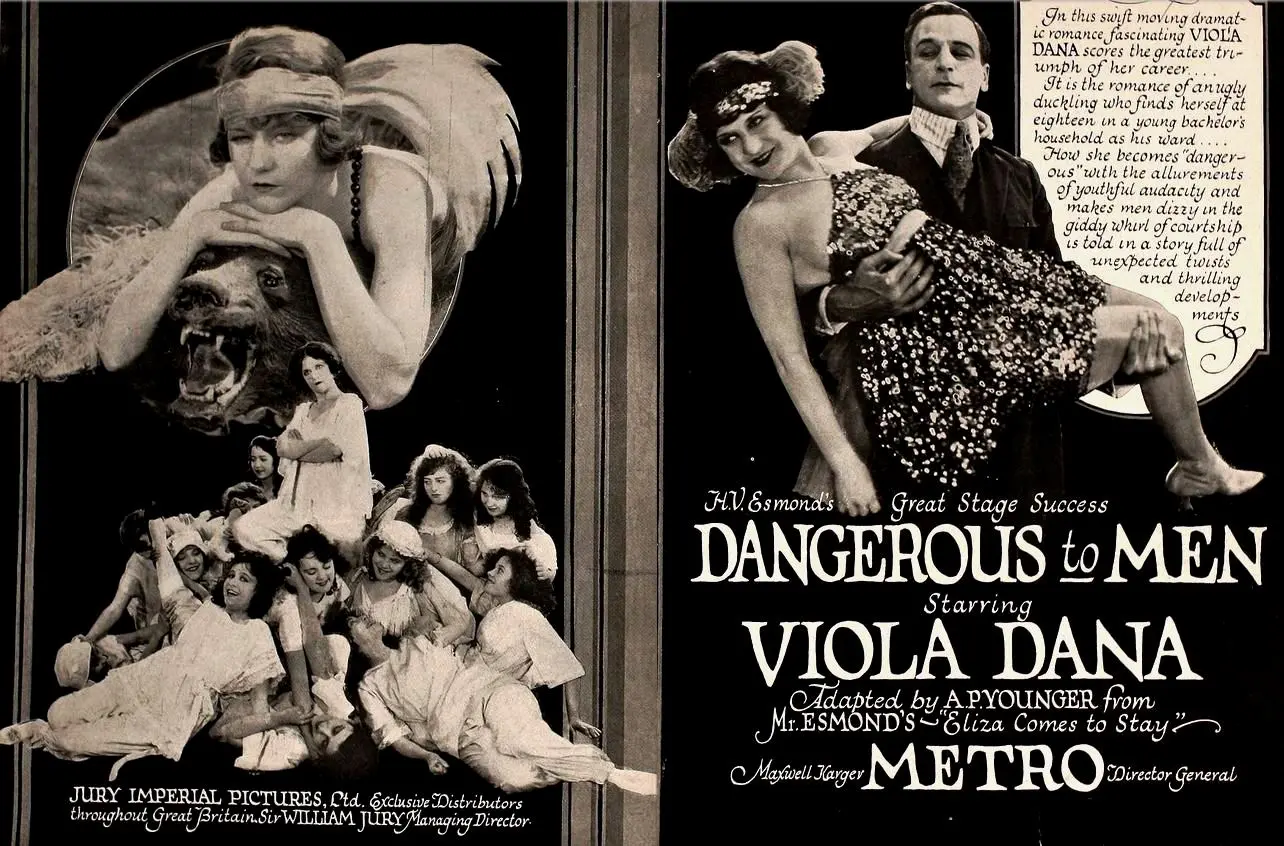
Compare this denouement to Daddy-Long-Legs where the orphan’s gratitude calcifies into dependency; Dangerous to Men lets its heroine retain the upper hand even while clutching a bouquet. The difference is seismic: one film ends on bended knee, the other on a shared smirk that says, "Game recognizes game."
Though originally released without official score, surviving promptbooks indicate house orchestras were instructed to interpolate "Amapola" and "Dardanella" during Eliza’s transformation scenes. Modern restorations often pair the flick with a jaunty, klezmer-tinged arrangement that accentuates the film’s tonal whiplash—ukuleles pluck when she pranks, cellos groan when desire floods in. The dissonance feels apt: a reminder that 1923 audiences consumed chaos with a live soundtrack, each theater a unique remix.
For decades, the picture languished in mislabeled cans misidentified as a lost two-reeler. When a 35mm nitrate print surfaced at a Belgian flea market in 1998, the tinting was still vivid enough to make archivists weep. Its rediscovery dovetailed with feminist re-appraisals of silent-era authorship; scholars now cite Eliza as a missing link between Alone in New York’s street-urchin pluck and the lethal sophistication of A Lady’s Tailor.
Meanwhile, Doris Baker’s supporting turn as Eliza’s conniving maid—part confidante, part Judas—prefigures the parasitic sidekicks later glamorized in noir. Watch how she pockets loose pearls while delivering exposition; the gesture is so fluid it could teach a master-class in larcenous continuity.
Dangerous to Men is not a curio; it is a stick of dynamite with the fuse half-burnt. Its sexual politics remain volatile, its humor still pricks, its aesthetics prefigure the saturated dreamscapes of Sirk and Wong Kar-wai. The film argues, with breezy amorality, that love is the greatest confidence trick—and that the con artist deserves our applause, not our condemnation.
So seek it out, whether via archive torrents or a rep house that smells of acetate and ambition. Bring friends who still think silent cinema equals static cameras and fluttering eyelashes. When the lights dim and Eliza’s trumpet first squawks, you’ll feel the room tilt. That’s not nostalgia—it’s the ground shifting under your feet, a reminder that a hundred years ago, audiences were already fluent in chaos, craving heroines who could detonate propriety and waltz through the wreckage wearing nothing but a smirk and a borrowed top-hat.
IMDb 5.6
1936
Community
Log in to comment.