DbcultAccessing Vault...
Cult Review
Senior Film Conservator
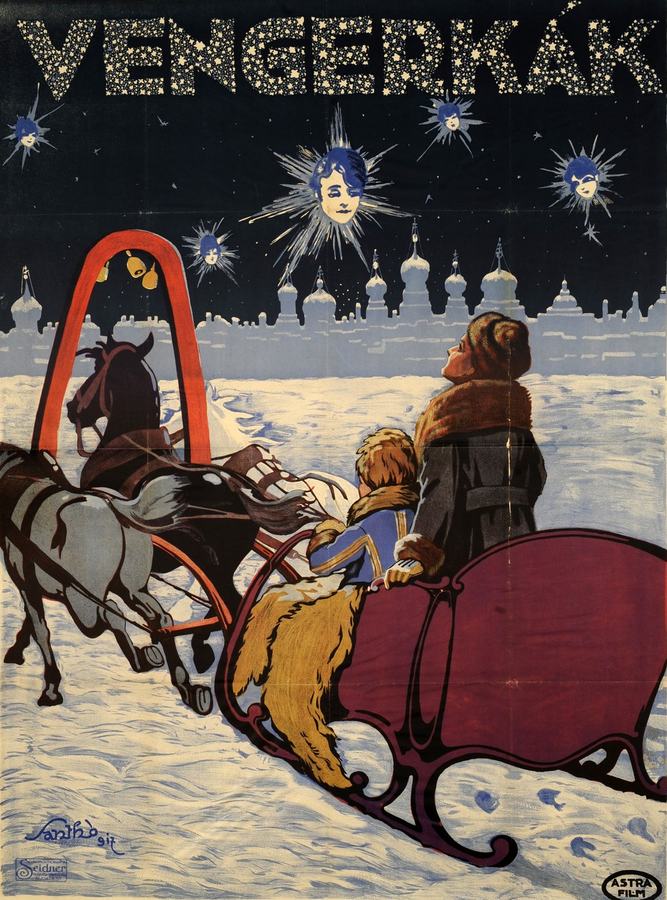
Stepping into the world of 'Vengerkák' is akin to unearthing a meticulously preserved relic from a bygone era, a cinematic tapestry woven with threads of yearning, betrayal, and the enduring resilience of the human spirit. This Hungarian silent film, a collaborative effort from writers Sándor Góth, Béla Balogh, and Árpád Pásztor, and brought to life under the nuanced direction of Balogh, stands as a testament to the profound storytelling capabilities of early cinema. It’s not merely a period piece; it’s a timeless exploration of societal strictures, class disparities, and the perilous journey of a young woman caught between the innocence of her origins and the deceptive glamour of a burgeoning metropolis. The film, though over a century old, resonates with an emotional immediacy that few contemporary works achieve, drawing the viewer into its narrative vortex with an almost hypnotic pull.
At the heart of 'Vengerkák' lies the luminous figure of Ilona, portrayed with a breathtaking blend of naiveté and burgeoning ambition by Ica von Lenkeffy. Her performance is nothing short of a masterclass in silent acting, conveying a vast spectrum of emotions through subtle gestures, expressive eyes, and a posture that shifts from hopeful uprightness to weary resignation. Ilona is not merely a protagonist; she is an archetype, representing countless young women of her era who found themselves at the crossroads of tradition and modernity, their destinies often dictated by forces far beyond their control. Her journey begins in the pastoral serenity of a Hungarian village, a world of simple pleasures and predictable rhythms. Yet, a restless spirit stirs within her, a longing for something more, something grander than the life prescribed by her circumstances. This internal conflict is beautifully articulated by Lenkeffy, making Ilona's initial enchantment with the city's promise entirely believable, even tragically understandable. The film's early scenes establish this contrast with a painterly eye, the rustic charm of the village serving as a poignant backdrop to Ilona's nascent dreams.
This narrative arc, focusing on a young, impressionable woman's descent into a world of moral ambiguity, finds echoes in other cinematic works of the period. One might draw a parallel to Graziella, another melodrama exploring the tragic romance and societal pressures faced by its titular heroine. Both films excel at depicting the vulnerability of their female protagonists against a backdrop of rigid social conventions. However, 'Vengerkák' distinguishes itself through its particular Hungarian sensibility, imbuing its tale with a unique cultural flavor that feels both specific and universally resonant. The stakes feel incredibly high, not just for Ilona personally, but for the very fabric of her family's honor and dignity.
The catalyst for Ilona's transformation is the enigmatic Count István, brought to life with a chilling blend of suavity and menace by Gusztáv Vándory. Vándory masterfully crafts a character who is initially charming, almost irresistible, embodying the very allure that draws Ilona away from her humble roots. His performance is a study in calculated seduction, his every gesture and expression designed to disarm and captivate. He represents the corrupting influence of unchecked privilege and the moral bankruptcy that can lie beneath a veneer of sophistication. The audience is privy to his duplicity long before Ilona fully grasps it, creating a palpable sense of dread that pervades their interactions. This narrative tension, where the viewer observes the unfolding tragedy with a sense of helpless foresight, is a hallmark of Balogh’s directorial skill.
Vándory's portrayal of István is particularly effective in its subtlety. He doesn't resort to overt villainy in his initial scenes; rather, he presents a figure of alluring danger, a predator cloaked in gentlemanly guise. This nuanced approach allows the audience to understand Ilona's attraction, making her eventual disillusionment all the more devastating. The contrast between István's public persona and his private machinations brings to mind the themes explored in Der gestreifte Domino, which often deals with hidden identities and the masks people wear in society. Both films deftly peel back layers of artifice to expose the unsettling truths beneath. The Count's manipulation, a form of psychological control, also resonates with the thematic undertones of Ipnosi, suggesting a kind of hypnotic sway he holds over Ilona's judgment.
Counterbalancing Ilona's impetuousness is her sister Erzsi, brought to life by Helene von Bolvary with a quiet strength and unwavering loyalty. Erzsi serves as the film's moral compass, her pragmatism and deep familial love providing a stark contrast to Ilona's romantic idealism. Bolvary's performance is understated yet immensely powerful; her concern for Ilona is palpable, expressed through worried glances and desperate pleas. She represents the anchoring force of tradition and the profound, often unacknowledged, sacrifices made for kin. Her struggle to protect her sister, to pull her back from the precipice, forms one of the film's most emotionally resonant subplots. The bond between the sisters is the emotional bedrock of the narrative, giving the eventual tragedies an even greater weight.
The selfless devotion of Erzsi to Ilona, even in the face of Ilona's poor choices, is a powerful motif that transcends the immediate plot. It speaks to a universal truth about unconditional love and the enduring nature of family ties. This thematic depth can be compared to the moral dilemmas and familial struggles depicted in Shall We Forgive Her?, where questions of societal judgment and personal absolution are central. Both films probe the boundaries of forgiveness and the societal pressures that often dictate personal morality. Erzsi's quiet suffering and determination to help Ilona, even when it means personal sacrifice, lend the film a profound sense of pathos, reminding us that even in the bleakest circumstances, human connection can offer a glimmer of hope.
Béla Balogh’s direction is marked by a keen eye for visual storytelling, a necessity in the silent era. The film utilizes a rich palette of cinematic techniques to convey emotion and narrative progression. The use of lighting, in particular, is masterful; the gentle, naturalistic illumination of the village scenes gives way to the stark, often harsh, artificial glow of the city, symbolizing Ilona's transition from innocence to experience. Close-ups are employed judiciously, magnifying the characters' internal struggles and allowing the audience to intimately connect with their emotional journeys. The pacing, though deliberate, never feels sluggish, building a gradual crescendo of tension and pathos that culminates in a truly heartbreaking climax. The film's aesthetic choices are not merely decorative; they are integral to its thematic concerns, underscoring the stark contrasts between different social strata and moral landscapes.
The screenplay, credited to Sándor Góth, Béla Balogh, and Árpád Pásztor, is remarkably intricate for its time, weaving together threads of romance, social commentary, and melodrama into a cohesive and compelling whole. It avoids simplistic moralizing, instead presenting a nuanced view of its characters and their motivations. Even Count István, despite his villainy, is not a caricature; his actions, though reprehensible, stem from a sense of entitlement that was, unfortunately, all too common in the upper echelons of society. This complexity elevates 'Vengerkák' beyond a mere cautionary tale, transforming it into a profound sociological study. The film's examination of societal judgment and the lasting impact of scandal echoes the themes found in The Torture of Silence, where unspoken truths and their devastating consequences drive the narrative. Both works highlight the immense pressure individuals face under the scrutiny of public opinion.
Beyond its personal drama, 'Vengerkák' functions as a trenchant critique of the class structure and gender roles prevalent in early 20th-century Hungary. Ilona's story is not just her own; it is emblematic of the precarious position of women, particularly those from lower social standings, in a patriarchal society. Her vulnerability to István's manipulations is a direct consequence of her lack of agency and the limited opportunities afforded to her. The film subtly, yet powerfully, exposes the hypocrisy of a society that readily condemns the fallen woman while often overlooking the transgressions of powerful men. This social commentary is deftly integrated into the narrative, never feeling didactic, but rather emerging organically from the characters' experiences.
The film's exploration of these themes places it alongside other significant works of social realism from the era. Consider The Law Decides, which similarly scrutinizes the justice system and societal norms through a dramatic lens. While 'Vengerkák' might not be as overtly political as some of its contemporaries, its implicit critique of social injustices is undeniable. The film also touches upon the theme of the 'prodigal child' or the one who strays from their roots, a narrative common in many cultures, as seen in L'enfant prodigue. Ilona's journey is one of leaving home, seeking a different life, and ultimately facing the profound consequences of her choices and the choices made by others around her. Her return, or the desire for it, often forms the emotional core of such narratives, highlighting the enduring pull of one's origins.
'Vengerkák' is more than just a historical artifact; it is a vibrant, compelling piece of cinematic art that continues to speak to modern audiences. Its themes of love, loss, betrayal, and redemption are universal, transcending the specific historical context in which the film was made. The performances by Ica von Lenkeffy and Helene von Bolvary are particularly noteworthy, showcasing the incredible talent of silent film actors who could convey complex emotions without the aid of spoken dialogue. Their nuanced portrayals elevate the material, transforming what could have been a simple melodrama into a profound exploration of human frailty and resilience. The film's enduring power lies in its ability to evoke deep empathy for its characters, drawing the viewer into their world of joy and sorrow, hope and despair.
The careful craftsmanship evident in every frame—from the evocative cinematography to the thoughtful narrative structure—solidifies 'Vengerkák's place as a significant work in Hungarian cinema history. It reminds us that the foundational elements of powerful storytelling were already firmly established in the early days of the medium. The film’s ability to depict significant life changes and transformations within its characters, often forced by circumstance or external manipulation, echoes the spirit of Uma Transformista Original, which might explore the dramatic shifts in identity or social standing. While the latter title suggests a more literal 'transformist,' the metaphorical transformation of Ilona's character arc is equally profound.
Furthermore, the emotional weight of Ilona's suffering and eventual ostracism can be powerfully linked to the narrative of The Derelict, a film likely focused on social outcasts and those who have lost their way or societal standing. 'Vengerkák' vividly portrays the crushing burden of societal judgment and the profound isolation that can follow a public fall from grace. The sense of a world collapsing around a character, a personal 'end of the world,' is also palpable here, connecting it thematically, if hyperbolically, to The End of the World. For cinephiles and historians alike, 'Vengerkák' offers a rich, rewarding viewing experience, a window into the past that illuminates timeless truths about the human condition. Its poignant narrative, superb performances, and masterful direction ensure its place as a truly resonant and essential piece of early cinematic art. The film is a powerful reminder of how deeply art can reflect and critique the societal mores of its time, offering both a historical document and a moving human drama.
IMDb —
1928
Community
Log in to comment.