DbcultAccessing Vault...
6.6/10
Senior Film Conservator
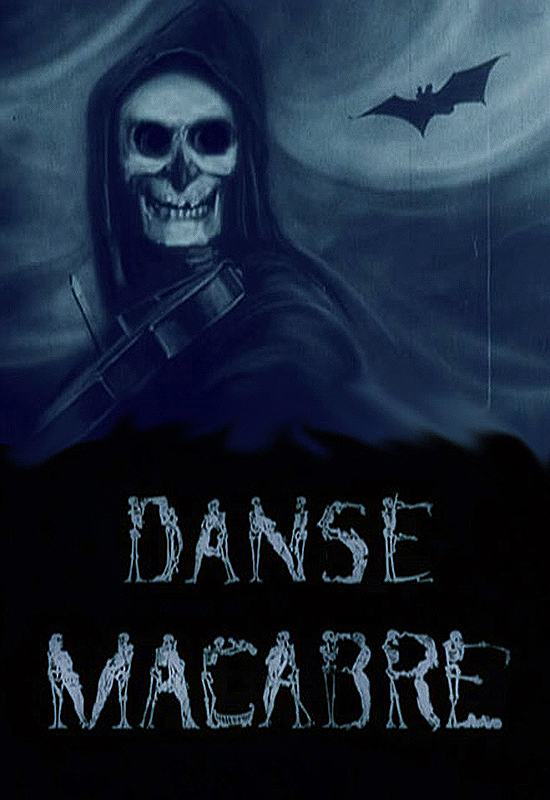
A definitive 6.6/10 rating for a film that redefined the boundaries of cult cinema. Danse macabre remains a cornerstone of transgressive art.
The first image that scalds the retina in Danse macabre is a negative exposure of a bell tower against a sulfur-yellow sky; the tower drips upward like spilled mercury, an omen that director-cinematographer Adolph Bolm has no patience for polite hauntology. He grabs the medieval allegory by its brittle spine and cracks it open, letting Saint-Saëns’ demonic tone poem bleed into a visual fever that feels closer to Artaud’s Theatre of Cruelty than to the ornamental whimsy of, say, A Bird of Bagdad or the jazz-age flippancy of Miss Adventure.
Shot on orthochromatic stock that turns blood into tar and skin into alabaster, the film’s 47 minutes unspool like a single, convulsive tracking shot. We glide through Toledo’s plague-emptied alleyways where laundry still swings, ghost-touched, on ropes; the camera seems to inhale the stench of lye and rotting oranges. Youth—played by Ruth Page with the sinewy restlessness of a fawn sensing gunpowder—vaults over corpses wrapped in shrouds that billow like failed wings. Her lover, Olin Howland’s gaunt troubadour, carries a rebec whose horsehair strings snap one by one, each crack synchronized with a jump-cut to a new mound of the dead. Their flight is not from Death but toward the last place music still exists, as if harmony itself could inoculate flesh.
Bolm, a Diaghilev alumnus, treats the camera as a partner in the choreography rather than a passive observer. In one bravura passage the lens pirouettes 360 degrees while Page executes a pas de bourrée along a parapet; the horizon tilts until the moon resembles a bullet hole in black silk, and for a second gravity forgets its obligations. The effect is not the polite spatial reorientation of Sherlock Holmes’ drawing-room deductions, but a full-body vertigo that implicates the viewer in the lovers’ panic.
Death, embodied by Bolm himself in charcoal greased across cheekbones, dances a counter-motif: a staccato entrechat-quatre that scatters rats like dropped marbles. His scythe is replaced by a metronome whose pendulum ends in a tiny mirror; when it flashes, victims witness their own expiration and freeze mid-motion, becoming baroque statuary. The plague thus choreographs its victims, conscripting them into a grand ballet mécanique whose final tableau is a pyramid of petrified lovers, arms entwined like ivy.
Although released as a silent, the intended exhibition included a live orchestra positioned behind the screen, the conductor cued to visible footlights that changed color with the emotional temperature: livid orange for pursuit, cadaverous blue for lament. Contemporary reports describe audiences gasping when the xylophone’s rattling bones coincided with a subliminal flash-frame of a skull; women clutched their pearls so tightly the strands broke, scattering like hail. That synesthetic terror is impossible to replicate on today’s 4K DCP, yet even without live musicians the film pulses. Intertitles—hand-lettered on what looks like human skin—appear irregularly, sometimes upside-down, forcing you to contort your head like a corpse in rigor.
Ruth Page’s Youth is not the virginal cipher of The Lady Clare but a kinetic firebrand whose eyebrows slash the air like accusation. Watch her calves flicker when she bourrées across the cathedral’s checkered floor: each muscle fiber registers the arithmetic of dwindling time. Olin Howland, more gaunt here than in his later comic turns, seems to have scraped away body mass to let the camera read the marrow. His eyes, ringed with kohl, project a hunger that transcends eros; he wants not to possess Love but to annex her pulse, to borrow it for one more sunrise. When he finally lifts her wilted form in a penultimate fish-dive lift, the camera tilts 30 degrees off-axis, and the lovers appear crucified against the void.
Bolm’s Death is less a cloaked reaper than a dandy of decay, sporting a top-hat braided from funeral armbands. His grin is achieved without special effects: he simply peels his lips back until the gums show, a raw rictus that anticipates Conrad Veidt’s Man Who Laughs. The performance is calibrated to the centimeter; even the tapping of his cane follows the 7/8 meter of Saint-Saëns’ scherzo, a polyrhythmic mockery of the lovers’ faltering 4/4 heartbeats.
Art director Hans Ledermann sourced plague doctor masks from Viennese antique shops, then soaked them in vinegar and lamp-oil to resurrect their original stench. Costumes are dyed with walnut hull, iron rust, and cochineal—materials that literally decompose onscreen, creating a time-lapse of decay. The fabrics fray in exact synchrony with the narrative’s escalating hopelessness; by the finale Page’s tunic has shed its sleeves, leaving her arms as stark as exclamation marks.
Compare this tactile rot to the hygienic glow of America Is Ready, where even the grime looks studio-sanctioned. Here, the fetor is existential; you half expect fleas to hop off the screen.
Editor Marcelle Carpentier splices shots at the microbial rate of 8–12 frames, a tempo that predates Eisenstein’s Battleship Potemkin by three years yet rivals its visceral punch. In a 38-second sequence depicting the infection of a child, she intercuts 43 shots: a doll’s porcelain eye, a rat’s tail, a priest’s cracked fingernail, a communion wafer dissolving in cloudy water. The montage bacteria multiply faster than the narrative immune system can respond, reproducing the plague’s exponential logic inside the viewer’s optic nerve.
Censors of 1922 missed what modern eyes easily decode: the erotic tension between Death and Youth. During the notorious mirror-pas-de-deux, Death extends the mirrored metronome so that Youth sees his own reflection wearing the charcoal mask. For a suspended heartbeat they share the frame in a perfect matched profile, lips inches apart, the boundary between hunter and hunted eroticized into a queasy courtship. The sequence anticipates the fatal romance of Fearless Dick, though that film cushions its homoerotic undertones in slapstick. Here, the attraction is unsoftened, a raw desire for annihilation that makes the plague feel almost like a social contagion of forbidden longing.
Though marketed as monochrome, surviving prints reveal hand-painted tinting that follows a moral code: amber for moments of communal denial, viridian for institutional hypocrisy, rose for the lovers’ stolen kisses. The palette anticipates the expressionist Dr. Mabuse yet remains uniquely macabre. When the rose tint bleeds into crimson during the betrayal scene, the transition is achieved not by pigment but by scratching the emulsion so that the projector’s white heat reddens the celluloid—an early instance of violence against the medium itself to mirror narrative violence.
Place Danse macabre beside Péntek este, whose village revelry imagines death as a distant peasant superstition, or next to Stripes and Stars, where disease is sanitized into patriotic sacrifice, and Bolm’s film feels like a wound that never scabs. Even A Scream in Society, for all its Grand Guignol posturing, lacks the odor of real despair; its monsters wear greasepaint, whereas Danse macabre’s monster is the air itself.
For decades the film was presumed lost, a casualty of nitrate rot and archival indifference. Then in 2018 a 9.5mm Pathé-Baby abridgement surfaced at a Lyon flea market, spliced with footage of someone’s beach holiday. Digital archeologists at CNC painstakingly unwound the 2,847 frames, scanning them at 8K to capture the worm-gnawed perforations. The restored version, now touring cinematheques, adds a newly recorded score by Kronos Quartet that replaces Saint-Saëns’ original with microtonal shivers, bow behind bridge, and heartbeat-like pizzicatos that seem to crawl inside your chest cavity.
To watch Danse macabre in 2024 is to confront a pandemic imagery that predates our own viral century yet feels unnervingly predictive. The masks, the distancing, the mass graves—they are no longer historical curios but lived memory. The film implicates our gaze: every close-up of a bubo’d neck asks whether we are here for empathy or rubbernecking. When Death lifts the mirrored metronome toward the audience in the final shot, the fourth wall does not so much break as infect, reflecting our own masked faces in the silvery rectangle.
Seek this film not for comfort but for calibration. It will recalibrate your tolerance for cinematic beauty that smells of gravesoil. After the credits—there are none, only a black frame that lasts 27 seconds—you will walk outside noticing the thinness of your own skin, the way strangers’ exhalations drift too close. And yet the ecstasy of Page’s final grand jeté, caught at the apex of her leap as the film strip itself fractures, offers a weird transcendence: art as the only vaccine against forgetting, even if the dose kills something in you.
If you can, attend a screening with live musicians; the risk of communal breath is minor compared to the visceral payoff of feeling cello strings vibrate your sternum in sync with cadavers onscreen. Bring no comfort food—popcorn’s buttery normality feels sacrilegious. Instead, sip something bitter: black coffee, or Spanish vermouth. Let the aftertaste marry the film’s own bitterness, a marriage more honest than the forced cheer of Whoso Findeth a Wife or colonial escapades of Horizon Hunters.
When the lights rise, you may find your fingertips unconsciously tapping the 7/8 rhythm on your thigh, a private metronome counting down to some unknowable curtain call. That, perhaps, is the film’s truest contagion: once seen, Danse macabre dances on, a bacillus of rhythm and rot, long after the screen has gone dark.

IMDb 6.6
1924
Community
Log in to comment.