DbcultAccessing Vault...
5.6/10
Senior Film Conservator
A definitive 5.6/10 rating for a film that redefined the boundaries of cult cinema. Brothers Under the Chin remains a cornerstone of transgressive art.
In the pantheon of early 20th-century slapstick, few motifs are as enduring as the separated-at-birth trope, yet Brothers Under the Chin elevates this narrative skeleton into something remarkably visceral. Released in an era when the Hal Roach studios were refining the alchemy of visual gags, this film serves as a fascinating bridge between the crude knockabout of the late teens and the sophisticated character-driven comedy that would eventually define the careers of its stars. The film begins not with a laugh, but with a moment of Dickensian gravity—an orphanage scene that establishes the stakes of the twins' separation. This prologue is essential; it provides the emotional scaffolding for the absurdity that follows twenty years later. Unlike the more whimsical approach seen in Aladdin and the Wonderful Lamp, there is a grounded, almost gritty texture to the orphanage sequence that highlights the divergence of the brothers' paths.
The transition to the 'twenty years later' title card is where the film truly finds its sea legs. We are introduced to the first brother, a man of the cloth and high collars, whose life is a testament to the civilizing influence of wealth and adoption. Conversely, the other brother has become a creature of the ocean—a captain whose moral compass is as weathered as his hull. The casting here is inspired. While Stan Laurel is often remembered for his later partnership, his solo work in this period reveals a performer of immense physical precision. His ability to convey both the arrogance of the socialite and the desperation of the sea captain (portrayed through the lens of those around him) showcases a range that was often overlooked in the shadows of his later fame. The maritime setting allows for a series of escalating comedic set-pieces that feel far more organic than the episodic nature of The Handy Man.
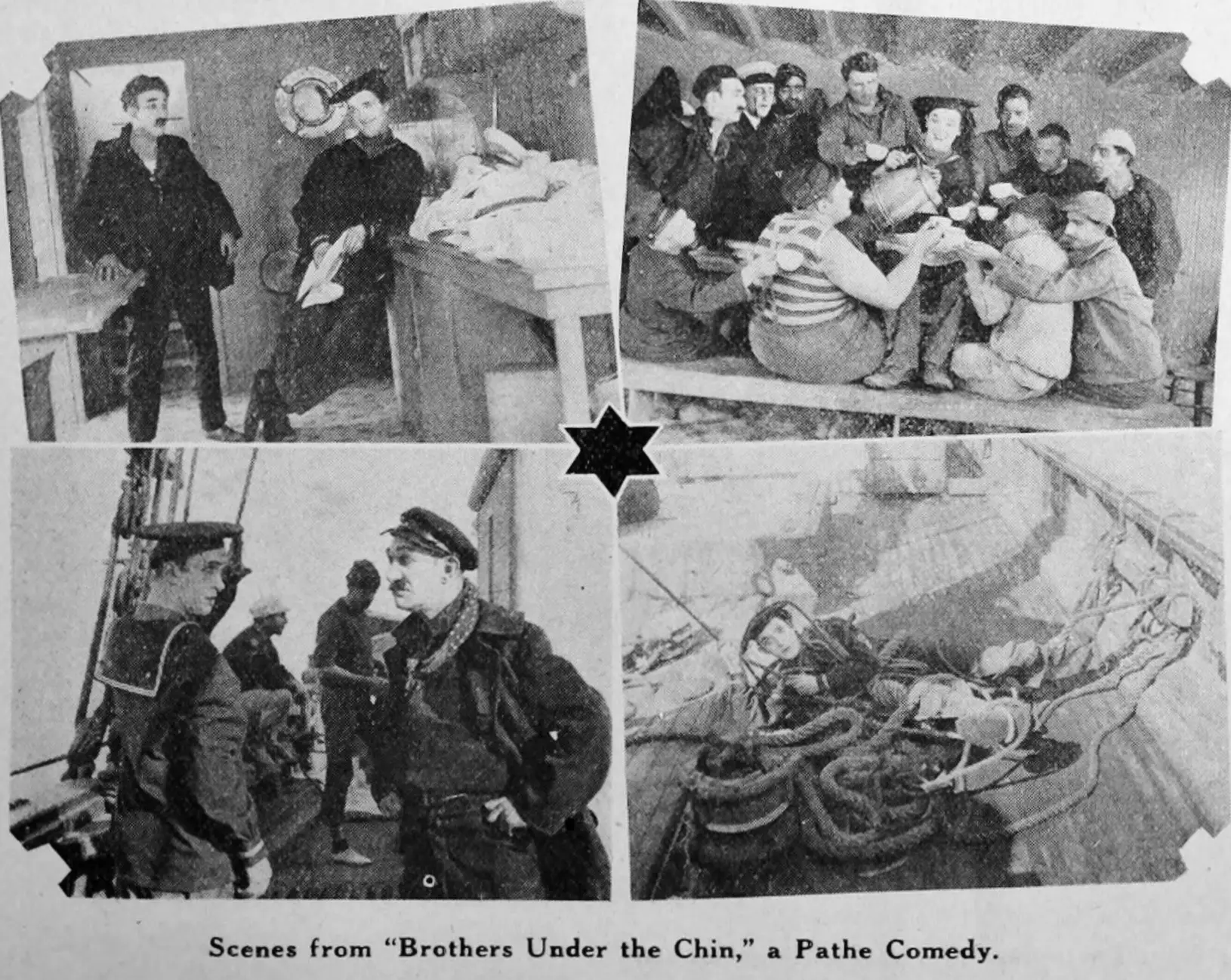
The central conflict ignites when the captain, starved for labor, decides to 'recruit' an extra hand through the traditional, if illegal, method of abduction. The irony is thick enough to choke a whale: the very man he drags into the bowels of his ship is his own flesh and blood. This sequence is a masterclass in dramatic irony. We, the audience, are privy to the birthmark—that singular patch of skin beneath the chin—while the characters remain blissfully, hilariously ignorant. This tension drives the middle act of the film, as the well-dressed brother is forced into the grueling life of a deckhand. The physical comedy here is relentless, utilizing the rocking motion of the ship to create a rhythmic chaos that rivals the best work of the era. It lacks the somber introspection of Shattered, but it replaces that weight with a frantic energy that is infectious.
The supporting cast, featuring stalwarts like James Finlayson and Noah Young, provides the necessary friction for the brothers' interactions. Finlayson, with his iconic squint and double-take, acts as a comedic catalyst on the vessel, often being the one to suffer the brunt of the brothers' unwitting synchronization. There is a specific scene involving a shared meal in the galley where the two brothers—still unaware of their connection—mirror each other's movements with an uncanny, subconscious precision. This 'mirroring' gag, a staple of the silent era, is handled here with a subtlety that suggests a deeper, biological tether. It’s a far cry from the more overt theatricality of Az utolsó bohém, leaning instead into the innate humor of the uncanny.
One cannot discuss Brothers Under the Chin without acknowledging the sharp-witted titles of H.M. Walker. His writing elevates the visual storytelling, providing a dry, observational humor that balances the slapstick. The script by Hal Conklin and Al Giebler is surprisingly tight for a short of this period, avoiding the narrative bloat that often plagued productions like The Exiles. Every scene on the ship serves a purpose, either to heighten the brothers' mutual disdain or to bring them closer to the inevitable revelation. The cinematography, while constrained by the technology of the day, manages to capture the claustrophobia of the ship's interior and the vast, uncaring expanse of the sea, creating a visual metaphor for the brothers' isolation from one another.
As the film hurtles toward its climax, the stakes shift from mere survival to a frantic search for identity. A storm sequence—likely filmed with the aid of massive water hoses and a tilting set—serves as the literal and figurative tempest that strips away the brothers' external differences. Soaked to the bone and stripped of their social markers (the fine suit and the captain's coat), they are reduced to their essential selves. It is in this moment of vulnerability that the birthmark is finally revealed to both parties. The recognition is not played for tears, but for a sudden, jarring realization that renders all previous hostilities moot. This resolution is more satisfying than the somewhat convoluted endings of contemporary dramas like A Child of Mystery.
Viewing this film today, one is struck by how much of the 'Stan' persona was already present in 1924. The hesitant gestures, the fluttering of the hands, and the sudden bursts of frantic movement are all visible here, albeit in a more raw form. The presence of Fred Karno Jr. is also a significant touchstone, reminding us of the British music hall roots that informed so much of American silent comedy. The film feels like a bridge between the old world and the new, much like the characters themselves. While it may not have the epic scale of Kitchener's Great Army in the Battle of the Somme, its focus on the intimate, often hilarious bonds of family makes it a more enduring piece of entertainment.
Furthermore, the film's treatment of class is surprisingly nuanced for a comedy. The 'well-dressed' brother is not merely a caricature of wealth; he is shown to have a resilience that surprises his seafaring sibling. Similarly, the captain is not a villain, but a man hardened by a world that gave him nothing. This duality prevents the film from becoming a simple 'fish out of water' story. It is a study in how environment shapes us, and how nature—symbolized by the birthmark—eventually reclaims its own. In this regard, it shares a thematic DNA with The Sport of the Gods, though it approaches the subject with a wink rather than a scowl.
In the final analysis, Brothers Under the Chin stands as a testament to the ingenuity of the Hal Roach era. It takes a premise that could have been maudlin and turns it into a high-energy exploration of fate. The chemistry between the cast members, many of whom would go on to be legends of the screen, is palpable even in the grainy frames of a century-old print. The film avoids the pitfalls of being a 'lost' curiosity and instead remains a vibrant, funny, and occasionally touching piece of cinema. It reminds us that even in a world as vast as the ocean, we are often closer to our roots than we realize. For those looking to understand the evolution of screen comedy, this is an essential chapter, far more rewarding than the routine tropes found in Where Is My Wife? or the standard western fare of A Daughter of the West.
The technical prowess on display, from the editing of the chase sequences to the lighting of the ship's hold, demonstrates a studio at the height of its powers. While it may lack the avant-garde ambitions of Oltre l'amore, it succeeds in its primary goal: to entertain through a sophisticated blend of character and chaos. The birthmark itself becomes a symbol of the indelible links we share, a physical manifestation of a bond that no amount of time or distance can truly erase. Whether you are a scholar of silent film or a casual viewer seeking a laugh, this film offers a treasure trove of comedic brilliance and historical significance.
Ultimately, the film's enduring appeal lies in its simplicity. It doesn't try to reinvent the wheel, but it polishes it until it shines. The performances of William Gillespie, Ena Gregory, and the rest of the ensemble ensure that every frame is filled with life. As we watch the two brothers finally embrace, we are reminded that comedy, at its best, is a celebration of our shared humanity, birthmarks and all. It is a far more cohesive experience than the disjointed narrative of Hoarded Assets, and a more joyful one than From Dusk to Dawn. Brothers Under the Chin is a minor masterpiece that deserves a major place in the history of film.
IMDb —
1926
Community
Log in to comment.