DbcultAccessing Vault...
3.8/10
Senior Film Conservator
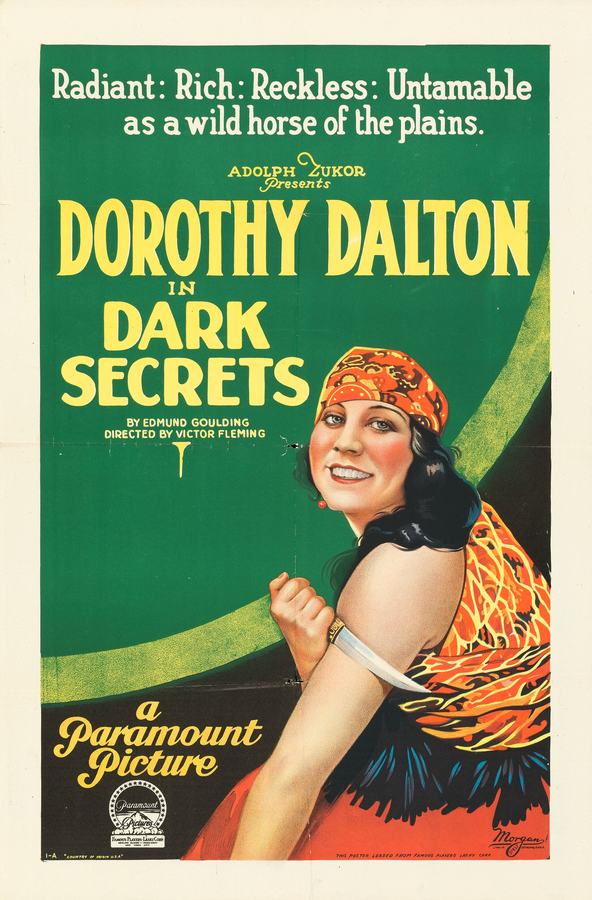
A definitive 3.8/10 rating for a film that redefined the boundaries of cult cinema. Dark Secrets remains a cornerstone of transgressive art.
Stepping back into the annals of cinematic history, one occasionally unearths a relic that, despite its age, still pulsates with a peculiar, compelling energy. Such is the case with Edmund Goulding's 1923 silent drama, Dark Secrets, a film that deftly weaves together threads of physical affliction, emotional despair, mystical healing, and a climax born of calculated deception. It’s a narrative tapestry rich with the melodramatic flourishes typical of its era, yet possessing a psychological depth that elevates it beyond mere spectacle. The film invites us into a world where personal tragedy intertwines with the allure of the exotic, challenging perceptions of agency and the enduring power of the human spirit, even when seemingly broken.
Our journey begins amidst the opulent tranquility of Long Island society, a setting that initially promises a life of unblemished privilege for Ruth Rutherford, portrayed with a compelling blend of fragility and resolve by Dorothy Dalton. Her world, however, shatters quite literally when a brutal fall from a horse leaves her crippled, her mobility cruelly snatched away. This devastating blow isn't merely physical; it's an existential crisis that compels her to make a heart-wrenching decision: to break her engagement to Lord Wallington, played by Robert Ellis, a man whose devotion seems boundless. Ruth's rationale, born of a profound sense of inadequacy, is that she can no longer be the woman he deserves, her spirit as broken as her body. It’s a moment that resonates with a tragic selflessness, or perhaps a profound misunderstanding of love's true nature, placing her alongside characters in films like The Strength of the Weak, who grapple with the crushing weight of perceived personal failings.
Wallington, a figure of aristocratic refinement, is understandably crushed. His subsequent retreat to Egypt, a land synonymous with ancient mysteries and a certain decadent escapism, marks a descent into dissipation. Goulding cleverly uses this geographical shift not just as a change of scenery, but as a metaphor for Wallington's internal landscape—a once-bright spirit now clouded by sorrow and self-neglect. His plight, however, is not destined to remain hidden. News of his decline, a whisper carried across oceans, reaches Ruth, igniting within her a complex cocktail of guilt, regret, and a rekindled affection. This narrative device, the distant echo of a lover's suffering, is a classic romantic trope, yet here it serves to propel Ruth, still confined to her wheelchair, on her own arduous pilgrimage to the same exotic shores.
It is in Egypt that the film truly embraces its more enigmatic elements. Ruth's desperation leads her to Dr. Mohammed Ali, a character brought to life with a captivating blend of gravitas and subtle menace by José Ruben. Ali is not your conventional physician; he is a figure steeped in the mystical, a healer whose methods border on the miraculous. He offers Ruth a path to recovery, a chance to walk again, but at a profound, personal cost: her hand in marriage. This transactional healing, where a physical cure demands a marital bond, raises fascinating questions about power dynamics, sacrifice, and the blurred lines between gratitude and obligation. Ali's character, with his commanding presence and almost otherworldly abilities, calls to mind the alluring, sometimes dangerous, figures of influence seen in films like The Impostor, where charisma masks deeper, often self-serving, intentions.
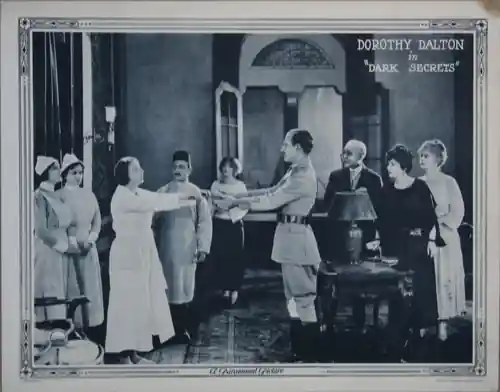
The narrative takes another sharp turn with the introduction of Biskra, Ruth's devoted servant, portrayed with a compelling, almost unsettling intensity by Julia Swayne Gordon. Biskra's loyalty to Ruth is absolute, bordering on possessive, and her actions ultimately become the catalyst for the film's most dramatic twists. Before Ali can claim his marital prize, Biskra intervenes decisively, violently ending his life. This act, seemingly one of liberation, paradoxically plunges Ruth back into her previous state of paralysis. The film suggests that Ali, even in death, maintains a psychological, almost supernatural, hold over Ruth, manifesting as a return of her lameness. This is a brilliant, unsettling touch, implying that some bonds, whether forged in healing or manipulation, transcend even mortality. The visual of Ruth, inexplicably returned to her wheelchair despite having been cured, is a powerful symbolic representation of psychological trauma and the lingering echoes of control.
The climax is a masterclass in silent film melodrama. Biskra, in a desperate attempt to solidify her control over Ruth and perhaps to fully sever the lingering threads of Ali's influence, stages an attack on Wallington. It's a feigned peril, designed to elicit a specific, powerful response from Ruth. And it works. Witnessing Wallington's fabricated danger, Ruth's latent strength and love surge forth, shattering the psychological shackles that had bound her. She leaps from her wheelchair, fully cured, not by Ali's mystical powers, but by the raw, unadulterated force of her own will and affection. This moment of triumphant agency, where a woman reclaims her physical and emotional freedom through an act of selfless love, is truly cathartic. It’s a testament to the enduring human capacity for resilience, echoing the spirited women often depicted in narratives like Girls Will Be Girls, who, despite societal constraints, find their own paths to empowerment.
Edmund Goulding's direction, even a century later, feels remarkably assured. He uses the visual language of silent cinema to great effect, employing expressive close-ups to convey the characters' tumultuous inner lives and wide shots to establish the contrasting opulence of Long Island with the stark, exotic beauty of Egypt. The pacing is deliberate, allowing the emotional beats to land with maximum impact, a hallmark of skilled storytelling in an era reliant on visual cues and orchestral scores. The depiction of Egypt, while undoubtedly filtered through a Western lens of exoticism prevalent in the 1920s, still manages to create an atmosphere of mystery and otherworldliness that serves the plot's mystical elements well. One can almost feel the dry desert air and sense the ancient secrets lurking beneath the surface, a stark contrast to the manicured lawns of Ruth's initial world.
Dorothy Dalton's performance as Ruth is the emotional anchor of the film. Her portrayal of Ruth's initial despair, her reluctant acceptance of Ali's terms, her subsequent psychological relapse, and finally, her triumphant resurgence, is nuanced and deeply felt. She communicates a vast spectrum of emotion without uttering a single word, relying on her expressive eyes and body language, a true testament to the artistry required in silent film acting. José Ruben as Dr. Ali is equally captivating, exuding an enigmatic charm that makes his proposition both tempting and unsettling. He embodies the 'dark' in Dark Secrets, a figure whose benevolence is inextricably linked to a desire for control. Julia Swayne Gordon's Biskra is perhaps the most fascinating supporting character; her fierce devotion to Ruth is both admirable and terrifying, showcasing the darker side of unconditional loyalty. Her actions, though morally questionable, are driven by a singular, unwavering purpose, making her a complex and memorable antagonist, or perhaps, a misguided protector.
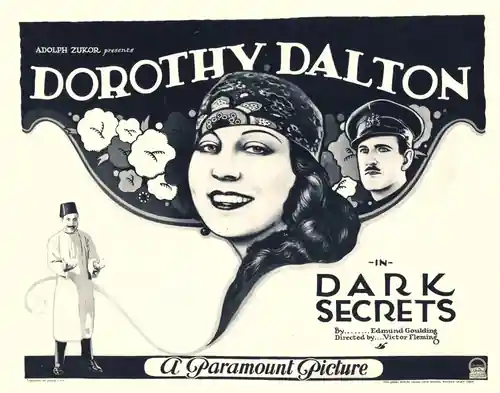
Thematically, Dark Secrets delves into the nature of sacrifice, the seductive power of control, and the enduring strength of love. It questions whether true healing comes from external forces or from an internal awakening. The film posits that while external aid can be a catalyst, ultimate recovery and autonomy are deeply personal journeys. The psychological dimension of Ruth's paralysis and her subsequent 'cure' is particularly intriguing, suggesting that her initial lameness was not just physical, but also a manifestation of her emotional brokenness. Her final act of jumping to save Wallington isn't just about regaining physical movement; it's about reclaiming her spirit, her agency, and her capacity for unconditional love. This shift from passive recipient of healing to active participant in her own destiny is a powerful statement, particularly for a film of its time, where female characters often struggled for such profound self-determination.
Comparing it to other works of the era, Dark Secrets stands out for its willingness to embrace the more mystical and psychological aspects of its narrative. While many silent films explored romance and melodrama, Goulding injects a subtle layer of the uncanny, particularly with Ali's lingering influence. This makes the film feel less like a straightforward romance and more like a psychological thriller wrapped in a romantic drama, giving it a unique flavor that distinguishes it from contemporaries like A Private Scandal, which might focus more on societal transgressions, or The Love Special, which would lean into more conventional romantic escapades. The film's careful balance of the dramatic and the mysterious keeps the audience engaged, constantly questioning the true nature of the events unfolding on screen.
The aesthetic choices, too, contribute significantly to the film's impact. The use of light and shadow, characteristic of the silent era, is particularly effective in creating mood and tension. The costumes, from the elegant gowns of Long Island to the exotic attire of Egypt, are meticulously crafted, adding to the visual richness of the production. While the film is a product of its time, complete with certain cultural portrayals that might be viewed differently today, its core emotional narrative and exploration of human resilience remain remarkably potent. It’s a testament to the universal themes Goulding was able to tap into, ensuring the film's enduring appeal to those willing to look beyond its silent origins.
In conclusion, Dark Secrets is far more than a mere historical curiosity. It is a compelling drama that leverages the strengths of silent cinema to tell a deeply human story of loss, healing, and self-discovery. Dorothy Dalton delivers a performance of remarkable depth, anchoring a narrative that is both grand in its romantic scope and intimate in its psychological exploration. Goulding's direction ensures that the film's melodramatic elements never overshadow its genuine emotional core, culminating in a powerful affirmation of love's ability to transcend even the most profound physical and psychological barriers. It’s a film that reminds us that even in the absence of spoken dialogue, the human heart can communicate volumes, and that true freedom often lies in the courage to reclaim oneself against all odds. For those with an appreciation for the artistry of early cinema, this is a secret well worth uncovering, a captivating journey into the heart of a bygone era's storytelling prowess. A truly underrated gem that deserves a wider contemporary audience, showcasing how even a century ago, filmmakers were exploring complex themes with audacious creativity.
IMDb —
1923
Community
Log in to comment.