DbcultAccessing Vault...
6/10
Senior Film Conservator
A definitive 6/10 rating for a film that redefined the boundaries of cult cinema. Salambo, a $100,000 Spectacle remains a cornerstone of transgressive art.
The year 1914 stands as a monumental threshold in the chronology of the moving image, a period where the primitive "flickers" of the nickelodeon era began to metastasize into the gargantuan, multi-reel spectacles that would eventually define the cinematic medium. Among these early behemoths, Salambo, a $100,000 Spectacle, emerges as a fascinating relic of Italian historical grandiosity. Based loosely on Gustave Flaubert’s 1862 novel, this film is not merely an adaptation; it is a declaration of visual intent. At a time when the industry was still grappling with the boundaries of narrative duration, director and producer alike dared to pour a small fortune into a reconstruction of Punic splendor that remains, even a century later, a masterclass in proscenium-style artifice.
The film’s visual language is deeply rooted in the 19th-century academic painting tradition, particularly the Orientalist movement. Every frame feels meticulously composed, as if the director sought to breathe life into the canvases of Jean-Léon Gérôme. The portrayal of Carthage is one of opulent decay and rigid hierarchy. Cristina Ruspoli, portraying the titular priestess, embodies a specific type of silent-era divinity. Her performance is less about internal psychological depth and more about the iconography of the body—wide-eyed supplication, the dramatic sweep of her robes, and a stillness that suggests a statue come to life. Her relationship with the Sacred Veil, the Zaimph, is the film's central metaphysical anchor. The veil is not merely a prop; it is a character in its own right, a shimmering barrier between the mortal and the divine.
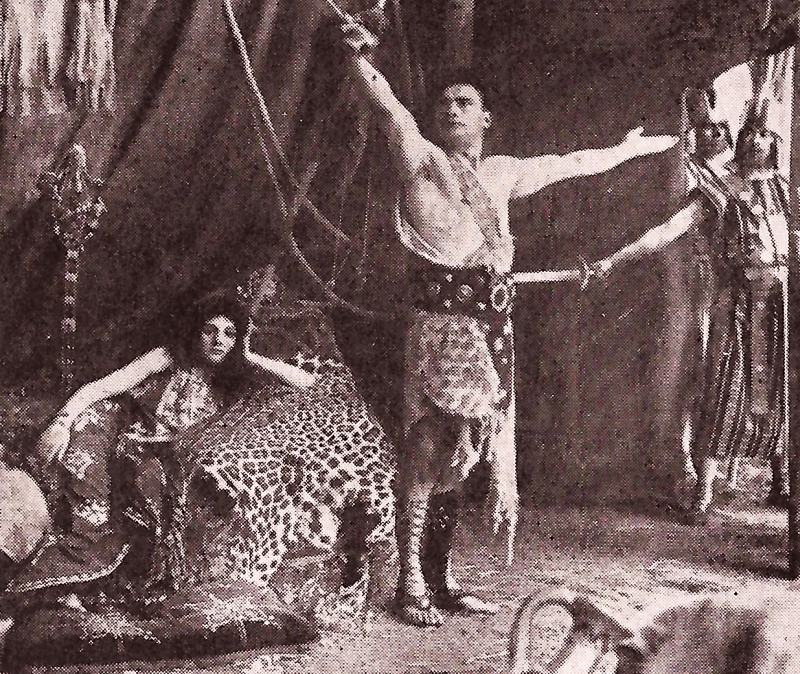
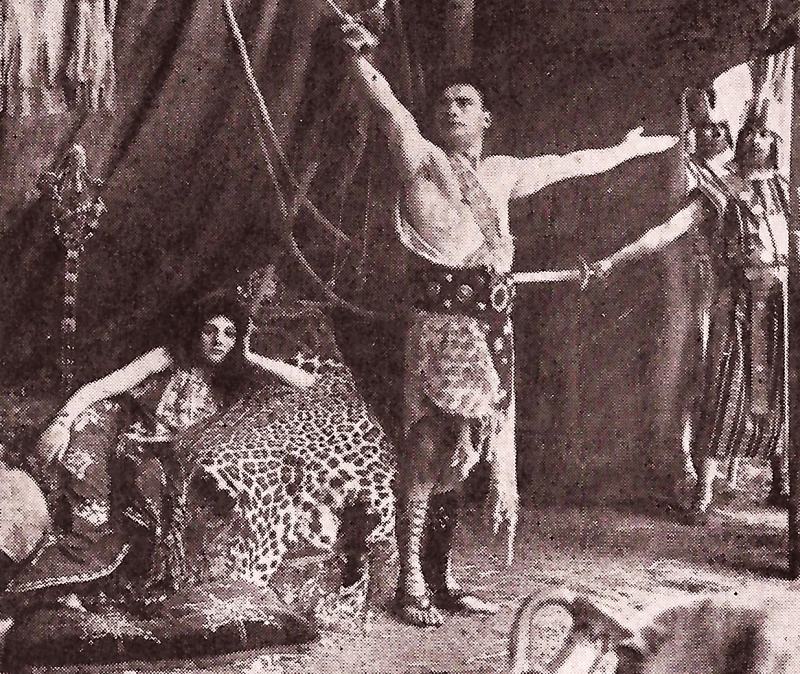
Contrast this with the rugged, almost feral energy of Mario Guaita-Ausonia as Matho. If Salambo is the moon, Matho is the scorching sun of the desert. The chemistry between them is forged in the fires of conflict, a dynamic that feels remarkably modern despite the stylized gestures of the era. The scene in Matho’s tent, where Salambo attempts to reclaim the stolen veil, is a highlight of early erotic tension. The interplay of shadows and the heavy drapes of the tent create a sense of claustrophobia that heightens the stakes of their encounter. This is a far cry from the urban grit found in contemporary works like Fantômas: The False Magistrate, which traded in shadows of a different, more modern variety.
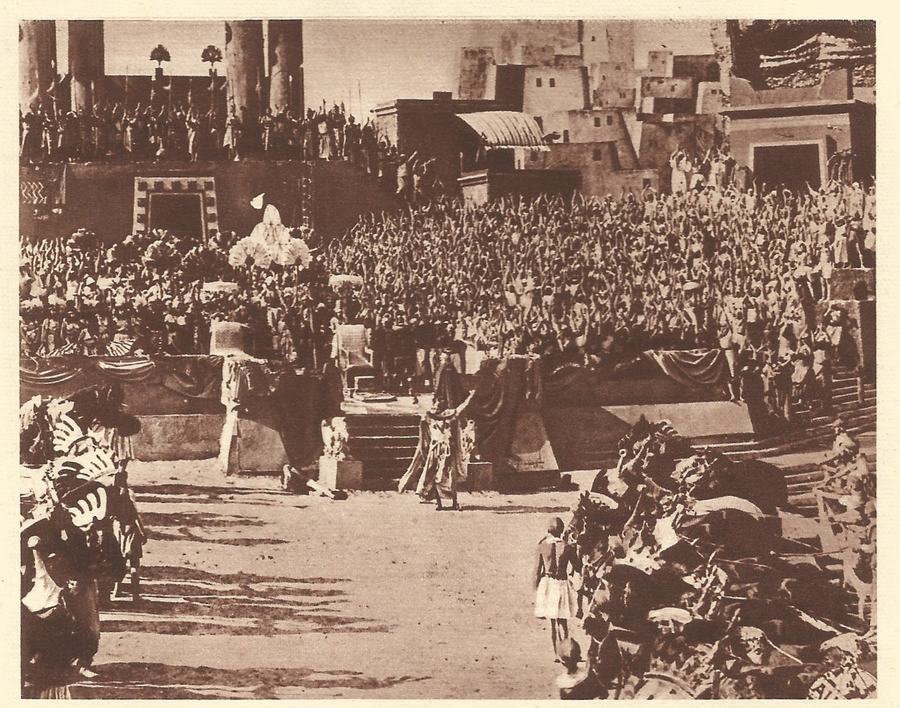
The subtitle of the film, "A $100,000 Spectacle," was not just marketing hyperbole; it was a testament to the burgeoning power of the feature film budget. In 1914, such a sum was astronomical. Where did the money go? It is visible in every teeming crowd scene and every cyclopean set piece. The reconstruction of the Carthaginian senate and the sprawling mercenary camps provides a sense of scale that was rarely achieved during this period. Unlike the more intimate character studies of the time, such as The Other's Sins, Salambo utilizes its budget to create a world that feels inhabited, even if it is a world of theatrical artifice.
"The film operates on a scale of architectural ambition that demands the viewer's total surrender to its historical hallucinations."
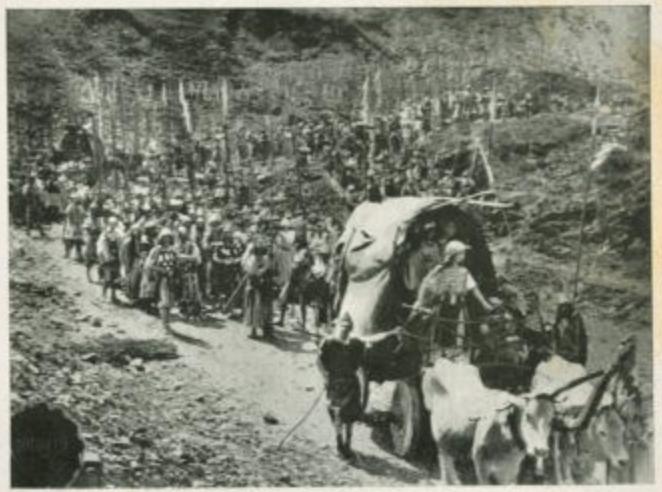
The use of extras is particularly noteworthy. The battle sequences between the mercenaries and the Carthaginian forces are choreographed with a chaotic vigor that predates the more refined maneuvers of Griffith or DeMille. There is a visceral quality to the mass movements that reminds one of the raw energy captured in The Joe Gans-Battling Nelson Fight, though here that energy is harnessed for the sake of historical myth-making rather than documentary realism. The film’s ability to manage hundreds of bodies on screen without losing the central narrative thread of the lovers is a testament to the burgeoning sophistication of film direction.
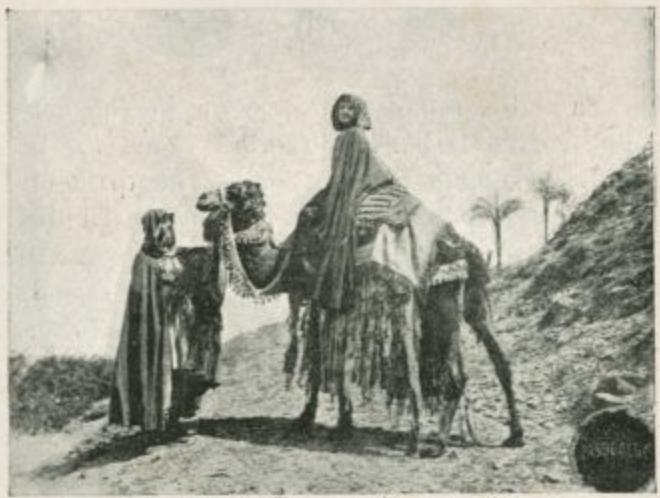
Purists of Flaubert’s novel might find the film’s conclusion somewhat jarring. While the source material is famously pessimistic, concluding with the tragic demise of the protagonists, the 1914 film opts for a more redemptive, almost operatic resolution. This shift reflects the cultural anxieties of the pre-WWI era, where audiences perhaps craved a restoration of order and a validation of love over the nihilism of the original text. The role of Spendius, the slave-turned-strategist, becomes crucial here. His manipulation of the Oracle of Tanit provides a bridge between the divine will and human desire, allowing the film to conclude with a "pomp" that would make even the most lavish stage production envious.
In comparing this to other historical epics of the time, such as Les Misérables, Part 1: Jean Valjean, one notices a distinct difference in tone. While the French epic is grounded in social realism and moral struggle, Salambo is a fever dream of antiquity. It is less concerned with the human condition and more preoccupied with the human legend. This aligns it more closely with the liturgical weight of Rebecca the Jewess, where religious identity and historical destiny are inextricably linked.
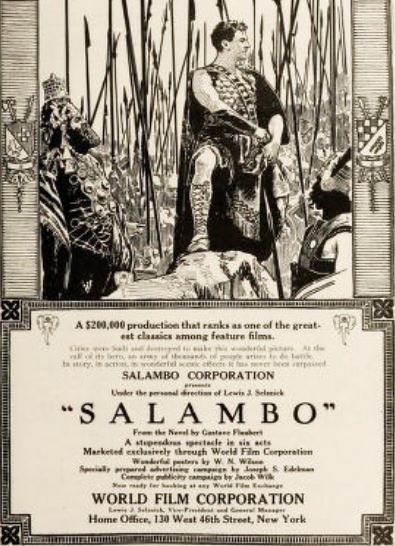
From a technical perspective, the cinematography of Salambo is a fascinating study in early lighting techniques. While the camera remains largely static—a common trait of the era—the use of natural light and carefully placed reflectors creates a sense of depth in the Carthaginian palaces. The way the light catches the metallic embroidery of Salambo’s gowns or the glint of Matho’s bronze armor adds a layer of texture that was often missing from lower-budget productions like In the Nick of Time or Half a Hero.
The pacing of the film, while slow by modern standards, possesses a rhythmic quality that mirrors the ritualistic nature of its subject matter. The sequences involving the Tanit priests, with their elaborate costumes and solemn processions, provide a counterpoint to the frenetic energy of the mercenary camp. This duality is the heart of the film: the clash between the civilized, ritual-bound world of Carthage and the primal, uninhibited force of the mercenary army. It is a theme explored with far less subtlety in films like Pierre of the Plains, which focuses on a different kind of frontier conflict.
Salambo remains a vital piece of cinematic history because it captures a moment of pure, unadulterated ambition. It was a film that sought to prove that cinema could be more than just a novelty; it could be high art, capable of rivaling the opera and the theater in both scale and emotional resonance. While it lacks the psychological nuance of later silent masterpieces, it compensates with a sheer, overwhelming presence. The performances of Egidio Candiani and Suzanne De Labroy provide the necessary supporting structure for the central drama, ensuring that the human element is never entirely eclipsed by the sets.
When we look back at the landscape of 1914, from the mysterious intrigue of Wer ist der Täter? to the biographical depth of The Life of Richard Wagner, Salambo stands out for its sheer commitment to the spectacle. It is a film that demands to be seen on the largest screen possible, where the intricate details of its $100,000 production can be fully appreciated. It is a reminder that even in the infancy of the medium, filmmakers were already dreaming of empires, gods, and the eternal, transformative power of a forbidden love. Whether viewed as a historical curiosity or a triumph of silent-era production, Salambo continues to cast a long, golden shadow over the history of the epic film, a shimmering Zaimph that still manages to dazzle the modern eye.
In the end, the marriage of Salambo and Matho, celebrated with such pomp in the final frames, serves as a metaphor for the film itself: a union of the sacred arts of the past and the burgeoning technology of the future. It is a spectacle that, despite the passage of over a century, has lost none of its ability to provoke awe and wonder.

IMDb 6.1
1925
Community
Log in to comment.