DbcultAccessing Vault...
Cult Review
Senior Film Conservator
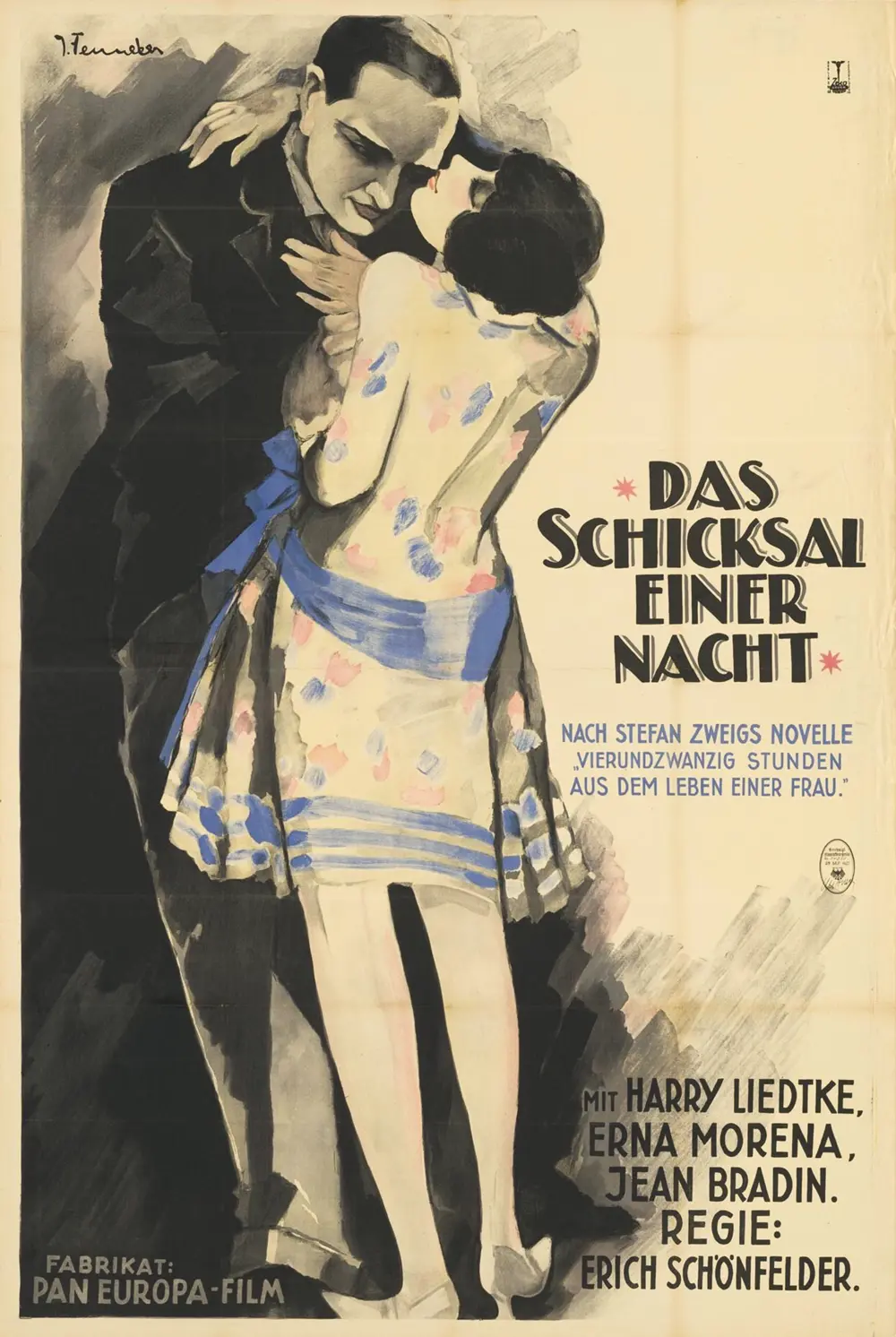
Is Das Schicksal einer Nacht worth your time in the age of high-speed digital thrillers? Short answer: Yes, but only if you are willing to slow your pulse to the rhythm of a 1920s psychological drama that prioritizes internal collapse over external action.
This film is specifically for those who appreciate the intersection of literature and early cinema, particularly the works of Stefan Zweig. It is most certainly not for viewers who find silent-era pacing tedious or those who require a clear-cut moral resolution. This is a film of shadows, both literal and figurative.
1) This film works because it captures the frantic, sweaty desperation of gambling better than many modern counterparts through focused, tight cinematography.
2) This film fails because its middle act stretches the 'pity-to-love' transition thin, demanding a level of suspension of disbelief that modern audiences might find taxing.
3) You should watch it if you want to see Harry Liedtke break away from his usual 'charming rogue' persona into something far more fractured and vulnerable.
Yes, it is worth watching for the historical significance of its source material and the powerhouse performances of its lead cast. While some silent films feel like museum pieces, the emotional core of this story—the idea that one night can redefine a person's entire moral compass—remains startlingly modern. It deals with themes of addiction and social disgrace that are as relevant today as they were in 1927.
Adapting Stefan Zweig is a treacherous task. His prose is so deeply rooted in the internal monologue that translating it to a visual medium often results in a loss of nuance. However, director Erich Engel (uncredited in some records but widely associated with the production's style) manages to externalize the internal. The camera doesn't just watch the characters; it lingers on their hands. The obsession with the gambling table is conveyed through close-ups of trembling fingers and the clatter of chips—a technique that mirrors Zweig's own fascination with the 'language of hands.'
Unlike the more adventure-oriented films of the period like Sahara, this film is claustrophobic. The sets feel heavy, draped in the velvet and gold of a dying aristocracy. There is a palpable sense of dread that permeates the hotel rooms and the casino floors. The film understands that the real horror isn't losing money; it's losing one's sense of self-respect in a single evening.
Harry Liedtke is the standout here. In films like Champagne caprice, he often played the lighthearted lead. Here, his face is a mask of agony. There is a specific scene where he realizes he has lost everything, and the way his eyes glaze over is genuinely chilling. It’s a performance that eschews the typical over-the-top gesticulation of the silent era for something more grounded and haunting.
Erna Morena provides the perfect foil. She represents the 'civilized' world that is being pulled into the muck. Her performance is subtle, relying on micro-expressions to convey the conflict between her social standing and her burgeoning obsession with saving Liedtke’s character. It lacks the melodrama found in The Misfit Wife, opting instead for a quiet, simmering intensity.
The visual language of Das Schicksal einer Nacht is surprisingly sophisticated. The use of low-key lighting in the nighttime scenes creates a noir-like atmosphere years before the genre was officially recognized. The shadows in the hotel corridor seem to swallow the characters whole, emphasizing their isolation. It reminds me of the atmospheric weight found in Pilgrims of the Night, where the environment is as much a character as the actors.
However, the pacing is erratic. The first half is a masterclass in tension-building, but the second half slows down significantly as it explores the aftermath of the night. It’s a bold choice to focus so heavily on the psychological fallout, but it may test the patience of those used to the more balanced structure of films like Irish Eyes. The film is a slow burn that occasionally threatens to go out entirely before the final, tragic flicker.
One of the most striking elements of the film is its refusal to condemn the 'fallen' woman. In many films of this era, such as The Scarlet Oath, there is a heavy-handed moralism that punishes characters for deviating from social norms. Das Schicksal einer Nacht is different. It views its protagonist with a profound, almost painful empathy. It suggests that her 'sin' wasn't her passion, but her belief that she could save someone who didn't want to be saved. It is a cynical, yet humanistic perspective that feels ahead of its time.
Pros:
The atmospheric lighting creates a sense of impending doom. Harry Liedtke delivers perhaps the most nuanced performance of his career. The film captures the specific 'European' melancholy of the interwar period perfectly. It avoids the easy, happy ending in favor of something much more honest and devastating.
Cons:
The transition between the casino and the hotel room feels slightly disjointed. Some of the supporting characters, like those played by Paul Otto or Adele Sandrock, feel underutilized despite their talent. The print quality of surviving versions can be a barrier for casual viewers.
Das Schicksal einer Nacht is a somber, deeply felt piece of cinema that deserves more than its current status as a footnote in Weimar film history. It isn't a 'fun' watch, but it is an essential one for anyone interested in how cinema learned to portray the inner workings of the human mind. It’s flawed. It’s slow. But it’s also undeniably powerful in its depiction of a life unraveling in the span of a few hours. If you can find a copy, watch it for Liedtke’s eyes alone—they tell a story of ruin that words could never quite capture.
IMDb 6.1
1936
Community
Log in to comment.