DbcultAccessing Vault...
3.1/10
Senior Film Conservator
A definitive 3.1/10 rating for a film that redefined the boundaries of cult cinema. What's Bred... Comes Out in the Flesh remains a cornerstone of transgressive art.
The film begins like a soot-stained lithograph: gaslights hemorrhage through London fog while a bobby’s whistle slices the night into guilty fragments. We watch Judge Meredith—ivory gloves, frock coat as rigid as a cathedral buttress—sentence petty thieves with the languid boredom of a man swatting flies. Yet every verdict seems to echo inside his own skull; the camera, in proto-Close-up, lingers on the tremor of a left eyelid. That tic is the first hairline fracture in the porcelain of Victorian rectitude.
Enter the accused: a dockworker named Larkin, shoulders scalloped by poverty, eyes like wet gravel. He stands charged with the garroting of a moneylender along the Thames—an act we soon learn was performed with the judge’s own monogrammed cravat. The evidence is farcical, circumstantial, but the court throngs hunger for a neck in a noose. What follows is not a whodunit but a who-am-I, a cinematic séance where identity wobbles like a reflection in disturbed water.
The gypsy, Zara, glides into this tableau as if conjured from the negative space of Dickens and Stoker. Coins sewn in her hem jangle a morse code of fate; her hoop earrings swing like miniature gallows. During recess she presses into Meredith’s palm a shard of mirror wrapped in tarot silk. The moment his gloved skin touches the glass, the courtroom walls atomize into a dust of after-images. We plunge into a hallucinated flashback—tinted amber by the laboratory of light—where the judge, drunk on brandy and Nietzsche, stalks the usurer through Whitechapel’s arterial alleys. The camera adopts the killer’s POV: breathy, arterial, exhilarated. Intercut are single-frame subliminals of Zara’s eyes, a primitive yet uncanny grammar that predates Eisenstein’s montage shocks.
What’s radical here is the refusal to grant the audience omniscience. We share Meredith’s amnesia, his dawning nausea. The film’s structure mimics the return of the repressed: each testimony peels back another layer of the magistrate’s armor until the wig itself becomes a Medusa of curls, petrifying him with self-recognition. When the final reveal arrives—Larkin merely a patsy, the gypsy an agent of karmic audit—it lands less as twist than as metaphysical inevitability. The gavel falls, but this time toward Meredith’s own jurisprudential skull.
Director Sidney Morgan, shackled by post-war rationing of both finance and film stock, turns austerity into aesthetics. Sets are recycled from a prior morality tale (The Christian), yet through oblique lighting and smeared vaseline on the lens he conjures Caravaggio chiaroscuro. Shadows possess gravitational weight; they pool like spilled ink across Justice’s blindfold. The negative itself was reportedly solarized—flash-exposed during development—resulting in halos that flicker around Zara’s silhouette as though the celluloid were spontaneously combusting.
Compare this to the pageant pomp of The Life of Our Saviour, where piety is a spectacle of static tableaux. Morgan’s camera, by contrast, is carnivorous: it prowls, recoils, lunges. In one bravura sequence the lens corkscrews down from the courtroom skylight, spiraling past gargoyles carved by underpaid artisans, to rest on Meredith’s sweating collar. The viewer plummets from transcendence to perspiration in a single, unbroken movement—an ancestor of the Vertigo shot eight years before Hitchcock formalized it.
Being a 1920 production, the film was mute, yet Morgan orchestrates a symphony of implied acoustics. Intertitles appear sparingly, often as fractured epitaphs—“The law is a knife; it cuts both ways.”—white on black like fresh scars. Between them we hear through synesthetic suggestion: the creak of oak benches, the hiss of gas lamps, the metallic shhhk of the hangman testing the trapdoor. Contemporary exhibitors were encouraged to accompany screenings with a low timpani roll followed by abrupt silence at the moment of confession. Reports from the Henley-on-Thames Picture Palace describe patrons fainting in synchrony with the judge’s collapse, as though the auditorium itself had become a ventricular chamber of collective guilt.
“I sentence therefore I am—yet the sentence passed pronounces me.”—Judge Meredith’s unspoken realization
Frank Tennant’s Meredith begins in the register of Edwardian starch: jaw hinged, voice (via intertitle) clipped. But watch the micro-movements—how his left hand, hidden beneath the bench, crab-walks across his thigh as if seeking escape from its own body. By the time he utters the penultimate intertitle—“The prisoner in the dock is myself”—his cheeks have hollowed into a death-mask rictus. The transformation evokes Barrymore’s Jekyll three years prior, yet Tennant lacks the luxury of sound; his agony must seep through pores and pupils.
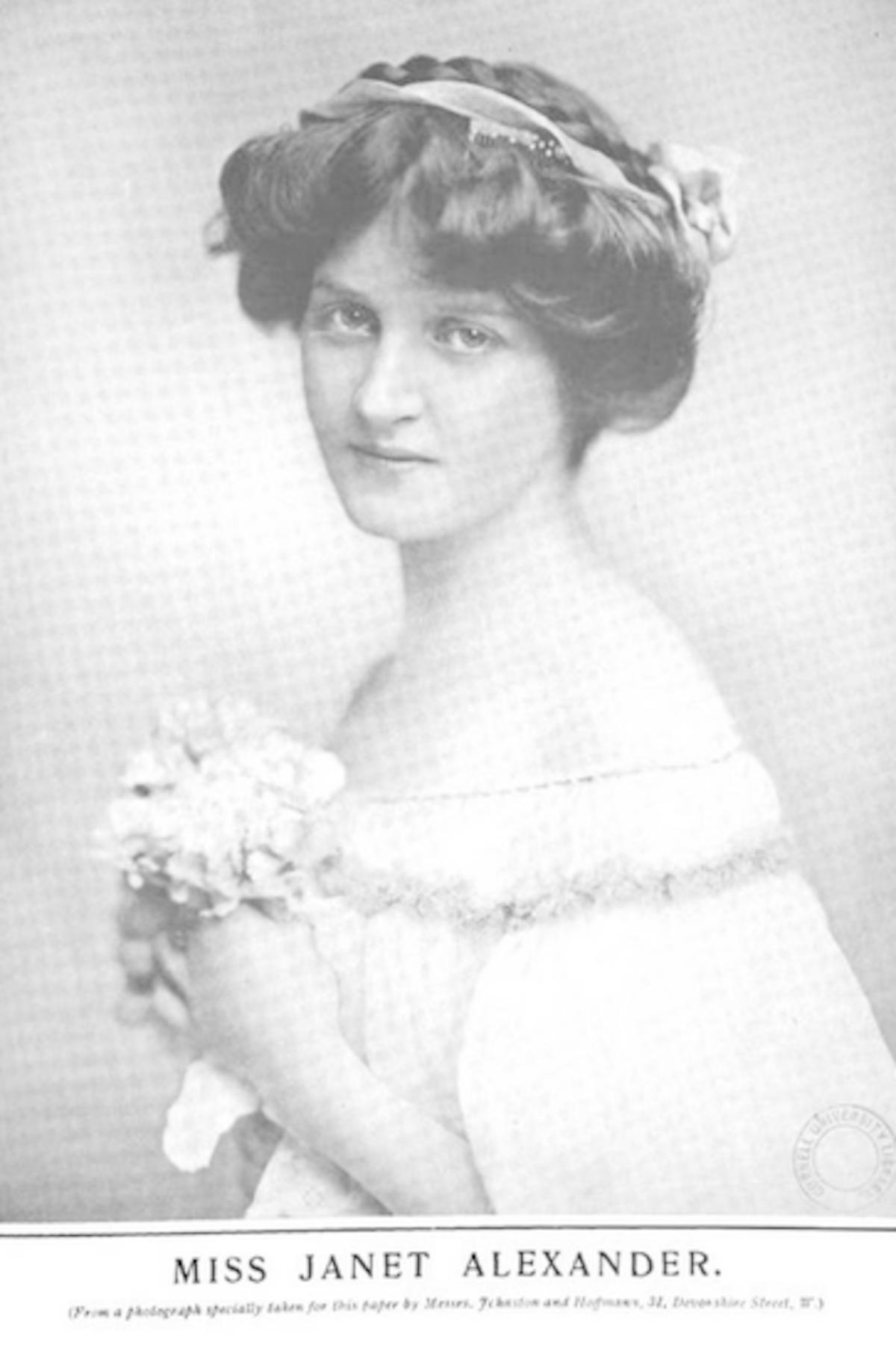
Janet Alexander’s Zara could have slid into exoticized cliché, but she undercuts Orientalist expectation with a grounded weariness. Her spell-casting is less mystic mumbo-jumbo than weary labor: she massages temples, counts rosary beads of river-stones, exhales as though returning an overdue library book. In a medium where gypsies often twirl madly (Trilby’s Svengali), Alexander’s stillness radiates ungimmicky power.
The screenplay credits both Morgan and Grant Allen, the latter a Canadian polymath who flirted with Victorian scientism. Allen’s novella The Beckoning Hand prefigured the tale: a rationalist protagonist haunted by a pre-Freudian id. The film, however, distills Allen’s verbose naturalism into an oneiric courtroom thriller, predating German strassenfilme and American expressionist noirs by half a decade. One could splice DNA strands from this print to Scandal (1920, Japan) and find matching chromosomes of social hypocrisy.
Morgan’s cutter, H.J. Lord (also the credited screenwriter), employs a rhythmic stutter: shots repeat at diminishing length—a proto-metric montage that predates Kuleshov’s experiments. When Meredith first fondles the mirror shard, we see the same close-up of his thumb sliding across mercury-backed glass three times in rapid succession, each iteration shorter by four frames. The effect is not redundancy but neural strobe: memory fragmenting under moral concussion. Film historians often credit Napoleon (1927) with popularizing such rhythmic intensification; here it is already fully gestated.
While the narrative focalizes on male guilt, the catalytic agency rests with Zara, a woman marginalized by both class and ethnicity. Her clairvoyance operates as epistemic insurgency: she trespasses the sanctum of legal rationality armed only with intuition and a cracked mirror. The film quietly proposes that patriarchal law, for all its Latin gravitas, is impotent before the semiotic chaos of the feminine occult. In a climate where suffrage agitation still smoldered, such depiction flirted with progressive radicalism, even as it risked pandering to gypsy stereotypes.
Compare this to Her Mother’s Secret, where maternal sacrifice redeems patriarchal fracture. In What’s Bred… there is no redemption, only exposition. Zara’s final close-up—half-smile, half-grimace—implies that once truth is excavated, the excavator becomes superfluous, perhaps dangerous. She exits the narrative not in triumph but in exile, swallowed by the same fog that birthed her.
Century-old yet eerily contemporary, the film prefigures today’s true-crime podcasts where middle-class consumers binge on rural murders from the safety of AirPods. Meredith embodies the armchair detective who discovers the killer’s footprint matches his own Ferragamo loafer. The story’s horror lies not in external monsters but in the moment the mirror refuses to lie, when the face staring back is both victim and perpetrator. In an era of algorithmic echo chambers, the movie’s central dread—what if I am the algorithm?—feels tweetable.
Yet the film withholds catharsis. No hanging, no absolution, no swelling orchestra. The final intertitle reads: “The court adjourns; the soul does not.” Fade to black. The lack of closure is itself jurisprudential commentary: British law can sentence bodies but remains impotent before the penal colony of conscience.
For decades the film languished in oblivion, misfiled under Educational Shorts in a Kent archive. Then in 2018 a frost-bitten canister was discovered beneath a demolished cinema’s floorboards, its emulsion blistered like burned skin. The BFI’s conservationists bathed the reel in a cocktail of glycerol and rosewater—an alchemical recipe whispered by retired projectionists—until images resurfaced like bruises blooming. The restoration screened at the 2022 Pordenone Silent Festival, where a live score by Kreptoscope fused hurdy-gurdy with sub-bass drones, turning the courtroom into a resonating ribcage.
Fast-forward to 1947: Out of the Past’s laconic antihero confesses “I never learned anything listening to myself.” That line is the sound-era echo of Meredith’s silent realization. You can trace the chromosomal link through Lang’s Forgiven and even Hitchcock’s I Confess. The courtroom-as-twilight-zone trope resurfaces in The Night Of, True Detective, and every prestige miniseries where jurisprudence collides with metaphysics.
Yet few successors capture the primal dread of What’s Bred…: the terror that the law, designed to civilize chaos, may itself be the most elegant instrument of barbarism. The film ends where it begins—under sickly gaslight—implying the cycle of hereditary guilt is less linear than spiral, a Möbius strip of condemnation. Watch it at midnight, curtains drawn, volume of your own pulse turned up. When the screen goes black, check your reflection in the darkened glass; if the eyes staring back seem unfamiliar, blame the gypsy, blame the judge, blame the century-old celluloid that still knows how to bite.
IMDb —
1929
Community
Log in to comment.