DbcultAccessing Vault...
Cult Review
Senior Film Conservator
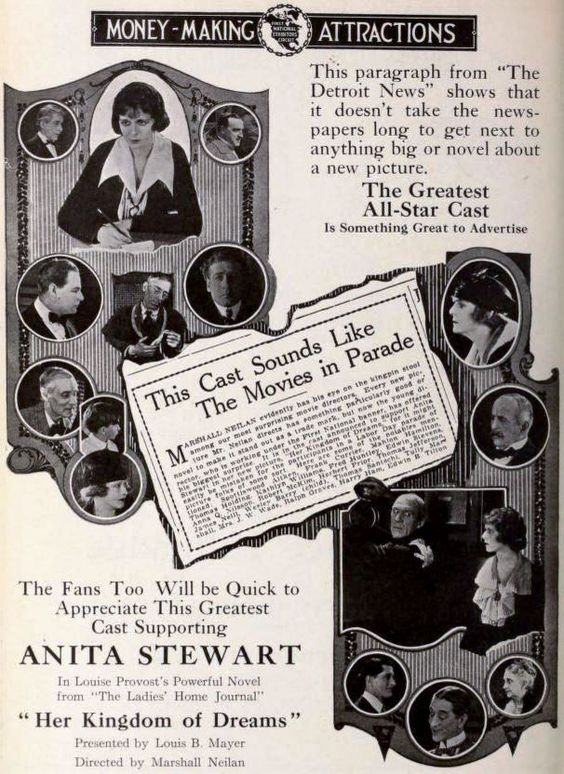
The cinematic landscape of 1919 was a shimmering tapestry of transition, a period where the primitive innocence of the early short films had fully surrendered to the sophisticated, multi-reel narrative structures that would define the Golden Age. Standing at the precipice of this evolution is Her Kingdom of Dreams, a film that functions as both a cautionary fable and a scathing indictment of the American class stratification. While many contemporary works were preoccupied with the immediate aftershocks of global conflict—much like the visceral themes explored in The Rights of Man: A Story of War's Red Blotch—this Marshall Neilan-directed piece turns its gaze inward, examining the psychological lacerations inflicted by social mobility.
The film opens with a sequence of breathtaking pastoralism, establishing Judith’s (Anna Q. Nilsson) secluded life not as a deprivation, but as a sanctuary. Her lack of 'sophistication' is presented as a state of grace, a vestigial remnant of a pre-industrial American ideal. However, the narrative engine ignites when this isolation is punctured by the arrival of a massive inheritance. Suddenly, Judith is no longer a person; she is a prize, a vessel for the ambitions of others, and a target for the sycophantic vultures that populate the 'frightening social whirl.' This transition is handled with a tonal shift that borders on the gothic, suggesting that the 'Kingdom' promised by her wealth is actually a gilded cage of immense proportions.
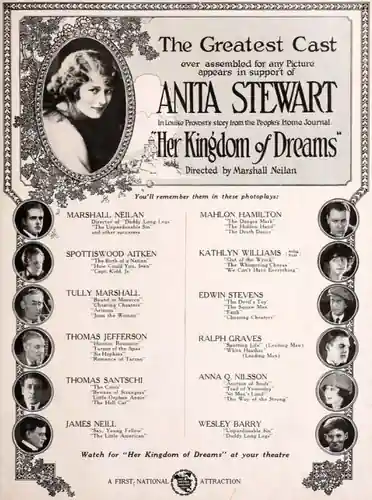
Agnes Louise Provost’s screenplay avoids the simplistic tropes of the 'country mouse' in the city. Instead, it delves into the ontological shock of Judith’s experience. The wealth is not a liberation; it is a weight. The social whirl is not a celebration; it is a cacophony of judgment. In comparing this to the more lighthearted paternal dynamics found in Sunshine Dad, one finds that Her Kingdom of Dreams possesses a much darker marrow, questioning whether the American Dream of upward mobility is inherently a nightmare for the soul.
Anna Q. Nilsson delivers a performance of remarkable emotional dexterity. In an era where pantomime often veered into the hyperbolic, Nilsson employs a subtle economy of movement. Her eyes serve as the film's emotional anchor, reflecting a profound sense of displacement as she moves through the opulent sets. Whether she is being scrutinized by the high-society matriarchs or navigating the romantic entanglements of the supporting cast, she maintains a core of vulnerability that never descends into fragility. Her portrayal of Judith’s transformation is less about the clothes she wears and more about the hardening of her spirit—a process of self-preservation that mirrors the character arcs seen in As Man Made Her.
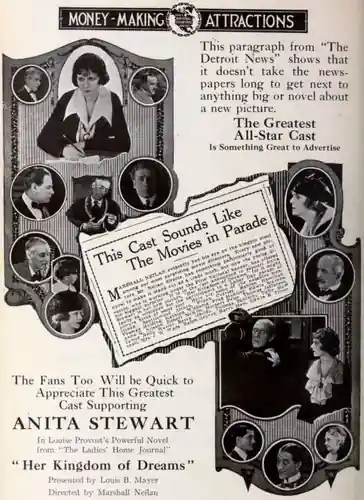
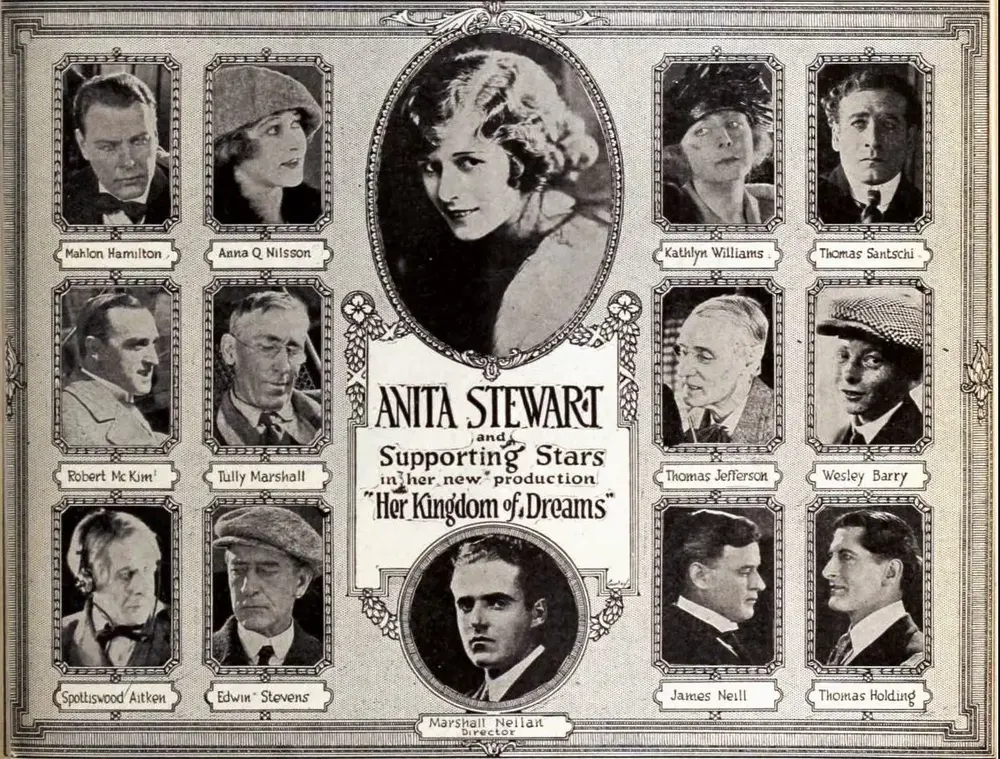
The supporting ensemble provides a robust framework for Nilsson’s luminosity. Robert McKim, playing the inevitable antagonist with a serpentine elegance, serves as the perfect foil to Judith’s sincerity. His performance reminds us of the predatory nature of the social elite, where every gesture is calculated and every compliment is a transaction. The presence of veterans like Tully Marshall and Mahlon Hamilton adds a layer of gravitas to the production, ensuring that the 'social whirl' feels populated by real, albeit often cruel, human beings rather than mere caricatures.
Visually, the film is a masterclass in silent era composition. The contrast between the open, sun-drenched fields of Judith’s youth and the cramped, shadow-heavy interiors of the city mansions is striking. The cinematography uses depth of field to emphasize Judith’s isolation; even in a room full of people, she is often framed in a way that suggests she is adrift in a vast, cold ocean of finery. This visual language of alienation is far more effective than any intertitle could be. It evokes the same sense of tragic inevitability found in European works like Die Tragödie auf Schloss Rottersheim, where architecture itself seems to conspire against the protagonist's happiness.
The costume design also plays a pivotal role in the narrative. As Judith is 'thrust' into wealth, her garments become increasingly ornate and restrictive. By the second act, she is literally draped in the symbols of her new status, but these silks and jewels look like armor—or perhaps a shroud. The film suggests that the 'sophistication' she is forced to acquire is merely a costume, a mask that hides the genuine self. This thematic preoccupation with the 'mask' of social standing is a recurring motif in silent cinema, yet here it feels particularly poignant because of the sheer speed at which Judith is forced to adapt.
One cannot view Her Kingdom of Dreams without considering the zeitgeist of 1919. The world was reeling from the Great War and the Spanish Flu; the old social orders were crumbling while new, aggressive forms of capitalism were rising. Judith’s 'kingdom' is a microcosm of this unstable world. The film captures the anxiety of a generation that found itself suddenly wealthy but spiritually bankrupt. It shares a certain thematic DNA with Thais, exploring the intersection of spiritual purity and material temptation, though it grounds its conflict in the secular reality of American high society rather than religious allegory.
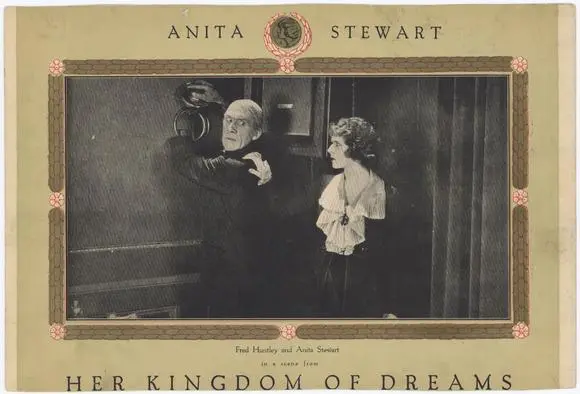
Furthermore, the film’s treatment of the 'frightening social whirl' reflects a burgeoning suspicion of the urban experience. As the American population shifted from rural to urban centers, films like this served as both a warning and a validation of rural values. The 'unsophisticated' life is framed as the only place where true dreams can reside, while the 'kingdom' of the title is revealed to be a hallucination fueled by greed. This sentiment is echoed in other contemporary dramas such as The Little Shepherd of Bargain Row, which also negotiates the treacherous waters of commercialism and character.
The pacing of the film is deliberate, allowing the tension to simmer before Judith’s inevitable breaking point. The 'social whirl' is depicted through a series of increasingly frantic vignettes—lavish parties, high-stakes gambling, and whispered scandals. This montage of decadence is claustrophobic, designed to make the audience feel the same vertigo Judith experiences. It is a far cry from the grounded heroism of The Heart of a Hero; here, the heroism is internal, found in the struggle to remain true to oneself when the entire world is demanding a performance.
As the plot progresses toward its climax, the film introduces elements of melodrama that, while expected for the period, are executed with surprising restraint. The conflicts are not just about who Judith will marry or how she will spend her money, but about whether she can survive the 'frightening' reality of her new life without losing her soul. This existential dread is what elevates the film above standard 'rags-to-riches' fare. It is a precursor to the psychological depth that would later be explored in films like Journey's End, albeit in a very different context.
In the final analysis, Her Kingdom of Dreams is a profound meditation on the volatility of identity. It suggests that our 'kingdoms' are not built of stone or gold, but of the dreams and values we hold when we have nothing else. When Judith is thrust into the whirl, she is forced to decide which parts of her 'unsophisticated' self are worth keeping and which are merely baggage. The film does not provide easy answers, acknowledging that wealth changes the landscape of the human heart irrevocably. It stands as a testament to the power of silent cinema to convey complex social critiques through the simple, evocative language of the human face and the play of light and shadow.
While it may not have the overtly political bite of Whom the Gods Destroy or the raw documentary feel of The Pendleton, Oregon, Round-Up, it possesses a timeless quality. The 'frightening social whirl' of 1919 is not so different from the digital whirl of the 21st century—a world where wealth and visibility are often mistaken for worth. Anna Q. Nilsson’s Judith remains a beacon for anyone who has ever felt like an outsider in their own life, a reminder that the most important kingdom is the one we carry within us. This is a film that deserves to be pulled from the shadows of history and viewed with fresh eyes, for its dreams are as vibrant and its warnings as relevant as they were over a century ago.

IMDb —
1925
Community
Log in to comment.