DbcultAccessing Vault...
Cult Review
Senior Film Conservator
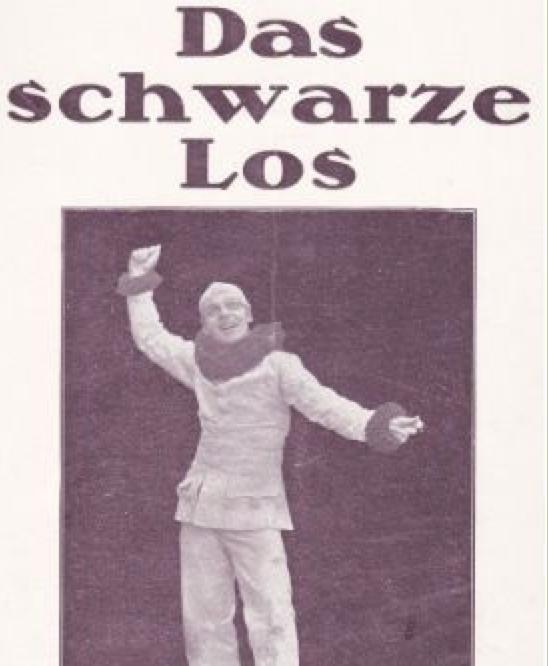
Imagine a toy music-box whose ballerina suddenly sprouts veins: that is the shock Adolf Paul’s Das schwarze Los delivers to the ribcage. One reel in, the screen still smells of roasted almonds and orange peel; by the fourth, it reeks of iron. The camera—primitive, hand-cranked, voracious—stalks the trio like a fourth lover, licking the sweat beading beneath greasepaint, counting heartbeats inside ruffled calico.
Paul refuses to genuflect before the proscenium arch. Instead he drags Commedia’s archetypes into the glare of a Mediterranean noon where every shadow is a scalpel. Pierrot (Alexander Moissi) floats through the first act on the helium of naïveté—his knees knock together like poorly glued marionette joints, his gaze swims in a blur of unearned adoration. Watch how Moissi lets the left corner of his mouth twitch upward half a millimeter whenever Colombina glances elsewhere: a hairline fracture that foretells total structural collapse.
Arlecchino, essayed by Paul Biensfeldt, storms in as a kinetic sneer—elbows angular, spine a coiled spring, tongue always polishing a toothpick of derision. Biensfeldt understands that Harlequin’s erotic currency is centrifugal force; he flings himself into rooms the way a gambler tosses dice that already spell ruin. When he slaps Pierrot’s back in camaraderie the sound is muffled yet oddly wet, as though flesh were a sponge soaked in prior humiliations.
Between them stands Colombina, Johanna Terwin navigating the tightrope between coquette and conduit of chaos. She never winks at the lens—an anachronistic mercy—yet her pupils perform an unsettling trick: they dilate like sinkholes whenever the plot demands fresh casualties. Notice the sequence where she sews sequins onto Pierrot’s costume while Arlecchino’s reflection superimposes itself in the window behind her, a ghost抢婚 yet to happen. The double exposure is technically primitive, but emotionally it lands like a guillotine.
Plot, that tyrant, is here a mere ringmaster. Acts bleed into each other like watercolors in rain: a lazzo of stolen sausages pivots—without warning—into a knife fight staged as shadow-play against canvas. The titular “black lot” of the cards, das schwarze Los, is never shown in close-up; we glimpse only the back of the card, a void that devours surrounding detail. By withholding the image, Paul turns the MacGuffin into a moral abscess: every character fondles the possibility of damnation yet refuses to name it aloud.
The narrative spine fractures at the halfway mark. A traveling cinematograph—yes, a film within a film—unspools inside the troupe’s tent, projecting jerky images of The Corbett-Fitzsimmons Fight onto a bedsheet. Spectators guffaw until they recognize their own jealous faces flickering beside the pugilists. In that instant cinema becomes mirror, and the mirage of entertainment curdles into self-incrimination. It is 1913 already interrogating voyeurism half a century before 8½ or Peeping Tom.
Cinematographer Emil Albes limps along with orthochromatic stock that turns blood into tar and lips into lunar craters. Yet constraint fathers enchantment. To simulate moonlight he floods the set with magnesium flares reflected off beaten tin, bathing Pierrot’s confession in a bruised argent that feels both holy and septic. During the climactic lottery draw the frame contracts to a vertical slit—mimicking the keyhole through which Colombina spies—then balloons outward again, exhaling dread like smoke from a pistol.
Color exists only as memory. A hand-tinted crimson ribbon flutters across monochrome streets, trailing associations of passion, then later reappears—now grey—knotted around Arlecchino’s wrist as a tourniquet after a brawl. The ribbon’s chromatic disappearance is more chilling than any gore effect modern CGI could graft onto the scene.
No musical cue sheet survives; archival screenings often pair the film with jaunty calliope, a travesty that turns tragedy into quaint pantomime. Watched dry, the silence is carnivorous. You hear the rasp of Arlecchino’s boots grinding broken glass into cobblestones, the soft pop of Pierrot’s collar button giving way under a strangler’s grip. Intertitles—sparse, haiku-brief—arrive like telegrams from a sadistic god: “Tomorrow the town will laugh again—without you.”
The absence of spoken word weaponizes gesture. Watch Colombina remove her pearl earring: she doesn’t merely unhook it, she unbirths it, letting the pearl roll along her palm, across the table, onto the floor—each bounce a countdown to betrayal. The shot lasts eight seconds yet stretches like taffy in the mind.
Cinephiles chasing genealogies will detect the DNA of The Student of Prague in Paul’s doppelgänger angst, and prefigurements of Fantômas in the way criminality wears a grinning mask. Yet Das schwarze Los is less a staircase of influence than a Möbius strip devouring its own precedents. Where Oliver Twist sentimentalizes orphan peril, this film orphans adulthood itself, leaving the viewer a trembling foundling.
Unlike the monumental pageants of Quo Vadis? or Napoleon, the spectacle here is interior, a tilt-a-whirl of eyelids and cuticles. The budget probably couldn’t afford a single elephant; instead it buys close-ups of a flea circus crawling across Pierrot’s forearm—an infestation more unsettling than any imperial army.
Restoration efforts stumble. Nitrate cremation claimed reels two and five; what survives is a 68-minute phantasm stitched from Czech and Argentine prints, the joins visible like surgical scars. Rather than polish these wounds, the curators leave them agape—an ethical choice that honors the film’s ontology of rupture.
Some spectators exit muttering “melodrama,” as if that were indictment rather than taxonomy. Yes, hearts fracture along fault-lines pre-drawn by centuries of Italian folklore. Yet the film’s urgency lies in how willingly it scrapes those archetypes raw, exposing nerve endings to the salt of modernity. Pierrot’s final grin—achieved by Moissi holding a hidden fishing hook that tugs his cheek upward—freezes into a rictus somewhere between rapture and rigor mortis. It is the most terrifying smile ever carved by German expressionism, and it predates The Cabinet of Dr. Caligari by six full years.
To watch Das schwarze Los is to volunteer for a carnival game whose prize is a shard of mirror reflecting nothing but your own appetite for catastrophe. The lights rise, the houselings depart, yet somewhere inside the skull a tiny Pierrot keeps juggling three balls—heart, spade, club—while a black card flutters down, down, down, never quite landing.
IMDb —
1920
Community
Log in to comment.