DbcultAccessing Vault...
Cult Review
Senior Film Conservator
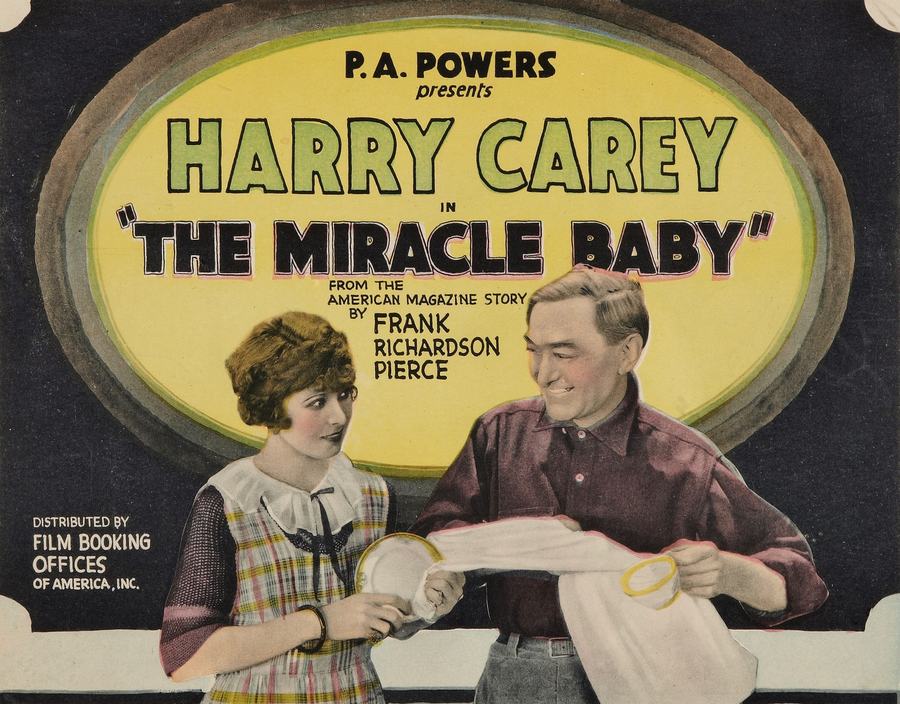
When the title The Miracle Baby first flickers across a grainy screen, one expects a simple frontier melodrama. What unfolds, however, is a layered tableau of guilt, redemption, and the fragile bonds that tether strangers together in the unforgiving West. Director Jacques Jaccard, collaborating with writers Frank Richardson Pierce and Isadore Bernstein, constructs a narrative that oscillates between the stark austerity of the landscape and the intimate turbulence of its characters.
Neil Allison (Harry Carey), a veteran assayist, is coaxed into testing ore that is, in fact, a sham. The ruse is engineered by the reckless Jim Starke (Edmund Cobb), whose youthful hubris blinds him to the consequences of his machinations. The moment Neil discovers the fraud, tension snaps like a frayed rope; a scuffle erupts, and an unseen assailant plunges a knife into Starke’s chest. The camera lingers on Neil’s stunned visage, allowing the audience to feel the weight of a man convinced he has become a murderer.
Fleeing the crime scene, Neil encounters Starke’s father—an anguished figure haunted by his son’s untimely demise. Rather than delivering vengeance, the elder, portrayed with stoic sorrow by Edward Hearn, proposes an uneasy partnership. Their shared grief becomes a conduit for an unexpected act of compassion: the adoption of a newborn whose parents succumbed to a blizzard. This infant, a symbol of fragile hope, anchors the narrative’s emotional core.
The trek to town is fraught with natural hazards and moral quandaries. Along the dusty trail, the duo confronts lawmen, opportunistic townsfolk, and the lingering specter of the unknown assassin. Each encounter peels back layers of Allison’s character, revealing a man torn between self‑preservation and an emergent paternal instinct.
Harry Carey’s performance is a masterclass in silent‑era restraint. Without the crutch of dialogue, he communicates remorse through a furrowed brow, a lingering glance, and the slightest tremor in his hands. In moments where the script would traditionally call for melodramatic outbursts, Carey opts for a restrained, almost stoic poise that elevates the film’s realism.
Edmund Cobb, as the reckless Jim Starke, brings a kinetic energy that contrasts sharply with Carey’s measured cadence. Cobb’s physicality—quick gestures, restless pacing—conveys a restless spirit doomed by his own impetuosity. The chemistry between the two actors, though limited on screen due to Starke’s early demise, leaves an indelible imprint, setting the stage for the paternal bond that follows.
Supporting players such as Hedda Nova (the mother‑figure who assists in the baby’s care) and Margaret Landis (the town’s skeptical constable’s daughter) add texture. Nova’s gentle demeanor, highlighted by soft, lingering close‑ups, provides a counterpoint to the harshness of the frontier. Landis, meanwhile, injects a hint of romantic tension, though the film resists a conventional love‑story resolution, opting instead for a nuanced portrayal of partnership.
Cinematographer Alfred Allen harnesses the natural chiaroscuro of the western landscape. Night scenes are rendered in deep obsidian, punctuated by the faint glow of campfires—an aesthetic choice that amplifies the sense of isolation. Daylight sequences, however, burst with a luminous quality that mirrors the film’s thematic shift from darkness to redemption.
The film’s promotional materials employed a striking triad of hues: dark orange (#C2410C) for the burning embers of conflict, vibrant yellow (#EAB308) for the fleeting moments of hope, and sea blue (#0E7490) for the expansive skies that loom overhead. Within the film, these colors manifest subtly: the orange‑tinged dust kicked up by horse hooves, the golden glint of a sunrise over the mountains, and the cool blue of a river that serves as a baptismal metaphor for the baby’s arrival.
Jaccard structures the film into three distinct acts. The opening act establishes the deceptive premise and the violent inciting incident. The middle act, the longest, follows the arduous journey with interspersed vignettes that develop the protagonists’ inner lives. The final act resolves the murder mystery while delivering an emotional catharsis. This tripartite rhythm mirrors the classic three‑act structure found in contemporary cinema, yet the pacing feels deliberately measured, allowing each tableau to breathe.
Comparatively, the narrative rhythm recalls the measured tension of Ingmarssönerna, where the environment itself becomes a character. Both films use the landscape not merely as backdrop but as an active participant in shaping destiny.
At its heart, The Miracle Baby interrogates the elasticity of moral responsibility. Neil’s self‑imposed exile stems from an internalized code of honor—a code that compels him to flee rather than face the community’s judgment. The baby, an embodiment of innocence, becomes the catalyst that forces Allison to confront his own culpability and, ultimately, to seek redemption.
The film also explores the concept of surrogate parenthood, a motif echoed in later westerns such as Winners of the West. The adoption narrative underscores a broader commentary on the fluidity of family structures on the frontier, where blood ties often yield to bonds forged in adversity.
While many silent westerns of the early 1920s leaned heavily on gun‑fights and overt heroism, The Miracle Baby distinguishes itself through its introspective focus. It shares a thematic kinship with Fighting Blood, wherein the protagonist wrestles with internal demons as much as external foes. However, where Fighting Blood resolves through violent retribution, The Miracle Baby opts for a quieter, more humane resolution.
The film’s narrative economy also aligns it with the succinct storytelling of Over Night, though the latter leans toward comedy. Both showcase a deftness in delivering a complete arc within a limited runtime, a hallmark of efficient silent‑era craftsmanship.
The editing, overseen by Jacques Jaccard, employs cross‑cutting during the murder sequence to heighten suspense—interweaving close‑ups of the knife’s glint with Neil’s panicked expression. Intertitles are sparingly used, favoring visual storytelling; when they appear, they are rendered in a bold serif font, colored in the film’s signature dark orange, reinforcing the visual motif.
The film’s soundscape, though silent, is complemented by period‑appropriate piano accompaniments that emphasize the tension of the night chase and the tenderness of the baby’s first cry. Modern screenings often pair the film with a live orchestra, enhancing its emotional resonance.
Although The Miracle Baby never achieved the box‑office heights of contemporaneous Carey vehicles like The White Rider, its nuanced approach to morality has earned it a cult following among silent‑film scholars. Recent restorations have brought the film’s original tinting—subtle orange and blue washes—to light, allowing contemporary audiences to appreciate the intentional color palette.
Film historians often cite it as an early example of the “miracle child” trope that would later surface in sound westerns and even in post‑war melodramas. Its influence can be traced to later works such as The Pill Pounder, where an orphaned infant becomes the linchpin of communal reconciliation.
In sum, The Miracle Baby stands as a testament to the silent era’s capacity for emotional depth without reliance on dialogue. Its blend of stark visual composition, morally complex characters, and a narrative that privileges redemption over retribution renders it a compelling study for both aficionados of early cinema and scholars of genre evolution. The film invites repeated viewings, each time revealing new subtleties in its choreography of light, shadow, and human frailty.
IMDb —
1925
Community
Log in to comment.