DbcultAccessing Vault...
5.7/10
Senior Film Conservator
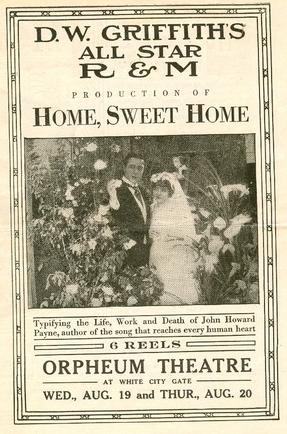
A definitive 5.7/10 rating for a film that redefined the boundaries of cult cinema. Home, Sweet Home remains a cornerstone of transgressive art.
By the time 1914 rolled around, the cinematic landscape was undergoing a seismic shift from the ephemeral novelty of short subjects to the sustained gravitas of the feature film. Standing at the epicenter of this evolution was D.W. Griffith, a man whose ego was matched only by his technical intuition. In Home, Sweet Home (slug: home-sweet-home), Griffith attempts something far more ambitious than a mere biography. He constructs a moral anthology, a precursor to the multi-narrative structure he would later perfect in Intolerance. This film is a meditation on the parasitic relationship between the suffering of the artist and the salvation of the audience.
The film opens with a visceral, almost claustrophobic depiction of John Howard Payne, played with a trembling, haunted elegance by Henry B. Walthall. Walthall, who would soon become the face of the 'Little Colonel,' here captures the essence of the 'poète maudit.' We see him in the throes of creative and financial destitution, a man whose life is a series of missed connections and unfulfilled yearnings. It is from this wellspring of misery that the song 'Home, Sweet Home' is born. Griffith treats the composition of the melody as a divine transmission, a moment of secular hagiography that sets the stage for the film’s episodic explorations.
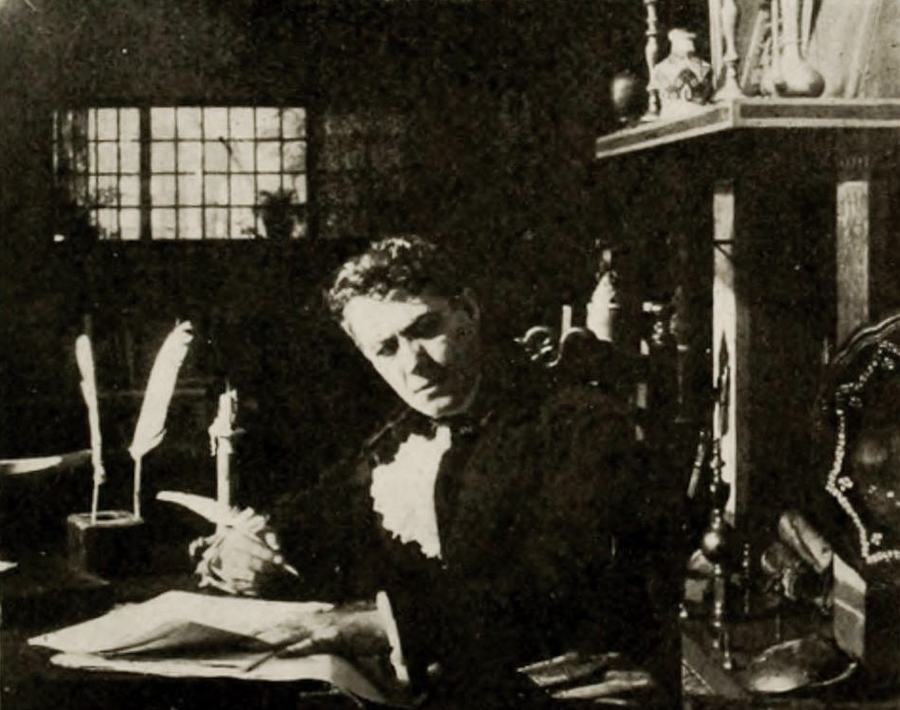
The narrative then diverges into three distinct vignettes, each illustrating the song's transformative power across different strata of society. The first, involving an Eastern adventurer, is perhaps the most visually striking. Here, the camera work of G.W. Bitzer begins to shimmer. We see the influence of early epic filmmaking, perhaps drawing a subtle lineage from works like From the Manger to the Cross in its use of landscape to reflect moral internalities. The adventurer is on the verge of succumbing to a life of hedonistic abandonment, but the haunting refrain of Payne’s melody pulls him back from the abyss, reminding him of a domestic purity he had long since discarded.
The second movement shifts focus to a maternal struggle, featuring the incomparable Mary Alden. Griffith was always a master of the domestic sphere, and here he uses the song to bridge the gap between a mother’s grief and her son’s potential delinquency. The pacing here is deliberate, almost agonizingly so, as Griffith utilizes the close-up to extract every ounce of pathos from Alden’s expressive features. It’s a technique that feels far more advanced than the stagey presentations found in contemporary works like Oliver Twist (1912). The song acts as a psychological tether, grounding the characters in a shared heritage of sentimentality that prevents the family unit from fracturing under the weight of external pressures.
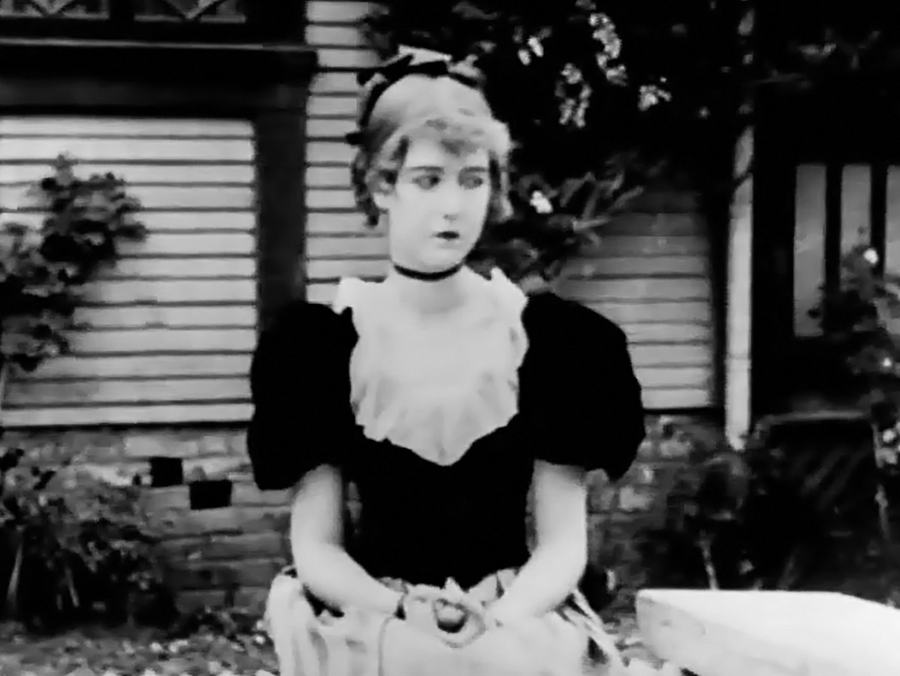
No discussion of a Griffith film would be complete without mentioning the Gish sisters. Lillian and Dorothy Gish bring a luminous, almost ethereal quality to the third vignette, which deals with a marriage on the brink of collapse. Lillian, in particular, possesses a face that seems designed for the silent screen—a canvas upon which the most subtle tremors of the soul are writ large. Their presence provides a counterweight to the more histrionic performances often found in early cinema, such as the grandiloquence of Les Misérables (1913). In this segment, the song 'Home, Sweet Home' becomes a literal peace offering, a sonic reminder of the vows taken and the sanctuary built between two people.
The way Griffith weaves the melody through these stories is nothing short of symphonic. It isn't just background music; it is a narrative engine. In an era where films like The Life and Passion of Jesus Christ relied on pre-existing religious devotion to move the audience, Griffith was attempting to create a new kind of secular religion—the religion of the American Home. He uses the iris shot to focus the viewer’s eye on small, significant objects: a letter, a locket, a mother’s hand. These are the icons of his new faith.
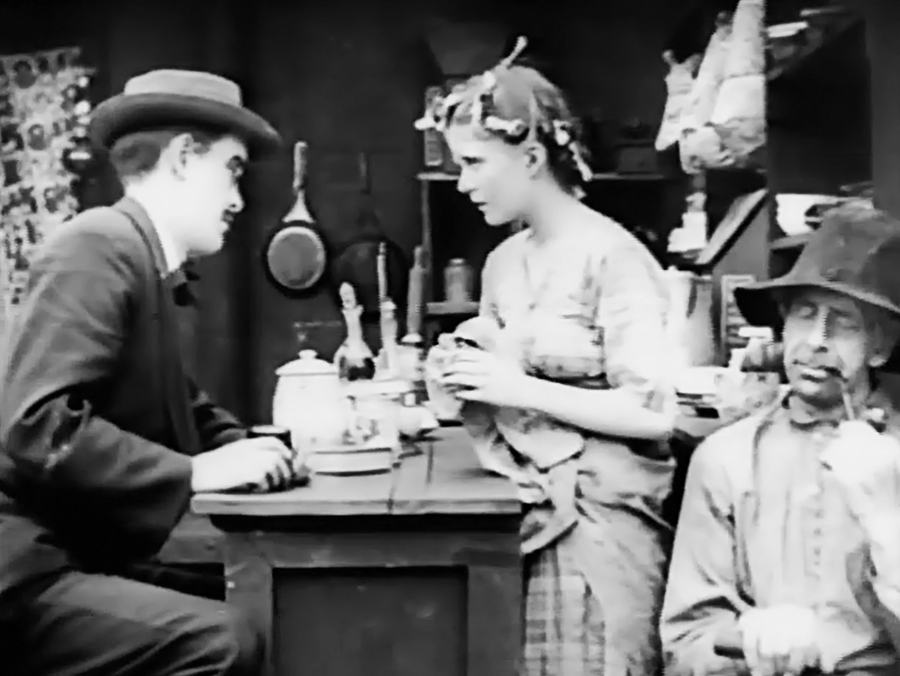
Technically, Home, Sweet Home is a masterclass in early film grammar. Griffith and Bitzer were experimenting with lighting in ways that their contemporaries were not. Note the use of shadows in Payne’s study—the way the light falls across Walthall’s face, emphasizing his sunken eyes and the desperate scribbling of his pen. This chiaroscuro effect creates a sense of psychological depth that was revolutionary for 1914. While other directors were still struggling with the basics of continuity, as seen in some of the more disjointed sequences of The Story of the Kelly Gang, Griffith was already thinking about the emotional rhythm of the edit.
The cross-cutting between the different stories is handled with a sophistication that belies the film's age. It creates a sense of simultaneity, a feeling that the song is echoing across the world at the exact moment it is needed most. This isn't just clever editing; it's a philosophical statement about the interconnectedness of human experience. The film’s structure suggests that no act of creation is ever truly solitary; its ripples are felt in the lives of strangers, often in ways the creator will never know.
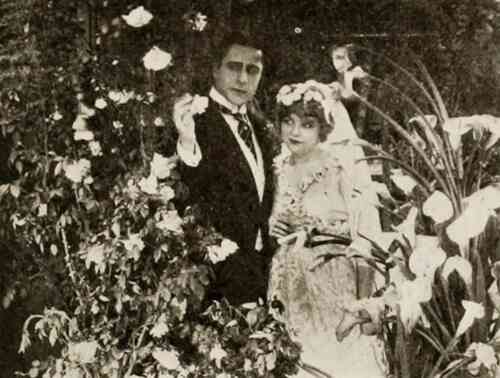
The final act of the film is where Griffith truly lets his imagination soar, moving into the realm of pure allegory. We witness the death of John Howard Payne, but Griffith refuses to leave his protagonist in the cold embrace of the grave. Instead, we are treated to a vision of the afterlife that is both breathtaking and, admittedly, a bit saccharine to modern sensibilities. However, within the context of 1914, this was high art. The use of double exposure and ethereal tinting creates a purgatorial space where Payne is greeted by the souls he helped save. It is a moment of profound catharsis, suggesting that the artist’s immortality is found not in his name, but in the comfort his work provides.
This sequence bears a striking resemblance to the spiritual ambitions of The Avenging Conscience: or 'Thou Shalt Not Kill', released the same year. Both films show Griffith grappling with the big questions of morality, guilt, and the afterlife. In Home, Sweet Home, the resolution is one of harmony. The song that began in a lonely room ends as a celestial choir, a final testament to the power of the domestic ideal. It is a bold, unapologetic piece of filmmaking that demands to be taken on its own terms.
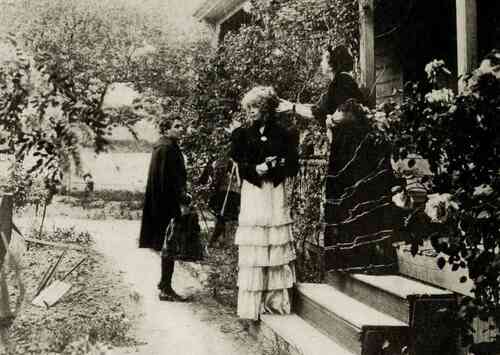
To watch Home, Sweet Home today is to witness the birth of the American cinematic identity. While some may find the moralizing tone a bit heavy-handed, one cannot deny the sheer craft on display. The cast, featuring stalwarts like Robert Harron, Mae Marsh, and Donald Crisp, represents the absolute pinnacle of the Griffith stock company. Each actor understands the specific needs of the silent frame, using gesture and gaze to communicate complex emotional states without the need for excessive intertitles.
The film’s influence can be seen in every anthology film that followed, and its thematic preoccupation with the 'home' as a sacred space remains a cornerstone of American culture. It is a more intimate film than the sprawling epics like The Life of Richard Wagner, focusing instead on the quiet, internal victories of the spirit. Griffith proves here that he is just as capable of handling the delicate nuances of a family drama as he is the grand spectacles of history.
In the end, Home, Sweet Home is a testament to the enduring power of a simple idea. It reminds us that art is a bridge, a way for one lonely soul to speak to another across the vast distances of time and space. It is a flawed, beautiful, and deeply moving piece of cinema that deserves its place in the pantheon of great early works. If you can look past the dust of a century, you will find a film that still beats with a very human heart, a melody that still resonates with the universal longing for a place where we truly belong.
Original Review by The Cinephile’s Ledger. All rights reserved.
IMDb 6.1
1935
Community
Log in to comment.