DbcultAccessing Vault...
6.3/10
Senior Film Conservator
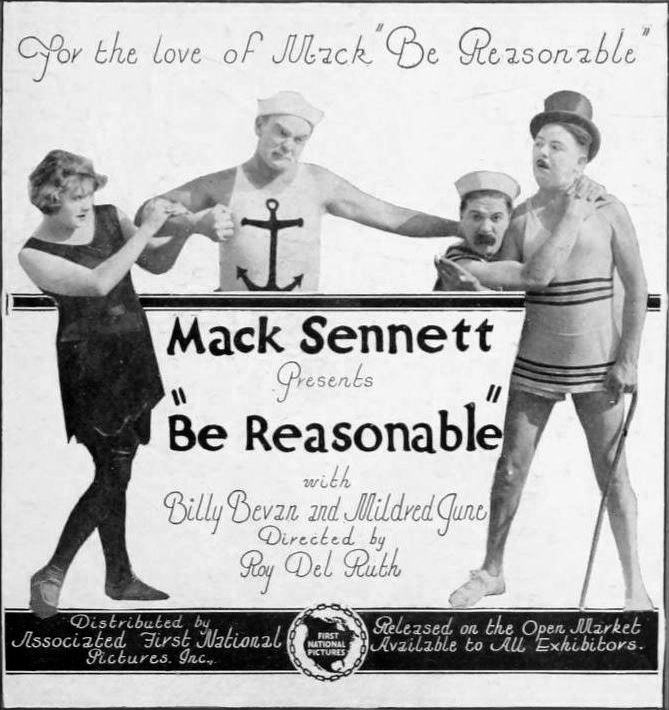
A definitive 6.3/10 rating for a film that redefined the boundaries of cult cinema. Be Reasonable remains a cornerstone of transgressive art.
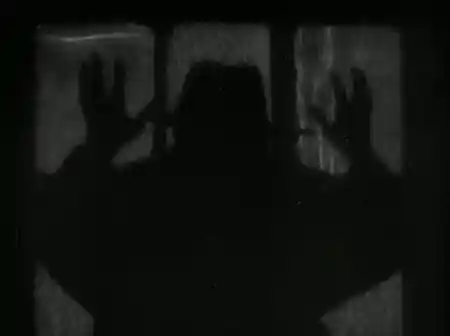
When a woman’s sanctuary is shattered by an uninvited presence, the result is rarely a simple tale of intrusion. In *Be Reasonable*, the 1930s-era film directed with taut precision, the narrative spirals into a labyrinth of moral uncertainty and psychological disintegration. The opening shot—a woman (Kewpie Morgan) roused from slumber by the sound of creaking floorboards—sets the stage for a story where safety is an illusion and every action carries unintended consequences. This is a film that thrives on its refusal to offer easy resolutions, instead forcing the audience to grapple with the ambiguity of its characters’ choices.

What begins as a straightforward home invasion quickly mutates into a kinetic chase sequence that mirrors the protagonist’s unraveling psyche. The man (Eddie Gribbon) in her home is not a typical burglar; his movements are deliberate, almost ritualistic, as if he’s performing a grim theater of justice. This ambiguity—who is the aggressor, and who the defender?—anchors the film’s tension. The police, led by the stern-faced Al Cooke, are portrayed not as saviors but as a bureaucratic force that amplifies the chaos, ensuring that the protagonist’s actions are misinterpreted at every turn.
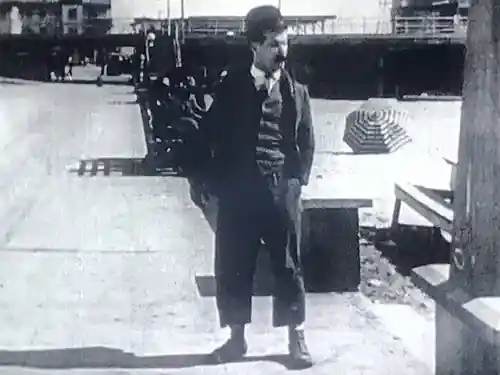
Comparisons to *Juan José* (href="/movies/juan-jose") are inevitable, given their shared themes of miscommunication and institutional failure. Yet *Be Reasonable* distinguishes itself through its meticulous pacing and the stark contrast between its protagonist’s internal monologue and the external spectacle of the chase. Unlike *The Law of the Great Northwest* (href="/movies/the-law-of-the-great-northwest"), which leans into rugged natural settings, this film’s urban environment becomes a character in itself—a grid of alleys and storefronts that trap the protagonist in a perpetual loop of evasion.
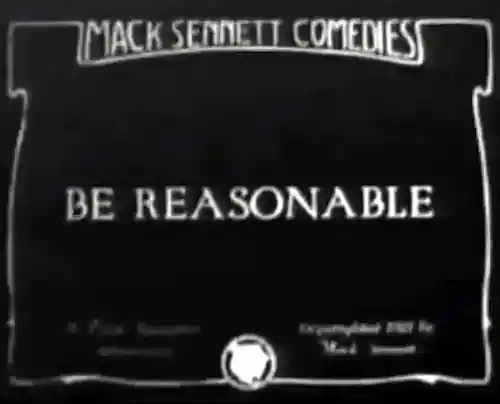
Morgan’s performance is a masterclass in subtle physicality. Her eyes betray the weight of her decisions long before her mouth does, a technique that echoes the silent film era while propelling the narrative into a modernist sensibility. Gribbon, meanwhile, embodies a menace that is neither overtly violent nor overtly sympathetic, a feat that requires a delicate balance. Their dynamic is the film’s emotional core, a push-and-pull between two individuals who may share more in common than either admits.
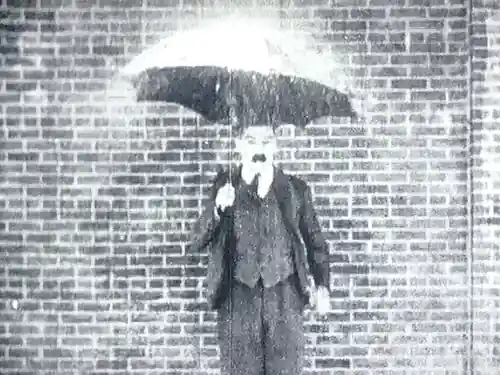
The cinematography, drenched in shadows and harsh light, evokes the stark contrasts of 1930s noir but avoids the genre’s clichés. The chase scenes are edited with a frenetic energy that mirrors the protagonist’s panic, yet the film never loses its grip on narrative coherence. This is a rare feat in films of this era, where technical limitations often hindered storytelling ambition. The use of sound—sharp breaths, the screech of tires, the distant wail of sirens—immerses the viewer in the protagonist’s sensory overload.

Thematically, *Be Reasonable* interrogates the notion of agency in a society that demands compliance. The title itself is a sardonic commentary on the futility of rationality when faced with systemic indifference. The protagonist’s attempts to “be reasonable” are met with escalating absurdity, a critique that resonates with the political anxieties of the time. This thematic depth is further enriched by the film’s secondary characters, such as Fanny Kelly’s neighbor, whose passive complicity speaks volumes about societal apathy.
While the film’s third act veers into the melodramatic—reminiscent of *The Bondage of Barbara* (href="/movies/the-bondage-of-barbara")—it manages to reclaim its momentum through a final sequence that is both cathartic and haunting. The resolution, rather than providing closure, leaves the audience with lingering questions about guilt, innocence, and the cost of survival. This refusal to sanitize the ending is a testament to the film’s artistic integrity.
Technically, the film is a product of its time, yet its emotional resonance transcends the era. The score, minimal but effective, underscores the tension without overpowering the performances. The set designs, particularly the protagonist’s home, are meticulously crafted to reflect her state of mind—cluttered with objects that have lost their meaning, yet charged with symbolic weight. These details contribute to a narrative that is as much about interiority as it is about action.
For contemporary viewers, *Be Reasonable* may initially feel dated in its aesthetics, but its exploration of power dynamics and personal autonomy remains startlingly relevant. The film’s influence can be traced in later works such as *Sunken Rocks* (href="/movies/sunken-rocks") and *The Missing Bullet* (href="/movies/the-missing-bullet"), which similarly blend high-stakes action with existential inquiry. Yet *Be Reasonable* stands apart for its unflinching portrayal of a woman navigating a world that seeks to control her narrative.
In an age where streaming platforms prioritize instant gratification, *Be Reasonable* demands patience and engagement. Its rewards, however, are substantial: a layered narrative that challenges the viewer to reconsider the morality of its characters and the systems that trap them. This is not a film for passive consumption—it is an invitation to wrestle with complexity, a quality that few modern thrillers dare to offer.
Ultimately, *Be Reasonable* is a triumph of storytelling over spectacle. Its legacy lies in its ability to provoke discomfort, to ask questions without providing answers, and to remind audiences that the line between reason and madness is thinner than it appears. For those willing to embrace its challenges, the film offers a richly rewarding experience that lingers long after the credits roll.
IMDb 6.4
1934
Community
Log in to comment.